The Crusades
The Crusades were a series of religious wars launched from Western Europe between 1095 and 1291 CE to capture Jerusalem and the Holy Land. They reshaped medieval Christian-Muslim relations, produced two centuries of intermittent conflict and exchange, and left a lasting legacy.
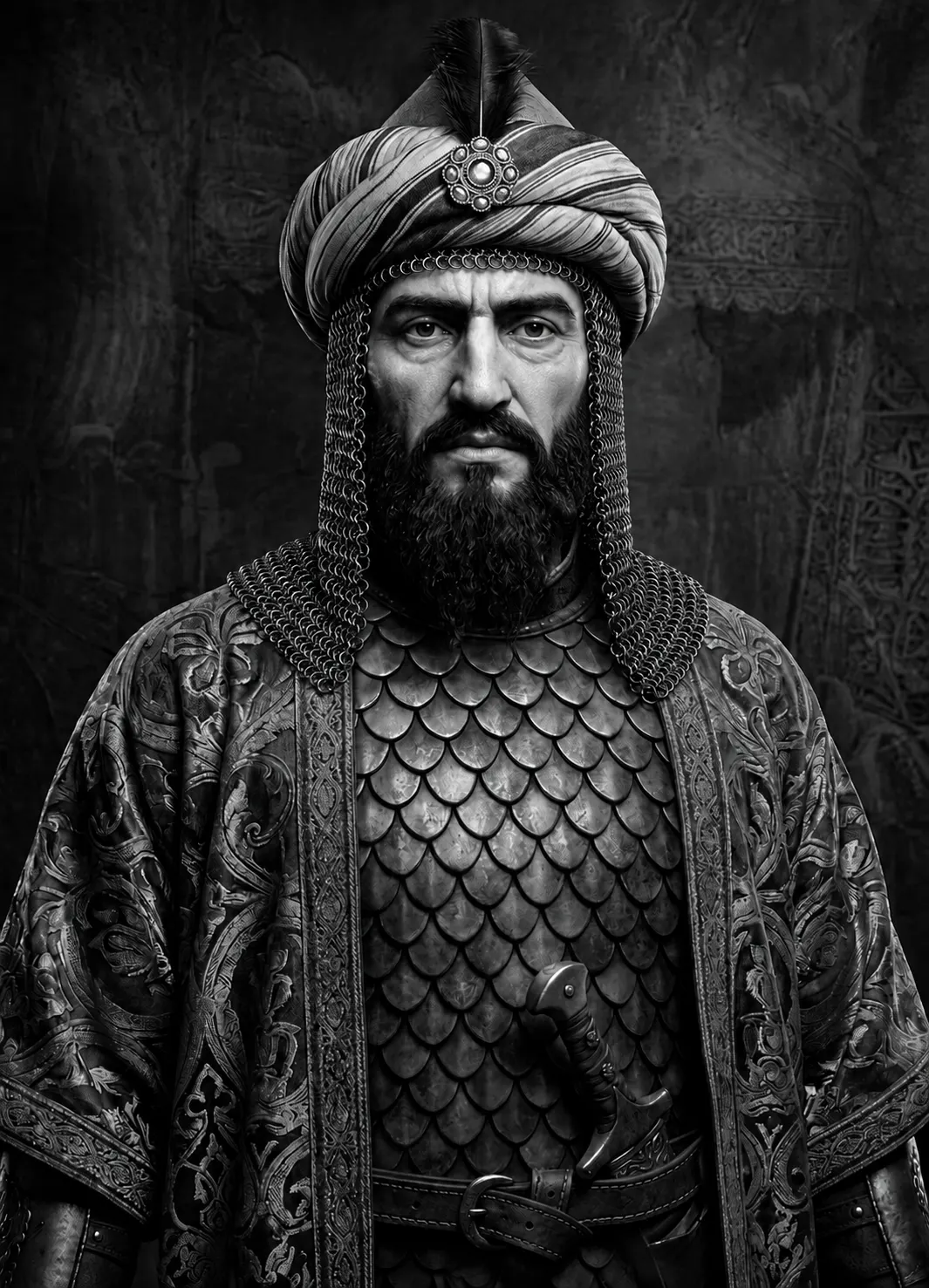
The Crusades were a series of religious wars launched from Western Europe between 1095 and 1291 CE, aimed primarily at capturing Jerusalem and the surrounding Holy Land from Muslim rule. Beginning with Pope Urban II's call at the Council of Clermont and continuing through nearly two centuries of intermittent warfare, they involved massive military expeditions to the Eastern Mediterranean, the temporary establishment of Latin Christian states in the Levant, and profound encounters between European and Islamic civilization. Their consequences — military, political, cultural, and religious — shaped the medieval world and left a legacy that continues to influence how Christians and Muslims understand their shared and contested history.
Understanding the Crusades requires holding multiple perspectives at once. For European Christians, the liberation of Jerusalem was framed as a sacred duty offering spiritual rewards. For the Muslim populations of the Levant and Egypt, the Crusades were a foreign military invasion requiring organized resistance. For the Byzantine Empire, they were an ambiguous intervention that brought both relief and catastrophe. None of these perspectives alone captures the full picture, and the most careful historical treatments of the Crusades have always acknowledged their complexity.
Background and Causes
The origins of the Crusades lie in the political, religious, and social conditions of the eleventh-century Mediterranean world. By the late eleventh century, the Islamic world had controlled Jerusalem and much of the Levant for over four centuries, since the initial Islamic conquests in the seventh century. Christian pilgrims had generally been able to visit Jerusalem and other holy sites under Muslim rule, though conditions varied depending on the policies of different dynasties.
Several developments in the eleventh century created the conditions for the First Crusade. The Seljuk Empire, a Turkic dynasty that had converted to Islam and established a powerful empire stretching from Central Asia to Anatolia, defeated Byzantine forces at the Battle of Manzikert in 1071, opening Anatolia to Turkish settlement and threatening Constantinople. Byzantine Emperor Alexios I Komnenos, seeking military assistance, appealed to Pope Urban II and Western European rulers for help.
In Western Europe, the eleventh century had seen significant social and religious changes. The Peace and Truce of God movements had attempted to limit warfare among Christian nobles. The Cluniac reform movement had strengthened papal authority. Population growth and the practice of primogeniture left younger sons without inheritance, creating a class of landless knights seeking opportunity. The concept of armed pilgrimage — combining military service with spiritual devotion — had precedents in the Reconquista in Al-Andalus.
Pope Urban II, seeking to assert papal authority and unite Christendom, saw an opportunity in the Byzantine appeal. At the Council of Clermont in November 1095, he delivered a sermon calling for a military expedition to liberate Jerusalem and aid Eastern Christians. He promised that participation would serve as penance for sins, effectively offering spiritual reward through military service. The response exceeded all expectations. Thousands of people from all social classes took crusading vows, motivated by a mixture of religious devotion, the prospect of land and wealth, adventure, and social pressure.
The First Crusade (1096–1099)
The First Crusade began in 1096 with several waves of crusaders departing from different parts of Europe. The initial wave, known as the People's Crusade, consisted largely of poor peasants and commoners led by charismatic preachers like Peter the Hermit. Lacking organization, supplies, and military leadership, this group engaged in violence against Jewish communities in the Rhineland before most were killed by Seljuk forces in Anatolia.
The main crusading armies, led by prominent nobles including Godfrey of Bouillon, Raymond of Toulouse, Bohemond of Taranto, and Robert of Normandy, departed in late 1096 and early 1097. These forces traveled overland through the Byzantine Empire to Constantinople. Emperor Alexios, alarmed by the size and independence of these Western armies, extracted oaths of loyalty from the crusade leaders, requiring them to return any conquered Byzantine territories to imperial control.
The crusaders achieved their first major success at the Siege of Nicaea in 1097, then defeated a Seljuk army at the Battle of Dorylaeum, opening the route across Anatolia. In 1098, they besieged Antioch for eight months before entering the city through the treachery of a tower guard. They were immediately besieged themselves by a Muslim relief army under Kerbogha of Mosul, but defeated it and secured Antioch.
The crusade's ultimate goal was Jerusalem, which the crusaders reached in June 1099. The city was then under Fatimid Caliphate control, the Fatimids having recently recaptured it from the Seljuks. The siege lasted about five weeks. On July 15, 1099, the crusaders breached the walls and captured the city. What followed was one of the most notorious massacres in medieval history: crusaders killed much of Jerusalem's Muslim and Jewish population. Contemporary accounts, both Christian and Muslim, describe the scale of the killing in stark terms. This massacre left a lasting mark on Christian-Muslim relations that subsequent centuries did not erase.
Following the capture of Jerusalem, most crusaders returned to Europe. A core group remained to establish what became known as the Crusader States: the Kingdom of Jerusalem, the County of Edessa, the Principality of Antioch, and the County of Tripoli. These Latin states, ruled by European nobles and populated by a mixture of European settlers and local Christians, Muslims, and Jews, would exist for nearly two centuries under constant military pressure.
The Crusader States and Islamic Response
The establishment of the Crusader States created a new political reality in the Levant. The crusaders built impressive fortifications, including Krak des Chevaliers and Kerak, to defend their territories. They established military orders — the Knights Templar, Knights Hospitaller, and Teutonic Knights — combining monastic vows with military service to provide permanent garrisons.
The initial Islamic response was fragmented. The Islamic world in the early twelfth century was politically divided, with the Abbasid Caliphate in Baghdad holding only nominal authority while real power was exercised by various Turkish dynasties and the Fatimid Caliphate in Egypt. These powers were often in conflict with each other, and some even allied with crusader states against Muslim rivals. This disunity allowed the crusaders to establish and maintain their presence despite being vastly outnumbered.
The concept of jihad — defensive struggle against foreign invaders — gradually gained prominence as a response to the crusader presence. The first significant Islamic military leader to effectively mobilize against the crusaders was Imad ad-Din Zengi, the atabeg of Mosul and Aleppo, who captured the County of Edessa in 1144, eliminating the most vulnerable of the crusader states.
Zengi's son, Nur ad-Din, continued his father's campaigns, gradually unifying Muslim Syria and presenting himself as the champion of Islam against the crusaders. He intervened in Egypt, where the Fatimid Caliphate was collapsing, sending his general Shirkuh and Shirkuh's nephew Saladin to prevent the crusaders from conquering Egypt. This intervention would have momentous consequences.
The Second and Third Crusades
The fall of Edessa in 1144 prompted calls for a new crusade. Pope Eugenius III issued a crusading bull, and Bernard of Clairvaux preached the crusade throughout Europe, inspiring King Louis VII of France and King Conrad III of Germany to take the cross. The Second Crusade (1147–1149) was the first to be led by kings, raising expectations for its success.
It proved to be a disaster. The German army was largely destroyed by Seljuk forces in Anatolia. The French army reached the Holy Land but achieved little. A planned attack on Damascus — a Muslim city that had been neutral or even friendly toward the crusaders — was poorly conceived and quickly abandoned. The crusade's failure raised questions about whether God truly favored the crusading enterprise.
The Third Crusade (1189–1192) was prompted by a far greater catastrophe: Saladin's conquest of Jerusalem in 1187. Saladin, who had unified Egypt and Syria under his rule, decisively defeated the crusader army at the Battle of Hattin in July 1187, capturing King Guy of Jerusalem and many other crusader nobles. With crusader military power broken, Saladin systematically conquered crusader territories, culminating in the capture of Jerusalem in October 1187. Unlike the crusaders' massacre in 1099, Saladin allowed the city's Christian inhabitants to ransom themselves or leave peacefully — an act that enhanced his reputation in both the Islamic world and Europe.
The loss of Jerusalem prompted the most impressive crusading response yet. Three of Europe's most powerful monarchs — Emperor Frederick Barbarossa of Germany, King Philip II of France, and King Richard I (the Lionheart) of England — took the cross. Frederick Barbarossa drowned while crossing a river in Anatolia, and his army largely dispersed. Philip and Richard reached the Holy Land and captured the port city of Acre after a long siege, but their personal rivalry and Philip's early departure left Richard to continue the campaign alone.
Richard the Lionheart proved to be a brilliant military commander, winning several victories against Saladin's forces, including the Battle of Arsuf. However, he lacked the resources to recapture Jerusalem, and Saladin's forces remained strong. After months of campaigning, Richard and Saladin negotiated a truce in 1192. The Treaty of Jaffa allowed the crusaders to retain a coastal strip from Tyre to Jaffa, while Jerusalem remained under Muslim control but with guaranteed Christian access for pilgrimage. Richard returned to Europe without achieving his primary goal, though he had restored crusader military credibility.
Later Crusades and the Decline of the Crusader States
The thirteenth century saw numerous additional crusading expeditions, though none achieved the scale or impact of the first three. The Fourth Crusade (1202–1204) never reached the Holy Land, instead being diverted to Constantinople, which the crusaders sacked in 1204, establishing the Latin Empire of Constantinople. This attack on a Christian city scandalized many and damaged the crusading movement's moral authority. The diversion also weakened the Byzantine Empire, which would never fully recover, ultimately contributing to the Ottoman conquest of Constantinople in 1453.
The circumstances of the Fourth Crusade's diversion were complex. Pope Innocent III had called for a new crusade to reclaim Jerusalem. The crusaders contracted with Venice for transport to Egypt, but when they could not pay the full amount, the Venetians persuaded them to attack the Christian city of Zara on the Adriatic coast. Subsequently, the crusaders became involved in Byzantine dynastic politics. When the Byzantines failed to provide promised payments and support, the crusaders attacked and sacked Constantinople itself. The sack destroyed or dispersed countless treasures of art and learning, and the Latin Empire established by the crusaders lasted only until 1261, when Byzantine forces recaptured the city.
The Fifth Crusade (1217–1221) targeted Egypt, recognizing it as the key to controlling the Levant. The crusaders captured the port city of Damietta in 1219, but disagreements among leaders and a poorly timed advance on Cairo during the Nile flood season ended in disaster. The crusader army was trapped by rising waters and forced to surrender, abandoning Damietta in exchange for safe passage.
The Sixth Crusade (1228–1229) was one of the most unusual, led by Emperor Frederick II of Hohenstaufen while under papal excommunication. Frederick approached the crusade through diplomacy rather than warfare, negotiating a treaty with the Ayyubid Sultan al-Kamil of Egypt. The Treaty of Jaffa (1229) returned Jerusalem, Bethlehem, and Nazareth to Christian control for ten years, while Muslims retained control of the Temple Mount. Frederick's diplomatic success was controversial among both Christians and Muslims. When the treaty expired in 1239, Jerusalem was recaptured by Muslim forces, and in 1244 it fell definitively.
The Seventh Crusade (1248–1254), led by the deeply pious King Louis IX of France, again targeted Egypt. The crusade initially succeeded in capturing Damietta in 1249, but an advance on Cairo ended in defeat at the Battle of Mansurah in 1250. Louis himself was captured and had to pay an enormous ransom for his release. Despite this defeat, he remained in the Holy Land for four more years, working to strengthen crusader fortifications. His dedication made him a revered figure in medieval Christendom; he was canonized in 1297.
The Eighth Crusade (1270) was Louis IX's second expedition, launched despite his advanced age. He targeted Tunis in North Africa, but disease swept through the crusader camp shortly after landing, killing Louis and many of his followers. The crusade was abandoned.
These later crusades demonstrated several important trends. Crusading was becoming increasingly difficult to organize and sustain. The Islamic world was becoming more unified and militarily effective. The Mamluk Sultanate, established in 1250 when Mamluk generals overthrew the last Ayyubid sultan of Egypt, proved to be the crusaders' most formidable opponent. The Mamluks were originally slave soldiers, mostly of Turkic and Circassian origin, trained as elite cavalry. Under Sultan Baibars (r. 1260–1277), they began a systematic campaign to eliminate the crusader states, capturing Caesarea, Arsuf, and the great fortress of Antioch in 1268.
Sultan Qalawun (r. 1279–1290) continued this policy, capturing the County of Tripoli in 1289. His son, al-Ashraf Khalil, completed the conquest by capturing Acre in 1291 after a fierce siege. The fall of Acre ended any significant crusader presence in the Levant. The remaining crusader strongholds quickly fell or were evacuated. By the end of 1291, nearly two centuries of crusader presence in the Holy Land had come to an end.
The Crusades Beyond the Holy Land
While the crusades to the Holy Land are the most famous, the crusading movement extended to other regions throughout the medieval period. The concept of crusading — holy war authorized by the papacy with spiritual rewards for participants — was applied to conflicts in Spain, the Baltic region, southern France, and within Italy itself.
The Reconquista in Spain, the centuries-long Christian effort to reclaim the Iberian Peninsula from Muslim rule, was closely connected to the crusading movement. Popes granted crusading indulgences to Christians fighting in Spain, and the conflict was framed in terms similar to the Holy Land crusades. Military orders, including the Knights Templar and Knights Hospitaller, established significant presences in Spain, and specifically Spanish military orders like the Order of Santiago were founded. The Reconquista's connection to crusading ideology attracted warriors from across Europe to campaigns against Muslim kingdoms in Al-Andalus.
The Northern Crusades targeted pagan peoples in northeastern Europe, including Prussians, Lithuanians, Livonians, and Estonians. Beginning in the twelfth century and continuing into the fifteenth, these crusades were led primarily by the Teutonic Knights, who established a powerful state in Prussia. The Northern Crusades combined religious conversion with territorial conquest and colonization, and were controversial even in their own time, as some questioned whether forced conversion of pagans was legitimate.
The Albigensian Crusade (1209–1229) was directed against the Cathars, a Christian heretical sect in southern France. Pope Innocent III authorized this crusade, offering the same spiritual rewards as crusades to the Holy Land. The Albigensian Crusade was notable for its brutality, including the massacre at Béziers in 1209, and resulted in the destruction of Cathar communities and the extension of French royal power into southern France. It demonstrated how crusading could be directed against Christians deemed heretical, raising questions about the movement's religious legitimacy and its potential for abuse.
Political crusades were also declared by popes against their Christian enemies, particularly the Hohenstaufen emperors of Germany. These crusades, which offered the same spiritual rewards as crusades to the Holy Land, were highly controversial and contributed to the crusading movement's declining moral authority. The diversity of crusading activities beyond the Holy Land reveals both the flexibility of crusading ideology and its susceptibility to expansion for purposes far removed from its original goals.
Cultural Exchange and Long-term Impacts
Despite the violence that characterized the Crusades, they also facilitated significant cultural exchange between Christian Europe and the Islamic world. Crusaders and European settlers in the Levant encountered Islamic civilization at its height, experiencing advanced urban culture, sophisticated architecture, scientific knowledge, and luxury goods unknown in Europe. The Crusades served as one conduit — alongside Spain and Sicily — for the transmission of knowledge, technology, and cultural practices between East and West.
The Crusades stimulated European interest in Eastern goods and trade, contributing to the commercial expansion of the later Middle Ages. Italian city-states, particularly Venice and Genoa, profited enormously from providing transport and supplies for crusaders and from trade with both crusader states and Muslim powers. These cities developed sophisticated banking and commercial practices to facilitate long-distance trade. European demand for Eastern spices, textiles, silk, and sugar increased dramatically, driving the development of trade networks that would eventually lead to the Age of Exploration.
The crusader states themselves became centers of cultural encounter, where Europeans lived alongside local Christians, Muslims, and Jews, adopting aspects of Eastern culture while maintaining their European identity. Some crusaders learned Arabic and developed relationships with Muslim neighbors, engaging in trade, diplomatic negotiations, and sometimes military alliances against common enemies. Military technology and tactics were exchanged in both directions. Europeans adopted aspects of Islamic military architecture, including certain castle designs and fortification techniques. The massive crusader castles built in the Levant, such as Krak des Chevaliers, incorporated both European and Islamic defensive features.
The military orders developed during the Crusades created organizational structures that influenced later European military and administrative institutions. The Templars developed sophisticated financial systems, including early forms of banking and credit, to manage their extensive properties. These organizational and financial innovations contributed to the growth of more centralized and bureaucratic forms of government in Europe.
The Crusades also facilitated the transmission of scientific and philosophical knowledge from the Islamic world to Europe. Crusaders and European settlers encountered Islamic learning in medicine, mathematics, astronomy, and philosophy — much of which was based on Greek texts preserved and elaborated in the Islamic world. While the main routes for this intellectual transmission were through Spain and Sicily rather than the crusader states, the Crusades increased European awareness of Islamic intellectual achievements and stimulated interest in acquiring this knowledge.
The persecution of Jews during the First Crusade and subsequent crusades reflected and reinforced anti-Semitic attitudes in medieval Europe. Crusading mobs attacked Jewish communities in the Rhineland and elsewhere, massacring thousands of Jews and forcing conversions. These attacks, while condemned by some church authorities, demonstrated how crusading fervor could be directed against non-Christians within Europe as well as Muslims in the Holy Land.
For the Islamic world, the Crusades had complex and varied impacts. In the short term, they caused significant destruction and loss of life in Syria and Palestine. Cities were besieged, populations killed or displaced, and agricultural lands devastated. However, the Islamic world's ultimate success in expelling the crusaders also demonstrated the resilience of Islamic civilization and the effectiveness of organized resistance. The Crusades stimulated Islamic military and political reorganization, contributing to the rise of powerful centralized states like the Ayyubid dynasty and the Mamluk Sultanate. The concept of jihad, revived as a response to the crusader invasion, influenced Islamic political and religious thought in ways that outlasted the Crusades themselves.
Figures like Saladin became central to Islamic historical memory, embodying ideals of just rule, military prowess, and devotion to faith. His recapture of Jerusalem in 1187 and his chivalrous treatment of defeated enemies became foundational episodes in how the Islamic world remembered and understood the crusading period.
The Crusades in Medieval Literature and Memory
The Crusades generated an extensive body of medieval literature that shaped how these conflicts were remembered. Chronicles, poems, songs, and romances about the Crusades were composed in Latin and various vernacular languages, creating a rich literary tradition that both recorded historical events and constructed idealized narratives of crusading.
Chronicles written by participants in the Crusades provide valuable historical sources while also revealing the perspectives and biases of their authors. The anonymous Gesta Francorum (Deeds of the Franks), written by a participant in the First Crusade, offers a vivid firsthand account of the expedition. Other chronicles, such as those by Fulcher of Chartres and Raymond of Aguilers, provide different perspectives on the same events, revealing the diversity of crusader experiences and interpretations.
Islamic chronicles and histories offer perspectives that differ significantly from European accounts. Writers such as Ibn al-Athir, Ibn al-Qalanisi, and Usama ibn Munqidh documented the crusader invasions from Islamic viewpoints, describing the Franks as foreign invaders who threatened Islamic civilization. These accounts emphasize Muslim resistance and eventual victory, while also revealing moments of cultural exchange and pragmatic coexistence that complicate simplistic narratives of pure religious conflict.
Crusading poetry and songs, particularly in French and Provençal, celebrated crusader heroes and encouraged participation in crusading expeditions. Troubadours composed songs about crusading that were performed in courts throughout Europe, spreading crusading ideology and creating cultural expectations about knightly behavior. Crusading romances, a popular literary genre in the later Middle Ages, blended historical events with fictional elements, creating entertaining narratives that often bore little resemblance to actual crusading experiences but shaped popular understanding of the period for generations.
In the Islamic world, memory of the Crusades emphasized Muslim resistance and eventual victory, with Saladin emerging as the preeminent hero of the crusading era. The Crusades were remembered as a foreign invasion ultimately repelled through faith, unity, and military prowess — a narrative that reinforced Islamic identity and provided historical examples invoked in later periods of conflict with European powers.
Historiography and Modern Interpretations
The historiography of the Crusades has evolved significantly over time, reflecting changing scholarly methods, political contexts, and contemporary concerns. Medieval chroniclers, both Christian and Muslim, wrote accounts shaped by religious and political agendas. European Christian chronicles typically portrayed crusaders as heroes engaged in a sacred mission. Islamic sources depicted crusaders as foreign invaders, emphasizing Muslim resistance and eventual victory. These medieval narratives established interpretive frameworks that influenced understanding of the Crusades for centuries.
In the early modern period, Protestant historians sometimes portrayed the Crusades as examples of papal corruption and religious fanaticism. Enlightenment thinkers often criticized them as irrational and destructive enterprises. Romantic nationalism in the nineteenth century led to renewed interest in the Crusades as examples of medieval heroism, with historians in various European countries claiming crusading heroes as national figures.
In the twentieth century, particularly after World War II, crusade historiography began to change significantly as historians adopted more critical and nuanced approaches. Scholars began to examine the Crusades from multiple perspectives, including Islamic viewpoints, and to analyze the complex motivations and consequences of these conflicts. The work of historians like Steven Runciman, whose three-volume History of the Crusades (1951–1954) presented a more balanced view that acknowledged both crusader achievements and atrocities, marked a turning point. The development of social history led historians to examine the experiences of ordinary crusaders, the role of women in crusading, the economic dimensions of the Crusades, and the cultural exchanges that occurred alongside military conflict.
The rise of Islamic studies in Western universities and increased scholarly exchange between Western and Islamic scholars has enriched crusade historiography by incorporating Islamic perspectives more fully. Historians like Carole Hillenbrand have examined Islamic sources and perspectives on the Crusades, revealing how Muslims experienced and understood these conflicts. This work has challenged Eurocentric interpretations and demonstrated the importance of considering multiple viewpoints when studying cross-cultural conflicts.
Contemporary crusade scholarship emphasizes the complexity and diversity of crusading experiences and motivations, rejecting simplistic narratives of good versus evil or civilization versus barbarism. The question of how to define "crusade" has itself become a subject of scholarly debate — some historians argue for a narrow definition limited to expeditions to the Holy Land authorized by the pope, while others advocate for a broader definition that includes campaigns in Spain, the Baltic, and against heretics. This definitional debate reflects broader questions about the nature of crusading and its relationship to other forms of religious violence and holy war.
Scholars have also examined how crusade memory has been constructed and reconstructed over time, and how the Crusades have been invoked in different historical contexts to serve various purposes. The Crusades have been used to justify imperialism, to explain contemporary conflicts, and to promote or criticize religious violence. Historians generally caution against drawing direct parallels between medieval crusades and modern conflicts — the historical contexts are too different, and such analogies tend to distort rather than illuminate. Understanding the Crusades in their historical complexity, rather than through simplified narratives, remains an important scholarly and educational goal.
Legacy
The Crusades represent a defining chapter in medieval history, with impacts that extended far beyond the immediate military conflicts. They facilitated cultural exchange and economic development while also causing immense suffering and reinforcing religious antagonisms. They contributed to the development of European institutions and thought while also demonstrating the destructive potential of religious zealotry directed toward political ends.
For the Islamic world, the Crusades represented a foreign invasion that was ultimately repelled, but not without significant cost and lasting impact on Islamic political and religious discourse. The successful resistance to the Crusades became part of Islamic historical memory, providing examples of leadership and principled resistance that would be invoked in later periods.
The Crusades' impact on Christian-Muslim relations has been profound and lasting, creating a legacy of religious conflict and mutual suspicion that has influenced interfaith relations for centuries. The memory of crusader violence, particularly the massacre at Jerusalem in 1099, remains part of Islamic historical consciousness. Conversely, European Christian memory of the Crusades has varied over time, from celebration of crusader heroism to critical examination of crusading violence and religious intolerance.
The Crusades also affected relations between Eastern and Western Christianity, particularly through the Fourth Crusade's sack of Constantinople. This attack deepened the schism between the Roman Catholic and Eastern Orthodox churches, creating lasting bitterness and mistrust that contributed to the failure of later attempts to reunite the two traditions.
What the Crusades ultimately reveal is the complexity of religious identity, cultural encounter, and historical memory across centuries. They were neither a simple story of Christian heroism nor a straightforward tale of European aggression. They were events involving people of various faiths and cultures, motivated by complex mixtures of religious devotion, political ambition, economic interest, and personal circumstance — events that saw moments of both extreme violence and surprising cooperation, of religious conviction and pragmatic diplomacy. Recognizing that complexity is essential for understanding both the medieval world and the ways in which its history continues to shape contemporary consciousness.
References and Further Reading
Primary Islamic Sources
- Quran, Surah Al-Baqarah (2:190–194) — Quranic principles on fighting in self-defense and the sanctity of the Sacred Mosque.
- Quran, Surah Al-Hajj (22:39–40) — "Permission [to fight] has been given to those who are being fought, because they were wronged."
- Ibn al-Athir, Ali ibn Muhammad. Al-Kamil fi al-Tarikh (The Complete History), covering the Crusader period. Beirut: Dar Sadir, 1979. [Original c. 1231 CE]
- Ibn al-Qalanisi, Hamzah. Dhayl Tarikh Dimashq (Continuation of the History of Damascus). Leiden: Brill, 1908. [Original c. 1160 CE]
- Usama ibn Munqidh. Kitab al-I'tibar (Book of Learning by Example). Princeton: Princeton University Press, 1930. [Original c. 1188 CE]
- Imad al-Din al-Isfahani. Al-Fath al-Qussi fi al-Fath al-Qudsi (Eloquent Account of the Conquest of Jerusalem). Cairo: Dar al-Manar, 2004. [Original c. 1190 CE]
- Abu Shama, Shihab al-Din. Kitab al-Rawdatayn fi Akhbar al-Dawlatayn (Book of the Two Gardens). Cairo: Dar al-Kutub al-Misriyyah, 1956. [Original c. 1267 CE]
Classical Islamic Sources
- Ibn Khaldun, Abd al-Rahman. Kitab al-Ibar, sections on the Frankish invasions. Bulaq: Dar al-Taba'ah al-Amiriyyah, 1867. [Original c. 1377 CE]
- Al-Maqrizi, Ahmad ibn Ali. Al-Suluk li-Ma'rifat Duwal al-Muluk, sections on Crusader-era Egypt. Cairo: Lajnat al-Ta'lif, 1934. [Original c. 1442 CE]
- Ibn Wasil, Jamal al-Din. Mufarrij al-Kurub fi Akhbar Bani Ayyub. Cairo: Dar al-Kutub al-Misriyyah, 1953. [Original c. 1298 CE]
Academic and Scholarly Sources
- Hillenbrand, Carole. The Crusades: Islamic Perspectives. Edinburgh: Edinburgh University Press, 1999.
- Maalouf, Amin. The Crusades Through Arab Eyes. Translated by Jon Rothschild. New York: Schocken Books, 1984.
- Tyerman, Christopher. God's War: A New History of the Crusades. Cambridge: Harvard University Press, 2006.
- Riley-Smith, Jonathan. The Crusades: A History. 3rd ed. London: Bloomsbury, 2014.
- Asbridge, Thomas. The Crusades: The War for the Holy Land. London: Simon & Schuster, 2010.
- Phillips, Jonathan. The Crusades, 1095–1204. London: Routledge, 2014.
- Sivan, Emmanuel. L'Islam et la Croisade: Idéologie et propagande dans les réactions musulmanes aux Croisades. Paris: Maisonneuve, 1968.
Further Reading
- Holt, Peter M. The Age of the Crusades: The Near East from the Eleventh Century to 1517. London: Longman, 1986.
- Lyons, Malcolm Cameron, and D.E.P. Jackson. Saladin: The Politics of the Holy War. Cambridge: Cambridge University Press, 1982.
- Irwin, Robert. "Muslim Responses to the Crusades." History Today 47, no. 4 (1997): 43–49.
- Runciman, Steven. A History of the Crusades. 3 vols. Cambridge: Cambridge University Press, 1951–1954.
Mentioned In
23 articles reference this topic
and 11 more articles