Umayyads of Cordoba
The Umayyads of Cordoba ruled Al-Andalus from 756 to 1031 CE, turning a distant province into one of medieval Europe's most sophisticated states. Founded by Abd al-Rahman I, survivor of the Abbasid massacre of his family, the dynasty produced the Caliphate of Cordoba before civil war.
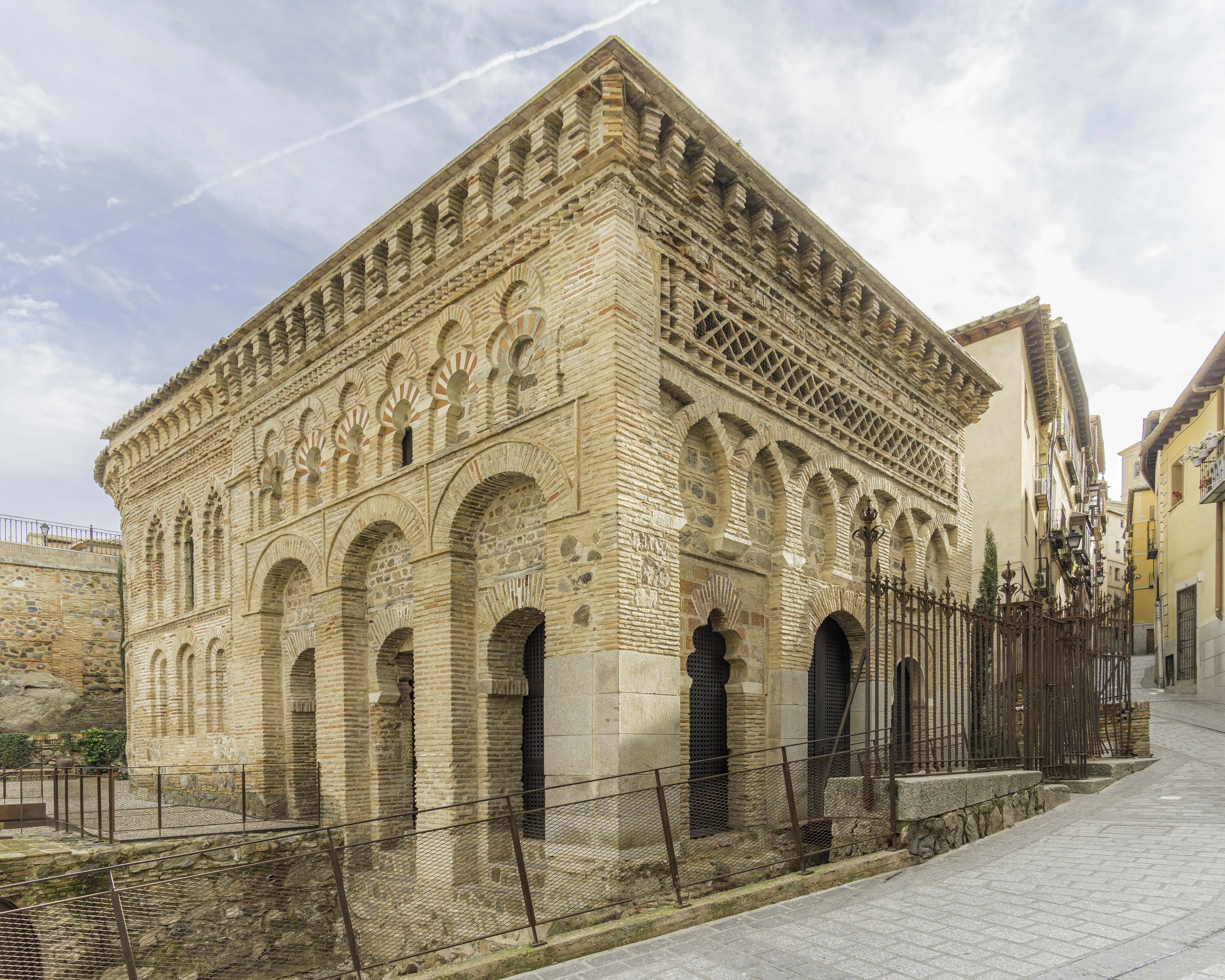
The Umayyads of Cordoba ruled Al-Andalus -- the Islamic territories of the Iberian Peninsula -- from 756 to 1031 CE, a period of nearly three centuries during which they transformed a distant province of the Islamic world into one of the most sophisticated states in medieval Europe. The dynasty was founded by a political refugee, sustained by a series of capable rulers, and brought to its greatest heights by Abd al-Rahman III, who declared himself Caliph in 929 CE and made Cordoba the rival of Baghdad and Constantinople. It ended in a civil war that fragmented the caliphate into dozens of small successor kingdoms and left the Iberian Peninsula permanently changed.
The Umayyads of Cordoba were not the same dynasty as the Umayyad Caliphate of Damascus, though they shared the same lineage. They were its survivors -- the remnant of a ruling family that had been overthrown and massacred by the Abbasid Caliphate in 750 CE, reconstituted in the far west of the Islamic world by a single young man who refused to accept his family's extinction.
Abd al-Rahman I: The Immigrant Prince (756-788 CE)
The founding of the Cordoban Umayyad dynasty is one of the most dramatic stories in medieval Islamic history. When the Abbasids overthrew the Umayyad Caliphate in 750 CE, they systematically hunted down and killed members of the Umayyad family to prevent any restoration. Most were killed. Abd al-Rahman ibn Muawiyah, a young prince in his early twenties, escaped -- reportedly swimming across a river to avoid capture when Abbasid soldiers were closing in -- and fled westward across North Africa.
His mother was a Berber woman, and her tribal connections gave him a network of support in North Africa that kept him alive during years of wandering. He eventually reached the Maghreb, where he made contact with Syrian Arab soldiers who had settled in Al-Andalus and who remained loyal to the Umayyad name. In 755 CE, he crossed the Strait of Gibraltar with a small force. Within a year, he had defeated the existing governor of Al-Andalus, Yusuf al-Fihri, and established himself as emir of Cordoba.
Abd al-Rahman I -- known as al-Dakhil, the Immigrant -- spent his thirty-year reign consolidating what he had won. He suppressed rebellions from Berber tribes, Arab factions, and local strongmen who resented his authority. He defeated a Frankish invasion led by Charlemagne's forces at Zaragoza in 778 CE -- the battle that, in distorted form, became the basis for the French epic Song of Roland. He refused to acknowledge the authority of the Abbasid caliphs in Baghdad, establishing Al-Andalus as an independent emirate that owed nothing to the dynasty that had murdered his family.
His most enduring achievement was architectural. In 785 CE, he purchased the site of the Visigothic church of Saint Vincent in Cordoba and began construction of the Great Mosque -- the building that would be expanded by his successors into one of the most magnificent religious structures in the world. The mosque was both a statement of Umayyad legitimacy and a practical center of Islamic life in the new emirate.
The Emirate: Building a State (788-912 CE)
The century and a half between Abd al-Rahman I's death and Abd al-Rahman III's accession was a period of consolidation, expansion, and periodic crisis. The emirate grew in sophistication and wealth, but it also faced persistent challenges from within and without.
Abd al-Rahman II (r. 822-852 CE) was the most culturally ambitious of the early emirs. He expanded the Great Mosque significantly, established diplomatic relations with the Byzantine Empire, and made Cordoba a center of Islamic learning and culture. He patronized the musician Ziryab (Abu al-Hasan Ali ibn Nafi), who had come from Baghdad and who transformed Andalusi court culture -- introducing new musical forms, new fashions, new foods, and new standards of refinement that shaped the culture of Al-Andalus for generations. Under Abd al-Rahman II, Cordoba began to develop the cosmopolitan character that would define it at its height.
The emirate also faced serious internal challenges during this period. The Mozarab martyrs movement of the 850s -- in which a group of Christians in Cordoba deliberately provoked Muslim authorities by publicly insulting Islam, seeking martyrdom -- created a crisis that revealed the tensions beneath the surface of Andalusi society. The emirs handled it with a combination of firmness and restraint, but the episode demonstrated that the structured coexistence of the emirate was not without its stresses.
By the late ninth century, the emirate was in serious difficulty. A major rebellion led by Umar ibn Hafsun, a convert from Christianity who reverted to his ancestral faith and established a stronghold in the mountains of Malaga, controlled large parts of southern Al-Andalus for decades. The emirs struggled to suppress it, and the authority of Cordoba over the provinces weakened significantly. It was into this situation that Abd al-Rahman III was born.
Abd al-Rahman III and the Caliphate (912-961 CE)
Abd al-Rahman III came to power in 912 CE at the age of twenty-one and spent the first two decades of his reign systematically reasserting Umayyad authority over Al-Andalus. He suppressed the Ibn Hafsun rebellion, brought the rebellious provincial cities back under central control, and rebuilt the administrative and military machinery of the emirate. By the late 920s, he had achieved a degree of internal unity that the emirate had not known for generations.
In 929 CE, he took a step that transformed the political landscape of the Islamic world: he declared himself Caliph, adopting the title Amir al-Mu'minin (Commander of the Faithful) and the honorific al-Nasir li-Din Allah (Defender of God's Religion). The declaration was a direct challenge to the Abbasid Caliphate in Baghdad and to the Fatimid Caliphate that had recently established itself in North Africa. It asserted that the Umayyad line -- the family that had ruled the Islamic world before the Abbasid revolution -- retained its claim to the highest religious and political authority in Islam.
The caliphal declaration was not merely symbolic. It had practical consequences for diplomacy, for the legitimacy of the Cordoban state, and for the relationship between the caliph and the religious scholars of Al-Andalus. Abd al-Rahman III backed it with military power: he conducted campaigns against the Christian kingdoms of the north, established Umayyad influence across the Strait of Gibraltar in Morocco, and built a navy that gave Cordoba a presence in the western Mediterranean. He received embassies from the Byzantine Emperor, the Holy Roman Emperor Otto I, and rulers across Europe and the Islamic world -- recognition that Cordoba was a major power whose caliph deserved diplomatic respect.
His greatest architectural project was Madinat al-Zahra, the palatine city he built on the slopes of the Sierra Morena about five kilometers west of Cordoba. Construction began in 936 CE and continued for decades, employing thousands of workers and consuming enormous resources. Madinat al-Zahra was a statement of imperial ambition on a scale that had no precedent in the western Islamic world: a complex of reception halls, administrative buildings, gardens, and mosques designed to impress foreign visitors with the wealth and sophistication of the Umayyad state. The reception halls were decorated with marble, gold, and carved ivory; the gardens had fountains and pools; the workshops produced luxury goods for the court. Foreign ambassadors who visited were received in these halls, and the impression they carried back was of a civilization of extraordinary power and refinement.
Al-Hakam II: The Scholar Caliph (961-976 CE)
Abd al-Rahman III's son al-Hakam II was a scholar-caliph of genuine intellectual depth -- a man who was as interested in books as in politics, and who used the resources of the caliphate to make Cordoba the intellectual capital of the western Mediterranean. He expanded the caliphal library into one of the largest in the world, reportedly containing 400,000 volumes -- a figure that may be somewhat exaggerated but that reflects a real and extraordinary accumulation of manuscripts. He sent agents throughout the Islamic world and beyond to acquire texts, and he reportedly received advance copies of new works from authors in Baghdad before they were available anywhere else.
Al-Hakam II patronized scholars, translators, and scientists from across the Islamic world, and Cordoba under his reign attracted talent that made it genuinely comparable to Baghdad at its height. The translation movement that had transformed Islamic science in the ninth century found a western counterpart in al-Hakam's Cordoba, where Greek, Latin, and Arabic texts were translated, copied, and studied. The scholars who worked under his patronage included physicians, astronomers, mathematicians, and philosophers who made original contributions to their fields.
His reign was also a period of architectural refinement. He extended the Great Mosque southward and added the maqsura -- the screened enclosure near the mihrab reserved for the caliph -- and the mihrab itself, decorated with Byzantine-style mosaics commissioned from craftsmen sent by the Byzantine Emperor. The mihrab of the Great Mosque of Cordoba, with its horseshoe arch framed by elaborate gold and colored mosaics, is one of the most beautiful examples of Islamic decorative art in existence.
Al-Mansur and the Regency (976-1002 CE)
Al-Hakam II died in 976 CE, leaving as his successor a ten-year-old son, Hisham II. The real power passed to the chamberlain Muhammad ibn Abi Amir, who would become known as al-Mansur (the Victorious) -- one of the most effective and most controversial figures in the history of Al-Andalus.
Al-Mansur was not a member of the Umayyad family. He was an administrator of Yemeni Arab origin who had risen through the bureaucracy to become the dominant figure at court. He effectively ruled Al-Andalus for more than two decades while Hisham II remained a figurehead caliph, kept confined within the Umayyad palace at Cordoba and excluded from any real exercise of power. Al-Mansur's rule was characterized by military aggression against the Christian kingdoms of the north -- he conducted more than fifty campaigns, sacking Barcelona, Leon, and Santiago de Compostela (where he reportedly used the cathedral bells as lamps in the Great Mosque of Cordoba) -- and by careful management of the religious scholars and the general population.
His military successes were real and impressive, but they came at a cost. To fund his campaigns and maintain his power, al-Mansur relied increasingly on Berber mercenaries from North Africa, who were paid with grants of land and privileges that created a new military class with interests distinct from those of the established Andalusi population. The tensions this created would contribute to the civil war that followed his death.
Al-Mansur died in 1002 CE, and his son Abd al-Malik continued his policies for a few years before dying in 1008 CE. The attempt by another son, Abd al-Rahman Sanchuelo, to have himself designated as heir to the caliphate -- bypassing the Umayyad family entirely -- triggered the crisis that destroyed the dynasty.
The Fitna and the Collapse (1009-1031 CE)
The civil war that ended the Cordoban Umayyad dynasty -- known as the fitna (strife) -- was one of the most destructive episodes in the history of Al-Andalus. It began in 1009 CE when a group of Umayyad princes and Andalusi nobles overthrew Abd al-Rahman Sanchuelo and restored a member of the Umayyad family to the caliphate. But the restoration did not end the conflict; it began a decade of competing claimants, shifting alliances, and military violence that tore the caliphate apart.
The Berber mercenaries who had been brought to Al-Andalus by al-Mansur played a particularly destructive role. When their pay was disrupted by the political chaos, they turned to looting. Madinat al-Zahra -- the magnificent palatine city that Abd al-Rahman III had built as a symbol of Umayyad power -- was sacked and burned in 1010 CE. The destruction was catastrophic: the buildings were stripped of their marble and precious materials, the gardens were abandoned, and the complex that had taken decades to build was reduced to ruins within a few years.
By 1031 CE, the caliphate had been formally abolished. A council of notables in Cordoba declared the end of the Umayyad caliphate and divided Al-Andalus into the taifa kingdoms -- small, competing principalities each ruled by a local strongman. The political unity that the Umayyads had maintained for nearly three centuries was gone, and it would never be restored.
Legacy
The Umayyads of Cordoba left a legacy that operated at several levels. Architecturally, the Great Mosque of Cordoba -- expanded by successive emirs and caliphs over two centuries -- remains one of the most extraordinary buildings in the world, a monument to the dynasty's ambition and aesthetic achievement. The ruins of Madinat al-Zahra, excavated by archaeologists from the twentieth century onward, give a sense of the scale and sophistication of the caliphal court at its height.
Institutionally, the Cordoban Umayyads demonstrated that an Islamic state could flourish far from the traditional centers of Islamic civilization, developing its own distinctive culture while maintaining connections to the broader Islamic world. The administrative, legal, and cultural institutions they built provided the framework within which Andalusi civilization continued to develop even after the caliphate's collapse -- the taifa kingdoms that succeeded them were, in many ways, inheritors of the Umayyad tradition.
Intellectually, the patronage of al-Hakam II and his predecessors made Cordoba a center of learning whose influence extended far beyond Al-Andalus. The translation movement centered in Cordoba and later in Toledo transmitted Islamic scientific and philosophical knowledge to medieval Europe, contributing to the intellectual transformation that historians call the twelfth-century Renaissance. The scholars who worked under Umayyad patronage -- physicians, astronomers, mathematicians, philosophers -- made contributions that shaped the subsequent history of knowledge in both the Islamic world and Europe.
The dynasty's story -- from the desperate escape of a young prince across North Africa to the declaration of a caliphate that rivaled Baghdad, and then to the civil war that destroyed everything -- is one of the most compelling narratives in medieval history. It demonstrates both the possibilities and the fragility of political achievement, and it left a physical and cultural legacy that has endured for a thousand years.
References and Further Reading
Primary Islamic Sources
- Al-Maqqari, Ahmad ibn Muhammad. Nafh al-Tib min Ghusn al-Andalus al-Ratib. Cairo: Dar al-Kutub al-Misriyyah, 1949. [Original c. 1629 CE]
- Ibn Hayyan, Abu Marwan. Al-Muqtabis fi Tarikh Rijal al-Andalus (sections on the Umayyad emirs and caliphs). Beirut: Dar al-Thaqafah, 1973. [Original c. 1076 CE]
- Ibn Idhari al-Marrakushi. Al-Bayan al-Mughrib fi Akhbar al-Andalus wa al-Maghrib. Leiden: Brill, 1948–1951. [Original c. 1312 CE]
- Ibn al-Qutiyya, Muhammad. Tarikh Iftitah al-Andalus (History of the Conquest of al-Andalus). Beirut: Dar al-Kitab al-Lubnani, 1982. [Original c. 977 CE]
- Al-Khushani, Muhammad ibn Harith. Qudat Qurtuba (Judges of Cordoba). Cairo: Dar al-Kitab al-Misri, 1914. [Original c. 981 CE]
Classical Islamic Sources
- Ibn Khaldun, Abd al-Rahman. Kitab al-Ibar, sections on the Umayyads of al-Andalus. Bulaq: Dar al-Taba'ah al-Amiriyyah, 1867. [Original c. 1377 CE]
- Al-Himyari, Muhammad ibn Abd al-Munim. Kitab al-Rawd al-Mi'tar fi Khabar al-Aqtar, entries on Cordoba. Beirut: Librairie du Liban, 1975. [Original c. 1461 CE]
- Ibn al-Athir, Ali ibn Muhammad. Al-Kamil fi al-Tarikh, sections on al-Andalus. Beirut: Dar Sadir, 1979. [Original c. 1231 CE]
Academic and Scholarly Sources
- Fierro, Maribel. Abd al-Rahman III: The First Cordoban Caliph. Oxford: Oneworld Publications, 2005.
- Catlos, Brian A. Kingdoms of Faith: A New History of Islamic Spain. New York: Basic Books, 2018.
- Kennedy, Hugh. Muslim Spain and Portugal: A Political History of al-Andalus. London: Longman, 1996.
- Fletcher, Richard. Moorish Spain. London: Weidenfeld and Nicolson, 1992.
- Wasserstein, David J. The Rise and Fall of the Party-Kings: Politics and Society in Islamic Spain 1002–1086. Princeton: Princeton University Press, 1985.
- Lévi-Provençal, Évariste. Histoire de l'Espagne musulmane. 3 vols. Paris: Maisonneuve & Larose, 1950–1953.
- Safran, Janina M. The Second Umayyad Caliphate: The Articulation of Caliphal Legitimacy in al-Andalus. Cambridge: Harvard University Press, 2000.
Further Reading
- Menocal, María Rosa. The Ornament of the World: How Muslims, Jews, and Christians Created a Culture of Tolerance in Medieval Spain. Boston: Little, Brown, 2002.
- Jayyusi, Salma Khadra, ed. The Legacy of Muslim Spain. 2 vols. Leiden: Brill, 1992.
- Lowney, Chris. A Vanished World: Muslims, Christians, and Jews in Medieval Spain. Oxford: Oxford University Press, 2005.
- Glick, Thomas F. Islamic and Christian Spain in the Early Middle Ages. Princeton: Princeton University Press, 1979.
Mentioned In
8 articles reference this topic