Conquest of Mecca
The conquest of Mecca in 630 CE (8 AH) was the decisive event of the Prophetic era. After eight years of exile, Prophet Muhammad led ten thousand Muslims into the city, declared a general amnesty, purified the Kaaba of its idols, and transformed the Arabian political landscape.
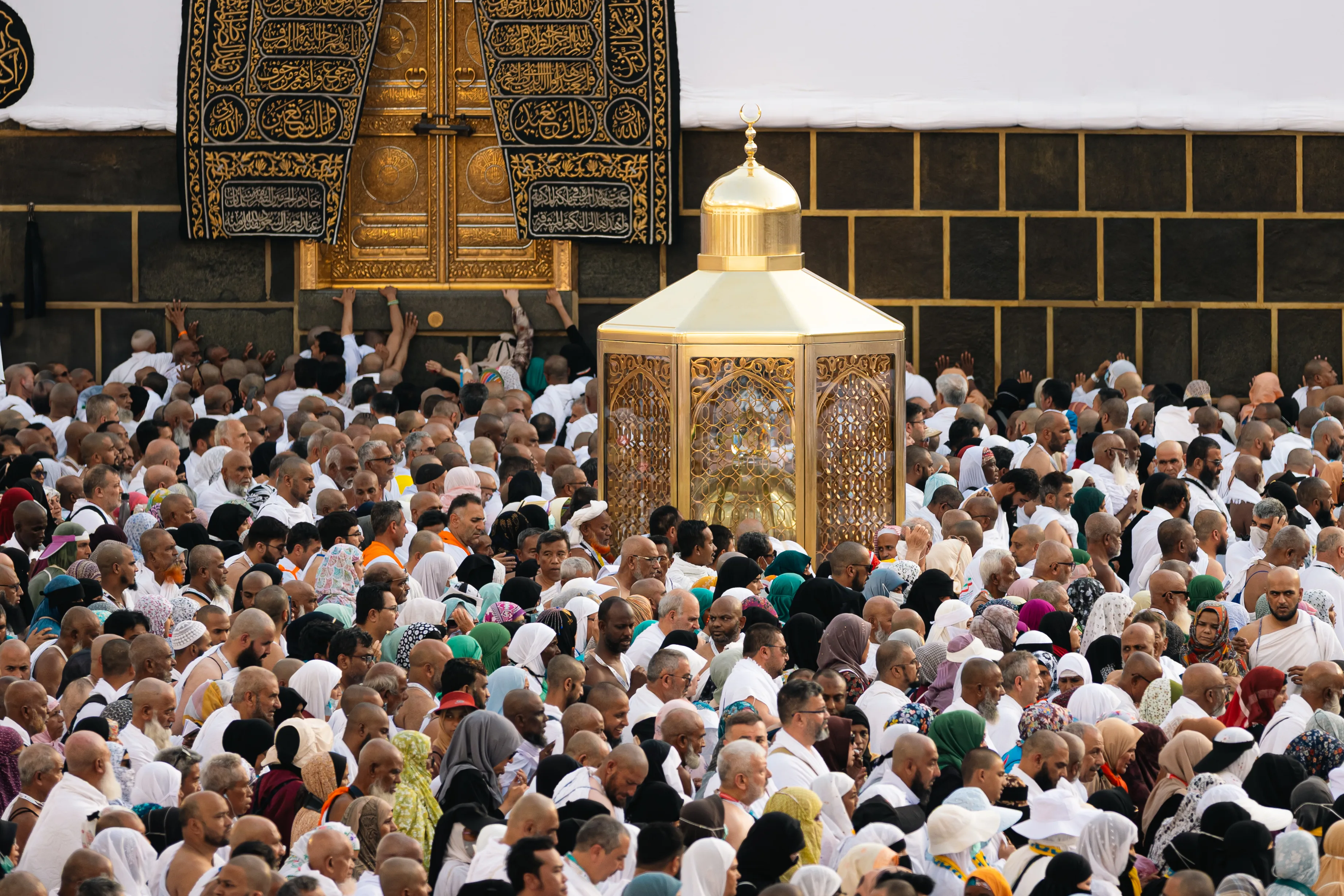
The conquest of Mecca (Fath Makkah, Arabic: فتح مكة) in January 630 CE (20 Ramadan, 8 AH) was the decisive military and political event of the Prophetic era — the moment when Prophet Muhammad ﷺ returned to his native city at the head of ten thousand believers, entering it without significant bloodshed, declaring a general amnesty for its inhabitants, and cleansing the Kaaba of the idols that had accumulated within it over generations. In a single day, the city that had persecuted the Prophet and driven out his followers was transformed from the center of Arabian paganism into the spiritual heart of Islam.
The event is known in Islamic tradition as al-Fath — the Opening — a term drawn from the Quran's description of the Treaty of Hudaybiyyah two years earlier as a "clear opening" (fath mubin, Quran 48:1). For Muslims, the conquest fulfilled a divine promise and completed the mission that had begun with the first revelation in Mecca more than two decades before. For historians, it represents one of the most consequential political events of the seventh century, reshaping the religious, political, and social landscape of Arabia and laying the foundation for the rapid expansion of Islam that would follow under the Rashidun Caliphate.
The near-bloodless nature of the conquest — achieved through overwhelming force combined with extraordinary clemency — established a model of magnanimity in victory that the Islamic tradition regards as one of the Prophet's greatest achievements. A city that had tortured, boycotted, and expelled the believers was taken without vengeance, and its people were offered forgiveness rather than punishment.
Background: The Road from Hudaybiyyah to Mecca
The Treaty of Hudaybiyyah (628 CE)
The conquest of Mecca cannot be understood apart from the Treaty of Hudaybiyyah, signed two years earlier in 628 CE (6 AH), which created the conditions that made the conquest both possible and necessary. In that year, the Prophet had marched toward Mecca with approximately 1,400 followers intending to perform the lesser pilgrimage (umrah). The Quraysh, alarmed by this show of Muslim strength, blocked the route and refused entry.
After tense negotiations at Hudaybiyyah, on the outskirts of the sacred territory, a treaty was concluded. Its terms appeared to favor the Quraysh: the Muslims would return to Medina without performing the pilgrimage that year; they would come back the following year for only three days; any Meccan who fled to Medina without his guardian's permission would be returned; but any Muslim who fled to Mecca would not be returned. Many companions, including Umar ibn al-Khattab, were distressed by what seemed like a humiliating concession.
Yet the treaty proved to be a strategic masterstroke. The ten-year truce it established allowed Islam to spread rapidly through peaceful propagation. Freed from the constant threat of Qurayshi military action, the Prophet was able to send emissaries to tribes across Arabia, many of whom now embraced Islam or entered into alliance with Medina. The period between Hudaybiyyah and the conquest saw a dramatic expansion of the Muslim community's size and influence — the "clear opening" that the Quran had promised.
The Breach of the Treaty
The critical turn came when the Quraysh violated the treaty's terms. The treaty had stipulated that the tribes of Arabia were free to ally themselves with either party — Mecca or Medina. The Banu Khuza'a, a tribe with long-standing ties to the Prophet, allied themselves with Medina. The Banu Bakr, their traditional rivals, allied with the Quraysh. In late 629 CE (8 AH), the Banu Bakr, with the active support of certain Quraysh leaders who provided weapons and fighters, attacked the Banu Khuza'a at their watering-place, killing approximately twenty men.
This attack was a clear violation of the Treaty of Hudaybiyyah. The Banu Khuza'a were allies of Medina, and the Quraysh had participated in an attack on them — effectively breaking the truce. A delegation of the Banu Khuza'a traveled to Medina and reported the attack to the Prophet, demanding that he fulfill his obligation to protect his allies.
Abu Sufyan's Failed Diplomacy
The Quraysh leaders quickly realized the gravity of their mistake. Abu Sufyan ibn Harb, the chief of the Banu Umayya and the most prominent leader of the Quraysh, traveled to Medina in a desperate attempt to salvage the treaty or negotiate new terms. His mission was a failure: the Prophet refused to see him, and the senior companions — Abu Bakr, Umar, Ali ibn Abi Talib — each refused to intercede on his behalf. Even his own daughter Umm Habiba, the Prophet's wife, refused to let him sit on the Prophet's bed, declaring that he was "an impure polytheist."
Abu Sufyan returned to Mecca empty-handed, unable to secure either a renewal of the treaty or any assurance that the Muslims would not retaliate. The Quraysh now faced the prospect of military confrontation with a Muslim community that had grown exponentially since Hudaybiyyah — a community that now included many of the tribes that had previously been allied with or neutral toward Mecca.
The March on Mecca
Preparation and Secrecy
The Prophet began preparations for the march on Mecca with the utmost secrecy. He wanted to achieve surprise — to arrive at the gates of Mecca with such overwhelming force that resistance would be pointless and bloodshed unnecessary. He summoned the Muslim forces from Medina and from the allied tribes, and he took measures to prevent news of the expedition from reaching the Quraysh.
The most famous episode of the secrecy campaign involved Hatib ibn Abi Balta'a, a companion who had fought at Badr, who sent a letter to the Quraysh warning them of the Muslim advance. The Prophet, informed of this through revelation according to the Islamic sources, dispatched Ali ibn Abi Talib and al-Zubayr ibn al-Awwam to intercept the messenger — a woman who had concealed the letter in her hair. The letter was recovered, and Hatib was brought before the Prophet. He explained that he had acted not out of disbelief but from a desire to protect his family in Mecca, who lacked tribal protection. The Prophet forgave him, and Umar's request to execute him was refused on the grounds that Hatib had fought at Badr.
The Army of Ten Thousand
The Muslim army that marched toward Mecca in Ramadan of 8 AH numbered approximately ten thousand — the largest force the Prophet had ever commanded, and a dramatic demonstration of how the Muslim community had grown since the early days of persecution. The army included the Muhajirun of Medina, the Ansar, and contingents from numerous tribes that had embraced Islam or allied themselves with the Prophet in the two years since Hudaybiyyah.
The size of the army was itself a strategic weapon: the Prophet intended that the sheer scale of the force would make resistance futile and thereby prevent bloodshed. His goal was not the destruction of Mecca or the punishment of the Quraysh but the peaceful entry into the city and the establishment of Islam as its religion. The overwhelming numerical superiority of the Muslim force was the means to this end — not an instrument of vengeance but a guarantor of mercy.
The March Through the Desert
The army departed Medina on the tenth of Ramadan, 8 AH, and marched south toward Mecca. The soldiers fasted during the march (it being Ramadan), and the Prophet broke his fast during the journey, granting permission for the army to do the same given the hardship of marching in a state of fasting. The route took them through the desert terrain between Medina and Mecca — a journey of approximately 450 kilometers that the army covered in stages over about ten days.
As the army approached Mecca, it was joined by additional tribal contingents who had pledged their support. The force grew as it moved, and by the time it reached the outskirts of Mecca, it was the most formidable military force Arabia had ever seen assembled. The Prophet ordered the army to camp at Marr al-Zahran, a location close to Mecca, where the fires of ten thousand camps were lit — a deliberate display of strength visible from the city.
Al-Abbas and Abu Sufyan
At Marr al-Zahran, a critical encounter took place that would determine the character of the conquest. Al-Abbas ibn Abd al-Muttalib, the Prophet's uncle (who had recently professed Islam openly and left Mecca), was concerned about the fate of the Quraysh if they resisted. He rode out from the Muslim camp on the Prophet's mule, hoping to find a Qurayshi messenger whom he could persuade to arrange a surrender.
Instead, he encountered Abu Sufyan himself, who had come out to reconnoiter the Muslim army. Al-Abbas brought Abu Sufyan to the Prophet's camp, where the Quraysh chief was confronted with the reality of the situation: ten thousand warriors, united and determined, against a city that could muster at most a fraction of that number. Abu Sufyan's encounter with the Muslim camp that night — seeing the fires stretching across the plain, hearing the call to prayer, witnessing the discipline and devotion of the army — convinced him that resistance was impossible.
The following morning, Abu Sufyan was brought before the Prophet. The encounter was tense: Abu Sufyan had led the Quraysh opposition to Islam for two decades, had organized the armies at Uhud and the Battle of the Trench, and bore responsibility for years of persecution. Yet the Prophet received him with dignity and offered him a choice: embrace Islam, or face the consequences of continued opposition. Abu Sufyan declared his acceptance of Islam — whether from genuine conviction, pragmatic calculation, or some combination of both has been debated by historians ever since.
The Prophet also granted a crucial concession: "Whoever enters the house of Abu Sufyan shall be safe. Whoever closes his door upon himself shall be safe. Whoever enters the Masjid al-Haram shall be safe." This declaration, issued even before the army had entered the city, signaled that the conquest would be conducted with clemency rather than vengeance.
The Entry into Mecca
The Four Columns
The Prophet organized the army into four columns for the entry into Mecca, each approaching from a different direction:
- Khalid ibn al-Walid commanded the right flank, entering from the lower part of Mecca through the southern approach
- Zubayr ibn al-Awwam led a column through the upper part of the city from the north
- Abu Ubaydah ibn al-Jarrah commanded a column through the central valley
- Sa'd ibn Abi Waqqas (or, in some accounts, the Prophet himself) led the main body
The Prophet gave strict instructions: no fighting unless fired upon first. The goal was peaceful entry, not conquest by the sword. The soldiers were told not to harm anyone who did not resist, not to pursue those who fled, and not to enter homes by force.
Minimal Resistance
The entry into Mecca was accomplished with almost no bloodshed. The vast majority of the city's inhabitants, aware of the overwhelming force approaching and having heard the declaration of amnesty, offered no resistance. They stayed in their homes or gathered in the Masjid al-Haram, waiting to learn their fate.
The only significant fighting occurred at the southern approach, where Khalid ibn al-Walid's column encountered a small group of Quraysh fighters led by Ikrimah ibn Abi Jahl and Safwan ibn Umayya. A brief skirmish ensued in which approximately twelve or thirteen Meccans were killed before the resistance collapsed. Two Muslims were also killed in this engagement. The total casualties for the entire conquest — the fall of the largest city in Arabia — numbered fewer than thirty.
The Prophet's Entry
The Prophet entered Mecca riding his camel, his head bowed in humility and gratitude rather than raised in triumph. According to the accounts, he was reciting Surah al-Fath (the Chapter of Victory) as he entered, and his head was bowed so low that it nearly touched the camel's saddle. This posture of humility at the moment of his greatest worldly triumph became one of the defining images of the conquest — a conqueror who attributed his victory to God rather than to himself, who entered his native city in devotion rather than arrogance.
The Prophet made his way to the Kaaba, where he would perform the most symbolically important act of the conquest: the purification of the ancient shrine from the idol worship that had corrupted it.
The Purification of the Kaaba
The Destruction of the Idols
Upon reaching the Kaaba, the Prophet found it surrounded by 360 idols — statues and images representing the various deities worshipped by the Arabs. Riding his camel, he pointed at each idol with his staff, reciting the Quranic verse: "Truth has come, and falsehood has vanished. Indeed, falsehood is bound to vanish" (Quran 17:81). As he pointed, the idols fell forward on their faces, one after another.
The companions then entered the Kaaba to remove the idols and images from within. Paintings on the inner walls were washed away, and the shrine was restored to the austere monotheism of Prophet Abraham and Prophet Ishmael, who according to Islamic tradition had originally built the Kaaba as a house of worship for the One God. The purification was complete: the most sacred site in Arabia was now exclusively dedicated to the worship of Allah, free of the polytheistic accretions that had accumulated over centuries.
The First Adhan in Mecca
After the purification of the Kaaba, Bilal ibn Rabah — the Ethiopian former slave who had been tortured by his Meccan master for embracing Islam and who had become the Prophet's muezzin (caller to prayer) — climbed to the roof of the Kaaba and called the adhan, the Islamic call to prayer. This moment was profoundly symbolic: the man who had been tortured for his faith in the very city he now stood above, calling to the worship of God from the most sacred building in Arabia, while the former masters of the city listened below.
The Quraysh aristocrats, who had despised Bilal for his origins and had attempted to beat Islam out of him years earlier, now heard his voice proclaiming "God is the Greatest" from their holiest shrine. The moment encapsulated the revolutionary nature of Islam's social message: that human worth was determined by faith and character, not by lineage, wealth, or ethnicity.
The General Amnesty
"Go, for You Are Free"
Having purified the Kaaba, the Prophet addressed the people of Mecca who had gathered before him — the same people who had persecuted, boycotted, tortured, and expelled the Muslims over more than a decade. Many expected retribution. The customs of Arabian warfare permitted a conqueror to kill, enslave, or exact tribute from a defeated enemy, and the Quraysh had given the Muslims every reason for vengeance.
The Prophet asked: "O people of Quraysh, what do you think I am going to do with you?" They replied: "Good. You are a noble brother, the son of a noble brother." The Prophet then declared: "Go, for you are free" (Idh'habu fa antum al-tulaqa).
This declaration of general amnesty — forgiving an entire city that had persecuted him and his followers for over a decade — became one of the most celebrated acts of the Prophet's life and one of the defining moments of Islamic history. It established a principle of magnanimity in victory that would influence Islamic military ethics and political practice across the centuries. The Prophet did not merely refrain from vengeance — he actively offered forgiveness, restoring the Quraysh to their freedom and dignity without conditions.
Specific Pardons and Exceptions
While the general amnesty covered the vast majority of Mecca's population, a small number of individuals were initially excluded — those who had committed specific crimes that went beyond ordinary opposition to Islam. Among those initially condemned were individuals who had murdered Muslims, apostates who had killed after converting, and those who had engaged in particularly egregious acts of treachery.
Yet even among this small group, most were eventually pardoned when they sought clemency. Ikrimah ibn Abi Jahl, whose father Abu Jahl had been the most virulent enemy of Islam, fled Mecca but was later pardoned at the intercession of his wife and became a Muslim. Safwan ibn Umayya was given a period of grace and eventually embraced Islam. Hind bint Utba, the wife of Abu Sufyan who had mutilated the body of Hamza ibn Abdul-Muttalib at Uhud, came to the Prophet and professed Islam, receiving his forgiveness.
The pattern of the amnesty was consistent: even those who had committed the gravest offenses against the Muslims were forgiven when they accepted Islam or sought mercy. The conquest was conducted as an act of reconciliation rather than retribution — a demonstration that the Prophet's goal had never been personal power or tribal vengeance but the establishment of the worship of God.
Consequences and Significance
The Immediate Aftermath in Mecca
In the days following the conquest, the Prophet remained in Mecca for approximately two weeks, during which he consolidated the transformation of the city and addressed the practical matters that the sudden change of regime necessitated. He appointed Attab ibn Asid, a young Quraysh convert of only twenty years, as the governor of Mecca — a decision that demonstrated both trust in the new converts and a willingness to entrust the city to one of its own people rather than imposing a Medinan administrator.
During this period, the people of Mecca came to the Prophet individually and in groups to pledge their allegiance and accept Islam. The women of Mecca pledged separately, and the Prophet received their oath on terms specified in the Quran (Quran 60:12): that they would not associate anything with God, would not steal, would not commit adultery, would not kill their children, would not slander, and would not disobey the Prophet in what was right. This structured allegiance process transformed the conquest from a military event into a communal act of religious commitment.
The Prophet also addressed the practical matter of the Quraysh's economic interests. The custodianship of the Kaaba was confirmed in the hands of Uthman ibn Talha, whose family had held the key since pre-Islamic times — the Prophet did not redistribute this traditional privilege but legitimized it within the new Islamic order. The provision of water to pilgrims (siqaya), traditionally held by the family of al-Abbas, was similarly confirmed. These decisions signaled that the conquest was not a social revolution that would strip the Quraysh of their traditional roles but a religious transformation that would redirect those roles toward the service of Islam.
The Battle of Hunayn
The conquest of Mecca was followed almost immediately by a new military challenge. The Hawazin and Thaqif — powerful tribal confederations south of Mecca centered on the city of Ta'if — assembled a large force to confront the Muslims, believing that the conquest of Mecca was merely the prelude to an attack on their own territories. Their army, numbering perhaps 20,000 under the command of Malik ibn Awf al-Nasri, advanced toward Mecca through the valley of Hunayn.
The Prophet marched out to meet them with 12,000 men — his 10,000 from the conquest plus 2,000 newly converted Meccans. Despite their numerical advantage, the Muslim army was initially thrown into confusion by a Hawazin ambush in the narrow valley of Hunayn. The newly converted Meccans and many others fled in panic. Only the Prophet, surrounded by a small group of loyal companions — including Abu Bakr, Umar, Ali, and al-Abbas — stood firm. The Prophet called out to the fleeing soldiers, and gradually the army rallied. The Hawazin were defeated and their camp captured, yielding enormous spoils.
The Battle of Hunayn is addressed directly in the Qur'an (Quran 9:25-26): "God has already given you victory in many regions and on the day of Hunayn, when your great number pleased you, but it did not avail you at all, and the earth was confining for you with its vastness; then you turned back, fleeing. Then God sent down His tranquility upon His Messenger and upon the believers..." The passage served as a corrective to any sense that military victory was automatic or that numbers alone guaranteed success — a lesson directed particularly at those whose confidence in the army's size had led to complacency.
The Siege of Ta'if
Following the victory at Hunayn, the Muslim army pursued the remnants of the Hawazin force to Ta'if, the fortified city of the Thaqif tribe. The Prophet laid siege to Ta'if but was unable to take it — the city's strong walls and determined defenders held out. After approximately two weeks, the Prophet withdrew without capturing the city. Ta'if would submit to Islam later, sending a delegation in 9 AH, but the failed siege demonstrated the limits of military power and the reality that not every opponent would yield as readily as Mecca.
The contrast between the bloodless conquest of Mecca and the stalemated siege of Ta'if illustrated an important distinction: Mecca had yielded because its people were psychologically, politically, and strategically overwhelmed — the conditions for surrender had been carefully prepared through years of diplomacy, alliance-building, and the demonstration of growing Muslim power. Ta'if, which had not undergone this preparation, resisted. The lesson was that the conquest of Mecca owed its near-bloodless character not to luck or to Meccan cowardice but to the Prophet's strategic preparation of the conditions that made armed resistance futile.
The Distribution of Spoils at Hunayn
The aftermath of the Battle of Hunayn generated one of the few moments of tension between the Prophet and the Ansar (the Medinan helpers). The enormous spoils from the Hawazin defeat were distributed by the Prophet in a way that heavily favored the newly converted Quraysh leaders and other recent converts — men like Abu Sufyan and his sons, who received large grants of camels and wealth. The Prophet's intention was to win the hearts of these new and potentially fragile Muslims (al-mu'allafati qulubuhum — "those whose hearts are to be reconciled"), but the Ansar, who had supported Islam from the beginning and had received comparatively little, were hurt.
When the Prophet learned of the Ansar's feelings, he gathered them and addressed them with words that have become famous in the Islamic tradition: "Are you not satisfied that other people take away sheep and camels, while you take back with you the Messenger of God to your homes?" The Ansar wept and declared their satisfaction, and the moment passed. But the episode illustrated the complex social dynamics that the conquest had set in motion — the integration of former enemies into the community created inevitable tensions with those who had sacrificed from the beginning.
The Collapse of Arabian Paganism
The conquest of Mecca marked the definitive end of organized paganism in Arabia. With the Kaaba — the spiritual center of Arabian religion — now purified and dedicated exclusively to Islamic worship, and with the most powerful tribe in Arabia now professing Islam, the remaining pagan tribes lost both their religious center and their most powerful patron. In the months following the conquest, delegations from tribes across Arabia came to Medina to pledge their allegiance to the Prophet and their acceptance of Islam — the "Year of Delegations" ('Am al-Wufud) of 9-10 AH.
The Quran describes this process in Surah al-Nasr (Quran 110:1-2): "When the victory of God has come and the conquest, and you see the people entering into the religion of God in multitudes..." This verse, revealed after the conquest, anticipated the mass conversion that would follow — not by force (for the general amnesty had demonstrated that conversion was not compulsory) but by the removal of the social and political barriers that had prevented people from accepting Islam when the Quraysh were its enemies.
The speed of Arabia's conversion after the conquest of Mecca demonstrated that much of the resistance to Islam had been political rather than theological. Once the Quraysh — the gatekeepers of Arabian religion and the leaders of opposition to Islam — had themselves submitted, the other tribes had no reason to continue resisting a message that many of them had already found compelling but had been afraid to accept openly.
The Transformation of Quraysh
The conquest transformed the Quraysh from Islam's greatest opponents into members of the Muslim community. Many of the former leaders of the opposition — including Abu Sufyan, his sons Muawiyah and Yazid, and other prominent figures — embraced Islam and would later play significant roles in the Islamic state. Muawiyah ibn Abi Sufyan would become the founder of the Umayyad Caliphate; his descendants would rule the Islamic empire for nearly a century. The administrative and commercial skills of the Quraysh, honed over generations of running Mecca's trading empire, were now available to the Muslim state.
This integration of former enemies into the community was not without controversy. Some Muslims, particularly among the Ansar, questioned whether the late converts from Quraysh should receive the same status and rewards as those who had believed from the beginning and suffered for their faith. The Prophet addressed this concern directly, affirming both the merit of early faith and the legitimacy of later conversion, while ensuring that the Ansar's fears of being marginalized were allayed.
The Quran itself distinguished between those who converted before the conquest and those who converted after: "Not equal among you are those who spent before the conquest and fought [and those who did so after it]. Those are greater in degree than they who spent afterwards and fought" (Quran 57:10). This verse acknowledged that early faith and sacrifice earned a higher spiritual rank while still affirming the validity of later conversion.
The Model of Merciful Conquest
Perhaps the most enduring significance of the conquest of Mecca lies in the model it established for the treatment of a defeated population. The Prophet's declaration of general amnesty — offered to a people who had every reason to expect retribution — became a foundational principle of Islamic military ethics. Subsequent Muslim conquests, while not always matching this ideal in practice, were measured against it as a standard. The mercy shown at Mecca became the benchmark against which all later treatments of conquered peoples were judged.
The conquest demonstrated that Islam's goal was not the destruction or subjugation of its opponents but their transformation — their liberation from false beliefs and their incorporation into a community of faith. The Quraysh were not punished for their decades of opposition; they were forgiven and welcomed. This approach, radical in its context, reflected the Quranic principle that the purpose of the Prophet's mission was mercy: "And We have not sent you except as a mercy to all the worlds" (Quran 21:107).
The Hajj and the Sacred Precincts
The conquest of Mecca also had profound implications for the institution of the Hajj — the annual pilgrimage that is one of the Five Pillars of Islam. With Mecca now under Muslim control, the pilgrimage could be performed according to Islamic rites rather than the corrupted pagan ceremonies that had accumulated over the centuries. The following year (9 AH), the Prophet sent Abu Bakr to lead the pilgrimage and to announce that after that year, no polytheist would be permitted to perform pilgrimage and no one would circumambulate the Kaaba unclothed (a pre-Islamic practice). In 10 AH, the Prophet himself performed the Farewell Pilgrimage, establishing the rites of Hajj in their definitive Islamic form.
The Strategic Genius of the Conquest
Preparation Over Years
The near-bloodless conquest of Mecca was not an accident but the result of years of strategic preparation. The Treaty of Hudaybiyyah, which had seemed like a defeat at the time, created the conditions for peaceful propagation that multiplied the Muslim community's strength fivefold in two years. The alliances with tribes across Arabia, built through diplomacy, marriage, and the demonstrable justice of the Islamic system, ensured that when the moment came, the Prophet could assemble an overwhelming force. The secrecy of the march, the display of campfires at Marr al-Zahran, and the calculated offer of amnesty through Abu Sufyan were all elements of a carefully orchestrated strategy designed to achieve victory without battle.
The conquest thus represents not only a military achievement but a masterpiece of political and psychological strategy — the kind of victory that Sun Tzu described as the highest form of warfare: winning without fighting. The Prophet achieved this not through deception or trickery but through the patient accumulation of strength, the careful creation of conditions that made resistance irrational, and the offer of mercy that made surrender honorable rather than humiliating.
The Role of the Treaty of Hudaybiyyah
The Quran's description of the Treaty of Hudaybiyyah as a "clear opening" (Quran 48:1) — given that its terms appeared so unfavorable — was vindicated by the conquest. The two-year truce had allowed Islam to spread without military interference, had demonstrated to the tribes of Arabia that the Muslims were reasonable negotiating partners rather than implacable enemies, and had given the Prophet time to build the alliances and the army that made the conquest possible. Without Hudaybiyyah, the conquest would likely have required a prolonged siege and significant bloodshed; with it, the city fell in a day without a real battle.
The lesson drawn by Muslim strategists and scholars across the centuries is that apparent concession can serve long-term strategic goals, and that patience and diplomacy are as much instruments of power as military force. The Prophet's willingness to accept unfavorable terms at Hudaybiyyah — against the wishes of many of his own companions — reflected a confidence in divine promise and a strategic vision that looked beyond the immediate moment to the ultimate objective.
The Conquest in Islamic Memory
A Turning Point in Sacred History
In Islamic consciousness, the conquest of Mecca represents the fulfillment of a divine promise and the vindication of the Prophet's mission. The city that had rejected the message, persecuted its messenger, and expelled his followers was conquered not by the sword but by the weight of truth — or rather, by an army so vast that the sword was unnecessary. The Prophet returned not as a vengeful exile but as a merciful ruler, and the city that had been the seat of idolatry became the spiritual center of monotheism.
The symbolism of the purification of the Kaaba is particularly powerful: the house built by Abraham for the worship of the One God, corrupted over millennia by the accumulation of idol worship, was now restored to its original purpose. The conquest thus completed a circle of sacred history that stretched back to the patriarch Abraham himself, and it established Mecca permanently as the qibla (direction of prayer) and the center of the Islamic world.
The Ethical Legacy
The ethical legacy of the conquest — the principle that victory should be accompanied by mercy rather than vengeance — has resonated throughout Islamic history and beyond. When Umar ibn al-Khattab entered Jerusalem in 637 CE, he emulated the Prophet's clemency, offering protection to the city's Christian inhabitants. When Saladin reconquered Jerusalem from the Crusaders in 1187 CE, he explicitly invoked the Prophet's example at Mecca as his model, offering the defeated Crusaders safe passage rather than the massacre they had inflicted on Jerusalem's Muslims a century earlier.
The conquest of Mecca thus stands not merely as a historical event but as a moral reference point — a demonstration that power and mercy are not contradictory, and that the highest expression of victory is not the humiliation of the defeated but their elevation through forgiveness.
Key Figures of the Conquest
The Prophet's Commanders
The conquest of Mecca brought together the leading military figures of the early Muslim community, each entrusted with a specific role in the carefully planned operation. Khalid ibn al-Walid, who had himself converted from the Quraysh only months earlier (early 8 AH), commanded the right flank — an assignment that demonstrated the Prophet's willingness to trust new converts with significant responsibility and that gave Khalid an opportunity to prove his loyalty to his new faith against his former allies. It was Khalid's column that encountered the only resistance, and his handling of the brief skirmish drew the Prophet's concern (he had wished for no bloodshed) but also demonstrated the effectiveness of his military leadership.
Zubayr ibn al-Awwam led the northern approach, Abu Ubaydah ibn al-Jarrah commanded the central column, and Sa'd ibn Ubada, the chief of the Khazraj (one of the Ansar tribes), initially held a command before being replaced — according to some accounts because he declared that "today is a day of slaughter," a sentiment the Prophet wished to suppress. The diversity of the commanders — Muhajirun and Ansar, early converts and recent ones, Quraysh and non-Quraysh — reflected the inclusive character of the Muslim community and the Prophet's determination that the conquest belong to all Muslims, not to any single faction.
Abu Sufyan's Role
Abu Sufyan ibn Harb's role in the conquest was complex and has been debated by historians. The chief of the Quraysh opposition for nearly two decades, he converted to Islam in the immediate hours before the army's entry — a conversion whose sincerity has been questioned by some scholars and defended by others. The Prophet's decision to honor Abu Sufyan by declaring that his house was a place of safety served multiple purposes: it gave Abu Sufyan a dignified role in the surrender process, it incentivized other Quraysh leaders to submit peacefully, and it associated the former enemy with the new order rather than leaving him as a potential center of resistance.
Abu Sufyan's conversion, whatever its initial motivation, was confirmed by his subsequent service to Islam: he fought at the Battle of Hunayn shortly after, losing an eye in the fighting, and his descendants went on to serve as governors and eventually caliphs. The Prophet's treatment of Abu Sufyan exemplified his broader approach to the Quraysh elite — incorporating them into the community through dignity and generosity rather than marginalizing them through punishment.
The Women of the Conquest
The conquest also had significance for the women of both communities. The Muslim women who had been driven from Mecca years earlier returned to their native city in triumph. Umm Habiba, the Prophet's wife and Abu Sufyan's daughter, witnessed her father's conversion and the vindication of her own choice to follow Islam against her family's opposition. The women of Mecca came to the Prophet to pledge their allegiance under the terms specified in the Quran, marking their formal entry into the Muslim community.
Hind bint Utba, the wife of Abu Sufyan and the woman who had mutilated Hamza's body at Uhud, came to the Prophet in disguise and pledged her allegiance. When the Prophet listed the conditions of the women's oath — including the prohibition on killing children — Hind reportedly responded that she had raised her children only for the Quraysh to kill them at Badr (referring to her son's death in battle). Despite her past actions, she was accepted into Islam and forgiven.
The Conquest and the Quranic Narrative
Surah al-Fath (Chapter 48)
The Quran devotes an entire surah — al-Fath (the Victory/Opening) — to the events surrounding the conquest, though it was revealed after the Treaty of Hudaybiyyah rather than after the conquest itself. This timing is significant: God declared the treaty to be "a clear conquest" at a moment when the Muslims themselves saw it as a setback. The subsequent actual conquest of Mecca vindicated this divine characterization, demonstrating that what appeared to be a political concession was in fact the prelude to total victory.
The surah contains several passages relevant to the conquest and its aftermath. It promises the believers "a near victory" (Quran 48:18) and describes the image of the Prophet and his companions entering the Sacred Mosque "in security, with heads shaved and hair shortened, not fearing" (Quran 48:27) — a vision that was fulfilled in the conquest when the believers entered Mecca freely for the first time since the Hijra. The surah also addresses the hypocrites who had refused to join the Hudaybiyyah expedition, predicting that they would seek to join the next military venture when they saw the spoils available — a reference understood by many commentators as anticipating the response to the conquest.
Surah al-Nasr (Chapter 110)
Surah al-Nasr, one of the shortest surahs in the Quran, is understood by the classical commentators as referring directly to the conquest of Mecca and its aftermath: "When the victory of God has come and the conquest, and you see the people entering into the religion of God in multitudes, then exalt Him with praise of your Lord and ask forgiveness of Him. Indeed, He is ever Accepting of repentance." This surah, revealed toward the end of the Prophet's life, was interpreted by some scholars — including Ibn Abbas — as an indication that the Prophet's mission was nearing its completion and that his death was approaching. The conquest was thus both a culmination and a conclusion — the fulfillment of the mission that signaled its approaching end.
The Verse of Truth and Falsehood
The verse the Prophet recited while destroying the idols — "Truth has come, and falsehood has vanished. Indeed, falsehood is bound to vanish" (Quran 17:81) — became one of the most iconic statements in Islamic history. It encapsulated the meaning of the conquest in a single phrase: the triumph of monotheism over idolatry, of truth over falsehood, of divine guidance over human invention. The verse had been revealed years earlier in a different context, but its recitation at this specific moment — as the Prophet pointed his staff at each idol and it fell — gave it a concrete, historical fulfillment that cemented its association with the conquest in Islamic memory.
Historiographical Perspectives
Classical Islamic Accounts
The conquest of Mecca is one of the most extensively documented events of the Prophetic era, recorded in detail by all the major classical historians. Ibn Ishaq (d. 767 CE), whose biography of the Prophet survives in Ibn Hisham's recension, provides the earliest comprehensive narrative. Al-Waqidi (d. 823 CE), in his Kitab al-Maghazi, offers the most detailed military account, including specific troop movements, the identities of those killed, and the sequence of events within the city. Al-Tabari (d. 923 CE) synthesizes multiple earlier accounts into his comprehensive history.
The classical accounts agree on the essential narrative: the breach of Hudaybiyyah by the Quraysh, the march of ten thousand, the encounter with Abu Sufyan, the four-column entry, the minimal resistance, the general amnesty, and the purification of the Kaaba. Differences between the sources concern secondary details — the exact number of casualties, the precise words of the Prophet's address, and the identities of specific individuals involved in particular episodes.
Modern Historical Analysis
Modern historians have approached the conquest from various analytical perspectives. W. Montgomery Watt, in Muhammad: Prophet and Statesman, analyzed the conquest in terms of political strategy, emphasizing the preparation that made it possible and the statesmanship that made it relatively bloodless. Francis Peters, in Muhammad and the Origins of Islam, situated the conquest within the broader religious history of Mecca and the Kaaba. Fred Donner, in The Early Islamic Conquests, examined it as the foundation for the expansion that followed.
The near-bloodless nature of the conquest has attracted particular scholarly attention. Historians have noted that it stands in contrast to the norms of contemporary warfare — both in Arabia and in the Byzantine and Sasanian empires — where the sack of a conquered city, the enslavement of its population, and the killing of fighting-age males were commonplace. The Prophet's amnesty represented a radical departure from these norms, one that the sources clearly present as intentional and principled rather than accidental.
Orientalist and Revisionist Perspectives
Western orientalist scholarship has sometimes approached the conquest with skepticism, questioning the reliability of the Islamic sources or interpreting the event through frameworks that emphasize political calculation over religious motivation. Some scholars have suggested that the near-bloodless character of the conquest reflects the strength of pre-existing economic and kinship connections between Medina and Mecca rather than purely religious factors. Others have questioned the historicity of specific episodes (such as the Hatib ibn Abi Balta'a incident) while accepting the broad narrative.
The Islamic scholarly response has generally maintained that the sources are reliable in their essential narrative while acknowledging that specific details may be subject to interpretive variation. The conquest's significance as a historical event is not seriously disputed; the debates concern its interpretation, its motivations, and the degree to which the Islamic sources' framing of the event as divinely guided should be accepted by secular historians.
The Transformation of Mecca's Religious Landscape
From Polytheistic Shrine to Monotheistic Sanctuary
The purification of the Kaaba was not merely the removal of physical idols but the beginning of a comprehensive transformation of Mecca's religious identity. For generations, the city's economy, prestige, and social structure had been organized around the pilgrimage trade — the annual gatherings that brought Arabs from across the peninsula to worship at the Kaaba's polytheistic shrine. The destruction of the idols threatened to destroy this economic foundation, for what would draw pilgrims to a city whose gods had been removed?
The answer lay in Islam's own relationship to the Kaaba. Islam did not reject the Kaaba itself but reclaimed it, declaring it the original house of monotheistic worship built by Prophet Abraham and Prophet Ishmael, subsequently corrupted by generations of idol worship. The pilgrimage was not abolished but reformed — its rites purged of pagan elements and redirected toward the worship of the One God. The result was that Mecca's economic foundation (the pilgrimage) was preserved while its religious content was completely transformed. The city remained the spiritual center of Arabia, but now as the center of monotheism rather than polytheism.
The Fate of Mecca's Religious Institutions
The custodial offices associated with the Kaaba — the key-keeping (hijaba), the provision of water to pilgrims (siqaya), and the feeding of pilgrims (rifada) — were maintained under Islamic authority, their holders confirmed in their traditional roles. This continuity of institutional function, despite the total change in religious content, eased the transition for the Meccan elite. They retained their social roles and their association with the sacred precinct, but now exercised those roles within an Islamic framework.
The Prophet's decision to maintain these traditional offices rather than redistributing them reflected a consistent pattern in his governance: preserving useful institutions while transforming their purpose. This pragmatic approach minimized social disruption while achieving religious revolution — the Kaaba was purified without dismantling the social order that surrounded it.
The Abolition of Pagan Practices
In the months following the conquest, specific pagan practices associated with the pilgrimage were gradually abolished. The circumambulation of the Kaaba in a state of undress (which some pre-Islamic Arabs practiced, claiming they would not wear clothes that had witnessed sin), the inclusion of animal sacrifices to specific deities, and various superstitious rites that had accumulated over centuries were all prohibited. The call to prayer replaced the clapping and whistling that had accompanied pre-Islamic worship at the Kaaba.
These changes were implemented gradually rather than instantaneously, allowing the population time to adjust. The Prophet did not demand immediate perfection from new converts who had grown up with these practices but guided them progressively toward the pure monotheistic worship that Islam required. This gradualist approach facilitated the smooth transition of an entire city's religious life — a transformation that, despite its revolutionary character, was accomplished without significant resistance or trauma.
The Long-Term Consequences for Islamic History
The Foundation for the Great Conquests
The conquest of Mecca was the essential precondition for the rapid expansion of Islam beyond Arabia that began under the Rashidun Caliphate. With Arabia unified under Islam — a process that the conquest of Mecca made inevitable — the Muslim community possessed the manpower, the organization, and the sense of divine mission necessary to challenge the great empires of the age. The armies that would defeat Byzantium at Yarmouk and Persia at Qadisiyyah within a decade of the Prophet's death were assembled from the very tribes that had accepted Islam in the wake of Mecca's fall.
Without the conquest, this expansion would have been impossible. A divided Arabia, with Mecca still hostile and the tribes still fractured between paganism and Islam, could never have projected power against the Byzantines and Sasanians. The conquest removed the last major obstacle to Arabian unity and channeled the energy of a newly unified people outward — toward the frontiers of the great empires that the early Islamic conquests would transform.
Mecca as the Eternal Center
The conquest established Mecca permanently as the spiritual center of the Islamic world — the direction of prayer for every Muslim, the destination of the annual pilgrimage, and the holiest city in Islam. This status has remained unchanged for fourteen centuries: no subsequent event, no political revolution, no empire's rise or fall has altered Mecca's position as the focal point of Muslim devotion. The conquest of 630 CE determined the sacred geography of Islam for all subsequent history.
The city that the Prophet conquered in a single day, with minimal bloodshed and maximum mercy, became the city to which Muslims across the world turn in prayer five times daily and to which millions journey each year for the Hajj. This permanence — the unbroken continuity between the Prophet's purification of the Kaaba and the prayers offered there today — gives the conquest a significance that extends beyond historical analysis into the living spiritual experience of the Muslim world.
Individual Stories of the Conquest
Ikrimah ibn Abi Jahl
Among the most dramatic individual stories of the conquest is that of Ikrimah ibn Abi Jahl, the son of Abu Jahl — Islam's most virulent enemy, the man the Prophet had called "the Pharaoh of this community." Ikrimah had inherited his father's hostility and was among the few who fought at the southern approach with Khalid's column. After the battle, he fled Mecca and headed for the coast, intending to sail to Abyssinia. His wife, Umm Hakim, who had embraced Islam, sought and received a guarantee of safety for him from the Prophet, then pursued him to the coast and convinced him to return. Ikrimah came back, accepted Islam, and went on to serve the community with distinction — fighting in the Ridda Wars and dying as a martyr at the Battle of Yarmouk. His transformation from the son of Islam's worst enemy into a Muslim martyr encapsulated the conquest's power to transform.
Wahshi ibn Harb
Wahshi, the Ethiopian slave who had killed Hamza ibn Abdul-Muttalib at the Battle of Uhud — the Prophet's uncle, described as "the lion of God" — was among those who feared for his life after the conquest. He had been specifically hired by Hind bint Utba to kill Hamza, and the Prophet's grief at his uncle's death and mutilation was well known. Yet even Wahshi was pardoned when he came to the Prophet and professed Islam. The Prophet's only request was that Wahshi not appear before him, as the sight of Hamza's killer would cause him pain. This extraordinary act of forgiveness — pardoning the man who had killed his beloved uncle — demonstrated that the amnesty was genuine and comprehensive, not limited to those whose offenses were minor.
Safwan ibn Umayya
Safwan ibn Umayya, one of the Quraysh leaders who had actively participated in the war against the Muslims, was not among those initially offered amnesty. He fled Mecca after the conquest and prepared to sail away. But his friend Umayr ibn Wahb went to the Prophet and secured a guarantee of safety for him. The Prophet sent his own turban as a token of protection. Safwan returned, asked for — and received — a grace period of two months before being required to make a decision about Islam. He accompanied the Muslim army to Hunayn and Ta'if (still as a non-Muslim), and eventually embraced Islam voluntarily after witnessing the Muslims' conduct and the Prophet's generosity in distributing the spoils of Hunayn.
The Ka'b ibn Zuhayr Affair
One of the most celebrated episodes of the post-conquest period involved the poet Ka'b ibn Zuhayr, whose father Zuhayr ibn Abi Sulma had been one of the greatest pre-Islamic poets. Ka'b had written satirical verses attacking the Prophet and was among those condemned. His brother Bujayr, a Muslim, warned him of his danger and urged him to come to the Prophet and seek forgiveness. Ka'b came to Medina, stood before the Prophet in the mosque, and declared his Islam. He then recited his famous poem Banat Su'ad (Su'ad Has Departed), a brilliant qasida that combined the traditional Arabian ode form with praise of the Prophet and the Muslim community. The Prophet was so pleased that he removed his own cloak (burda) and placed it on Ka'b's shoulders — a gesture that gave the poem its alternate title, Qasidat al-Burda (The Poem of the Cloak), and made it one of the most famous poems in Arabic literary history.
The Theological Dimensions
The Fulfillment of Divine Promise
For the Muslim community, the conquest of Mecca was not merely a political or military event but a theological one — the fulfillment of a divine promise that had been made years earlier. The Quran had told the believers: "It is He who sent His Messenger with guidance and the religion of truth to manifest it over all religion" (Quran 9:33, Quran 48:28, Quran 61:9). The conquest was understood as the first great manifestation of this promise — the moment when Islam's superiority was demonstrated not merely in argument but in reality, as the most powerful city in Arabia submitted to its message.
The Prophet's vision — reported in Sahih al-Bukhari — in which he saw himself performing pilgrimage at the Kaaba with his head shaved, was understood as a divine assurance that Mecca would be conquered. When the Treaty of Hudaybiyyah initially seemed to prevent the fulfillment of this vision, some companions were troubled, but the Prophet's confidence never wavered. The conquest vindicated that confidence and demonstrated that divine promises operate on a timeline different from human expectations.
The Destruction of Idols as a Prophetic Act
The destruction of the idols at the Kaaba was not merely iconoclasm but a prophetic act — the physical manifestation of the spiritual truth that Islam proclaimed. The verse the Prophet recited ("Truth has come, and falsehood has vanished") was not a war cry but a theological statement: the idols fell not because they were pushed over by soldiers but because the truth had arrived and falsehood — by its very nature — could not endure in its presence.
This theological framing of the destruction — as the natural consequence of truth's arrival rather than as an act of violence — gave the purification of the Kaaba its distinctive character in Islamic memory. The idols are described as falling of their own accord, toppling forward as the Prophet merely pointed his staff and recited the verse. Whether this description is understood literally or symbolically, its message is clear: the old order did not need to be fought; it merely needed to be confronted with truth, and it collapsed under the weight of its own falsity.
The Prophet's Humility
The tradition's emphasis on the Prophet's humility at the moment of conquest — his head bowed so low it nearly touched his camel's saddle, his recitation of praise to God rather than proclamation of personal triumph — carries profound theological significance. The conquest was attributed to God, not to Muhammad; the victory belonged to truth, not to any army or commander. This attribution shaped the Islamic understanding of all subsequent victories: they were God's gifts rather than human achievements, and they demanded gratitude and humility rather than arrogance and self-congratulation.
The contrast with the typical behavior of conquerors in the ancient world — the triumphant entry, the humiliation of the defeated, the assumption of divine or quasi-divine honors — could not be more stark. The Prophet entered his greatest worldly triumph in an attitude of prayer, and his first act was not to claim a palace or demand tribute but to purify a house of worship. This ordering of priorities — God first, worship first, humility first — became the standard against which all subsequent Muslim rulers would be measured.
The Year of Delegations
Arabia's Response to the Conquest
The conquest of Mecca set in motion a chain reaction across the Arabian Peninsula. With the fall of the Quraysh — the most powerful tribe in Arabia and the last major organized opposition to Islam — the remaining tribes lost both the will and the rationale for resistance. In the months that followed, and accelerating through 9-10 AH (630-632 CE), delegations (wufud) from tribes across Arabia traveled to Medina to pledge their allegiance to the Prophet and to announce their tribes' acceptance of Islam.
This period, known as the Year of Delegations ('Am al-Wufud), represented the practical completion of Arabian unification under Islam — a process that the conquest of Mecca made inevitable. The delegations came from every corner of the peninsula: from Yemen in the south, from Oman in the east, from the tribal confederations of central Arabia, and from the northern borderlands. Each delegation typically consisted of tribal leaders who came to negotiate terms, profess Islam, and establish their tribe's relationship with the new Islamic state.
The terms offered to each tribe were generally consistent: acceptance of Islam (or, for some Christian and Jewish communities, the payment of jizya), the obligation to pay zakat, adherence to Islamic law, and military cooperation. In exchange, the tribes received protection, a share of the state's resources, and incorporation into the larger Muslim polity. The speed and comprehensiveness of this process demonstrated that the conquest of Mecca had not merely been a military event but a psychological turning point — the moment when Arabian society collectively recognized that Islam was the inevitable future.
The Significance of Voluntary Conversion
A crucial point about the Year of Delegations is that the conversions were largely voluntary. The general amnesty at Mecca had demonstrated that the Prophet did not compel conversion by force. The Quran itself declared: "There is no compulsion in religion" (Quran 2:256). The tribes that sent delegations did so because the political and social landscape had changed — not because Muslim armies were at their gates demanding conversion at sword-point.
This distinction is historically important because it establishes that the Islamization of Arabia was accomplished primarily through the removal of political obstacles (the Quraysh opposition) and the demonstration of Islam's social, moral, and political superiority rather than through systematic military coercion. The conquest of Mecca was the key that unlocked this process — not by forcing conversion but by removing the one power that had prevented others from choosing Islam freely.
Specific Delegations
Among the notable delegations were:
- The delegation of Thaqif from Ta'if, who came in 9 AH after their earlier resistance, negotiated the terms of their submission, and eventually agreed to destroy their idol al-Lat
- The delegations from Yemen, including emissaries from various Yemeni tribes and kingdoms, bringing the rich southern lands into the Islamic polity
- The delegation of Tamim, one of the largest Arab tribes, whose representatives included al-Aqra' ibn Habis, who had previously opposed the Muslims
- The Christians of Najran, who negotiated a separate treaty (the Treaty of Najran) allowing them to maintain their faith in exchange for jizya — establishing one of the earliest models of Islamic governance over non-Muslim populations
- The delegation of Banu Hanifa from the Yamama region of central Arabia, who would later produce the false prophet Musaylima, leading to the Ridda Wars after the Prophet's death
Each delegation represents a chapter in the story of how the conquest of Mecca transformed the political geography of Arabia — converting a peninsula of competing tribes and religions into a unified Islamic polity within the space of two years.
The Conquest and Islamic Law
Precedents Established
The conquest of Mecca established several important precedents for Islamic law and governance that shaped Muslim practice across the centuries:
The law of amnesty: The Prophet's declaration "Go, for you are free" established that a Muslim conqueror could offer general amnesty to a defeated population. This principle was invoked in subsequent conquests, though not always applied, and it became a reference point in Islamic juristic discussions about the treatment of conquered peoples.
The sanctity of Mecca: The Prophet declared Mecca inviolable after its conquest — that no blood should be shed there, that its game should not be hunted, and that its plants should not be cut. This declaration reinforced the pre-existing Arabian tradition of Mecca's sacred character while giving it Islamic legal sanction. The inviolability of Mecca became a permanent feature of Islamic sacred geography.
The abolition of pre-Islamic practices: The conquest provided the occasion for the formal abolition of various pre-Islamic practices — usury (riba), blood feuds, the privileges attached to tribal aristocracy, and certain forms of marriage and inheritance that contradicted Islamic law. The Prophet's address on the day of the conquest (and his more famous Farewell Sermon the following year) enumerated these abolitions explicitly.
The treatment of sacred spaces: The purification of the Kaaba established the principle that sacred spaces corrupted by non-Islamic worship should be purified and rededicated rather than destroyed. This principle distinguished the Islamic approach from that of some other conquerors and established a precedent for the Muslim treatment of sacred sites in conquered territories.
The Conquest and the Quranic Principle of Jihad
The conquest of Mecca also contributed to the Islamic legal understanding of jihad (struggle in the path of God). The near-bloodless character of the conquest demonstrated that the goal of military jihad was not killing but the establishment of conditions in which Islam could be freely practiced and propagated. The minimum-force approach — overwhelming strength used not for destruction but for the elimination of resistance — became a reference point in juristic discussions about proportionality, the avoidance of civilian casualties, and the preference for peace over warfare.
The Prophet's instructions to his commanders — not to kill those who did not resist, not to pursue those who fled, not to harm non-combatants — were subsequently cited as binding precedents for the conduct of Muslim armies. While later conquests did not always achieve the bloodless character of Mecca's fall, the principle it established — that conquest should aim at the minimum necessary force and the maximum possible mercy — remained the ideal against which practice was measured.
The Conquest in the Long Sweep of History
The Beginning of the Islamic World Order
The conquest of Mecca in 630 CE marks, in retrospect, the beginning of the Islamic world order that would dominate the Middle East, North Africa, Central Asia, and parts of South and Southeast Asia for the next millennium. The unification of Arabia under Islam — completed through the conquest and the Year of Delegations — created the base from which the early Islamic conquests were launched. Within twenty years of Mecca's fall, Muslim armies had defeated the Byzantine Empire in Syria and Egypt and had destroyed the Sasanian Empire entirely. Within a century, the Islamic world stretched from Spain to the borders of China.
None of this would have been possible without the conquest of Mecca. The city's fall unified Arabia, provided the manpower for expansion, established the religious and political framework that motivated and organized the conquests, and created the precedent of rapid, relatively low-casualty military success that characterized the early Islamic expansion. In this sense, 10 Ramadan 8 AH — the day the Prophet entered Mecca — was one of the most consequential dates in world history.
The Permanence of the Transformation
Unlike many conquests in history, the transformation effected by the conquest of Mecca proved permanent. The city never reverted to paganism. The Kaaba has remained a house of monotheistic worship for fourteen centuries without interruption. The pilgrimage (Hajj) has been performed according to the Islamic rites established by the Prophet every year since 631 CE — making it the longest continuously observed religious ritual in the world. The sacred geography of Islam — with Mecca as its center, the Kaaba as its focal point, and the Hajj as its supreme act of worship — was established on the day of the conquest and has not been altered since.
This permanence is extraordinary when measured against the transience of most political conquests. Empires rise and fall; cities change hands repeatedly; religious centers shift. Yet Mecca, as established by the Prophet's conquest in 630 CE, remains exactly what he made it: the spiritual center of Islam, oriented toward the One God, purified of all forms of polytheism, and visited by millions who perform the same rites the Prophet performed. The conquest was not merely a moment in time but the establishment of a permanent reality — one that shows no signs of changing after fourteen centuries.
The Personal Dimension: The Prophet's Return
A Homecoming After Eight Years
At a personal level, the conquest of Mecca was the Prophet's homecoming — his return to the city of his birth after eight years of exile. He had been born in Mecca, had grown up there, had married Khadijah there, had received the first revelation in the cave of Hira above the city, and had spent thirteen years calling its people to Islam while enduring their persecution. He had been driven out in 622 CE, fleeing at night with Abu Bakr to avoid assassination. Now he returned — not as a fugitive but as the leader of ten thousand, not as a supplicant but as a conqueror.
Yet the sources emphasize that the Prophet did not treat the conquest as a personal triumph or as an occasion for settling old scores. The man who had been stoned at Ta'if, boycotted for three years in the Valley of Abu Talib, and driven from his home city entered that city with his head bowed in prayer. The personal dimension of the conquest — the vindication of a man who had been called a madman, a poet, and a liar by his own people — was subordinated entirely to the religious dimension: the establishment of God's worship in the house that God had designated for His worship.
The Prophet's Address at the Kaaba
The Prophet's address to the assembled Quraysh at the Kaaba, immediately after its purification, drew upon the Quranic passage: "O mankind, indeed We have created you from male and female and made you peoples and tribes that you may know one another. Indeed, the most noble of you in the sight of God is the most righteous of you" (Quran 49:13). By reciting this verse at this moment — in the very city where tribal nobility had determined everything, where lineage was the basis of social worth, and where the Quraysh had considered themselves superior to all others — the Prophet declared the abolition of the old order. Worth was no longer determined by birth but by piety. The Qurayshi aristocrat and the Ethiopian slave were equal before God. The conquest was not merely a transfer of power but a revolution in values.
He also recited: "O Quraysh, God has abolished from you the arrogance of the Jahiliyyah and its veneration of ancestors. People are from Adam, and Adam is from dust." This declaration — that the pre-Islamic system of aristocratic privilege was abolished — matched the physical destruction of the idols with an intellectual destruction of the social system they had supported. The conquest of Mecca was thus a dual revolution: religious (from polytheism to monotheism) and social (from aristocracy to merit-based equality before God).
Bilal's Adhan: The Symbol of the Revolution
The selection of Bilal ibn Rabah — an Ethiopian former slave who had been tortured in Mecca for his faith — to climb the Kaaba and deliver the first adhan (call to prayer) was the most powerful symbolic act of the entire conquest. Bilal had been one of the most vulnerable members of the early Muslim community in Mecca. His master Umayya ibn Khalaf had placed heavy rocks on his chest in the midday sun, demanding that he renounce Islam. Bilal's only response was "Ahad, Ahad" (One, One) — affirming the oneness of God despite the torture.
Now that same man stood atop the most sacred building in Arabia — the building that the Quraysh had controlled for generations, that had been the center of their religious authority and economic power — and proclaimed the worship of the One God. The Qurayshi aristocrats listened below: some in genuine faith, others in calculated submission, but all forced to hear the voice of a man they had once enslaved declaring the supremacy of the God they had once denied.
This moment encapsulated the social revolution that the conquest represented. The old hierarchies of blood and wealth were overthrown. The first man to stand atop the Kaaba and call to Islamic worship was not a Qurayshi noble but a freed slave from Abyssinia. The message was clear and permanent: in Islam, human worth is determined by faith and character, not by lineage, ethnicity, or social origin. The conquest of Mecca was the moment when this principle was enacted in the most dramatic possible way — in the very city that had most fiercely defended the old hierarchies.
The Economic Transformation
The conquest also transformed Mecca's economic life. The pre-Islamic Meccan economy had been built on two pillars: the caravan trade (connecting Yemen to Syria through Mecca) and the pilgrimage economy (the annual gatherings that brought spending pilgrims to the city's markets). The destruction of the idols threatened the second pillar — for what would draw pilgrims now?
The Islamic reformation of the Hajj answered this question: the pilgrimage was preserved and redirected. The rituals were purified of pagan elements but maintained in their Abrahamic form — circumambulation of the Kaaba, the standing at Arafah, the sacrifice. Pilgrims would continue to come, but now they would come for the worship of the One God rather than for the festivals of the old pantheon. Mecca's economic function was thus preserved even as its religious content was completely transformed.
The trade networks were similarly maintained. Mecca's commercial position — at the intersection of trade routes and blessed with the political stability that the new Islamic state provided — continued to generate wealth. But now that wealth operated within an Islamic ethical framework: zakat was collected, usury was prohibited, and the exploitative commercial practices of the Jahiliyyah were regulated by Islamic law. The city's prosperity continued, but its moral character was reformed.
References and Further Reading
Primary Islamic Sources
- Quran, Surah al-Nasr (110:1-3) — "When the victory of Allah has come and the conquest, and you see the people entering into the religion of Allah in multitudes, then exalt Him with praise"
- Quran, Surah al-Fath (48:1) — "Indeed, We have given you a clear conquest" — revealed after the Treaty of Hudaybiyyah, anticipating the conquest of Mecca
- Quran, Surah al-Isra (17:81) — "Truth has come, and falsehood has vanished. Indeed, falsehood is bound to vanish" — recited by the Prophet while destroying the idols
- Sahih al-Bukhari, Book of Military Expeditions (Kitab al-Maghazi), Hadith 4280-4290 — multiple narrations on the conquest, the amnesty, and the purification of the Kaaba
- Sahih al-Bukhari, Hadith 4286 — the Prophet's address at the Kaaba after purifying it
- Sahih Muslim, Book of Jihad and Expeditions, Hadith 1780 — the Prophet's entry into Mecca and the general amnesty
- Sahih Muslim, Hadith 1781 — the Prophet entering with his head bowed in humility
Classical Islamic Sources
- Ibn Hisham. Al-Sirah al-Nabawiyyah. Edited by Mustafa al-Saqqa et al. Cairo: 1955. [Based on Ibn Ishaq, 8th century CE] — the most detailed early narrative of the conquest
- Al-Waqidi, Muhammad ibn Umar. Kitab al-Maghazi. Edited by Marsden Jones. London: Oxford University Press, 1966. [Original c. 822 CE] — extensive account of military expeditions including Fath Makkah
- Al-Tabari, Muhammad ibn Jarir. Tarikh al-Rusul wa al-Muluk, Vol. 8. Edited by M.J. de Goeje. Leiden: Brill, 1879-1901. [Completed c. 915 CE]
- Ibn Kathir, Ismail. Al-Bidaya wa al-Nihaya. Beirut: Dar al-Kutub al-Ilmiyyah, 1994. [Compiled c. 1373 CE]
- Ibn Qayyim al-Jawziyya. Zad al-Ma'ad fi Hady Khayr al-'Ibad. Beirut: Mu'assasat al-Risalah. [14th century CE] — analysis of the Prophet's conduct at the conquest
Academic and Scholarly Sources
- Lings, Martin. Muhammad: His Life Based on the Earliest Sources. Cambridge: Islamic Texts Society, 1983.
- Watt, W. Montgomery. Muhammad: Prophet and Statesman. Oxford: Oxford University Press, 1961.
- Peters, Francis E. Muhammad and the Origins of Islam. Albany: State University of New York Press, 1994.
- Peters, Francis E. Mecca: A Literary History of the Muslim Holy Land. Princeton: Princeton University Press, 1994.
- Donner, Fred M. The Early Islamic Conquests. Princeton: Princeton University Press, 1981.
- Haykal, Muhammad Husayn. The Life of Muhammad. Translated by Isma'il Razi al-Faruqi. Indianapolis: North American Trust Publications, 1976.
Further Reading
- Armstrong, Karen. Muhammad: A Biography of the Prophet. San Francisco: HarperSanFrancisco, 1992.
- al-Mubarakpuri, Safi-ur-Rahman. Ar-Raheeq Al-Makhtum (The Sealed Nectar). Riyadh: Darussalam, 1979.
- Rogerson, Barnaby. The Prophet Muhammad: A Biography. London: Little, Brown, 2003.
- Cook, Michael. Muhammad. Oxford: Oxford University Press, 1983.
Mentioned In
20 articles reference this topic
and 8 more articles