Abd Allah ibn al-Zubayr: The Counter-Caliph of Mecca
Abd Allah ibn al-Zubayr (624–692 CE) was the first child born to the Muhajirun in Medina, grandson of Abu Bakr and son of Zubayr ibn al-Awwam. He declared himself caliph in Mecca against the Umayyads, ruling much of the empire for a decade before his death in 692 CE.
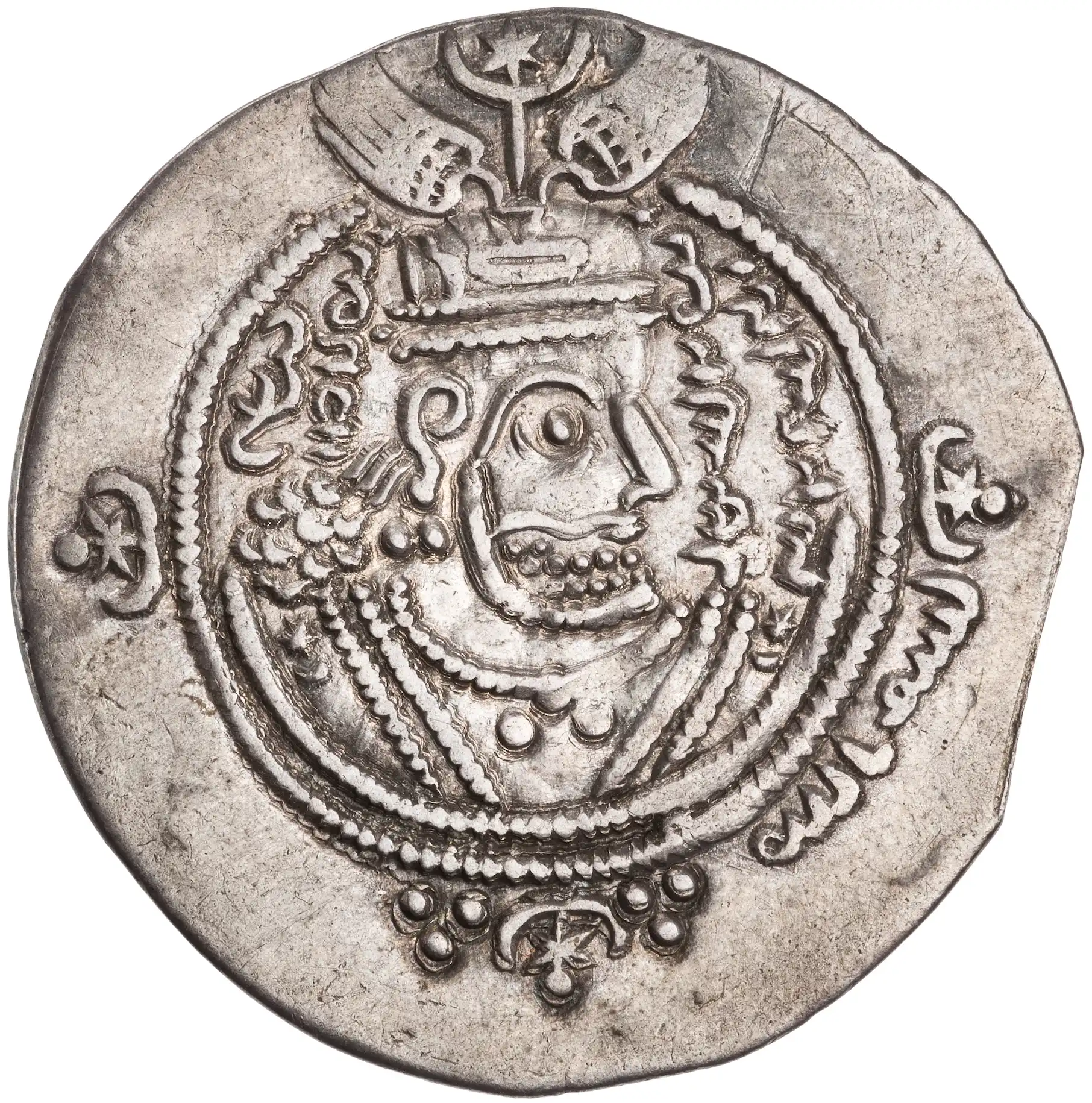
Abd Allah ibn al-Zubayr (Arabic: عبد الله بن الزبير) was one of the most remarkable figures of early Islamic history — a man whose life spanned the entire formative period of the Muslim community from the time of Prophet Muhammad ﷺ through the Rashidun era and into the turbulent decades of Umayyad rule. Born as the first child of the Muhajirun (emigrants) in Medina, he was the grandson of the first caliph Abu Bakr al-Siddiq through his mother Asma bint Abu Bakr, and the son of the great warrior-companion Zubayr ibn al-Awwam. His lineage placed him at the very heart of the Prophet's inner circle.
Abd Allah ibn al-Zubayr grew to become a fearless military commander who fought in the conquests of North Africa and participated in the siege of Constantinople. He was renowned for his extraordinary personal piety — spending entire nights in prayer and fasting frequently — and for his fierce independence of spirit. When the Umayyad dynasty descended into crisis following the death of Yazid ibn Muawiyah in 683 CE, Ibn al-Zubayr declared himself Commander of the Faithful in Mecca, establishing a rival caliphate that at its height commanded allegiance from most of the Islamic world outside Syria. His nearly decade-long resistance to the Umayyads ended only when the formidable general al-Hajjaj ibn Yusuf besieged Mecca in 692 CE, during which the Kaaba was damaged by catapult fire. Ibn al-Zubayr fought to the death rather than surrender, becoming one of the most celebrated martyrs of early Islamic political history.
Birth and Lineage
The Historical Context of His Birth
The year 1 AH (624 CE) was a pivotal moment in Islamic history. The Muslim community had just completed its migration (Hijra) from Mecca to Medina, establishing the first Islamic state. The community faced existential threats from the Quraysh of Mecca, uncertainty about their economic survival in a new city, and the complex task of building a functioning polity from scratch. In this atmosphere of anxiety and hope, every sign of the community's growth and permanence was seized upon as evidence of divine favor.
The migration had been physically and psychologically demanding. The Muhajirun had left behind their homes, properties, and in many cases their families. They were refugees in a strange city, dependent on the generosity of the Ansar (Medinan helpers). The question of whether this fragile community would survive, let alone flourish, was far from settled. Against this backdrop, the birth of a healthy child to one of the most prominent Muhajir families was invested with symbolic significance far beyond its biological reality.
The First Child of the Muhajirun
Abd Allah ibn al-Zubayr was born in Medina in the year 1 AH (624 CE), shortly after the Muslim community's migration from Mecca. His birth was a momentous occasion for the early Muslim community. The Muhajirun had been troubled by a rumor spread by some of the Jewish tribes of Medina that they had cast a spell upon the emigrants so that no children would be born to them. When Asma bint Abu Bakr gave birth to Abd Allah, the entire community celebrated. The Prophet Muhammad ﷺ himself received the newborn, performed the tahnik (softening a date and rubbing it on the infant's palate), and named him Abd Allah. He was thus the first child born to the Muhajirun in their new home, a symbol of hope and continuity for the nascent Muslim community.
Noble Parentage
Abd Allah's parentage placed him among the most elite families of early Islam. His father, Zubayr ibn al-Awwam, was one of the Ten Promised Paradise (al-Ashara al-Mubashsharun), the Prophet's cousin (son of Safiyyah bint Abd al-Muttalib), titled "Hawari Rasul Allah" (Disciple of the Messenger of Allah), and one of the six members of the shura council appointed by Umar ibn al-Khattab to select the next caliph. His mother, Asma bint Abu Bakr, was known as "Dhat al-Nitaqayn" (She of the Two Belts) for her role in the Hijra; daughter of Abu Bakr al-Siddiq, the Prophet's closest companion and first caliph, she was renowned for her courage, generosity, and longevity, living to approximately one hundred years of age and witnessing both the rise and fall of her son's caliphate. Through his mother he descended from Abu Bakr al-Siddiq, the first Rightly-Guided Caliph and the Prophet's most intimate companion, while his paternal grandmother was Safiyyah bint Abd al-Muttalib, the Prophet's paternal aunt and herself a woman of legendary courage. His maternal aunt was Aisha bint Abu Bakr, the Prophet's wife and one of the greatest scholars of early Islam, who played a significant role in Abd Allah's upbringing and education and whose influence on his religious knowledge was considerable.
This extraordinary convergence of lineage meant that Abd Allah ibn al-Zubayr could claim connection to the Prophet through multiple family ties, giving him unparalleled religious legitimacy among the second generation of Muslims. No other figure of his generation — not even Husayn ibn Ali, who was the Prophet's grandson through Fatimah — could claim connection through quite so many of the Prophet's inner circle simultaneously. This lineage was not merely a biographical detail; it was a political fact of the first importance, establishing his credentials to speak for the values and practices of the founding generation in ways that the Umayyads, with their late conversion and their long history of opposition to the Prophet, could never match.
Childhood and Education
The Formative Environment of Medina
The Medina in which Abd Allah ibn al-Zubayr grew up was unlike any other place on earth. It was a city where the Prophet of God walked the streets, where divine revelation descended regularly, where the moral and legal framework of a new civilization was being constructed in real time. For a child born into the community's elite, this environment provided unparalleled educational opportunities.
The households of Abu Bakr, Aisha, and Zubayr were among the most intellectually vibrant in Medina. These were not merely political leaders but people who had witnessed the revelation of the Quran, who had heard the Prophet's interpretations firsthand, and who understood the new faith at its deepest level. Abd Allah absorbed this knowledge from infancy — not as formal instruction but as the ambient intellectual atmosphere of his upbringing.
Growing Up in the Prophet's Household
Abd Allah spent the first years of his life in Medina during the Prophet's lifetime. Although he was only eight or nine years old when the Prophet died in 632 CE, he was old enough to have direct memories of him and to have received his blessing. The hadith literature records that Abd Allah was brought to the Prophet as a young child and that the Prophet prayed for him and blessed him.
His education was shaped by the most distinguished scholars of the first generation. His maternal aunt Aisha was his primary teacher in matters of hadith, Quranic interpretation, and jurisprudence. He became one of the most prolific narrators of hadith from Aisha, transmitting her knowledge to subsequent generations. He also learned from his father Zubayr, his grandfather Abu Bakr (through family oral tradition), and from other senior companions including Umar ibn al-Khattab and Uthman ibn Affan.
Character Formation
From his earliest years, Abd Allah was known for qualities that would define his adult life. He displayed courage from boyhood: at the age of seven, he is reported to have pledged allegiance (bay'ah) to the Prophet — an unusual act for one so young, reflecting his early maturity and determination — while other accounts describe him playing with other children of the companions and already showing the competitive spirit and physical daring that would mark his adult life. He developed an intense devotion to worship that would become legendary, and later in life he was known to pray through entire nights, maintain extended fasts, and perform tawaf (circumambulation of the Kaaba) with great frequency. He mastered the Arabic language and became known for his powerful oratory, a skill that would serve him in his later political career. Like his father, he was powerfully built and trained in martial skills from youth, becoming one of the finest warriors of his generation; he excelled in horsemanship, swordsmanship, and the arts of war that the Arab tribal tradition demanded of its elite males. His physical prowess was complemented by an ascetic discipline — he was lean and hardened rather than large, his body shaped by frequent fasting and constant activity.
Military Career Under the Rashidun Caliphs
The Conquest of North Africa
Abd Allah ibn al-Zubayr first distinguished himself militarily during the Muslim conquests of North Africa under the caliphate of Uthman ibn Affan. In 647 CE, at approximately twenty-three years of age, he participated in the expedition led by Abdullah ibn Sa'd ibn Abi Sarh against the Byzantine-allied Berber kingdoms of Ifriqiya (modern Tunisia).
The expedition was one of the most ambitious military operations of the Rashidun period. The army marched westward from Egypt across the Libyan desert into territory that had been under Byzantine control for centuries. The indigenous Berber population was divided between those allied with Byzantium and those who remained independent, creating a complex political and military landscape.
During the decisive Battle of Sufetula (modern Sbeitla), Abd Allah played a heroic role that established his reputation. According to classical sources, the Muslim forces initially struggled against the heavily armored Byzantine cavalry of the patrician Gregory, who commanded a large and well-equipped army that included both Byzantine regular troops and Berber auxiliaries. The battle was fought in the heat of the North African summer, and the outcome hung in the balance.
It was Abd Allah who broke the impasse. In a daring personal action, he broke through the enemy lines — some accounts say after observing the enemy commander's position during lulls in fighting — and personally killed the patrician Gregory. The death of their commander threw the Byzantine forces into panic and rout. The Muslim army achieved a crushing victory that opened North Africa to Islamic expansion.
This feat of arms — combining tactical observation with extraordinary personal courage — established his reputation as a warrior of the first rank. He received a significant share of the war spoils and returned to Medina celebrated as a hero. More importantly, the experience gave him confidence in his own military abilities and established him as a public figure in his own right, beyond merely being the son of Zubayr and grandson of Abu Bakr.
The Conquest of North Africa's Significance
The North African campaign had broader significance for Ibn al-Zubayr's later life. It demonstrated his ability to operate far from the centers of Muslim power, to adapt to unfamiliar terrain and opponents, and to perform acts of individual heroism that inspired collective military success. These qualities — long-range strategic vision, physical courage, and the ability to inspire loyalty — would all be tested during his later caliphate.
The campaign also exposed him to the realities of empire-building: the challenges of governing diverse populations, the tensions between military expansion and political consolidation, and the economic motivations that underlay apparently religious enterprises. This practical education complemented the religious and scholarly training he had received in Medina.
The Siege of Constantinople
Abd Allah also participated in the first Muslim naval expedition against Constantinople during the caliphate of Muawiyah ibn Abi Sufyan. This ambitious campaign (669–678 CE), which aimed at capturing the Byzantine capital itself, represented the furthest reach of Muslim military ambition in the seventh century. The expedition involved a massive fleet and army, and although it ultimately failed to capture the city — the Byzantines deployed their feared "Greek fire" weapon with devastating effect — it demonstrated the confidence and military capability of the early Muslim state.
For Ibn al-Zubayr, the Constantinople campaign provided critical experience in sustained siege warfare, naval operations, and military logistics far from home bases. He witnessed firsthand both the potential and the limitations of Islamic military power when projected over great distances — lessons that would become painfully relevant during his own later defense of Mecca against Umayyad siege armies.
The campaign also brought him into direct contact with the Syrian military establishment — the very forces that would later become his primary enemy. He observed their discipline, organization, and fighting methods, gaining knowledge that would inform his later strategic calculations.
Service Under Muawiyah
During Muawiyah's caliphate (661–680 CE), Abd Allah continued to serve in military capacities while maintaining his political independence. He participated in various campaigns along the Byzantine frontier and in North Africa, building his reputation as one of the foremost warriors of his generation. His military record gave him credibility that extended beyond his noble lineage — he was not merely a man of privileged birth but a proven commander who had risked his life repeatedly in service of the Muslim community.
However, his relationship with Muawiyah was complex. He refused to participate in political intrigues and maintained a public posture of pious neutrality while privately disapproving of Muawiyah's dynastic ambitions. Muawiyah, for his part, respected Ibn al-Zubayr's military prowess and religious reputation but recognized him as a potential challenger to his son Yazid's succession. Various accounts describe attempts by Muawiyah to win Ibn al-Zubayr's allegiance through gifts and flattery — attempts that were consistently rebuffed.
The Battle of the Camel (656 CE)
The assassination of Caliph Uthman in 656 CE plunged the Muslim community into its first civil war (the First Fitna). Abd Allah's father Zubayr, along with Talha ibn Ubaydullah and his aunt Aisha bint Abu Bakr, raised an army to demand justice for Uthman's murder and marched on Basra. Abd Allah accompanied his father in this campaign and fought at the Battle of the Camel against Ali ibn Abi Talib.
During the battle, Abd Allah fought with exceptional valor. After the defeat of the Basran forces and the death of both his father Zubayr (killed after withdrawing from the battle) and Talha, Abd Allah was among those who surrendered to Ali. Ali treated him with generosity, recognizing his noble lineage and his youth. This experience — the death of his father in civil conflict, the sight of Muslims fighting Muslims — profoundly shaped Abd Allah's political consciousness and his later determination to resist what he perceived as illegitimate Umayyad rule.
The Umayyad Period: Opposition and Resistance
The Transformation of Islamic Governance
To understand Ibn al-Zubayr's opposition to the Umayyads, one must grasp the fundamental transformation that occurred in Islamic governance between the Rashidun and Umayyad periods. Under the first four caliphs, leadership had been determined — however imperfectly and contentiously — by some form of consultation among the Muslim elite. The caliph was understood as the steward of the community's affairs, accountable to Islamic law and the principles established by the Prophet. He was chosen for his religious knowledge, piety, and connection to the Prophet's legacy.
The Umayyad model, as it evolved under Muawiyah and crystallized under Yazid, was fundamentally different. Power was based on hereditary succession, military force (particularly the Syrian army), and tribal solidarity (asabiyyah). The caliph was increasingly a king (malik) in all but name, his authority backed by the sword rather than by religious consensus. Damascus, a former Byzantine provincial capital, replaced the sacred cities as the center of governance. Arabic-speaking Syrian Christians served in the administration. The pious scholars of Medina and Mecca were marginalized from political power.
For someone of Ibn al-Zubayr's background — raised in the Prophet's city, educated by the Prophet's wife, descended from the Prophet's closest companions — this transformation was not merely a political disagreement but a fundamental corruption of Islam's divinely-guided community. His opposition was rooted in genuine religious conviction, not merely personal ambition.
Under Muawiyah ibn Abi Sufyan
Following the establishment of Umayyad rule under Muawiyah ibn Abi Sufyan in 661 CE, Abd Allah ibn al-Zubayr maintained a position of quiet but firm opposition. He refused to pledge allegiance to Muawiyah's designation of his son Yazid as heir — a position shared by several other prominent figures including Husayn ibn Ali, Abd Allah ibn Umar, and Abd al-Rahman ibn Abu Bakr.
Abd Allah settled in Mecca, where he devoted himself to worship and scholarship. His intense piety, his noble lineage, and his growing reputation as the most prominent living representative of the early community's values made him a natural focal point for dissatisfaction with Umayyad rule. Muawiyah was aware of the potential threat Ibn al-Zubayr represented but, characteristically, chose diplomacy over confrontation. He is reported to have said of Ibn al-Zubayr: "I do not concern myself with that man of Quraysh as long as he does not confront me openly."
The Succession of Yazid ibn Muawiyah
When Muawiyah died in 680 CE and Yazid succeeded him, the crisis came to a head. Yazid demanded bay'ah (allegiance) from all prominent Muslims, particularly from those who had previously refused to acknowledge his designation as heir. Both Husayn ibn Ali and Abd Allah ibn al-Zubayr refused. Husayn departed Mecca for Iraq, where he met his martyrdom at Karbala in 680 CE. Ibn al-Zubayr remained in Mecca, using the sanctuary of the Haram (Sacred Mosque) as his base.
The First Siege of Mecca (683 CE)
Yazid sent an army under Husayn ibn Numayr al-Sakuni to subdue Ibn al-Zubayr. The Umayyad forces besieged Mecca in the autumn of 683 CE, an act that shocked the Muslim world. During the siege, the Umayyad army employed catapults (manjaniq) against the city, and the Kaaba was struck and damaged — its wooden structure catching fire. This destruction of the most sacred site in Islam dealt a devastating blow to Umayyad legitimacy.
The siege was lifted when news arrived of Yazid's death in November 683 CE. The Umayyad commander Husayn ibn Numayr even offered Ibn al-Zubayr terms — reportedly suggesting that he come to Damascus and claim the caliphate from there — but Ibn al-Zubayr refused to leave Mecca, insisting that the caliphate should be based in the Hejaz, the original heartland of Islam.
The Caliphate of Ibn al-Zubayr (683–692 CE)
Declaration and Recognition
With Yazid dead and the Umayyad dynasty in disarray — Yazid's son Muawiyah II abdicated after only weeks, and the Umayyads fragmented into competing factions — Abd Allah ibn al-Zubayr formally declared himself Amir al-Mu'minin (Commander of the Faithful). His caliphate rapidly gained recognition across most of the Islamic world. The Hejaz (Mecca and Medina) was his core territory and the seat of his authority. Iraq (Basra and Kufa) initially pledged allegiance, though this was contested. Egypt recognized his authority for a period, Yemen and South Arabia acknowledged his caliphate, and parts of Khorasan and the eastern provinces recognized him as well.
At its height, only Syria and parts of Jordan remained firmly under Umayyad control. The Marwanid branch of the Umayyads, led by Marwan ibn al-Hakam and then his son Abd al-Malik ibn Marwan, controlled Damascus but faced the reality that the majority of the Muslim world looked to Mecca for leadership.
Reconstruction of the Kaaba
One of Ibn al-Zubayr's most significant acts as caliph was the reconstruction of the Kaaba, which had been damaged during the first siege. Drawing on a hadith transmitted by his aunt Aisha, in which the Prophet Muhammad stated that he would have rebuilt the Kaaba on the foundations of Ibrahim (Abraham) had the Quraysh not recently converted to Islam, Ibn al-Zubayr demolished the existing structure and rebuilt it on what he believed were the original Abrahamic foundations. Among the key changes, he incorporated the semicircular area known as the Hijr Ismail (the Hatim) within the main structure of the Kaaba, as the Prophet had indicated was the original design; he installed two doors at ground level — one for entry and one for exit — making the Kaaba accessible to all, in contrast to the single elevated door that had previously restricted access; and the rebuilt Kaaba was larger, incorporating the area that Ibrahim had originally included.
This reconstruction was both a religious act of restoration and a political statement — positioning Ibn al-Zubayr as the true custodian of Islamic sacred heritage in contrast to the Umayyads who had damaged it. After Ibn al-Zubayr's defeat, Abd al-Malik ibn Marwan would partially reverse these changes, restoring the Kaaba closer to its pre-Zubayrid configuration, though some aspects of Ibn al-Zubayr's reconstruction were retained.
Governance and Administration
Ibn al-Zubayr governed from Mecca rather than establishing a new capital, and his administrative approach reflected his conservative religious orientation. In his governance philosophy he sought to restore the model of the early Rashidun caliphs — consultative governance, personal austerity, strict adherence to Quranic principles, and the centrality of the Hejaz in Islamic political life. He appointed governors for the various provinces under his control, his brother Mus'ab ibn al-Zubayr serving as his governor in Iraq, a critical appointment given Iraq's military importance and its restive population. In financial administration he maintained the traditional Islamic system of taxation and distribution, emphasizing justice in the collection and disbursement of revenues.
As caliph based in Mecca he exercised religious authority, overseeing the Hajj and other religious observances and thereby reinforcing his claim to legitimate Islamic leadership; his personal conduct during Hajj — leading prayers, delivering sermons, performing tawaf with visible devotion — served as both religious worship and political communication, and pilgrims who witnessed his leadership returned to their homelands as witnesses to his legitimacy. In military organization, while the Hejaz lacked the standing armies of Syria or Iraq, he assembled a defensive force drawn from the local population and augmented by loyalists who had gathered in Mecca from across the empire; his forces, though smaller than those of his rivals, were motivated by the belief that they were defending the House of Allah against impious aggressors. In matters of justice and dispute resolution he served as the supreme judicial authority for his domains, his rulings drawing on his knowledge of Quranic law, prophetic precedent, and the practices of Abu Bakr and Umar, and he was known for strict impartiality in judgment, refusing to favor the wealthy or powerful over the poor.
Challenges and Weaknesses
Despite his moral authority and widespread recognition, Ibn al-Zubayr's caliphate faced structural weaknesses. There was a geographical disadvantage: Mecca, while sacred, was economically and strategically peripheral compared to Damascus or the garrison cities of Iraq, and governing a vast empire from the Hejaz was logistically challenging. There was the problem of limited military resources: the Hejaz lacked the manpower of Syria or Iraq, and Ibn al-Zubayr was dependent on the allegiance of distant provinces whose loyalty was sometimes fragile. Iraq itself proved ungovernable — the Kufan Shia refused full allegiance, various Kharijite movements disrupted order, and tribal rivalries made stable administration nearly impossible — and the defeat and death of his brother Mus'ab ibn al-Zubayr at the hands of Abd al-Malik's forces in 691 CE was a catastrophic blow. On the question of his personality, classical sources — many of which are admittedly hostile, having been compiled under Umayyad or Abbasid patronage — characterize Ibn al-Zubayr as austere to the point of severity, lacking the diplomatic flexibility of a Muawiyah; whether this is accurate or reflects hostile historiography remains debated.
The Fall: The Second Siege of Mecca (692 CE)
Abd al-Malik's Campaign
By 691 CE, the Umayyad caliph Abd al-Malik ibn Marwan had consolidated his power in Syria, defeated various rivals, and was ready to deal with Ibn al-Zubayr. After the defeat and death of Mus'ab ibn al-Zubayr in Iraq, Abd al-Malik dispatched his most ruthless general, al-Hajjaj ibn Yusuf al-Thaqafi, to bring the Hejaz under Umayyad control.
The Siege
Al-Hajjaj arrived in the Hejaz in early 692 CE and besieged Mecca with a large army. The siege lasted approximately six to seven months. Al-Hajjaj employed catapults against the city, and once again the Kaaba and its surroundings sustained damage from bombardment. The psychological impact of attacking the holiest site in Islam was immense, but al-Hajjaj was not deterred.
During the siege, Ibn al-Zubayr's support gradually eroded. Many of his followers, seeing the hopelessness of the military situation, deserted — some accepting Umayyad amnesties. Even two of his own sons defected to al-Hajjaj's camp. The old warrior was progressively abandoned until only a small band of loyal fighters remained with him.
The Final Consultation with His Mother
One of the most famous episodes in Islamic history is Abd Allah's final conversation with his mother Asma bint Abu Bakr. As the siege tightened and his situation became desperate, he went to consult her. Asma, now approximately one hundred years old and blind, delivered one of the most celebrated speeches in Arab historical literature. When her son indicated that he was being offered safe passage if he surrendered, she reportedly said:
"You know yourself best. If you believe you are upon the truth and calling to the truth, then persevere — for your companions who were upon the same cause have died [honorably]. Do not let the boys of Banu Umayyah play with your neck. And if you desire the world, then what a wretched servant you are — you have destroyed yourself and those who were killed with you. If you say, 'I was upon the truth but when my companions weakened I became weak' — this is not the action of a free man or a man of religion. How long will you live in this world? Death is better."
When Abd Allah asked her if she feared for what might happen to his body after death, she replied: "The slaughtered sheep does not feel the pain of skinning." This conversation steeled his resolve to fight to the end.
Death and Martyrdom
On the final day, Abd Allah ibn al-Zubayr performed his ritual ablutions carefully, prayed the dawn prayer, and addressed his remaining companions — perhaps a few dozen men at most. He told them that anyone who wished to leave could do so without blame, that each man should fight only for the sake of Allah and not out of tribal loyalty or personal obligation to him. Those who remained did so out of genuine conviction.
He then donned his armor, wrapped his sword, and went out to fight. Despite his advanced age (he was approximately sixty-eight years old), witnesses described his fighting with the energy and ferocity of a young man. He fought in the narrow streets and alleys around the Sacred Mosque, the terrain he knew intimately from decades of living in Mecca. Classical sources record detailed accounts of the final combat — al-Tabari and Ibn al-Athir describe him cutting his way through multiple opponents, his back to the wall of the Mosque, refusing every call to surrender.
One account describes a moment during the fighting when a stone struck him in the face, causing blood to stream over his features. He wiped the blood away and recited the verse: "Among the believers are men who have been true to their covenant with Allah. Of them some have fulfilled their vow, and of them are some who are still waiting — and they have not altered in the least" (Quran 33:23).
He was eventually overwhelmed and killed in combat — by some accounts struck from behind by a group of attackers after he had been surrounded. He never surrendered, never asked for quarter, and never retreated from the fight. He died as he had lived — with absolute conviction and physical courage.
Al-Hajjaj ordered his body crucified on the roadside — a deliberate act of humiliation directed not only at the dead man but at the entire principle of religiously-motivated resistance to Umayyad power. The body reportedly hung for days, visible to all entering or leaving Mecca. This act of desecration against a man of Ibn al-Zubayr's lineage and piety — grandson of Abu Bakr, son of Zubayr, raised by the Prophet's own hands — was condemned even by those who had opposed his political claims. Abd al-Malik ibn Marwan is reported to have been displeased when he learned of it, though he took no action against al-Hajjaj.
His aged mother Asma came to view his crucified body and refused to petition al-Hajjaj for its release. She reportedly said: "Is it not time for this horseman to dismount?" — a statement that combined defiance, dignity, and maternal grief in a manner that has echoed through centuries of Arabic literature. Eventually, after the intervention of Abd al-Malik himself (or, in some accounts, after Asma's death shortly after), the body was taken down and buried.
The date of his death was the month of Jumada al-Ula, 73 AH (October/November 692 CE).
The Broader Islamic World Under Zubayrid Rule
Provincial Administration
The administration of the Zubayrid caliphate extended across vast territories, each presenting its own challenges. The Hejaz was the core territory: Mecca and Medina formed the heartland of Ibn al-Zubayr's authority, the spiritual center of Islam but a region lacking significant agricultural resources or military manpower. Its strength lay in religious legitimacy, for control of the Two Holy Mosques gave Ibn al-Zubayr unmatched symbolic authority over the worldwide Muslim community, and Medina, the city of the Prophet, housed many descendants of the Companions and scholars whose support bolstered his claims.
Iraq was the most strategically important and most difficult province. It contained the garrison cities of Basra and Kufa, each with large Arab military populations, significant revenues, and constant factional conflict; Basra was generally more loyal to the Zubayrids, while Kufa was divided between Zubayrid, Alid, and Kharijite sympathies. Ibn al-Zubayr appointed his brother Mus'ab as governor of Iraq, and Mus'ab proved an effective if controversial administrator, suppressing the revolt of al-Mukhtar ibn Abi Ubayd al-Thaqafi (who had claimed to represent the Alid cause) in 687 CE and maintaining order through a combination of military force and political negotiation.
Egypt initially recognized Ibn al-Zubayr's authority following Yazid's death; however, the province's position between the Zubayrid Hejaz and the Umayyad Levant made it a natural battleground, and it eventually returned to Umayyad control as Marwan I recovered it in 684 CE during his brief caliphate. Yemen and South Arabia remained broadly loyal to the Zubayrid cause throughout most of the period, though distance and local tribal dynamics meant that central control was often nominal. In North Africa and the East, parts of Khorasan, Sistan, and North Africa recognized Zubayrid authority, though the practical impact was limited by distance and the autonomy of local governors.
Economic and Monetary Policy
One of the most tangible expressions of Ibn al-Zubayr's sovereignty was his minting of coins. Archaeological evidence shows that Zubayrid coins were produced in several provinces, bearing inscriptions affirming his caliphal authority. The coinage provides physical evidence of the geographic extent of his actual control and serves as an important complement to the literary sources.
Ibn al-Zubayr maintained the existing fiscal systems of the Islamic state — the kharaj (land tax), jizya (poll tax on non-Muslims), and distribution of stipends to the military and religious classes. However, his emphasis on austerity and his distance from the wealthy provinces of Syria and Egypt meant that his financial resources were consistently inferior to those of his Umayyad rivals.
The Hajj as Political Statement
Control of the Hajj was perhaps Ibn al-Zubayr's most powerful political tool. As the ruler based in Mecca, he presided over the annual pilgrimage — the one occasion when Muslims from across the empire gathered in a single location. The Hajj under Ibn al-Zubayr served multiple functions. It demonstrated his sovereignty, since his role as organizer and overseer of the pilgrimage reinforced his caliphal credentials. It functioned as a communication network, allowing him to reach supporters from distant provinces directly. It served recruitment, as pilgrims who experienced his authority in Mecca often returned home as supporters. And it conferred religious legitimacy, for his visible piety during the rites contrasted with reports of Umayyad worldliness.
The Umayyads were acutely aware of this advantage. During periods of conflict, they sometimes organized rival pilgrimages or sent their own hajj leaders, creating the unprecedented spectacle of competing Muslim authorities vying for control of the sacred rites.
Relations with Non-Arab Muslims
The early Umayyad period was marked by growing tensions between Arab Muslims and the increasing number of non-Arab converts (mawali), who often felt marginalized in the Arab-dominated political system. Ibn al-Zubayr's caliphate, based on religious legitimacy rather than Arab tribal solidarity, theoretically offered an alternative model. However, the sources provide limited evidence of a distinctly different mawali policy under Zubayrid rule. His focus remained primarily on the Arab political elite and the traditional structures of Islamic governance.
Religious Character and Devotion
Personal Piety
Abd Allah ibn al-Zubayr was acknowledged — even by his political opponents — as a man of intense religious devotion, and his worship took several characteristic forms. He was known for night prayer (qiyam al-layl), standing in prayer throughout the night; classical sources describe him dividing the night into thirds, spending one third in prayer, one third in recitation of the Quran, and one third in rest, and some accounts state that he would pray the entire night without break. He maintained a rigorous fasting schedule, often fasting consecutive days, and was lean and ascetic in appearance as a result of his frequent fasting and minimal eating. Living in Mecca, he performed tawaf of the Kaaba with great frequency and devotion, known to circumambulate multiple times daily and to combine it with extensive supplication and remembrance of Allah. His forehead bore permanent marks from the frequency and duration of his prostrations (sujud), a physical testament of decades of worship. And despite being caliph with access to considerable wealth, he maintained a simple lifestyle, showing detachment from worldly luxury — eating simply, dressing modestly, and distributing wealth rather than accumulating it.
Scholarship and Knowledge
While primarily known as a warrior and political leader, Ibn al-Zubayr was also a significant transmitter of religious knowledge. He narrated hadith from the Prophet Muhammad (those he witnessed as a child), from Abu Bakr, Umar, Uthman, Ali, and especially from his aunt Aisha, and he was considered a reliable narrator in the hadith sciences. His opinions on matters of jurisprudence were recorded and transmitted by later scholars, and he was an expert in Quranic recitation and interpretation.
Relationship with the Kaaba
His deep attachment to the Kaaba was not merely political — it was profoundly spiritual. He considered himself the custodian of the House of Allah and took personal responsibility for its maintenance, cleanliness, and accessibility. His reconstruction of the Kaaba on what he believed were its Abrahamic foundations was motivated by genuine religious conviction, not merely political calculation.
The connection between Ibn al-Zubayr and the Kaaba was intimate and lifelong. He had grown up in Mecca, performed tawaf thousands of times, and developed a relationship with the sacred House that went beyond formal worship into something deeply personal. When the Umayyads damaged the Kaaba during the first siege, his grief was not performative — it was the anguish of a man who saw the house of his Beloved desecrated by those he considered tyrants. His decision to rebuild it on Abrahamic foundations was simultaneously an act of restoration, devotion, and political legitimation.
Classical sources describe him perfuming the Kaaba with fine musk and aloeswood, draping it in the finest fabrics, and ensuring that its interior was maintained in immaculate condition. He reportedly knew every stone and every feature of the structure intimately, and his reconstruction demonstrated detailed knowledge of the Kaaba's architectural history.
Comparisons with Contemporary Figures
Ibn al-Zubayr and Husayn ibn Ali
The two most prominent opponents of Yazid's succession — Husayn and Ibn al-Zubayr — represent contrasting approaches to resistance against perceived tyranny. Husayn chose active confrontation, marching toward Iraq in response to invitations from the Kufans, and met martyrdom at Karbala with a small band of family and followers; his death was a moral triumph that established the paradigm of sacrificial witness in Islamic tradition. Ibn al-Zubayr chose strategic patience, remaining in the sanctuary of Mecca, building support gradually, and waiting for Umayyad weakness before asserting his claim; his approach was political and military as well as moral, and he built a functioning alternative state that lasted nearly a decade.
Both figures are honored in Islamic tradition, but their legacies diverge: Husayn became the supreme symbol of righteous martyrdom (particularly in Shia tradition), while Ibn al-Zubayr represents the tradition of active political resistance and alternative governance.
Ibn al-Zubayr and Abd al-Malik ibn Marwan
The contest between Ibn al-Zubayr and Abd al-Malik represents a clash between two models of Islamic leadership. Ibn al-Zubayr was a religious scholar and devout worshipper, a descendant of the earliest companions, based in the sacred city and emphasizing shura and piety as qualifications for rule. Abd al-Malik was an administrative organizer and a patron of architecture and culture (builder of the Dome of the Rock), Arabicizer of the imperial bureaucracy, based in the cosmopolitan Levant and emphasizing effective governance and state-building.
The triumph of Abd al-Malik's model determined the future direction of Islamic political civilization — toward sophisticated imperial administration rather than toward a community of believers governed primarily by religious law. Both men were personally devout, but they represented fundamentally different visions of what an Islamic state should be.
Legacy and Historical Assessment
In Islamic Historiography
The assessment of Abd Allah ibn al-Zubayr in classical Islamic sources is complex and varies by tradition. In the Sunni perspective, the majority tradition generally views Ibn al-Zubayr favorably as a pious companion (sahabi, or more precisely one who saw the Prophet as a child), a brave warrior, and a man who stood against Umayyad tyranny; his name is not typically listed among the caliphs in the standard Sunni lists, which go from the Rashidun directly to the Umayyads, but he is honored as a righteous Muslim who died fighting for what he believed was just, and some Sunni scholars, including Ibn Kathir, describe him as having been upon the truth in his opposition to Umayyad illegitimacy. Sources sympathetic to the Umayyads, by contrast, tend to portray him as a divisive figure who prolonged civil conflict and caused the deaths of many Muslims, emphasizing his alleged personal faults of miserliness, inflexibility, and ambition. Shia sources are generally less sympathetic, viewing him as having opposed Ali ibn Abi Talib at the Battle of the Camel and as a political rival to the Ahl al-Bayt's claims to leadership. Contemporary scholars generally recognize Ibn al-Zubayr as a figure of genuine religious conviction who represented a legitimate alternative to Umayyad dynastic rule, and his caliphate is seen as reflecting the tensions between the Hejazi religious establishment and the Syrian military elite that defined early Islamic politics.
Political Legacy
Ibn al-Zubayr's resistance established several important precedents in Islamic political thought. His rebellion demonstrated the legitimacy of opposition, showing that resistance to perceived unjust rule was considered legitimate by significant portions of the early Muslim community rather than a merely fringe position. His insistence on Meccan-based leadership reflected the tension between the Hejaz and Syria — a fundamental disagreement about whether Islamic authority should be rooted in the sacred cities or in the administrative and military centers. His emphasis on personal piety, consultation, and adherence to prophetic practice as qualifications for rule represented an alternative to the Umayyad model of hereditary dynastic succession backed by military power. And his refusal to surrender and his death fighting became a model of principled resistance and martyrdom that influenced later Islamic political movements.
Impact on Islamic Sacred Architecture
His reconstruction of the Kaaba, though partially reversed by Abd al-Malik, had lasting implications for debates about the proper form and maintenance of Islam's most sacred structure. The hadith he cited from Aisha about the Prophet's intentions for the Kaaba remained an important reference point in subsequent discussions about the building's architecture.
The Family of Ibn al-Zubayr
His Mother Asma's Legacy
Asma bint Abu Bakr outlived her son only briefly, dying approximately days or weeks after his crucifixion at the age of approximately one hundred. Her courage in the face of her son's death — refusing to bow to al-Hajjaj or beg for the release of the body — became one of the most celebrated examples of female strength and dignity in Islamic historical literature. The contrast between her noble bearing and al-Hajjaj's brutality reinforced the moral narrative of Zubayrid resistance.
His Brother Mus'ab ibn al-Zubayr
Mus'ab served as Abd Allah's governor in Iraq and was known for his personal bravery, generosity, and handsome appearance. He fought against both Kharijite rebels and Umayyad forces before being killed at the Battle of Maskin in 691 CE by the forces of Abd al-Malik. His death removed Iraq from Zubayrid control and sealed the fate of his brother's caliphate.
His Sons
Several of Abd Allah's sons played roles in later Islamic history. Some fought alongside him and died in the siege; others — to their father's disappointment — surrendered to al-Hajjaj. His descendants, known as the Al al-Zubayr, continued as a notable family in the Hejaz for centuries afterward.
Historical Context: The Second Fitna
The Crisis of Succession and the Death of Muawiyah
The roots of the Second Fitna lay in Muawiyah ibn Abi Sufyan's controversial decision to designate his son Yazid as his successor — an act that broke with the principle of consultative succession that had characterized the Rashidun period. While Muawiyah secured pledges of allegiance from most provincial elites during his lifetime, several prominent figures refused: Husayn ibn Ali, Abd Allah ibn al-Zubayr, Abd Allah ibn Umar, and Abd al-Rahman ibn Abu Bakr among them.
When Muawiyah died in April 680 CE, the fragility of this arrangement became apparent. Yazid lacked his father's political acumen, personal charisma, and decades of experience. His demand for immediate and unconditional bay'ah from all holdouts precipitated the crisis.
The Tragedy of Karbala and Its Impact on Ibn al-Zubayr
The martyrdom of Husayn ibn Ali at Karbala in October 680 CE fundamentally altered the political landscape. The killing of the Prophet's grandson by Umayyad forces shocked the Muslim world and delegitimized Yazid's rule in the eyes of many. For Ibn al-Zubayr, Karbala served multiple functions. It eliminated a potential rival for anti-Umayyad leadership, though this was not Ibn al-Zubayr's doing or desire; it provided devastating evidence of Umayyad tyranny that supported his own case for resistance; it galvanized opposition to Yazid across the empire; and it established martyrdom as a politically powerful act of witness against injustice.
After Karbala, Ibn al-Zubayr's position in Mecca became increasingly that of an alternative center of gravity for Muslim loyalty — the one remaining major figure with the lineage, piety, and courage to challenge Umayyad authority.
The Battle of al-Harrah (683 CE)
Before Yazid's army reached Mecca, it first dealt with Medina, where the people had also risen against Umayyad rule. In August 683 CE, the Umayyad army under Muslim ibn Uqbah crushed the Medinan opposition at the Battle of al-Harrah, east of the city. The aftermath was brutal — the army sacked Medina for three days, an outrage against the Prophet's city that further damaged Umayyad legitimacy. The army then proceeded to Mecca to deal with Ibn al-Zubayr, beginning the first siege.
The Fragmentation of the Umayyads
Yazid's sudden death in November 683 CE created a power vacuum. His young son Muawiyah II was proclaimed caliph but abdicated after just weeks, reportedly declaring that the caliphate was neither his family's right nor properly earned. The Umayyad dynasty then fragmented: in Syria, the Qays and Yaman tribal factions fought each other at the Battle of Marj Rahit (684 CE); Marwan ibn al-Hakam emerged as the Umayyad candidate, founding the Marwanid branch; Marwan died after just nine months, succeeded by his capable son Abd al-Malik ibn Marwan; and it took Abd al-Malik nearly a decade to reunify the Umayyad domains and defeat Ibn al-Zubayr.
The Revolt of al-Mukhtar (685–687 CE)
While Ibn al-Zubayr controlled the Hejaz and nominally Iraq, a third force emerged in Kufa: al-Mukhtar ibn Abi Ubayd al-Thaqafi, who claimed to act on behalf of Muhammad ibn al-Hanafiyyah (Ali's son by a non-Fatimid wife) and demanded vengeance for Husayn. Al-Mukhtar's revolt complicated the political landscape by introducing a competing anti-Umayyad movement in Iraq that was neither Zubayrid nor conventionally Umayyad. His forces defeated an Umayyad army and killed many of those responsible for Karbala, but he also clashed with Zubayrid authority. Mus'ab ibn al-Zubayr eventually defeated and killed al-Mukhtar in 687 CE, reuniting Iraq under nominal Zubayrid control.
The Kharijite Threat
Throughout the Second Fitna, various Kharijite movements added to the chaos. The Kharijites — who rejected both Umayyad and Zubayrid claims, holding that the caliph should be the most pious Muslim regardless of lineage — launched numerous revolts in Iraq, Arabia, and Iran. Notable Kharijite leaders like Nafi ibn al-Azraq and Najda ibn Amir al-Hanafi carved out independent domains. Managing the Kharijite threat drained Zubayrid military resources and prevented the consolidation of power needed to resist the eventual Umayyad counterattack.
The Umayyad Recovery Under Abd al-Malik
Abd al-Malik ibn Marwan (r. 685–705 CE) proved to be one of the most capable rulers in Islamic history. Patient, methodical, and ruthless when necessary, he spent several years consolidating his position in Syria, negotiating truces with the Byzantines to free military resources, and waiting for the right moment to strike. By 691, he was ready: he dispatched his general al-Hajjaj to subdue the Hejaz, his own forces defeated Mus'ab ibn al-Zubayr at Maskin in Iraq (691 CE), and with Iraq and the east secured, Mecca stood alone.
The strategic character of Abd al-Malik's approach — patience followed by overwhelming force — contrasted with Ibn al-Zubayr's disadvantage of defending a geographically isolated sacred city against enemies who controlled the empire's economic and military heartlands.
Understanding the Second Civil War
Abd Allah ibn al-Zubayr's caliphate cannot be understood apart from the broader context of the Second Fitna (680–692 CE), the second great civil war of Islam. This conflict erupted following the death of Muawiyah and his controversial succession by Yazid, and involved multiple competing factions. The Umayyads of Syria were initially under Yazid, then fragmented, then reunited under the Marwanid branch (Marwan I and Abd al-Malik). The Zubayrids of the Hejaz comprised Abd Allah ibn al-Zubayr and his supporters. The Alids were supporters of the Prophet's family, initially under Husayn (martyred at Karbala) and later under al-Mukhtar in Kufa. The Kharijites operated as multiple independent movements in Iraq, Arabia, and Iran. And the tribal factions were embodied in the Qays-Yaman rivalry that divided Arab tribes across the empire.
The resolution of the Second Fitna in favor of the Marwanid Umayyads was not inevitable. For much of the period 683–691, the Zubayrids appeared to be the dominant force in the Islamic world. Their ultimate defeat reflected the Umayyads' superior military organization and ruthless determination rather than any lack of popular support or religious legitimacy on Ibn al-Zubayr's part.
Significance in Islamic Political Development
The Second Fitna and Ibn al-Zubayr's caliphate marked a decisive turning point in Islamic political history. The Umayyad victory confirmed that hereditary dynastic succession had triumphed over consultative selection (shura), that military power based in Syria would dominate Islamic governance, and that the Hejaz would become politically peripheral despite its religious centrality; it also confirmed that opposition movements would continue to challenge Umayyad legitimacy, eventually succeeding in the Abbasid revolution of 750 CE.
Hadith Narrated by Ibn al-Zubayr
Abd Allah ibn al-Zubayr appears in the hadith literature both as a narrator and as a subject. He transmitted hadith primarily from his aunt Aisha, as well as from Abu Bakr (through family transmission), Umar, Uthman, and other senior companions. Among the notable traditions associated with him are narrations about the Prophet's character and daily practices transmitted through Aisha; the hadith regarding the Prophet's intention to rebuild the Kaaba on Abrahamic foundations (from Aisha); various narrations about the virtues of prayer, fasting, and devotion; and historical narrations about events during the Prophet's lifetime that he witnessed as a child.
The major hadith collections (Bukhari, Muslim, Abu Dawud, Tirmidhi, Nasa'i, and Ibn Majah) all contain narrations from or about Abd Allah ibn al-Zubayr.
His role as a hadith narrator is particularly important because of his direct connection to Aisha bint Abu Bakr. Aisha was one of the most prolific narrators of hadith and one of the earliest authorities on Islamic jurisprudence. Abd Allah, as her nephew who spent considerable time in her household, became one of the primary chains through which her vast knowledge was transmitted to later generations. Scholars of hadith recognized his reliability (thiqah) as a narrator, and his narrations appear in all six canonical collections.
Key Narrations
Among the most significant hadith transmitted by or about Ibn al-Zubayr, several stand out. On the Kaaba's reconstruction, Aisha narrated to him that the Prophet said: "O Aisha, had your people not been so close to the pre-Islamic period of ignorance, I would have demolished the Kaaba and rebuilt it on the foundations of Ibrahim, for the Quraysh reduced it when they rebuilt it" (Sahih al-Bukhari, Book of Hajj); this hadith was the religious basis for his reconstruction project. On his birth, the narration of his being the first child born to the Muhajirun in Medina and the Prophet performing tahnik on him is recorded in both Bukhari and Muslim. On worship, multiple narrations describe his devotion in prayer, with companions and later scholars citing him as an example of the ideal worshipper. And on courage, the Prophet's statement that every prophet has a disciple (hawari) and that his hawari was Zubayr (Ibn al-Zubayr's father) appears in Bukhari and Muslim, establishing the family's special status.
The Zubayrid Legacy in Later Islamic History
Influence on Political Thought
The Zubayrid movement's emphasis on shura (consultation), piety as a qualification for rule, and the religious obligations of the caliph influenced subsequent Islamic political thought in several ways. It shaped the Abbasid revolution: when the Abbasids overthrew the Umayyads in 750 CE, they employed rhetoric remarkably similar to the Zubayrid critique — emphasizing the Umayyads' impiety, their deviation from prophetic practice, and the need to restore Islamic governance to its proper foundations — and while the Abbasids claimed Hashimite rather than Zubayrid legitimacy, the intellectual framework of opposition to Umayyad tyranny that Ibn al-Zubayr had articulated decades earlier provided a template. It fed Islamic constitutional theory: the debates about legitimate authority that defined the Second Fitna — Is the caliph's primary qualification his piety and knowledge, or his ability to maintain order? Must he be chosen by consultation or can power be inherited? — remained central to Islamic political philosophy for centuries, and Al-Mawardi's Al-Ahkam al-Sultaniyyah (11th century) and other works of Islamic constitutional theory engage with questions that the Zubayrid period had posed in their most acute form. And it embodied the principle of resistance: Ibn al-Zubayr's willingness to resist what he perceived as illegitimate authority, and his death fighting rather than submitting, established a precedent on which later Islamic movements — from the Alid risings to the Abbasid revolution to various medieval reform movements — drew, holding that obedience to unjust rulers is not mandatory and that resistance, even to the point of death, can be religiously justified.
Historiographical Legacy
The history of Ibn al-Zubayr's caliphate poses particular challenges for historians because the victors — first the Umayyads, then the Abbasids — had every incentive to diminish or distort his legacy. The Umayyads wanted to portray him as a rebel against legitimate authority; the Abbasids, while critical of the Umayyads, did not wish to validate a non-Hashimite alternative to Umayyad rule.
Modern scholars have worked to recover the Zubayrid perspective from beneath layers of hostile historiography. The recognition that classical Islamic historical sources were compiled under patronage systems that influenced their content has led to more nuanced assessments of Ibn al-Zubayr's caliphate and its significance.
The Zubayr Family After the Second Fitna
Despite the defeat of 692 CE, the Al al-Zubayr (Zubayrid family) continued to hold social prestige in the Hejaz and other regions. They were recognized as descendants of two of the most honored companions (Abu Bakr and Zubayr) and maintained their status as scholars and notables. Individual members of the family occasionally appeared in later political events, though never again as serious contenders for supreme authority.
The family's scholarly contributions continued through subsequent generations, particularly in the transmission of hadith from Aisha and other early authorities. Several prominent hadith scholars of the second and third Islamic centuries bore Zubayrid lineage.
Conclusion
Abd Allah ibn al-Zubayr stands as one of the most significant and complex figures of the first Islamic century. Born into the most privileged circumstances possible in early Islam — grandson of Abu Bakr, son of Zubayr ibn al-Awwam, nephew of Aisha — he embodied the values of the founding generation: personal piety, military courage, and commitment to consultative governance rooted in prophetic example.
His life arc traced the entire trajectory of Islam's first century: from the hopeful community of Medina under the Prophet's guidance, through the triumphs of the conquests, the trauma of the first civil war, the complex compromises of Muawiyah's era, and finally the struggle against Umayyad dynastic absolutism. No other figure of his generation witnessed so many pivotal events or participated so actively in shaping them.
His nearly decade-long caliphate represented the last serious attempt to maintain the Hejaz as the political center of Islam and to preserve the Rashidun model of governance against the emerging pattern of dynastic hereditary rule. That he failed was not a reflection of personal inadequacy but of structural realities — the economic and military resources of Syria and Iraq simply outweighed those of the Hejaz. His reconstruction of the Kaaba on Abrahamic foundations symbolized his broader project — the restoration of Islam to its original purity and the rejection of innovations introduced by political expediency.
His death fighting in the shadow of the Kaaba, abandoned by all but his most devoted followers, refusing surrender despite the certainty of defeat, has ensured his place as one of the great exemplars of principled resistance in Islamic history. The image of this aged warrior — grandson of the Prophet's dearest friend — fighting alone against overwhelming odds rather than bowing to what he perceived as tyranny, has resonated through fourteen centuries of Islamic historical consciousness.
Whether one views him as a legitimate caliph denied his rightful authority or as a brave but ultimately unsuccessful political figure, his personal qualities — extraordinary piety, physical courage, intellectual integrity, and moral conviction — are beyond dispute. Even al-Hajjaj, his executioner, is reported to have acknowledged his opponent's bravery. Even hostile sources cannot deny his worship or his lineage.
The story of Abd Allah ibn al-Zubayr reminds us that the early Islamic community was not a monolith but a dynamic society in which competing visions of legitimate authority, proper governance, and the relationship between religious principle and political power were actively debated and fought over. His life illuminates both the grandeur and the tragedy of that formative period — a time when the stakes were not merely political but civilizational, when the decisions made and battles fought determined the direction of Islamic civilization for centuries to come.
His mother's final words to him capture something essential about his character and his legacy: he was a man who chose truth over safety, conviction over compromise, and death with honor over life with submission. In doing so, he joined the ranks of those whom the Quran describes as "men who have been true to their covenant with Allah" (Quran 33:23) — a verse that, fittingly, was on his lips as he fought his final battle.
References and Further Reading
Primary Islamic Sources
- Quran, Surah Ash-Shura (42:38) — "And those who have responded to their Lord and established prayer and whose affair is [determined by] consultation among themselves." (The principle of shura central to Ibn al-Zubayr's political philosophy)
- Quran, Surah Al-Baqarah (2:127) — "And [mention] when Abraham was raising the foundations of the House and [with him] Ishmael." (Basis for Ibn al-Zubayr's Kaaba reconstruction)
- Sahih al-Bukhari, Book of Hajj, Hadith 1586 — The Prophet's statement to Aisha about rebuilding the Kaaba on Abrahamic foundations.
- Sahih al-Bukhari, Book of Virtues of the Companions, Hadith 3723 — Narrations regarding Abd Allah ibn al-Zubayr.
- Sahih Muslim, Book of Hajj, Hadith 1333 — The hadith on the Prophet's wish regarding the Kaaba's structure.
- Sahih Muslim, Book of Virtues of the Companions — Narrations about the Zubayr family.
- Musnad Ahmad ibn Hanbal — Multiple narrations from and about Abd Allah ibn al-Zubayr.
Classical Islamic Sources
- Al-Tabari, Muhammad ibn Jarir. Tarikh al-Rusul wa al-Muluk (History of the Prophets and Kings), extensive coverage of Ibn al-Zubayr's caliphate. Cairo: Dar al-Ma'arif, 1960. [Original c. 915 CE]
- Ibn al-Athir, Ali ibn Muhammad. Al-Kamil fi al-Tarikh (The Complete History), sections on the Second Fitna. Beirut: Dar Sadir, 1979. [Original c. 1231 CE]
- Ibn Kathir, Ismail ibn Umar. Al-Bidaya wa al-Nihaya (The Beginning and the End), Vol. 8. Beirut: Dar al-Fikr, 1986. [Original c. 1370 CE]
- Al-Baladhuri, Ahmad ibn Yahya. Ansab al-Ashraf (Lineages of the Nobles), Vol. 4–5, on the Zubayrids. Beirut: Dar al-Fikr, 1996. [Original c. 892 CE]
- Ibn Sa'd, Muhammad. Al-Tabaqat al-Kubra, biography of Abd Allah ibn al-Zubayr. Leiden: Brill, 1904. [Original c. 845 CE]
- Al-Dhahabi, Shams al-Din. Siyar A'lam al-Nubala, entry on Ibn al-Zubayr. Beirut: Mu'assasat al-Risalah, 1981. [Original c. 1348 CE]
- Ibn Hajar al-Asqalani. Al-Isabah fi Tamyiz al-Sahabah, entry on Abd Allah ibn al-Zubayr. Cairo: Dar al-Kutub al-Misriyyah, 1972. [Original c. 1449 CE]
Academic and Scholarly Sources
- Hawting, G.R. The First Dynasty of Islam: The Umayyad Caliphate AD 661–750. 2nd ed. London: Routledge, 2000.
- Madelung, Wilferd. The Succession to Muhammad: A Study of the Early Caliphate. Cambridge: Cambridge University Press, 1997.
- Kennedy, Hugh. The Prophet and the Age of the Caliphates. 3rd ed. London: Routledge, 2016.
- Crone, Patricia, and Martin Hinds. God's Caliph: Religious Authority in the First Centuries of Islam. Cambridge: Cambridge University Press, 1986.
- Hinds, Martin. "The Murder of the Caliph Uthman." International Journal of Middle East Studies 3, no. 4 (1972): 450–469.
- Rotter, Gernot. Die Umayyaden und der zweite Bürgerkrieg (680–692). Wiesbaden: Franz Steiner, 1982.
- Dixon, Abd al-Ameer. The Umayyad Caliphate 65–86/684–705: A Political Study. London: Luzac, 1971.
Further Reading
- Donner, Fred M. Muhammad and the Believers: At the Origins of Islam. Cambridge: Harvard University Press, 2010.
- Hodgson, Marshall G.S. The Venture of Islam, Vol. 1: The Classical Age of Islam. Chicago: University of Chicago Press, 1974.
- Berkey, Jonathan P. The Formation of Islam: Religion and Society in the Near East, 600–1800. Cambridge: Cambridge University Press, 2003.
- Lapidus, Ira M. A History of Islamic Societies. 3rd ed. Cambridge: Cambridge University Press, 2014.
- El-Hibri, Tayeb. Parable and Politics in Early Islamic History: The Rashidun Caliphs. New York: Columbia University Press, 2010.
Mentioned In
19 articles reference this topic
and 7 more articles