A.P.J. Abdul Kalam: The People's President and Missile Man of India
Avul Pakir Jainulabdeen Abdul Kalam served as India's eleventh President (2002–2007) and was a principal architect of the country's missile programme and a coordinator of the 1998 nuclear tests. A DRDO and ISRO scientist, he became a symbol of Indian scientific aspiration.
Introduction
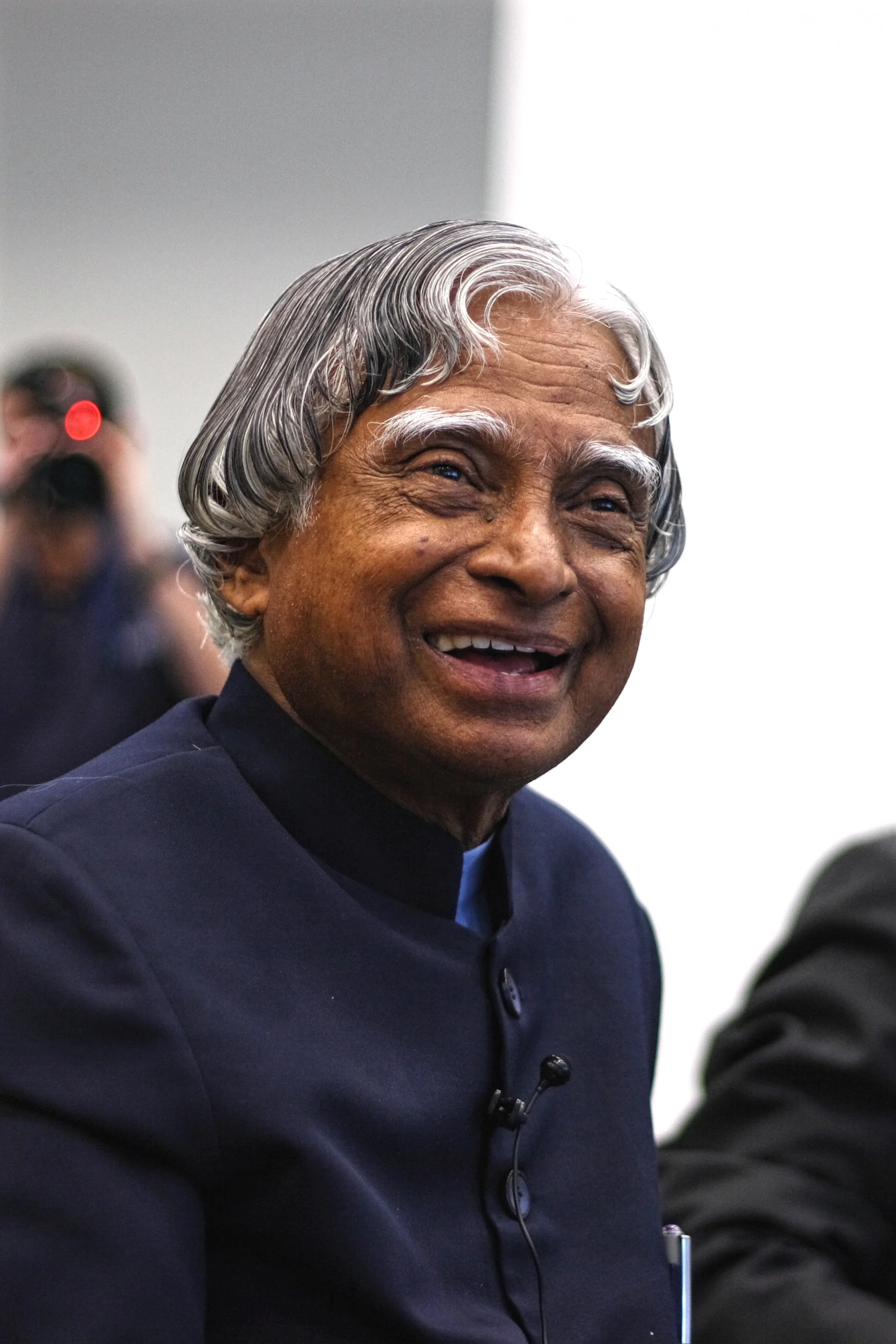
Avul Pakir Jainulabdeen Abdul Kalam (15 October 1931 – 27 July 2015) served as the eleventh President of the Republic of India from 2002 to 2007. Before entering public office, he spent four decades as a scientist and science administrator, principally at the Defence Research and Development Organisation (DRDO) and the Indian Space Research Organisation (ISRO), where he played central roles in the development of India's first indigenous satellite launch vehicle, the country's ballistic missile programme, and the nuclear weapons tests of 1998. His career traced the arc of independent India's ambitions in science and technology — from the modest beginnings of its space programme in the 1960s to the assertion of nuclear weapons capability at the end of the century.
Kalam's presidency was unusual in several respects. He was the first scientist and the first bachelor to occupy Rashtrapati Bhavan. He was nominated by the ruling National Democratic Alliance led by the Bharatiya Janata Party but received cross-party support, including from several opposition parties. His tenure was marked by an emphasis on youth engagement, educational outreach, and a vision of India as a developed nation by 2020 — an aspiration he had articulated in his widely read book India 2020: A Vision for the New Millennium. After leaving office, he returned to academic life, teaching and lecturing extensively until his death from cardiac arrest while delivering a lecture at the Indian Institute of Management Shillong in July 2015.
His public image — accessible, modest in personal habits, associated with scientific achievement and educational aspiration — earned him the informal title "People's President" in Indian media. This image, while reflecting genuine aspects of his personality and career, also served various political purposes across the spectrum and should be understood within the broader context of Indian public life, where scientists and technocrats have periodically been elevated as symbols of national capability and non-partisan governance.
His Muslim identity in a Hindu-majority nation, his Tamil background in a multilingual federation, and his scientific career in a country grappling with the politics of development all intersected in ways that made him a figure of considerable symbolic significance — significance that different constituencies interpreted according to their own frameworks and interests.
Early Life and Family Background
Rameswaram: Origins and Context
Abdul Kalam was born on 15 October 1931 in Rameswaram, a small island town in the Ramanathapuram district of what was then the Madras Presidency of British India (now Tamil Nadu). Rameswaram is situated on Pamban Island in the Palk Strait, connected to the Indian mainland by the Pamban Bridge. The town is primarily known as a Hindu pilgrimage site — one of the four sacred dhams in Hinduism — centred on the Ramanathaswamy Temple, one of the twelve Jyotirlinga temples dedicated to Shiva. The Muslim community in Rameswaram was a small minority, engaged primarily in fishing, boat-building, and small-scale trade.
Kalam's father, Jainulabdeen Marakayar, was a boat owner who ferried Hindu pilgrims between Rameswaram and the now-submerged island of Dhanushkodi. He was also the imam of the local Masjid on Mosque Street. The family belonged to the Marakayar community, a Tamil-speaking Muslim group historically involved in maritime trade and fishing along the southeastern coast of India. The Marakayars trace their origins to Arab traders who settled on the Coromandel and Malabar coasts and intermarried with local Tamil populations, creating a distinctive community that combined Islamic faith with Tamil linguistic and cultural identity.
Kalam's mother, Ashiamma, came from a similar background. The family was not wealthy by any conventional standard. Jainulabdeen owned a wooden boat and earned a modest income from the pilgrim ferry trade, supplemented by fishing. The household, by Kalam's own later account, was characterized by discipline, frugality, and a strong emphasis on education and religious observance. The family lived in a small ancestral house on Mosque Street, which still stands and has since been converted into a memorial.
Childhood and Early Education
Kalam was the youngest of five siblings — four older brothers (including one who assisted their father with the boat business) and one elder sister. His early education began at the Schwartz Higher Secondary School in Rameswaram, a school established during the colonial period. He was, by his own account and by the recollections of contemporaries, an average student in his early years but distinguished by curiosity and a particular interest in mathematics.
A formative influence during his childhood was his friendship with Ramanadha Sastry, the son of the chief priest of the Ramanathaswamy Temple. This friendship, which Kalam frequently cited in his later writings and speeches, exemplified the interfaith character of his upbringing in Rameswaram — a town where the Hindu majority and the Muslim minority coexisted in patterns of mutual accommodation that were common in many parts of southern India. Kalam's father and the temple priest maintained a friendship, and the two families moved within overlapping social circles despite their different religious identities.
Another significant early influence was a teacher named Siva Subramania Iyer, who taught at the school and who, according to Kalam's autobiography, challenged caste-based seating arrangements in his classroom and took deliberate steps to demonstrate communal harmony. Kalam credited this teacher with encouraging his interest in science and with demonstrating that knowledge transcended social and religious boundaries.
The economic circumstances of the family required Kalam to contribute to household income during his school years. He took up a newspaper delivery route, distributing copies of the Dinamani newspaper in the early morning hours before school. This experience — of combining labour with study, of the discipline required to meet a daily obligation before attending to one's own education — became a part of his public narrative about humble origins and self-reliance.
Higher Education
After completing his schooling in Rameswaram, Kalam enrolled at St. Joseph's College in Tiruchirappalli (Trichy), affiliated with the University of Madras, where he studied physics and graduated in 1954. St. Joseph's was a Jesuit institution with a strong academic reputation in the sciences. Kalam's years there provided his first exposure to a larger academic world beyond the small island community of Rameswaram.
Following his undergraduate degree, Kalam moved to Madras (now Chennai) to study aerospace engineering at the Madras Institute of Technology (MIT), a college established in 1949 that was among the earliest institutions in India to offer engineering education in aeronautical sciences. At MIT, Kalam studied under professors who had themselves been trained in European and American institutions and who were part of the generation of Indian academics tasked with building scientific and technical education in the newly independent nation.
His time at MIT included a significant episode that he frequently recounted: a project to design a low-level attack aircraft under the supervision of his professor and project guide, who set what Kalam perceived as an impossibly tight deadline. The pressure of that deadline and the eventual completion of the project within it became, in Kalam's telling, a formative lesson in the relationship between ambition, discipline, and achievement.
Kalam graduated from MIT in 1960 with a degree in aeronautical engineering. He had aspired to become a fighter pilot and applied to the Indian Air Force but was not selected, reportedly finishing ninth in the qualifiers when only eight positions were available. This setback redirected him toward a career in aerospace research and defence science — a career that would prove far more consequential for India's technological trajectory than service as an individual fighter pilot.
Career in Defence and Space Research
Early Career at DRDO and NASA
In 1960, Kalam joined the Aeronautical Development Establishment (ADE) of the Defence Research and Development Organisation (DRDO) as a scientist. His initial work involved the design of a small hovercraft, a project that was modest in scope but provided early experience in the design and testing cycle of aerospace systems. DRDO at this time was a relatively young organisation, established in 1958 through the merger of the Technical Development Establishment and the Directorate of Technical Development and Production, and was still finding its footing in a country where indigenous defence capability was more aspiration than reality.
In 1962, Kalam transferred to the Indian National Committee for Space Research (INCOSPAR), which would subsequently evolve into the Indian Space Research Organisation (ISRO) in 1969. This transfer was a decisive career move that placed him within the orbit of Vikram Sarabhai, the physicist widely regarded as the father of the Indian space programme. Sarabhai's vision — that space technology should serve the developmental needs of a poor country, not merely replicate the prestige projects of superpowers — shaped the institutional culture of Indian space research in its formative years, and Kalam was influenced by this orientation.
The Indian space programme in the early 1960s was a modest undertaking. Its principal facility was the Thumba Equatorial Rocket Launching Station (TERLS) near Thiruvananthapuram, Kerala, established in 1962 on land that included a Catholic church (which served as the programme's first office) and surrounding fishing villages. The early experiments involved sounding rockets — small research rockets launched to study the upper atmosphere — many of them supplied by France and the United States under international scientific cooperation agreements. The programme's staff numbered in the hundreds rather than the thousands, and its infrastructure was rudimentary by the standards of the superpower space programmes.
Kalam's work at TERLS in this period involved rocket engineering — the design, assembly, and testing of sounding rockets that progressively built India's rocketry capabilities. He worked under Sarabhai's direction alongside other young engineers who would later occupy senior positions in India's space and defence establishments. The culture of the early space programme was characterized by improvisation, resource constraints, and a sense of national mission that compensated for the absence of adequate funding and infrastructure.
During this period, Kalam also spent time at NASA's Goddard Space Flight Center in Greenbelt, Maryland, and at the Wallops Flight Facility in Virginia in 1963–1964, where he observed American rocketry and satellite operations. He also visited the Langley Research Center. This exposure to American space infrastructure — then at the height of the Apollo-era investment — gave him direct experience of what a fully resourced space programme looked like, even as Indian space research operated on budgets that were minuscule by comparison. The contrast between what he observed in America and what was available in India sharpened his understanding of the challenge facing Indian science — not merely to replicate Western achievements, but to find paths to capability that could work within severe resource constraints.
The Satellite Launch Vehicle Programme (SLV-III)
Kalam's first major role in Indian space research was as the project director of India's first indigenous Satellite Launch Vehicle, the SLV-III. This programme, initiated in 1969, aimed to give India the independent capability to place satellites in orbit — a capability then possessed only by the United States, the Soviet Union, France, Japan, and China.
The SLV-III was a four-stage, solid-propellant rocket designed to place a payload of approximately 40 kilograms into low Earth orbit. The programme faced substantial challenges: India's rocket technology base was limited, many critical components and materials had to be developed domestically because of international technology denial regimes, and the budget was constrained. The team operated under Kalam's direction from the Thumba Equatorial Rocket Launching Station (TERLS) in Thiruvananthapuram and later from the Satish Dhawan Space Centre at Sriharikota in Andhra Pradesh.
The first experimental flight of SLV-III took place on 10 August 1979 and was a failure — the rocket deviated from its trajectory and crashed into the Bay of Bengal. This failure was a significant setback, and Kalam, as project director, bore public responsibility for it. The second attempt, on 18 July 1980, was successful: the SLV-III placed the Rohini satellite (RS-1) into orbit, making India the sixth nation to achieve indigenous satellite launch capability. This success was nationally significant — it demonstrated that Indian engineers and scientists could master complex rocketry without direct technology transfer from the superpowers.
Kalam's role in the SLV-III programme established his reputation within India's scientific establishment. He demonstrated capacity for managing large, complex projects involving multiple institutions and hundreds of personnel, and for recovering from failure to achieve eventual success. The programme also provided the technological foundation — in solid propulsion, guidance systems, and project management — that would subsequently be applied to India's missile programme.
Transition to the Missile Programme
Following the success of SLV-III, Kalam was transferred back to DRDO in 1982, where he was appointed Director of the Defence Research and Development Laboratory (DRDL) in Hyderabad. This transfer was not merely administrative: it represented a deliberate decision by the Indian government, under Prime Minister Indira Gandhi, to apply the technological capabilities developed in the civilian space programme to the development of ballistic missiles for national defence.
The relationship between civilian space technology and military missile technology is inherently dual-use — the propulsion systems, guidance mechanisms, re-entry vehicle technology, and systems integration required for a satellite launch vehicle are substantially similar to those required for a ballistic missile. India's political and scientific leadership was aware of this dual-use character from the earliest days of the space programme, and the transfer of personnel and technology between ISRO and DRDO was a deliberate strategic choice.
The Integrated Guided Missile Development Programme (IGMDP)
Genesis and Scope
In 1983, Kalam was appointed chief executive of the Integrated Guided Missile Development Programme (IGMDP), an ambitious programme to develop a family of indigenous missiles covering a range of military requirements. The programme was approved by the Indian government under Indira Gandhi and represented the most significant commitment to indigenous missile development in Indian history.
The IGMDP encompassed five missile systems. Prithvi was a short-range, surface-to-surface ballistic missile with a range of 150–350 kilometres, designed as a tactical battlefield weapon, while Agni was an intermediate-range ballistic missile, initially designed with a range of 1,000–2,000 kilometres and capable of carrying nuclear warheads. Trishul was a short-range, surface-to-air missile designed for low-altitude air defence, and Akash a medium-range, surface-to-air missile for area defence against aircraft. The fifth system, Nag, was a third-generation anti-tank guided missile.
This was an extraordinarily ambitious undertaking for a country that had not previously developed or produced advanced guided missiles. The programme required simultaneous development across multiple missile classes, each with different propulsion requirements, guidance systems, and operational profiles. It demanded the creation of new testing and production infrastructure, the training of thousands of scientists and engineers, and sustained political and financial support across multiple governments.
Development and Testing
The Prithvi missile was the first to be flight-tested, on 25 February 1988. It was a liquid-fuelled, road-mobile, short-range ballistic missile that subsequently entered service with the Indian Army and was also developed in naval and air force variants. While it achieved its developmental objectives, the Prithvi was also controversial in international arms control discussions because of its potential to carry nuclear warheads and its relevance to the India-Pakistan strategic balance.
The Agni missile was tested for the first time on 22 May 1989 as a technology demonstrator. This test used a solid-fuel first stage derived from the SLV-III technology and a liquid-fuel second stage. The successful test of Agni was internationally significant: it demonstrated that India possessed the technology to deliver nuclear warheads over distances that encompassed the major cities of neighbouring countries and potentially beyond. Subsequent versions of Agni (Agni-II, Agni-III, Agni-IV, and Agni-V, developed after Kalam's tenure) progressively extended India's missile range to intercontinental distances.
The Trishul and Akash surface-to-air missiles had more troubled development histories. Both experienced significant delays and technical difficulties, and their ultimate induction into service occurred long after the originally projected timelines. The Nag anti-tank missile similarly experienced extended development periods and technical challenges. These delays invited criticism of the IGMDP's ambitious scope and raised questions about whether the simultaneous development of five missile systems had stretched India's limited technical resources too thin.
Kalam served as the programme's chief executive and later as the Scientific Adviser to the Defence Minister, a position he held from 1992 to 1999. In this role, he oversaw the continuation of missile development and broader defence research initiatives. His management style, as described by colleagues and in his own writings, combined technical engagement with an emphasis on team motivation and an ability to secure political support for programmes that required sustained investment across electoral cycles.
Assessment of the Missile Programme
The IGMDP is assessed differently depending on the framework applied. From a strategic perspective, it gave India indigenous missile capability across multiple classes and contributed to the country's nuclear deterrent posture. The Agni series, in particular, became the backbone of India's land-based nuclear delivery capability. From a defence procurement perspective, the programme demonstrated the feasibility of indigenous missile development but also revealed the difficulties of meeting timelines and cost estimates in complex weapons programmes.
Critics have noted that some of the IGMDP missiles experienced delays of a decade or more beyond their projected induction dates, that the programme absorbed resources that might have been directed toward other defence needs, and that some missiles (particularly Trishul) were eventually phased out without significant operational deployment. Supporters counter that the programme built institutional capabilities, trained a generation of missile engineers, reduced India's dependence on foreign arms suppliers, and created a strategic deterrent that would not have been available through imports due to technology denial regimes.
Kalam's personal contribution to the programme is difficult to disaggregate from the work of the large teams involved. As chief executive, he bore responsibility for both successes and failures. His public identification with the programme — and particularly with the Agni missile — led the Indian media to dub him the "Missile Man of India," a title that, while reflecting his leadership role, also simplified a collective scientific enterprise into a narrative of individual achievement.
Pokhran-II: The 1998 Nuclear Tests
Context and Kalam's Role
On 11 and 13 May 1998, India conducted five underground nuclear weapons tests at the Pokhran test range in the Rajasthan desert. These tests, conducted under the government of Prime Minister Atal Bihari Vajpayee, constituted India's second round of nuclear testing (the first, codenamed "Smiling Buddha," had been conducted in 1974 under Indira Gandhi's government and was officially described as a "peaceful nuclear explosion").
Kalam served as the Chief Scientific Adviser to the Prime Minister and as the principal coordinator of the 1998 tests from the DRDO side. The tests involved collaboration between DRDO and the Atomic Energy Commission under R. Chidambaram. Kalam's specific role was to coordinate the delivery system technology — the missile and weapon integration aspects — while the nuclear physics and weapon design was primarily the domain of the Bhabha Atomic Research Centre (BARC) scientists.
The Pokhran-II tests (codenamed Operation Shakti) included a thermonuclear device, a fission device, and three sub-kiloton devices. India declared itself a nuclear weapons state following the tests. Pakistan conducted its own nuclear tests (Chagai-I and Chagai-II) later that same month, making the Indian subcontinent an openly nuclearised region.
International and Domestic Responses
The international response to Pokhran-II was largely critical. The United States, Japan, and several other nations imposed economic sanctions on India. The tests were seen as a setback for the global non-proliferation regime and raised concerns about a nuclear arms race in South Asia. The Comprehensive Nuclear-Test-Ban Treaty (CTBT) negotiations, already complex, were further complicated by India's demonstration of its nuclear capability and its continued refusal to sign the treaty.
Within India, the tests generated substantial national pride across most of the political spectrum, though some voices — particularly from the left and from peace movements — criticized the decision to weaponize on grounds that it diverted resources from development, increased regional tensions, and did not enhance genuine security. The tests were also politically consequential for the BJP-led government, which had included nuclear testing in its election manifesto and used the successful tests to assert its nationalist credentials.
Kalam's association with the tests made him a figure of national recognition beyond the scientific community. The combination of his leadership of the missile programme and his coordination role in the nuclear tests positioned him as the public face of India's strategic weapons capability — a role that carried both prestige and the moral and political complexities inherent in nuclear weapons development.
Ethical and Strategic Debates
The development of nuclear weapons by any state raises fundamental ethical questions that cannot be resolved by reference to technical achievement alone. India's nuclear weapons programme was justified by its proponents on grounds of national security — particularly in relation to China (which had tested nuclear weapons in 1964 and with which India had fought a border war in 1962) and Pakistan (with which India had fought multiple wars and maintained an ongoing territorial dispute over Kashmir).
Critics argued that nuclear weapons development consumed resources that could have been directed toward poverty alleviation and development, that it encouraged a regional arms race with Pakistan, that it perpetuated a world order based on the threat of mass destruction, and that it undermined India's historical commitment to nuclear disarmament (a position advocated by Jawaharlal Nehru and pursued through various international initiatives).
Kalam's own public statements on nuclear weapons combined techno-strategic reasoning with assertions about the defensive and deterrent character of India's nuclear posture. He argued that strength — including nuclear weapons capability — was a prerequisite for peace, and that India's "no first use" policy (declared following the 1998 tests) indicated that the weapons were defensive rather than offensive in intent. These arguments, while internally consistent, are contested by those who argue that no nuclear weapons policy can guarantee prevention of their use and that the logic of deterrence is inherently fragile.
Presidency (2002–2007)
Nomination and Election
In 2002, Kalam was nominated as the presidential candidate by the ruling National Democratic Alliance (NDA), led by the Bharatiya Janata Party (BJP) under Prime Minister Atal Bihari Vajpayee. His nomination was politically astute for several reasons: as a scientist, he was perceived as non-partisan and above party politics; as a Muslim, his nomination by a Hindu nationalist party blunted opposition charges of communalism, particularly in the aftermath of the 2002 Gujarat riots which had severely damaged the BJP's secular credentials; and as the architect of India's missile and nuclear programmes, he was associated with nationalist achievement that aligned with the BJP's political identity.
Kalam received support from several opposition parties, including Samajwadi Party and key factions of the Indian National Congress initially before the Congress nominated its own candidate, Lakshmi Sahgal. The Samajwadi Party, the Bahujan Samaj Party, and several regional parties supported Kalam's candidacy. He was elected on 18 July 2002, defeating Lakshmi Sahgal with approximately 89 percent of the electoral college vote, and took office on 25 July 2002 as the eleventh President of India.
The political instrumentalisation of Kalam's candidacy was noted by commentators at the time. His Muslim identity served the BJP's purpose of demonstrating inclusivity at a moment when the party faced severe criticism over anti-Muslim violence in Gujarat. His scientific credentials served to present the presidency as being above partisan politics while simultaneously validating the BJP's emphasis on national strength and self-reliance. These political calculations do not diminish Kalam's individual qualifications, but they contextualise his nomination within the specific political dynamics of 2002.
Presidential Style and Activities
Kalam's presidency departed from the largely ceremonial norm of Indian presidents in its public-facing dimensions, though his actual exercise of constitutional powers remained largely within conventional bounds. He was more publicly visible and vocal than most of his predecessors, undertaking extensive tours, meeting with students and youth groups, and maintaining a schedule of public engagements that was unusual for a head of state in what is essentially a parliamentary system where the president's role is constitutionally limited.
His engagement with young people became the defining characteristic of his presidential style. He visited schools and universities, interacted with students, encouraged scientific thinking, and promoted his "India 2020" vision of the country as a developed nation. These activities generated substantial positive public attention and contributed to his popular image as an accessible and inspiring leader. Critics noted that much of this activity, while admirable in intent, was essentially motivational rather than substantive — exhortation rather than policy — and that it tended to personalize complex developmental challenges.
Constitutional Controversies
Kalam's presidency was not without constitutional significance or controversy. The most notable episode was his handling of the Office of Profit Bill in 2006. The bill sought to exempt certain positions from the disqualification provisions of the Representation of the People Act, which bars holders of offices of profit under the government from serving as Members of Parliament. Several members of the ruling United Progressive Alliance (UPA) coalition faced potential disqualification.
Kalam initially returned the bill to Parliament for reconsideration — an exercise of the president's limited power to delay legislation. When Parliament passed the bill again without modification, he was constitutionally bound to give assent, which he did. His initial decision to return the bill was praised by some as an assertion of presidential independence and criticized by others as a political gesture without substantive effect, given the constitutional certainty that Parliament could override his objection by simply re-passing the bill.
He also raised questions about the imposition of President's Rule in Bihar in 2005, where the governor's recommendations had been controversial. These episodes, while not amounting to a constitutional crisis, demonstrated the limited but real scope for presidential initiative within India's parliamentary framework.
Relations with the UPA Government
The change of government in 2004 — when the Congress-led United Progressive Alliance (UPA) replaced the BJP-led NDA following the general elections — created an unusual situation. Kalam, nominated by the NDA, now served as president under a government of a different political orientation. This cohabitation, while constitutionally unremarkable (the president serves a fixed five-year term regardless of government changes), required political sensitivity.
Kalam's relations with the UPA government, headed by Prime Minister Manmohan Singh (himself a technocrat who had served as Finance Minister and Reserve Bank Governor), were generally functional but not without tension. The Office of Profit Bill controversy in 2006 was the most visible point of friction, though even that was resolved within constitutional bounds. More broadly, Kalam's vision of technological development and national strength, while not inconsistent with the UPA's agenda, was not central to it either — the UPA's legislative priorities lay in social welfare legislation (the National Rural Employment Guarantee Act, the Right to Information Act, the Forest Rights Act) rather than in the technology-driven development that Kalam advocated.
The Question of a Second Term
As Kalam's term neared its end in 2007, there was public discussion about whether he should be offered a second term. By this time, the Congress-led UPA had replaced the BJP-led NDA in government (following the 2004 general elections), and the political calculations that had favoured Kalam's nomination in 2002 no longer applied. The UPA nominated Pratibha Patil as its presidential candidate, and Kalam did not contest the 2007 presidential election. He left office on 25 July 2007 after a single five-year term.
The transition was marked by widespread public sentiment that Kalam should have been offered a second term — a sentiment that reflected his personal popularity but also a degree of public disconnection from the political calculations that govern presidential nominations in India's parliamentary system. The president is elected by an electoral college composed of members of Parliament and state legislatures, and the nomination is effectively controlled by whichever coalition commands a majority in this college. Personal popularity, however great, is secondary to party calculations in this process.
Scientific Philosophy and Vision
India 2020 and Technological Self-Reliance
Kalam's most sustained intellectual contribution to Indian public discourse was his articulation of a vision for India's development that centred on technological self-reliance, scientific education, and national purpose. This vision was most fully elaborated in India 2020: A Vision for the New Millennium (1998, co-authored with Y.S. Rajan), which proposed that India could achieve developed-nation status by 2020 through focused investment in key technology sectors.
The book identified five areas for priority development: agriculture and food processing, infrastructure (including electric power, surface transport, and digital connectivity), education and healthcare, information technology, and strategic sectors. It proposed a combination of technological leapfrogging — using advanced technologies to bypass intermediate stages of development — and sustained investment in human capital. The vision was explicitly nationalist in orientation, drawing on the model of countries like South Korea, Israel, and Japan that had achieved rapid technological development through state-directed investment and national purpose.
The "India 2020" vision was influential in Indian public discourse, particularly among the educated middle class and the youth who formed Kalam's primary audience. Its limitations, however, were also noted by critics. The vision was primarily technocratic — it focused on technological inputs to development while giving less attention to questions of institutional reform, governance quality, social inequality, caste discrimination, religious conflict, and the political economy of development. The assumption that technological advance would translate into broad-based development without addressing structural inequalities was contested by scholars who pointed to the persistence of poverty, malnutrition, and social exclusion despite India's growth in information technology and other high-technology sectors.
By 2020 itself, India had clearly not achieved "developed nation" status by most measures, and the gap between Kalam's aspirational vision and the country's actual developmental trajectory had become evident. This does not necessarily invalidate the vision's motivational purpose — Kalam himself acknowledged that visions set directions rather than guarantee outcomes — but it does locate the "India 2020" project within the genre of aspirational national narratives rather than rigorous developmental planning.
Views on Education and Youth
Kalam's emphasis on education and youth engagement was perhaps the most consistent theme of his public career, particularly during and after his presidency. He advocated a reformed educational system that emphasised creativity, scientific thinking, and problem-solving over rote learning. He proposed what he called "learning through doing," integration of technology in classrooms, and the fostering of a research culture in Indian universities.
He was particularly associated with the concept of "ignited minds" — the title of one of his books — which argued that India's greatest resource was its large young population, and that properly educated and motivated youth could transform the country. This emphasis was both genuine and politically convenient: it identified a large and appreciative audience (young people), proposed solutions (education, motivation, technology) that were difficult to oppose, and avoided engagement with more divisive political questions about the structural barriers to youth advancement — unemployment, reservation politics, caste discrimination in education, the quality gap between elite institutions and mass education, and the political economy of educational reform.
His interactions with students — which numbered in the hundreds of thousands over his career, through school visits, lectures, and later through his website and social media presence — made him genuinely popular among younger Indians, who saw in him an accessible authority figure who combined scientific achievement with personal modesty and who took their questions and aspirations seriously. This popularity was real and not merely manufactured, though it was also cultivated and served various institutional and political purposes.
PURA: Providing Urban Amenities in Rural Areas
One specific policy proposal associated with Kalam was PURA (Providing Urban Amenities in Rural Areas), which proposed to bridge the urban-rural divide by creating clusters of villages with urban-level infrastructure — physical connectivity, electronic connectivity, knowledge connectivity, and economic connectivity. The concept envisioned that by connecting rural areas through roads, telecommunications, and knowledge centres, the migration pressure on cities could be reduced and rural prosperity enhanced.
PURA reflected Kalam's technocratic approach to development — the belief that connectivity and infrastructure could transform rural economies without necessarily addressing more fundamental questions of land reform, agricultural policy, market access, and political power. Several PURA pilot projects were initiated during and after Kalam's presidency, with mixed results. The concept influenced policy discussions but did not achieve the transformative impact its proponents anticipated.
Religious Identity and Interfaith Outlook
Muslim Identity in Public Life
Kalam was born into a practicing Muslim family and maintained his Islamic faith throughout his life. He observed the daily prayers, read the Quran regularly, and maintained the practices of his tradition. His personal habits — vegetarianism (unusual among Muslims), abstinence from alcohol, and ascetic simplicity — reflected both his religious sensibility and his personal temperament.
However, his public engagement with religious identity was distinctly ecumenical. He was known to read Hindu scriptures, including the Bhagavad Gita and the Thirukkural (a classical Tamil text by the Jain poet Thiruvalluvar), alongside the Quran. He visited temples, churches, and mosques without apparent distinction, and his public statements on religion emphasised unity, spirituality, and ethical conduct over doctrinal boundaries. This approach reflected both genuine personal conviction and the political requirements of public life in a multi-religious democracy where religious exclusivism is politically costly.
His religious identity carried particular significance given the broader context of Indian communal politics. As a Muslim occupying the highest constitutional office in a Hindu-majority nation — particularly one nominated by a Hindu nationalist party — Kalam served as a symbol of Indian secularism's continuing viability. Different constituencies read this symbolism differently: for secularists, he represented the principle that merit transcended religious identity; for Hindu nationalists, he represented the "good Muslim" who identified with the nation rather than with community, thereby implicitly legitimising their narrative about Muslim loyalty; for Muslims, he was a source of pride but also, for some, a figure whose ecumenism was perceived as distancing from community identity.
The "Good Muslim" Debate
Kalam's public image inevitably became entangled in Indian debates about Muslim identity, nationalism, and belonging. In Hindu nationalist discourse, he was frequently cited as an exemplary Muslim — one who prioritised national identity over religious community, who did not make "communal demands," and who was "Indian first and Muslim second." This framing, while ostensibly complimentary, carried implicit assumptions about what constituted acceptable Muslim behaviour in India and was deployed, sometimes explicitly, to contrast Kalam with Muslim political leaders who advocated for community-specific concerns such as educational rights, minority protections, and anti-discrimination measures.
Some Muslim commentators and intellectuals critiqued this dynamic, arguing that the celebration of Kalam as the ideal Muslim implicitly delegitimised Muslim political advocacy, that it required Muslims to erase their communal identity as the price of national acceptance, and that it located the burden of communal harmony solely on Muslims rather than on the majority community or the state. Others within the Muslim community celebrated Kalam as proof that individual achievement could transcend communal barriers and that excellence in one's field was the most effective form of community service.
Kalam himself appeared largely untroubled by these debates in his public statements, maintaining his characteristic emphasis on national unity, science, and youth while declining to engage directly with communal politics. Whether this reflected genuine indifference to identity politics, a strategic calculation about the costs of communal positioning for a figure in his position, or a combination of both, is ultimately a matter of interpretation.
Spiritual Writings
In his later years, Kalam authored or co-authored several books with explicitly spiritual themes, including Transcendence: My Spiritual Experiences with Pramukh Swamiji (2015), which documented his interactions with Pramukh Swami Maharaj, the head of the BAPS Swaminarayan Sanstha (a Hindu organisation). He also co-authored The Luminous Sparks (2004), a dialogue on spirituality with Arun Tiwari. These works reinforced his public image as a figure for whom spirituality transcended denominational boundaries, though they also generated some discomfort among Muslims who saw them as privileging Hindu-influenced spiritual frameworks over Islamic ones.
His engagement with the Bhagavad Gita, in particular, was publicly noted and sometimes celebrated in Hindu circles in ways that framed his appreciation of Hindu texts as a form of validation. Kalam's own articulation of his spiritual position — which appeared to be genuinely syncretic while remaining formally within the Islamic tradition — resists easy categorisation within the communal frameworks that dominate Indian public discourse.
Post-Presidency Years (2007–2015)
Return to Academic Life
After leaving the presidency in July 2007, Kalam returned to academic and public intellectual life with evident energy. He took up visiting professorships and affiliations at several institutions, including the Indian Institute of Management (IIM) at Ahmedabad and Indore, the Indian Institute of Science in Bangalore, and Anna University in Chennai. He also became a visiting professor at the Indian Institute of Space Science and Technology (IIST) in Thiruvananthapuram and was affiliated with the International Institute of Information Technology in Hyderabad.
His academic engagement was primarily in the mode of public lectures, motivational addresses, and interactions with students rather than original research or peer-reviewed publication. He lectured on topics including technology and development, leadership, national values, and his vision for India. The frequency and range of his engagements were remarkable for a man in his late seventies and early eighties — he maintained a schedule of public appearances, lectures, and institutional visits that would have been demanding for a much younger person.
Writing and Publications
Kalam was a prolific author, particularly in the period following his presidency. Wings of Fire: An Autobiography (1999, with Arun Tiwari) covered his life through the IGMDP period and became one of the best-selling books in Indian publishing history, while India 2020: A Vision for the New Millennium (1998, with Y.S. Rajan) set out his developmental vision for India. Ignited Minds: Unleashing the Power Within India (2002) addressed youth potential and national development, The Luminous Sparks (2004) took the form of spiritual dialogues, Mission India (2005) discussed developmental goals, and Inspiring Thoughts (2007) gathered collected reflections. You Are Born to Blossom (2011, with Arun Tiwari) dealt with education and personal growth, Turning Points: A Journey Through Challenges (2012) reflected on his presidency, and My Journey: Transforming Dreams into Actions (2013) was again autobiographical. His final book, Transcendence: My Spiritual Experiences with Pramukh Swamiji (2015), was published shortly before his death.
These books were primarily motivational and autobiographical in character. They were enormously popular — Wings of Fire alone sold millions of copies and was translated into numerous Indian and international languages — but they were not works of scholarship, policy analysis, or scientific contribution in the conventional academic sense. Their significance lay in their reach: they brought narratives of scientific achievement, national purpose, and personal aspiration to a mass Indian readership, particularly among the young.
Continued Public Engagement
Kalam maintained his engagement with policy discussions through various channels. He proposed a "What Can I Give" movement focused on youth civic engagement, advocated for solar energy development, and continued to promote his PURA concept. He participated in international forums and maintained connections with scientific organisations.
He also became an early adopter of social media among Indian public figures, using platforms like Twitter and Facebook to communicate directly with his audience — primarily young people and students. His social media presence, which reached millions of followers, extended his capacity for public engagement beyond physical travel and reinforced his image as an accessible elder figure in Indian public life.
The World Students' Day
In 2010, the United Nations declared 15 October — Kalam's birthday — as World Students' Day. While this recognition reflected his genuine dedication to student engagement, it also contributed to the hagiographic tendency in the public narrative around him — a tendency that, while understandable given his popularity, can obscure the more complex and contested aspects of his legacy.
Death
On 27 July 2015, Kalam collapsed while delivering a lecture on "Creating a Livable Planet Earth" at the Indian Institute of Management Shillong in Meghalaya. He was rushed to the Bethany Hospital in Shillong, where he was declared dead of a cardiac arrest at 7:45 PM IST. He was eighty-three years old.
His death generated an unprecedented public response. Tributes poured in from across the Indian political spectrum and from international leaders. The Government of India declared a seven-day period of state mourning. His body was flown from Shillong to New Delhi, where it lay in state at his residence on 10 Rajaji Marg. It was then transported to Rameswaram, his birthplace, where he was buried with full state honours on 30 July 2015 at the Pei Karumbu ground.
The funeral was attended by the Prime Minister (Narendra Modi), the Governor of Tamil Nadu, the Chief Ministers of several states, and representatives from across the political spectrum. An estimated 350,000 people attended the funeral ceremony in Rameswaram. He was buried according to Islamic rites, with prayers led by the imam of the local mosque — a final assertion of his religious identity even as his funeral was simultaneously a national event transcending religious boundaries.
The manner of his death — while actively engaged in teaching, mid-sentence in a lecture to students — was widely noted and seen as consistent with his lifelong commitment to education and public engagement. The fact that he died doing what he had devoted his post-presidential years to became part of the narrative of his life in a way that was both genuine and inevitably subject to the idealisation that accompanies the death of popular public figures.
Criticisms and Controversies
Limitations of the Technocratic Vision
The most sustained intellectual critique of Kalam's public philosophy centred on its technocratic character — the assumption that science, technology, and education could resolve developmental challenges without adequate attention to political, institutional, and structural factors. India's persistent poverty, inequality, caste discrimination, communal violence, and governance failures were not primarily problems of insufficient technology or inadequate motivation; they were products of political economy, power structures, and institutional design that no amount of missile development or space achievement could address.
Critics from the left argued that Kalam's vision served to depoliticise development — to reframe fundamentally political questions (who controls resources? whose interests does the state serve? how is wealth distributed?) as technical problems amenable to engineering solutions. This critique suggests that the popularity of figures like Kalam among India's middle class reflected, in part, a desire to believe that national development could be achieved without the difficult work of political mobilisation, redistribution, and institutional reform.
The Nuclear Question
Kalam's central role in India's nuclear weapons programme remains a contested aspect of his legacy. For those who believe that India's security required nuclear deterrence, his contribution was vital to national security. For those in the disarmament community — domestically and internationally — his work contributed to nuclear proliferation and regional instability. The ethical questions surrounding nuclear weapons development cannot be resolved by reference to Kalam's personal qualities or intentions; they are structural and political questions about the nature of security, the risks of nuclear weapons, and the morality of deterrence.
Political Instrumentalisation
Kalam's candidacy and presidency were used by the BJP to manage its communal image at a time when it faced severe criticism over the 2002 Gujarat violence. This instrumentalisation was not Kalam's doing — there is no evidence that he was complicit in it or even fully cognisant of it — but it is part of the political context of his presidency. The use of a Muslim figure to provide cover for a party accused of complicity in anti-Muslim violence is a recurring dynamic in Indian politics, and Kalam's case is its most prominent example.
Personality Cult and Hagiography
The public narrative around Kalam, particularly after his presidency, tended toward hagiography — an uncritical celebration of his personal qualities that obscured both the political complexities of his career and the structural limitations of his vision. The "People's President" narrative, while reflecting genuine public affection, also functioned to preclude critical assessment. The question of whether Kalam's enormous popularity reflected genuine wisdom and achievement, or whether it reflected a public desire for inspirational figures who transcended partisan politics in an era of increasing polarisation, is one that admits of no single answer.
Administrative Critiques
Some scientists and defence analysts have questioned the extent of Kalam's direct technical contribution to India's missile and space programmes, noting that he was primarily a programme manager rather than a designer or theoretician, and that the technical achievements of the SLV-III and IGMDP reflected the work of large teams rather than individual genius. These critiques do not deny his managerial contribution but question the public narrative that attributed collective achievements primarily to his leadership. Similar debates surround most figures who lead large technical programmes — the question of individual versus collective credit is inherent to such enterprises.
Awards and Honours
Over the course of his career, Kalam received numerous national and international awards and recognitions. He was given the Padma Bhushan (1981), India's third-highest civilian award, for his contribution to ISRO and the SLV-III programme; the Padma Vibhushan (1990), India's second-highest civilian award, for his work on the IGMDP and defence technology; and the Bharat Ratna (1997), India's highest civilian award, for his contributions to India's defence technology and scientific research. He also received the Indira Gandhi Award for National Integration (1997), the Veer Savarkar Award (1998), awarded by the Government of India, and the Ramanujan Award (2000) from the Alwars Research Centre.
International recognitions included the King Charles II Medal (2007) from the Royal Society, London, for his contributions to science and technology in India; the International von Kármán Wings Award (2009) from the California Institute of Technology; and the Von Braun Award (2013) from the National Space Society, United States. He held honorary doctorates from over forty universities in India and internationally, including the University of Wolverhampton, the University of Edinburgh, Carnegie Mellon University, and Nanyang Technological University.
After his death, several memorials were established. The APJ Abdul Kalam National Memorial was built at Pei Karumbu ground in Rameswaram, near his burial site. His ancestral house on Mosque Street was converted into the APJ Abdul Kalam House Museum. The Wheeler Island off the coast of Odisha, used as a missile test range, was renamed APJ Abdul Kalam Island in September 2015. Various educational institutions, roads, and programmes across India were named in his honour.
The concentration of India's highest civilian awards on Kalam — Padma Bhushan, Padma Vibhushan, and Bharat Ratna, all three awarded to the same individual over a sixteen-year period — reflected the state's progressive recognition of his contribution to India's strategic capability. The Bharat Ratna, in particular, is awarded rarely and its conferral on Kalam in 1997 (the year before the nuclear tests) signalled the government's valuation of defence science as a domain of the highest national contribution.
Legacy and Historical Assessment
As a Scientist and Science Administrator
Kalam's primary professional legacy lies in his contribution to Indian missile and space technology. The SLV-III programme, the IGMDP, and his coordination role in the 1998 nuclear tests collectively represent a significant chapter in India's pursuit of strategic autonomy. The institutional capabilities built during these programmes — the trained personnel, the testing infrastructure, the systems integration expertise — continue to underpin India's missile and space programmes.
However, a balanced assessment must note that Kalam was one figure among many who contributed to these achievements. Vikram Sarabhai, Satish Dhawan, and other ISRO leaders created the institutional foundation on which the SLV-III programme was built. Homi Bhabha, Raja Ramanna, and R. Chidambaram (among others) developed India's nuclear weapons capability. The thousands of scientists and engineers who worked in these programmes deserve collective credit that the personalised "Missile Man" narrative tends to obscure.
As President
Kalam's presidency is assessed positively in terms of accessibility, public engagement, and maintenance of the dignity of the office. His refusal to align himself with partisan politics during his tenure, his emphasis on youth, and his avoidance of personal controversy contributed to a presidency that enhanced rather than diminished public respect for the office.
His actual constitutional impact was modest — Indian presidents operate within narrow constitutional bounds, and Kalam's departures from ceremonial passivity (the Office of Profit Bill episode, questions about President's Rule in Bihar) were limited in scope and consequence. The "People's President" title reflected popularity rather than transformative governance.
As a Symbol
Perhaps Kalam's most enduring significance lies in his symbolic function in Indian public life. As a Tamil Muslim from a modest background who rose to the highest offices of state and science, he embodied a narrative of Indian meritocracy and inclusive nationalism that was attractive across communal and regional boundaries. Whether this narrative accurately described Indian reality — whether India genuinely offered such mobility to Muslims, Tamils, and the poor — is a separate question from its power as a national story.
His life was claimed by multiple constituencies: by Hindu nationalists as proof that Indian nationalism transcended religion; by secular liberals as evidence that secularism worked; by Muslims as a source of community pride; by scientists as validation of scientific careers; by the poor as proof that humble origins need not determine destiny; and by the young as evidence that established authority could be accessible and caring. The multiplicity of these claims reflected both the genuine breadth of his appeal and the tendency of national symbols to become projections of the desires of those who celebrate them.
The Question of Criticism
Any complete historical assessment must note that Kalam was exceptionally difficult to criticise in Indian public discourse during his lifetime and after his death. His personal modesty, his association with national achievement, his kindness in individual interactions, and his avoidance of personal controversy created a figure around whom criticism felt churlish rather than analytical. This resistance to criticism is itself a phenomenon worth noting: democratic societies benefit from the ability to assess their public figures with analytical detachment, and the hagiographic tendency around Kalam — while reflecting genuine affection — has sometimes inhibited serious assessment of his ideas, his role, and his political function.
The most honest assessment is probably that Kalam was a capable and dedicated scientist and administrator who made genuine contributions to India's strategic programmes; a president who served with dignity and personal integrity; a public figure whose motivational engagement with youth was sincere and appreciated; and simultaneously, a symbol whose meaning was constructed by the political needs of various constituencies and whose ideas, while popular, were limited by a technocratic framework that did not adequately address India's structural challenges. He was neither the uncomplicated hero of popular hagiography nor a figure who deserves the cynical deconstruction that some critics have attempted. He was a human being of genuine abilities and genuine limitations who occupied a particular place in Indian public life at a particular historical moment.
Personal Life and Character
Kalam never married and had no children. He lived a notably austere personal life — vegetarian, teetotal, disciplined in habits, early to rise, and without significant personal wealth or material accumulation. When he left the presidency, his declared assets consisted of a few thousand books, a veena (an Indian string instrument which he played), some personal clothing, and little else. He reportedly declined to use the air conditioning in his presidential quarters and maintained the simple lifestyle he had followed throughout his career.
His personal interests included playing the veena, reading (particularly the works of Thiruvalluvar and Sufi poetry), and Tamil literature. He composed poetry in Tamil and in English, some of which was published in his books. His writing style was accessible rather than literary — direct, motivational, and marked by an optimism that some found inspiring and others found insufficiently critical.
His relationships with colleagues were generally described as warm and supportive. He was known for acknowledging the contributions of team members, for remembering personal details about subordinates, and for maintaining relationships across decades. Several of his former colleagues published memoirs of their interactions with him, generally confirming the image of an accessible and encouraging leader.
The absence of family life in Kalam's biography is notable but not unprecedented among Indian public figures devoted to professional and national service. He himself attributed his unmarried status to the demands of his career and to a conscious choice to devote himself entirely to his work. Whether this choice also reflected the personal and social complexities of being an intensely career-focused Muslim man in institutions and social circles that were overwhelmingly Hindu is a question that his own public statements do not address.
Kalam's Place in the Indian Muslim Experience
Context: Indian Muslims in the Post-Independence Period
Understanding Kalam's significance requires locating him within the broader experience of Indian Muslims after 1947. The partition of British India created a Muslim-majority Pakistan and a Hindu-majority India in which approximately 35 million Muslims chose to remain (a number that grew to over 170 million by 2011). Indian Muslims in the post-independence period faced challenges including economic marginalization, under-representation in government employment, periodic communal violence, and the political complexities of asserting minority rights within a framework of majoritarian democracy.
The trajectory of Indian Muslims who achieved prominence in national life — whether in politics (Maulana Abul Kalam Azad, Zakir Husain, Fakhruddin Ali Ahmed), in science (Kalam), in the arts (M.F. Husain), or in other domains — was shaped by the tension between individual achievement within secular institutions and the structural marginalization of the community as a whole. The Nehruvian state offered formal equality and secular institutions that could, in principle, reward merit regardless of religion; the social reality was one of persistent disadvantage, discrimination (both informal and sometimes institutional), and periodic communal violence that reminded Indian Muslims of their vulnerable position.
The Sachar Committee Report (2006), commissioned during Kalam's presidency, documented the extent of Muslim socio-economic marginalization — lower literacy rates, higher poverty rates, under-representation in the civil services and the military, and limited access to credit and institutional support. The report found that in many socio-economic indicators, Indian Muslims were at par with or worse off than Scheduled Castes and Scheduled Tribes — India's most marginalized communities. Against this backdrop, Kalam's individual trajectory — from fishing village to Rashtrapati Bhavan — was genuinely exceptional and could be read either as proof that the system was open to Muslim advancement or as a statistical outlier that proved nothing about the experience of the community as a whole.
The Representational Burden
Kalam bore, whether willingly or not, a representational burden as the most prominent Indian Muslim of his generation. His every public statement on religion, his every gesture toward Hindu practices or texts, his refusal to engage with communal politics — all were scrutinised through the lens of what they meant for the broader Muslim community. This burden is one that minority figures in public life commonly bear: they are asked to represent not just themselves but their entire community, and their choices are read as statements about communal identity rather than as individual decisions.
Some Muslim intellectuals have argued that Kalam's trajectory, while individually admirable, should not be used to deflect from the structural challenges facing Indian Muslims — that his success was enabled by specific circumstances (the meritocratic culture of scientific institutions, the secular nationalism of the Nehruvian state, and his own exceptional abilities) that were not available to most Indian Muslims, and that celebrating him as proof of Indian Muslim possibilities obscured the much harsher reality documented by the Sachar Committee and other investigations.
Others have argued that Kalam's example was genuinely inspiring for Muslim youth, that his emphasis on education and scientific achievement offered a constructive path that did not depend on political mobilisation or communal identity politics, and that his career demonstrated what was possible even within the constraints that Indian Muslims faced.
Both perspectives have validity, and the tension between them reflects genuine complexities in the Indian Muslim experience that admit of no easy resolution.
References and Further Reading
Primary Islamic Sources
- Quran, Surah Al-Alaq (96:1-5) — "Read in the name of your Lord who created" — the injunction to seek knowledge that Kalam frequently cited as the Islamic basis for scientific inquiry
- Quran, Surah Al-Mujadila (58:11) — "Allah will raise those who have believed among you and those who were given knowledge, by degrees" — on the elevation of those who pursue knowledge
- Quran, Surah Al-Baqarah (2:164) — on the signs of God in natural phenomena, frequently referenced in discussions of science and faith in Islam
- Hadith on the obligation to seek knowledge: "Seek knowledge even unto China" — cited in various compilations including those attributed to al-Bayhaqi and Ibn Majah, reflecting the Islamic emphasis on learning that shaped Kalam's family values
- Hadith: "The best among you are those who are most beneficial to people" (al-Tabarani) — a principle Kalam referenced in discussions of public service and scientific contribution
Classical Islamic Sources
- Al-Ghazali. Ihya Ulum al-Din (The Revival of the Religious Sciences). 11th–12th century CE. — On the Islamic obligation to pursue knowledge in all fields, providing historical context for the integration of scientific and religious pursuits in Muslim intellectual tradition
- Ibn Khaldun. Muqaddimah. Cairo, 1377 CE. — On the rise and fall of civilizations and the role of education and science in national development, a framework relevant to Kalam's vision of India's development
- Al-Biruni. Kitab al-Hind (The Book of India). 11th century CE. — The earliest systematic Muslim scholarly engagement with Indian civilization, providing historical context for the Muslim presence in the Indian subcontinent
- Ibn Battuta. Rihla (The Travels). 14th century CE. — Documentation of Muslim maritime communities along the Indian coast, including the Tamil Nadu coast where the Marakayar community was established
Academic and Scholarly Sources
- Kalam, A.P.J. Abdul, and Arun Tiwari. Wings of Fire: An Autobiography. Hyderabad: Universities Press, 1999. — The primary autobiographical source for Kalam's life through the IGMDP period
- Kalam, A.P.J. Abdul, and Y.S. Rajan. India 2020: A Vision for the New Millennium. New Delhi: Viking/Penguin Books India, 1998. — Kalam's developmental vision for India
- Perkovich, George. India's Nuclear Bomb: The Impact on Global Proliferation. Berkeley: University of California Press, 1999. — Comprehensive academic treatment of India's nuclear programme
- Abraham, Itty. The Making of the Indian Atomic Bomb: Science, Secrecy and the Postcolonial State. London: Zed Books, 1998. — Critical scholarly assessment of India's nuclear programme and its relationship to state-building
- Sachar, Rajinder (Chairman). Social, Economic and Educational Status of the Muslim Community of India: A Report. New Delhi: Government of India, Prime Minister's High Level Committee, 2006. — The definitive government report on Indian Muslim socio-economic conditions during Kalam's presidency
- Guha, Ramachandra. India After Gandhi: The History of the World's Largest Democracy. London: Macmillan, 2007. — Contextualises Kalam's career within broader Indian democratic history
- Chengappa, Raj. Weapons of Peace: The Secret Story of India's Quest to Be a Nuclear Power. New Delhi: HarperCollins India, 2000. — Journalistic account of India's nuclear weapons programme including Kalam's role
- Nair, Air Marshal R.S. (Retd). "India's Missile Development: An Assessment." Strategic Analysis 24, no. 3 (2000): 493–514. — Academic assessment of the IGMDP's achievements and limitations
- Engineer, Asghar Ali. "Muslims and Indian Nationalism." Economic and Political Weekly 36, no. 37 (2001): 3526–3527. — On the complexities of Muslim identity in Indian public life
- Jaffrelot, Christophe. The Hindu Nationalist Movement and Indian Politics: 1925 to the 1990s. London: Hurst & Company, 1996. — Academic context for the BJP's nomination of Kalam as presidential candidate
Further Reading
- Kalam, A.P.J. Abdul. Ignited Minds: Unleashing the Power Within India. New Delhi: Viking/Penguin Books India, 2002.
- Kalam, A.P.J. Abdul. Turning Points: A Journey Through Challenges. New Delhi: HarperCollins India, 2012.
- Kalam, A.P.J. Abdul, and Arun Tiwari. Transcendence: My Spiritual Experiences with Pramukh Swamiji. New Delhi: HarperCollins India, 2015.
- Tiwari, Arun. A.P.J. Abdul Kalam: A Life. New Delhi: HarperCollins India, 2015. — Biography by Kalam's long-time collaborator and co-author
- Pillai, A. Sivathanu. The Path Unexplored: The Story of A.P.J. Abdul Kalam. Hyderabad: Universities Press, 2007. — Memoir by a close colleague from the missile programme
- Nair, R.K. Kalam Effect: My Years with the President. New Delhi: HarperCollins India, 2008. — Memoir by a Rashtrapati Bhavan staff member
- Kidwai, Rasheed. Neta Abhineta: Bollywood Star Power in Indian Politics. New Delhi: Hachette India, 2010. — Contains discussion of celebrity politics and Kalam's public image
- Bajpai, Kanti, Basit Bilal Koshul, and Aparna Pande, eds. India's Grand Strategy: History, Theory, Cases. London: Routledge, 2014. — Academic context for India's strategic decisions including nuclear weapons development
Mentioned In
1 article references this topic