Fakhruddin Ali Ahmed: Lawyer, Freedom Fighter, and Fifth President of India
Fakhruddin Ali Ahmed (1905–1977) was an Indian lawyer, freedom fighter, and statesman who served as the fifth President of India from 1974 until his death in office in 1977. A Congress member and cabinet minister, he is remembered partly for signing the 1975 proclamation of Emergency.
Introduction
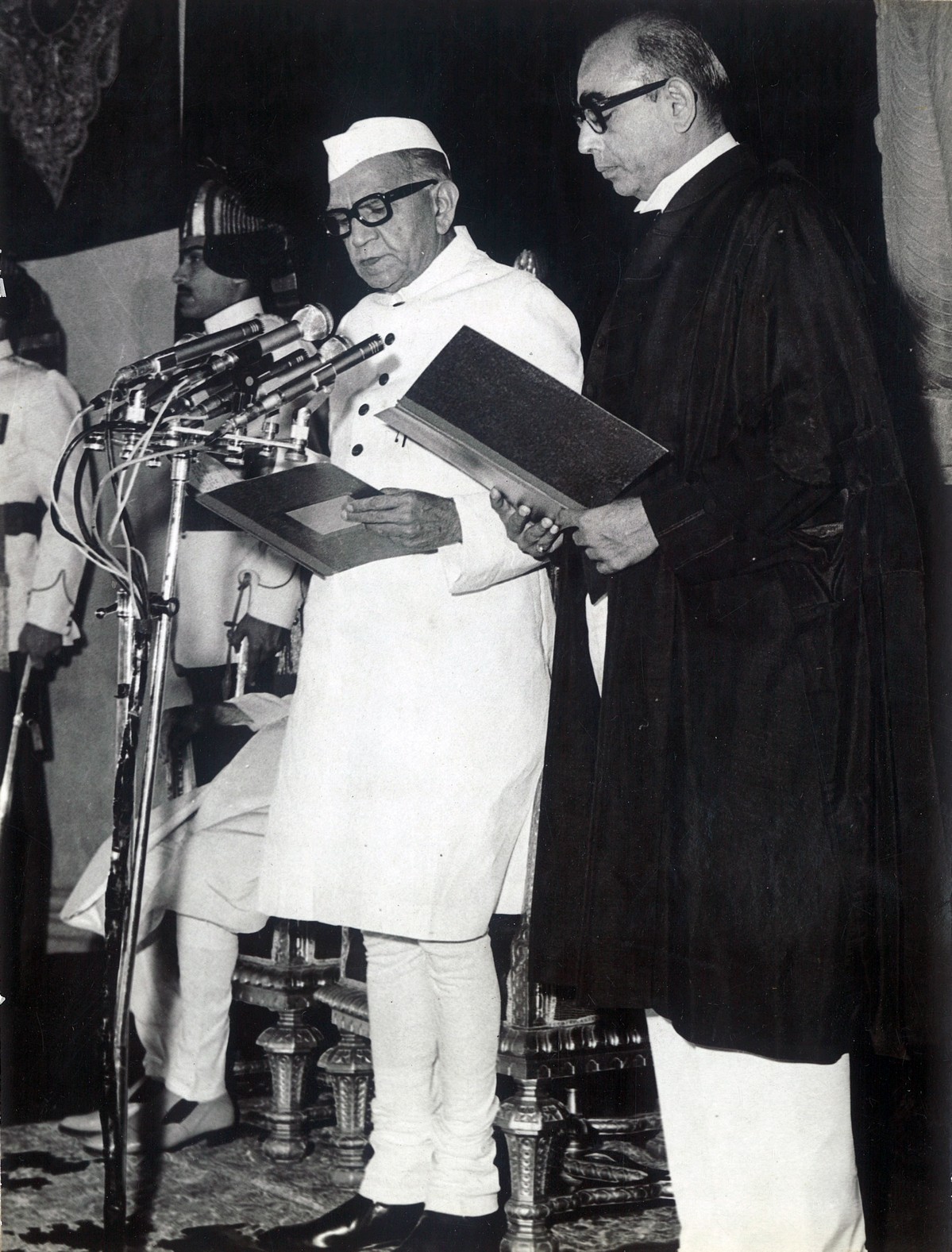
Fakhruddin Ali Ahmed served as the fifth President of India from August 1974 until his death in office on 11 February 1977. His life encompassed the full arc of the Indian national movement — from his student days in England, where he encountered Indian nationalist politics in their metropolitan setting, through his participation in the independence struggle, his long career as a lawyer and Congress politician in Assam, his successive ministerial roles in the governments of Jawaharlal Nehru and Indira Gandhi, and finally the presidency that ended with his death. He was the second Muslim to hold the office of President of India and the second President to die in office, following Dr. Zakir Husain.
His legacy is genuinely divided. On one side of the ledger stands a life of sustained commitment to Indian national independence and democratic governance — a lawyer who used his professional skills in the service of the national movement, a politician who built a career of genuine achievement in one of India's most complex and diverse states, a minister who contributed to significant areas of national policy, and a constitutional figure who represented the secular character of the Indian republic. On the other side stands his role in the Emergency of 1975–1977 — the period of authoritarian rule proclaimed by Prime Minister Indira Gandhi and formally brought into effect by his signature on the proclamation under Article 352 of the Constitution. His willingness to sign that proclamation, in the early hours of 26 June 1975, has been the defining episode by which subsequent generations have assessed his presidency, and it raises questions about the relationship between constitutional office and political loyalty that have never been fully resolved.
Any honest account of Fakhruddin Ali Ahmed must engage with both dimensions of this divided legacy — neither reducing him to the figure who signed the Emergency proclamation nor using his genuine earlier achievements to deflect from the seriousness of that act. He was a human being of real abilities and real limitations who made consequential choices in circumstances of unusual difficulty and pressure, and the historical record should be approached with that complexity in mind.
Early Life and Family Background
Fakhruddin Ali Ahmed was born on 13 May 1905 in Delhi. His father, Colonel Zalnur Ali Ahmed, was a medical officer in the British Indian Army, a background that placed the family in the professional stratum of Indian Muslim society that had engaged with the colonial system as a pathway to respectability and security. His family had roots in Assam — a northeastern state of India that would be the primary theater of his political career — and the combination of Delhi birth, military family background, and Assamese connections gave him a profile that crossed several of the boundaries that defined Indian social geography.
His early education was in Delhi, and he subsequently studied at the Government High School in Delhi before proceeding to St. Stephen's College, one of the most prestigious institutions of higher education in colonial India, associated with Delhi University. St. Stephen's was an institution where the English-educated Indian elite received a formation that combined academic rigor with the social cultivation of the colonial professional class, and Fakhruddin Ali Ahmed's years there equipped him with the educational credentials and social ease that would serve him throughout his career.
He then traveled to England to pursue legal studies, a path followed by many of the most prominent figures of the Indian national movement — Gandhi, Nehru, Jinnah, and numerous others had all read law in England, and the Inns of Court in London served as a remarkable incubator for Indian nationalist politics in the first half of the twentieth century. Ahmed studied at St. Catherine's College, Cambridge, and was called to the Bar from the Inner Temple. His years in England exposed him to Indian nationalist politics in their metropolitan form — the networks of Indian students in London and Cambridge who debated the future of their country, followed developments in India with intense interest, and formed the personal relationships that would define their later careers.
Legal Career and Entry into Politics
Returning to India after his legal training in England, Fakhruddin Ali Ahmed established himself as a lawyer, eventually practicing at the Gauhati High Court in Assam. His choice to build his legal career in Assam rather than in Delhi or the major cities of the United Provinces reflected both family connections and a deliberate choice to engage with the politics of a region that was genuinely complex and where legal skills could be deployed in the service of communities that were often underserved.
Assam in the 1930s and 1940s was a region of extraordinary diversity — home to tribal communities, Bengali immigrants, indigenous Assamese, tea garden workers of various origins, and a Muslim population that itself was internally diverse, including both indigenous Assamese Muslims and the descendants of Bengali Muslim immigrants who had settled in the Brahmaputra valley in the late nineteenth and early twentieth centuries. Navigating the politics of this diversity required a combination of legal skill, political sensitivity, and the ability to build coalitions across communal and linguistic boundaries. Fakhruddin Ali Ahmed's career demonstrated these qualities across several decades.
He joined the Indian National Congress and became involved in the independence movement in Assam. His participation in the Quit India Movement of 1942 led to his imprisonment by the colonial government — an experience shared with thousands of other Congress activists across India and one that gave him a credibility as a freedom fighter that would serve him throughout his subsequent political career. The imprisonment was not merely symbolic: it demonstrated a willingness to accept personal consequences for political commitment that distinguished genuine participants in the independence movement from those who expressed sympathy with its goals from a safe distance.
After independence and the end of his legal practice's primary orientation toward nationalist politics, he continued his legal career while building his political position within Assam's Congress organization. He was elected to the Assam Legislative Assembly and began the process of accumulating the legislative experience and the political relationships that would eventually carry him to the national stage.
Assam Politics and Regional Significance
Understanding Fakhruddin Ali Ahmed's political career requires attention to the specific conditions of Assam, which differed significantly from the political environment of the Hindi-speaking heartland that dominated much of Indian national politics. Assam had its own linguistic identity, its own historical relationship with the Mughal and British empires, its own communal dynamics shaped by the tea industry and by patterns of migration from Bengal, and its own political culture that reflected these specificities.
The Congress in Assam was shaped by these conditions. Building a viable Congress coalition in Assam required negotiating between indigenous Assamese political interests, the interests of the large Bengali-speaking population, the specific concerns of the tea garden communities, and the interests of various tribal groups — all while maintaining the connection to the national Congress leadership that gave Assam's politicians access to central resources and patronage.
Fakhruddin Ali Ahmed proved skilled at this kind of coalition politics. His Muslim identity was an asset in mobilizing Muslim voters who formed a significant portion of Assam's electorate, particularly in the districts of lower Assam where Muslim population density was highest. But his political base was never exclusively communal — he cultivated relationships across the religious and linguistic divides of Assamese politics in ways that reflected the Congress's nominally secular approach to electoral mobilization.
He served in the Assam state government in various capacities and built the record of legislative and administrative experience that qualified him for consideration at the national level. His reputation as a reliable Congress politician who could be trusted to maintain the party's coalition in a politically complex state made him a figure of value to the national Congress leadership, and his elevation to the central government reflected both this regional significance and the personal relationships he had built with the Congress high command.
Ministerial Career Under Nehru and Indira Gandhi
Fakhruddin Ali Ahmed's transition to national politics came with his election to the Lok Sabha, the lower house of the Indian Parliament, and his subsequent appointment to ministerial positions in the Union government. He served in the cabinets of both Jawaharlal Nehru and Indira Gandhi, holding portfolios in the areas of agriculture, education, and other significant domains of national policy.
Agriculture Ministry
His most substantive ministerial work was in the area of agriculture, a domain of crucial importance to a country where the majority of the population depended directly or indirectly on agricultural production. India in the 1960s was confronting acute food security challenges — the country had experienced severe famines and was heavily dependent on food imports, particularly from the United States under the PL-480 program. The political and economic vulnerability this dependence created was a source of profound national anxiety, and agricultural development was accordingly a central priority of the national government.
Fakhruddin Ali Ahmed served as Minister of Agriculture during a critical period in Indian agricultural policy — the years of the Green Revolution, when the introduction of high-yielding varieties of wheat and rice, combined with expanded irrigation, increased use of fertilizers, and other inputs, transformed India's agricultural productivity. His ministerial tenure coincided with the implementation of policies that contributed to India's eventual achievement of food self-sufficiency, though the degree of his personal contribution to these outcomes and the extent to which they should be attributed to ministerial leadership versus bureaucratic and technical expertise is a matter of historical judgment rather than simple attribution.
Other Ministerial Roles
Beyond agriculture, Ahmed held portfolios in education and other areas, contributing to the policy debates of a period in which India was attempting to build the institutional foundations of a modern state across multiple domains simultaneously. His ministerial career was characterized by competence and loyalty to the political leadership rather than by the kind of visionary leadership in any specific policy area that leaves a clearly identifiable personal imprint.
His relationship with Indira Gandhi, who became Prime Minister in 1966 following the death of Lal Bahadur Shastri, was one of political loyalty and personal trust. He was among the Congress politicians who supported Gandhi during the 1969 Congress split — when the party divided between the Gandhi faction and the Organization Congress — and this loyalty was rewarded with continued ministerial positions and, ultimately, with the Congress nomination for the presidency.
Election to the Presidency
Fakhruddin Ali Ahmed was elected President of India in August 1974, succeeding V.V. Giri. His election as the Congress candidate was an expression of the party's political calculus at the time: he was a trusted loyalist of Indira Gandhi, a Muslim — whose election would demonstrate the secular character of the Congress and the republic — and a politician with sufficient national standing to be credible as a candidate for the highest constitutional office.
The election of a Muslim as President of India for the second time (following Zakir Husain) had symbolic significance in the political context of the early 1970s, when the Partition generation was passing and the question of Indian Muslim identity in the republic was being continuously negotiated. Indira Gandhi's Congress sought to maintain its historical relationship with Muslim voters, and the nomination of Fakhruddin Ali Ahmed served this political purpose while also making a genuine statement about the inclusive character of Indian democracy.
His election was not without opposition. The Janata Party and other opposition groups had their own candidate, but the Congress's parliamentary majority ensured Ahmed's victory in the electoral college. He was sworn in as President on 24 August 1974, taking the oath of office in the ceremonial setting of the Central Hall of Parliament.
The Emergency of 1975: Background and Context
The declaration of a State of Emergency in India on 25–26 June 1975 is one of the most controversial episodes in the history of Indian democracy, and Fakhruddin Ali Ahmed's role in it — as the President who signed the proclamation — is the most contested aspect of his legacy. Understanding this episode requires attention to the political and constitutional context in which it occurred.
By mid-1975, Prime Minister Indira Gandhi was facing an acute political crisis. The Allahabad High Court had, in June 1975, found her guilty of corrupt electoral practices in connection with her 1971 election victory and had declared her election void, ordering her to vacate her parliamentary seat. The Supreme Court had granted a conditional stay of the High Court order, allowing her to remain in office pending appeal but restricting her from voting in Parliament or drawing her salary as a member.
The political opposition, emboldened by the High Court judgment, was intensifying its campaign to force Gandhi's resignation. The veteran socialist leader Jayaprakash Narayan — known as JP — had been leading a national movement of civil disobedience and demanding mass resistance to Gandhi's government. Strikes were being called, and there was a genuine prospect that the political situation would become ungovernable.
On the night of 25–26 June 1975, Indira Gandhi decided to invoke Article 352 of the Indian Constitution, which permits the President to proclaim a State of Emergency when the security of India is threatened by war, external aggression, or internal disturbance. She presented a cabinet recommendation to President Fakhruddin Ali Ahmed, who signed the proclamation in the early hours of 26 June 1975.
Fakhruddin Ali Ahmed and the Emergency Proclamation
The constitutional and political dimensions of the President's role in the Emergency declaration are complex and require careful analysis.
Under the Indian Constitution as it stood in 1975, the President was required to act on the advice of the Cabinet in the exercise of most executive functions. Article 74 of the Constitution specified that the President shall act in accordance with the advice of the Council of Ministers. The formal constitutional position was therefore that the President had limited discretion to refuse a Cabinet recommendation that was formally presented in accordance with constitutional procedure.
However, critics of Fakhruddin Ali Ahmed's role have argued that this formal constitutional argument, while technically accurate, does not fully exonerate him from responsibility for what followed. Several dimensions of this criticism deserve examination.
First, critics have argued that the Emergency declaration was not merely a constitutional formality but a fundamental assault on Indian democracy, and that a President of genuine independence and courage would have found ways to delay, question, or resist the proclamation even within the formal constitutional framework. The President's constitutional role includes the function of advising and warning the government, and a more assertive use of these informal powers might have introduced a delay or a political cost that could have altered the course of events.
Second, the manner in which the Emergency was declared — late at night, without full cabinet deliberation, with the press censorship announced simultaneously — raised procedural questions that a more constitutionally scrupulous President might have used as grounds for requesting further deliberation.
Third, and most fundamentally, critics argue that Fakhruddin Ali Ahmed's long history of personal and political loyalty to Indira Gandhi meant that he was psychologically and politically incapable of the independent judgment the moment required. His presidency had been the gift of Gandhi's political support, and his entire career had been built on loyalty to the Congress leadership. The Emergency declaration was, in this reading, the moment when the consequences of having a loyal ally rather than an independent person in the presidency became most clearly visible.
Defenders of Ahmed's conduct have offered several counter-arguments. They note that the formal constitutional position genuinely constrained his options, that the political situation was one of genuine uncertainty in which even observers of good faith disagreed about the appropriate response, and that the wisdom of hindsight — which clearly demonstrates the damage the Emergency did to Indian democracy — was not available to participants at the moment of decision. They also point to evidence that Ahmed had concerns about the Emergency, though the degree to which he expressed these concerns before or after signing the proclamation is disputed in the historical record.
The Emergency Period and Its Consequences
The Emergency that Fakhruddin Ali Ahmed's signature helped bring into effect lasted from June 1975 to March 1977 — twenty-one months during which India's democratic institutions were severely curtailed. During this period, fundamental rights were suspended, habeas corpus was overridden, thousands of political opponents were imprisoned without trial, press censorship was imposed, and the government attempted to rule by decree rather than democratic deliberation. The Forty-Second Amendment to the Constitution, passed during the Emergency, significantly increased the power of the executive at the expense of the judiciary and Parliament.
The consequences for Indian democracy were serious and lasting, even though many of the Emergency's excesses were reversed after the Congress's defeat in the 1977 elections and the subsequent restoration of democratic governance. The Emergency revealed vulnerabilities in India's constitutional system — particularly in the mechanisms for checking executive overreach — that prompted subsequent reform. It also produced a political realignment that permanently altered the landscape of Indian politics, strengthening opposition movements and contributing to the formation of the Janata Party coalition that defeated Congress in 1977.
President Fakhruddin Ali Ahmed's role during the Emergency period was largely passive from a constitutional standpoint. Having signed the initial proclamation, he continued to function as President, performing the ceremonial and constitutional duties of the office without exercising any significant independent agency. The Forty-Second Amendment, which reduced the President's already limited constitutional independence, was signed by him as part of the Emergency legislative programme.
His health had been declining during this period, and he died in Rashtrapati Bhavan on 11 February 1977, several weeks before the Emergency was formally lifted in March 1977 following the announcement of elections. He did not live to see the electoral verdict — Congress's defeat and the Janata Party's assumption of power — that constituted the democratic repudiation of the Emergency.
Death in Office and Response
Fakhruddin Ali Ahmed died on 11 February 1977, becoming the second Indian President to die in office after Dr. Zakir Husain. He was seventy-one years old. His death, which came while the Emergency was still in force and while the country was in the midst of the election campaign that would end it, was mourned with the ceremonial observances appropriate to the head of state, though the political atmosphere of the period inevitably colored the response.
He was buried in Delhi with state honors, and tributes were paid by political leaders across the political spectrum — including, with varying degrees of sincerity, by political figures who had been imprisoned during the Emergency and who held views about his responsibility for it that they were not free to express fully in the immediate aftermath of his death.
The posthumous assessment of his role became much more critical after the Congress's electoral defeat in March 1977 and the subsequent public examination of Emergency-era events. The reports of various commissions established by the Janata government to examine Emergency excesses contributed to a reappraisal of the roles of various figures, including the President, in enabling the Emergency.
Assessment of His Overall Record
A fair assessment of Fakhruddin Ali Ahmed must weigh his overall record against the specific episode of the Emergency, recognizing both the genuine achievements of his earlier career and the seriousness of his presidential role in the events of 1975.
His contributions to Indian national life before the presidency were real and substantive. His participation in the independence movement, including his imprisonment during the Quit India Movement, demonstrated genuine commitment to national liberation at a time when such commitment carried real costs. His long career in Assam politics reflected an ability to navigate one of India's most complex regional political environments with skill and, by the standards of Indian electoral politics, reasonable integrity. His ministerial career contributed to areas of national policy — particularly in agriculture — that were of significant national importance.
His election as President was itself an act of national symbolism that reinforced the secular character of the republic and the Congress's historical role in building it. The fact that a Muslim could twice in succession hold the highest constitutional office in India was not trivial in a country where communal tensions had produced the partition of the subcontinent less than three decades earlier.
Against these achievements stands the Emergency. Historical judgment on this point must be honest: whatever the constitutional constraints on his formal discretion, his signature on the Emergency proclamation enabled a serious assault on Indian democracy, and his conduct during the Emergency period did nothing to mitigate the damage. The defense that he was constitutionally required to act on cabinet advice, while technically sound, does not fully discharge the question of his broader responsibility. A President of greater independence, greater personal courage, or less political loyalty to the incumbent Prime Minister might have behaved differently, and the consequences might have been less severe.
The difficulty of this judgment is compounded by the genuine uncertainty about his inner life during this period. There is limited reliable evidence about the degree to which he was aware of and concerned about the implications of what he was signing, about whether he expressed any reservations to Gandhi or other members of the cabinet, and about the state of his health and the degree to which declining physical capacity may have affected his judgment. The historical record is incomplete, and honest assessment requires acknowledgment of this incompleteness.
Legacy
The legacy of Fakhruddin Ali Ahmed is inevitably shaped by the Emergency. In the public memory of Indian democracy, his name is associated primarily with the act of signing the Emergency proclamation, and this association has overshadowed the other dimensions of his career. This is not entirely unjust — the Emergency was a significant event in Indian history, and the President's role in enabling it is a legitimate focus of historical judgment. But it is also incomplete, and a fuller historical understanding of his life requires attention to the broader record.
In Assam, where he spent most of his political career, his memory is maintained with greater complexity and warmth than in the national narrative. He is remembered as a political figure who contributed to the development of the state's Congress organization and who gave Assam a degree of national visibility through his elevation to the presidency.
The Fakhruddin Ali Ahmed Medical College and Hospital in Barpeta, Assam, was established in his memory and named in his honor — a recognition of his contribution to the state and an effort to maintain his name in connection with an institution of public service. This recognition reflects the Assamese dimension of his legacy, which continues to be valued by those in the state who remember his political career independently of the national controversy over the Emergency.
His role in Indian Muslim political history is also part of his legacy, though one that has been assessed very differently from different perspectives. As the second Muslim President of India, he continued the representation of Muslim citizens at the highest constitutional level. The degree to which this representation was substantive rather than symbolic is a matter of debate — his presidency was not associated with any significant improvement in the conditions of Indian Muslims, and his loyalty to the Congress establishment did not always translate into effective advocacy for Muslim interests within that establishment. But the fact of his presidency retained symbolic significance for many Indian Muslims, even those who were critical of his Emergency role.
Personal Life and Character
Fakhruddin Ali Ahmed was described by those who knew him as an affable, sociable man with a genuine gift for personal relationships. His legal training gave him an analytical mind, and his years in Assam politics had given him the practical skills of coalition-building and negotiation that are essential to political survival in a diverse democracy.
He was married to Abida Ahmed, who survived him and subsequently engaged in public life and social work. His personal style was accessible rather than austere — he enjoyed the social dimensions of political life and maintained a large personal network across the political, professional, and social worlds in which he moved.
His Islamic practice was regular if not ostentatiously pious. He maintained the observances of his faith in a manner that was personal and consistent without being a central feature of his public identity in the way that religious conviction was for figures like Zakir Husain. He was, in this respect, typical of the generation of Congress Muslims whose identity was primarily defined by their political and professional roles rather than by their religious community.
His health had been uncertain for some years before his death, and the physical demands of the presidency took a toll. The Emergency period, with its political tensions and the moral weight of the decisions associated with it, may have added to the burdens he was carrying in his final years.
Constitutional and Political Lessons
The Emergency episode in which Fakhruddin Ali Ahmed played his presidential role generated extensive discussion and legislative response in the years following its end. The Janata government that came to power in 1977 undertook a review of the constitutional arrangements that had made the Emergency possible and introduced the Forty-Fourth Amendment to the Constitution, which among other things restored some of the constraints on emergency powers that the Forty-Second Amendment had weakened.
More broadly, the Emergency stimulated a serious examination of the relationship between constitutional office and political loyalty that had been exposed by Ahmed's conduct. The question of what a President should do when faced with a cabinet recommendation that threatens democratic norms — a question that the formal constitutional text does not fully answer — became a subject of sustained academic and political debate that has continued in various forms to the present.
Some constitutional scholars have argued that the Emergency revealed the inadequacy of formal constitutional provisions that assume good faith on the part of all actors in the system. When a Prime Minister acts in bad faith toward democratic norms, the Constitution provides limited formal mechanisms for the President to resist, and the informal moral authority of the office — which a figure of greater independence might have deployed — depends on the personal qualities of the holder rather than on structural provisions.
Others have argued that the problem was not constitutional but political: that the Congress Party's internal culture of loyalty and hierarchy had produced a party leadership that placed personal loyalty above constitutional principle, and that Fakhruddin Ali Ahmed was a product and a victim of this culture as much as a willing participant in its consequences.
These debates have no simple resolution, but their engagement with the Emergency episode that defines Ahmed's presidential legacy ensures that his name continues to appear in discussions of Indian constitutional law and democratic theory long after the specific events of 1975 have passed from living memory.
Conclusion
Fakhruddin Ali Ahmed's life and career embody both the achievements and the failures of Indian democratic politics in the first three decades of independence. The achievements were real: a career of genuine public service in one of India's most complex states, ministerial contributions to national policy in critical areas, and a symbolic role as the second Muslim President of India that reinforced the secular character of the republic. The failures were also real: a presidency that, at its most consequential moment, failed to exercise the independent constitutional judgment that the office required, and that instead provided constitutional cover for a serious assault on Indian democracy.
Reducing his legacy to either dimension alone would be a distortion. He was a man of the Congress system — shaped by its values, sustained by its patronage, and ultimately unable to transcend its demands even when those demands conflicted with his constitutional responsibilities. The Emergency was the moment when the costs of this dependency were most clearly exposed, and the historical record must acknowledge this honestly.
At the same time, the Emergency was not the whole of his life. The decades of work in Assam, the legal career in the service of the independence movement, the ministerial years, and the symbolic significance of his presidency were also real, and they deserve recognition in any complete account of a public life that was more complex, more textured, and more fully human than the single defining episode by which it is most often remembered.
Assam's Political Landscape and Ahmed's Role Within It
To appreciate the full significance of Fakhruddin Ali Ahmed's political career, it is necessary to understand Assam as a political environment in greater depth. Assam in the 1940s and 1950s was not merely a state with complex communal politics; it was a frontier region in the most literal sense — a territory where the boundaries of Indian national identity were contested, where the legacies of British colonial frontier administration intersected with post-independence nation-building, and where the question of who belonged to the Indian nation was posed with particular acuteness.
The immigration of Bengali Muslims from what is now Bangladesh into the Brahmaputra valley had been occurring for decades before independence, driven by land pressure and economic opportunity. By the time of independence, the Muslim population of districts like Nowgong, Darrang, and Goalpara was substantial, and the political implications of this demographic reality were significant. Indigenous Assamese communities, whose cultural and linguistic identity had been shaped over centuries, viewed the demographic change with anxiety. The Congress party in Assam had to navigate these tensions — maintaining the support of Muslim voters while also addressing the concerns of indigenous communities who feared cultural submersion.
Fakhruddin Ali Ahmed's position within this landscape was complex. As a Muslim politician who was also deeply embedded in the Congress establishment and closely associated with the Assamese political mainstream rather than with any specifically communal Muslim organization, he represented a kind of bridge figure — someone who could speak to Muslim voters while also being credible to non-Muslim Assamese colleagues. His personal background, with roots in both Delhi and Assam, gave him a certain versatility that pure regional politicians lacked.
His understanding of Assam's agricultural economy — the tea gardens that were central to the state's export earnings, the subsistence agriculture of the river valleys, the land tenure arrangements that shaped the lives of millions of small farmers — informed his subsequent work as a minister in the Union government, where his agricultural portfolio brought him back to issues he had understood on the ground level in Assam. This ground-level understanding of agricultural conditions distinguished him from ministers whose knowledge was primarily theoretical or bureaucratic.
He was also attentive to the educational needs of Assam's diverse population, advocating for investment in schools and colleges at a time when the state's educational infrastructure was significantly underdeveloped relative to the more prosperous states of the Indian heartland. His advocacy for educational development in Assam was not unrelated to the broader educational commitments of the Congress establishment — the emphasis on education as a foundation of national development was a consistent theme of Nehruvian India — but he brought to it the specificity of someone who knew the region's educational needs from direct experience.
The Congress Split of 1969 and Its Implications
One of the defining episodes of Fakhruddin Ali Ahmed's national political career was his response to the Congress Party split of 1969, which divided the organization into two factions — the Congress (R), led by Indira Gandhi, and the Congress (O), led by figures associated with the party's organizational old guard who were increasingly at odds with Gandhi's more populist and centralizing style of leadership.
The split was precipitated by the presidential election of 1969, in which Gandhi supported V.V. Giri against the official Congress candidate Neelam Sanjiva Reddy. Her open defiance of the party organization on this issue, combined with the nationalization of major banks — a populist economic measure that also served to weaken the financial networks associated with her political opponents within the Congress — created a rupture that could not be healed.
Fakhruddin Ali Ahmed aligned himself firmly with Indira Gandhi's faction in this split. His loyalty was not merely tactical — though it obviously had tactical dimensions — but reflected a genuine alignment with Gandhi's political direction. He had developed a close working relationship with her during his ministerial years and shared, at least in broad terms, her commitment to a more active state role in economic management and her emphasis on reducing poverty and inequality as central national goals.
This loyalty was rewarded with continued ministerial positions and, ultimately, with the Congress nomination for the presidency in 1974. It also deepened his personal and political dependence on Gandhi in ways that would prove consequential in 1975. A politician whose career had been built on loyalty to a specific leader was poorly positioned to exercise independent judgment when that leader made a demand that tested the limits of loyalty.
The 1969 split and its aftermath also illustrated the degree to which Indian national politics had become increasingly personalized around Indira Gandhi. The Congress party that emerged from the split was more centralized and more dependent on Gandhi's personal authority than its predecessor, and the culture of loyalty that this personalization generated created conditions in which independent judgment — whether by ministers, governors, or ultimately by the President — was increasingly difficult.
The Agricultural Policy Context
Fakhruddin Ali Ahmed's most substantive policy contribution was in agriculture, and understanding this contribution requires attention to the agricultural policy environment of the 1960s and early 1970s.
India's agricultural crisis in the mid-1960s was severe. The country had experienced back-to-back droughts in 1965 and 1966, resulting in significant food shortages and heavy dependence on American food aid under the PL-480 program. The political humiliation associated with this dependence — particularly after American President Lyndon Johnson's decision to use food aid as a diplomatic lever, delaying shipments to pressure India on various foreign policy issues — created a powerful national motivation to achieve food self-sufficiency as quickly as possible.
The Green Revolution strategy — the widespread adoption of high-yielding varieties of wheat and rice, combined with expanded irrigation, increased fertilizer use, and improved extension services — was the primary vehicle through which this self-sufficiency was eventually achieved. The adoption of these technologies required not merely technical decisions but political and administrative choices about the allocation of resources, the pricing of agricultural inputs and outputs, the provision of rural credit, and the development of rural infrastructure.
As Minister of Agriculture during part of this critical period, Fakhruddin Ali Ahmed was involved in the decision-making processes associated with these choices. His specific contributions to particular decisions are difficult to isolate from the broader policy environment — agricultural policy was made through a complex process involving the Cabinet, the Planning Commission, the state governments, and various bureaucratic and technical agencies — but his ministerial tenure coincided with the implementation of policies that transformed Indian agriculture.
His understanding of Assam's agricultural conditions gave him a perspective on the limitations of Green Revolution technology for India's more diverse and challenging agricultural environments. The high-yielding variety programme worked most effectively in the Punjab and Haryana, where irrigation was already available and the necessary infrastructure existed. Its benefits were less easily realized in states like Assam, where terrain, land tenure, and infrastructure posed additional challenges. This regional variation in agricultural development was a persistent theme of Indian agricultural policy debates, and Fakhruddin Ali Ahmed's Assamese background gave him an awareness of these limitations that informed his ministerial work.
Constitutional Role of the President: A Deeper Analysis
The constitutional questions raised by Fakhruddin Ali Ahmed's presidency deserve more extended treatment than they sometimes receive in historical accounts that focus primarily on the political drama of the Emergency.
The President of India occupies a position in the constitutional system that is deliberately ambiguous between ceremonial figurehead and active constitutional guardian. The constitutional text assigns the President significant formal powers — the power to promulgate ordinances, to withhold assent from legislation, to appoint prime ministers and call for votes of confidence, and of course to proclaim emergencies — but convention and constitutional practice have progressively reduced the scope for their independent exercise.
The question of how far this reduction is constitutionally legitimate — how far the President is bound to act on cabinet advice even when that advice conflicts with constitutional norms — was debated before 1975 and has been debated continuously since. The Emergency brought this debate to a head.
The formal constitutional position in 1975 was governed by Article 74, which required the President to act in accordance with cabinet advice. However, there were significant constitutional uncertainties about the scope of this requirement. Was the President required to act on advice that was procedurally irregular? Was the President permitted to ask for reconsideration? Was there any category of cabinet recommendation so fundamentally at odds with constitutional values that the President could legitimately decline to implement it?
These questions were not definitively resolved by the constitutional text or by Supreme Court jurisprudence as it stood in 1975. The Forty-Fourth Amendment, passed after the Emergency, added the provision that the President could return a cabinet recommendation for reconsideration once, though it did not give the President power to refuse implementation after reconsideration.
In the specific circumstances of June 1975, the Emergency proclamation was presented to President Ahmed in the early hours of the morning, without the opportunity for the kind of deliberate consideration that its constitutional significance warranted. Critics have argued that he could and should have delayed signing, requested time for deliberation, or insisted on receiving fuller information about the basis for the Cabinet's recommendation. Whether such delaying tactics would have changed the outcome is uncertain, but they would have demonstrated an awareness of his constitutional responsibilities that his immediate signature did not.
Post-Emergency Reassessment
The post-Emergency reassessment of Fakhruddin Ali Ahmed's presidency was shaped by the investigations and reports commissioned by the Janata government that came to power in 1977. The Shah Commission, established to investigate Emergency excesses, examined the declaration of Emergency and the role of various actors in enabling it. Its reports contributed to a public record that documented the circumstances of the Emergency proclamation in greater detail than had previously been available.
The Shah Commission's findings regarding the President's role were part of a broader examination of how the Emergency had been enabled by a combination of political loyalty, institutional deference, and constitutional ambiguity. The Commission's reports provided a factual record that subsequent historians have used to reconstruct the events of June 1975, though the interpretation of that record — particularly regarding the President's culpability — has remained a matter of debate.
The Janata government's legislative response to the Emergency — including the Forty-Fourth Amendment — reflected a judgment that the constitutional arrangements of 1975 had been inadequate to prevent the Emergency and needed to be strengthened. While Fakhruddin Ali Ahmed did not live to see these legislative responses, they constitute part of his institutional legacy in the sense that the inadequacies his presidency exposed contributed to the constitutional reforms that followed.
Place in Indian Muslim Political History
Fakhruddin Ali Ahmed's place in Indian Muslim political history is part of the broader story of Indian Muslim political engagement with the Indian National Congress and the secular republic that the Congress built and governed in the first decades of independence.
The Congress's relationship with Indian Muslim voters was complex throughout the post-partition period. The party needed Muslim electoral support to maintain its dominance in many states with significant Muslim populations, and it demonstrated this need through the nomination of Muslim candidates for prominent positions, including the presidency. But the relationship was often criticized from within the Muslim community as instrumentalizing — using Muslim figures as symbols of inclusion without delivering substantive improvements in Muslim living conditions, educational attainment, or representation in public institutions.
Fakhruddin Ali Ahmed's career can be read through this lens. His ministerial positions and his presidency represented genuine representation of Muslim citizens at the highest levels of the state. But the absence of any specifically Muslim policy agenda during his ministerial and presidential years — combined with his Emergency role, which many Indian Muslims experienced as a direct attack on the civil liberties they depended on as a minority community — meant that his legacy within the Muslim community was more ambivalent than the formal fact of his high office might suggest.
This ambivalence was not unique to him. It reflected the structural position of Muslim politicians within the Congress system, where inclusion at the leadership level was real but where the expectation of independent advocacy for Muslim interests was constrained by the culture of party loyalty and the imperative of maintaining the secular nationalist framework. Fakhruddin Ali Ahmed was a product of this system, shaped by its possibilities and limited by its constraints.
Conclusion: A Life Between Achievement and Accountability
Fakhruddin Ali Ahmed's life was one of genuine public service that ended in an episode of institutional failure. The service was real: decades of work in Assam's complex politics, ministerial contributions to national policy, the symbolic significance of his presidency as the second Muslim to hold that office. The failure was also real: a presidential signature that enabled the suspension of Indian democracy for twenty-one months.
History does not always allow us the comfort of clean verdicts. Fakhruddin Ali Ahmed was neither a hero whose Emergency role should be minimized nor a villain whose career of public service should be dismissed. He was a man formed by a particular political culture, in whom the qualities and the limitations of that culture were both present. The Emergency revealed which would prove dominant at the most consequential moment of his presidency.
For the student of Indian history, his life is a case study in the relationship between political loyalty and constitutional independence, between personal integrity and institutional culture, between the possibilities of Muslim participation in Indian democratic life and the limitations of a political framework that incorporated Muslim politicians without always fully empowering them. These are questions that endure beyond the specific circumstances of his life, and engaging honestly with his legacy means engaging honestly with them.
References and Further Reading
Primary Islamic Sources
- Quran, Surah An-Nisa (4:58) — "Indeed, Allah commands you to render trusts to whom they are due and when you judge between people to judge with justice." (Governance principles)
- Quran, Surah Al-Ma'idah (5:8) — "O you who have believed, be persistently standing firm for Allah, witnesses in justice, and do not let the hatred of a people prevent you from being just."
- Quran, Surah Sad (38:26) — "O David, indeed We have made you a successor upon the earth, so judge between the people in truth." (Presidential responsibility and just governance)
- Sahih al-Bukhari, Book of Judgments (Kitab al-Ahkam), Hadith 7138 — "Each of you is a guardian and is responsible for his charges." (Duty of those in authority)
- Sahih Muslim, Book of Government (Kitab al-Imarah), Hadith 1829 — "A just ruler is among the seven shaded by Allah on the Day of Judgment."
Classical Islamic Sources
- Al-Mawardi, Abu al-Hasan. Al-Ahkam al-Sultaniyyah (The Ordinances of Government). [Original 11th century CE — classical Islamic political theory on governance, the duties of rulers, and constitutional principles]
- Al-Ghazali, Abu Hamid. Nasihat al-Muluk (Counsel for Kings). [Original 12th century CE — ethical duties of the ruler including justice and consultation]
- Ibn Taymiyyah, Taqi al-Din. Al-Siyasah al-Shariyyah (Governance According to God's Law). [Original 14th century CE — obligations of governance in Islamic political thought]
Academic and Scholarly Sources
- Bhave, Y.G. From the Second to the Twelfth President: Political History of India. New Delhi: Northern Book Centre, 2001.
- Guha, Ramachandra. India After Gandhi: The History of the World's Largest Democracy. New Delhi: Picador, 2007.
- Henderson, Michael. Experiment with Untruth: India Under Emergency. New Delhi: Macmillan, 1977.
- Malhotra, Inder. Indira Gandhi: A Personal and Political Biography. London: Hodder and Stoughton, 1989.
- Nayar, Kuldip. The Judgment: Inside Story of the Emergency in India. New Delhi: Vikas Publishing House, 1977.
- Sahgal, Nayantara. Indira Gandhi: Her Road to Power. New York: Frederick Ungar, 1982.
- Shah Commission. Interim Report of the Shah Commission of Inquiry. New Delhi: Government of India, 1978.
- Thapar, Romila, and others. Emergency Recalled. New Delhi: Kali for Women, 1977.
Further Reading
- Austin, Granville. Working a Democratic Constitution: A History of the Indian Experience. New Delhi: Oxford University Press, 1999.
- Brass, Paul R. The Politics of India Since Independence. Cambridge: Cambridge University Press, 1994.
- Hasan, Mushirul. Legacy of a Divided Nation: India's Muslims Since Independence. London: Hurst & Company, 1997.
- Jaffrelot, Christophe. India's Silent Revolution: The Rise of the Lower Castes in North India. London: Hurst & Company, 2003.
Mentioned In
1 article references this topic