Maulana Abul Kalam Azad: Scholar, Theologian, and Architect of Indian Education
Maulana Abul Kalam Azad (1888–1958) was a leading Islamic scholar and independence leader of the twentieth century. A theologian, journalist, and statesman, he served as president of the Indian National Congress and India's first Education Minister, shaping thought and modern India.
Introduction
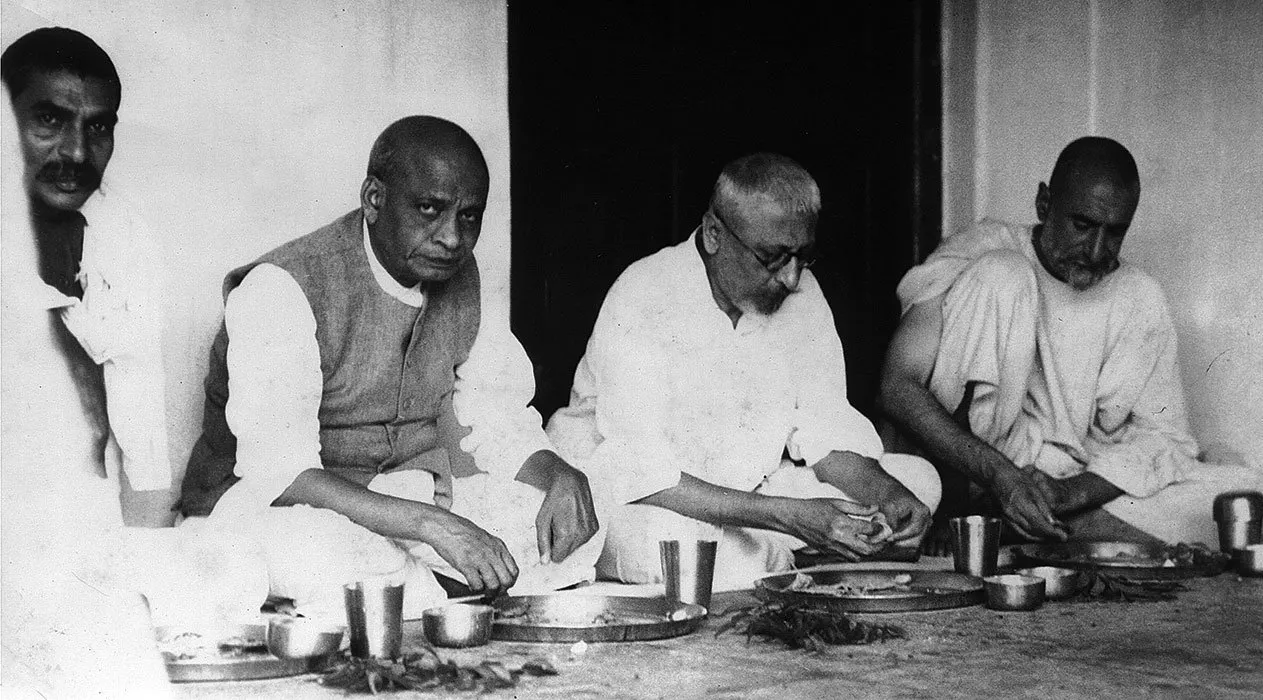
Maulana Abul Kalam Azad stands as one of the most intellectually formidable and politically consequential figures produced by the Indian subcontinent in the twentieth century. Born in Mecca in 1888 and raised in Calcutta, he combined mastery of classical Islamic learning with a reformist vision that challenged both colonial rule and communal division. By the time he died in Delhi in February 1958, he had founded two of the most influential Urdu newspapers in Indian history, written a landmark commentary on the Quran, served twice as president of the Indian National Congress, represented Indian Muslims in the highest councils of the independence movement, and shaped the institutional architecture of education in independent India as its first Education Minister.
His life resists simple categorization. He was simultaneously a traditionally trained Islamic alim and a thoroughgoing modernist; a fervent opponent of British imperialism and a committed advocate of Hindu-Muslim unity; a man whose theological arguments derived from the Quran and classical Islamic jurisprudence, yet whose political conclusions aligned with secular nationalism. These apparent contradictions were, in his own reckoning, not contradictions at all but expressions of a coherent Islamic worldview that he believed demanded justice, unity, and resistance to oppression regardless of religious affiliation.
Azad's opposition to the partition of India in 1947 made him a contested figure among Indian Muslims. His insistence that a two-nation theory based on religion was theologically flawed and historically catastrophic placed him in direct conflict with the Muslim League and Muhammad Ali Jinnah. When partition came despite his warnings, he remained in India, serving as a minister in Jawaharlal Nehru's cabinet and working to protect Muslim interests in the new republic while simultaneously building educational institutions that would serve all Indians regardless of faith or background.
The body of work he left behind — theological, journalistic, autobiographical, and administrative — continues to provoke debate. Admirers celebrate him as a visionary who saw the dangers of religious nationalism before they fully materialized. Critics argue that his position on partition left Indian Muslims politically isolated and that his warnings, however prescient, came to nothing. What neither side disputes is the depth of his learning, the courage of his convictions, and the significance of the institutional legacy he created in the years between 1947 and 1958.
Early Life and Family Background
Maulana Abul Kalam Azad was born on 11 November 1888 in Mecca, in the Hejaz region of the Arabian Peninsula. His father, Maulana Khairuddin, was a Bengali Muslim scholar of considerable reputation who had emigrated from Calcutta to Mecca following the aftermath of the 1857 uprising against British rule in India. His mother, Alia bint Muhammad, was the daughter of Sheikh Muhammad Zaher Watri, a prominent Arab scholar of Medina. This dual heritage — Bengali on his father's side, Arab on his mother's — gave Azad a unique position in the intellectual world of Indian Islam, grounding him simultaneously in the South Asian tradition of Islamic scholarship and in the heartland of the Arabic-speaking world.
The family name given at birth was Muhiyuddin Ahmad. The name "Abul Kalam" — Father of Discourse — was a pen name he adopted in recognition of his extraordinary gift for language and argument. "Azad," meaning "free," was a literary pseudonym that came to define his entire outlook. He kept both names and they became inseparable from his identity.
Azad's father, Khairuddin, was a Sufi scholar of the Qadiri order and a widely respected teacher in the circles of Islamic learning. He had been a disciple of the renowned Bengali Sufi Maulana Imdadullah Makki, who had himself played a role in the 1857 resistance. The family's departure from India was thus not merely a spiritual pilgrimage but a form of self-imposed exile from British-controlled territory. Growing up in Mecca during his earliest years, Azad absorbed the atmosphere of the Holy City — its scholars, its mosques, its multilingual community of Muslims from across the world — in a way that permanently shaped his sense of Islam as a universal civilization rather than a narrow sectarian identity.
In 1890, when Azad was approximately two years old, the family returned to Calcutta, which was then the capital of British India and one of the most cosmopolitan cities in Asia. Calcutta's Muslim community was deeply stratified between the ashraf elite — those who claimed descent from Arab, Persian, Turkish, or Afghan immigrants — and the atraf, the convert communities of Bengal. Azad's family occupied a respected position in the former category, and his upbringing in Calcutta exposed him to both the refinements of Mughal-era literary culture and the urgent social and political questions that British colonialism had forced upon Indian Muslims.
Education and Intellectual Formation
Azad's education was entirely traditional in its early stages, conducted within the home under the supervision of his father and other tutors. He received instruction in Arabic, Persian, Urdu, the Quran, hadith, fiqh (Islamic jurisprudence), kalam (theological philosophy), and the classical literary traditions of the Islamic world. By his own account, he had memorized the Quran and acquired proficiency in Arabic grammar and rhetoric before the age of ten. His father's demanding curriculum was modelled on the classical madrasa system, and Azad later recalled the rigor with which he was expected to master not merely the content of texts but the arts of disputation and commentary that defined traditional Islamic scholarship.
What distinguished Azad's intellectual formation from that of most contemporary Islamic scholars was his early exposure to the modernist reform movements that were reshaping Islamic thought in the late nineteenth and early twentieth centuries. The writings of Jamal al-Din al-Afghani reached him in Calcutta and made an immediate and lasting impression. Al-Afghani's arguments for pan-Islamic solidarity, his critique of both traditional scholasticism and uncritical Westernization, and his insistence that Islam possessed the intellectual resources to meet the challenges of modernity resonated deeply with the young Azad. He was equally influenced by Muhammad Abduh, the Egyptian scholar and Grand Mufti who had worked with al-Afghani in Paris and whose rational approach to Quranic interpretation Azad would later develop and extend in his own commentary.
The influence of Syed Ahmad Khan, founder of the Muhammadan Anglo-Oriental College at Aligarh, was more ambivalent. Azad respected Khan's educational vision but rejected his collaborationist politics and his tendency to dismiss the validity of political resistance to British rule. This disagreement would eventually harden into explicit critique, as Azad came to view the Aligarh school's accommodation with colonialism as a betrayal of both Islamic values and Indian national interests.
In 1908, at the age of nineteen or twenty, Azad undertook a journey to the Middle East that proved transformative. He visited Egypt, where he encountered the circle of scholars gathered around Muhammad Abduh's disciple Rashid Rida and the journal Al-Manar. He traveled to Iraq and met scholars in the Shia centers of learning at Najaf and Karbala. He spent time in Constantinople, then still the seat of the Ottoman Caliphate, where he witnessed firsthand the ferment of Young Turk reformism and the debates about the relationship between Islam, nationalism, and modernity that were tearing apart the Ottoman Empire. He visited Beirut and observed the early stirrings of Arab nationalism. This extended journey across the Islamic world sharpened his sense that the Muslim ummah faced a common crisis of colonialism and intellectual stagnation, and that the response required both political resistance and a thoroughgoing renewal of Islamic thought.
He returned to India with his intellectual framework essentially formed. The traditional learning acquired from his father gave him the tools to engage seriously with the classical texts of Islamic scholarship. The modernist influences he had absorbed gave him the critical distance to challenge received interpretations. The political experiences of his travels gave him the conviction that Islam demanded active resistance to injustice rather than quietist accommodation.
Early Journalism and Political Awakening
Azad's entry into journalism was not a departure from his scholarly vocation but an expression of it. He recognized that in the conditions of early twentieth-century India, the printed word reached audiences that no madrasa lecture could, and that the transformation of Muslim public opinion required a new kind of discourse — one that combined the authority of classical Islamic learning with the accessibility and urgency of popular journalism.
His early journalistic efforts included contributions to several Urdu periodicals, but it was the founding of Al-Hilal in July 1912 that announced his arrival as a major public voice. Published from Calcutta, Al-Hilal was unlike anything that had previously appeared in the Urdu press. Its physical design was elegant and its production values high, but what made it extraordinary was the quality and ambition of its content. Azad used the journal to develop a systematic critique of British imperialism grounded in Islamic theology, to argue for Hindu-Muslim unity as a political and moral imperative, and to engage with the intellectual currents of the wider Islamic world in a way that was rigorous rather than merely rhetorical.
The journal's circulation grew rapidly. Within two years of its founding, Al-Hilal had achieved a readership unprecedented for an Urdu publication, with estimates suggesting a circulation of twenty-five to twenty-six thousand copies per issue at its peak — figures that dwarfed those of competing publications. The British colonial government recognized its influence immediately. Azad's arguments that Muslims had a religious obligation to resist colonial rule, that the Quran demanded justice and liberation, and that Hindu-Muslim solidarity was not a pragmatic compromise but a moral necessity derived from Islamic principles were seen as seditious.
In 1914 the colonial government imposed a security deposit on Al-Hilal under the Press Act, demanding a sum that effectively forced its suspension. Azad responded by founding a second journal, Al-Balagh, in 1915, which continued the same agenda with even greater directness. Al-Balagh was banned outright in 1916, and Azad himself was interned under the Defence of India Regulations, initially in Ranchi, where he spent four years largely cut off from the political world but deeply engaged in writing and scholarship. The internment, while politically silencing him temporarily, provided the conditions in which he began work on what would become his most significant intellectual achievement, the Tarjuman al-Quran.
The period of his early journalism also saw the development of his distinctive political theology. Azad argued, drawing on classical sources, that the Quran's concept of millat — the community of believers — was not limited to Muslims alone but encompassed all those who submitted to divine guidance, including righteous practitioners of other monotheistic faiths. This theological position undergirded his political argument for Hindu-Muslim unity: not merely as a tactical alliance against colonialism but as an expression of a divinely ordained human solidarity that transcended religious boundaries.
Theological and Intellectual Contributions
The Tarjuman al-Quran — the Interpreter of the Quran — is Azad's most enduring intellectual achievement and one of the most significant works of Quranic commentary produced in the twentieth century. The project occupied him for decades, and its publication history reflects the turbulence of his political life. The first volume appeared in 1931, covering Surah Al-Fatiha, the opening chapter of the Quran, and the early Meccan surahs. Subsequent volumes appeared over the following decades, though the commentary was never fully completed to the extent Azad had originally envisioned.
The interpretive methodology of the Tarjuman was distinctive and, in the context of twentieth-century Islamic scholarship, controversial. Azad employed what he called the method of nazm — coherence or internal order — arguing that each surah of the Quran possessed a structural unity and a central theme that the interpreter must identify before proceeding to the meaning of individual verses. This approach, which he developed partly in dialogue with the work of earlier scholars but pushed further than most had gone, was designed to produce a reading of the Quran that was holistic rather than atomistic, concerned with the text as a living whole rather than as a collection of discrete legal or theological propositions.
His translation from Arabic into Urdu was deliberately literary, aiming to reproduce the rhetorical power of the original rather than merely convey its semantic content. The commentary accompanying the translation engaged with classical tafsir (exegetical) literature, with modern Western scholarship on religion and history, and with contemporary political and social questions in ways that few earlier commentaries had attempted. Azad's Quran was not a text sealed in the past but a living document speaking directly to the conditions of colonized, divided, and spiritually uncertain Muslims in the twentieth century.
Central to Azad's theological vision was the concept of din al-ilahi — not in the idiosyncratic sense employed by the Mughal emperor Akbar, but as Azad's term for the universal religion underlying all divine revelation. He argued that the core message of all prophets, from Adam through Moses and Jesus to Muhammad (peace be upon him), was identical: the acknowledgment of God's unity (tawhid), the practice of righteousness, and the pursuit of justice. The Quran, as the final and complete revelation, synthesized and perfected this universal guidance. This theological framework allowed Azad to argue simultaneously for the supremacy of Islam as the final revealed religion and for a profound respect for other monotheistic traditions — a position that had obvious political implications for his arguments about Hindu-Muslim relations.
His engagement with the question of ijtihad — independent reasoning in Islamic jurisprudence — placed him in the reformist tradition associated with al-Afghani and Abduh, though his approach was more deeply grounded in classical textual scholarship than either of those thinkers. Azad argued that the closing of the gates of ijtihad was a historical development rather than a theological necessity, and that the challenges of modernity demanded a renewed exercise of independent reasoning guided by the Quran and authenticated hadith rather than bound by the accumulated interpretations of the medieval schools.
His other significant scholarly works include Ghubar-e-Khatir (Dust of the Heart), a collection of letters written during his internment in Ahmadnagar Fort between 1942 and 1945, which combines personal reflection, literary criticism, and meditations on Islamic spirituality in a style of Urdu prose widely regarded as among the finest of the twentieth century. His autobiographical work India Wins Freedom, published posthumously in 1959, provided a detailed account of the independence negotiations and partition from his perspective, though thirty pages of the original manuscript were withheld at his request and published only in 1988, thirty years after his death.
The Khilafat Movement and Azad's Role
No account of Azad's political career is complete without examining his engagement with the Khilafat Movement, which represented the most significant attempt by Indian Muslims to mobilize around a pan-Islamic cause in the early twentieth century. The movement arose in response to the threat posed to the Ottoman Caliphate by the Allied powers following the First World War. The Ottoman Empire had entered the war on the side of the Central Powers, and its defeat left the Ottoman Sultan-Caliph in a precarious position, subject to the terms of the punitive Treaty of Sèvres in 1920 and the subsequent Allied occupation of Istanbul.
For Indian Muslims, the prospect of the abolition of the Caliphate was not merely a political concern but a profound religious anxiety. The Khilafat Committee, led by brothers Mohammad Ali and Shaukat Ali, launched a campaign to pressure the British government to preserve the Ottoman Caliphate as a condition of peace with Turkey. Azad's relationship to the Khilafat Movement was engaged but not uncritical. He participated in its agitations and contributed to its journals, and he saw it as a vehicle for building precisely the kind of Hindu-Muslim political solidarity that he believed was essential for Indian liberation. Gandhi's decision to align the Indian National Congress with the Khilafat Movement in 1919 and 1920 — creating what was briefly the most powerful mass political movement India had seen — was, in part, a product of negotiations in which Azad played a facilitating role.
However, Azad was also aware of the theological complexities of Khilafat politics. His understanding of the Caliphate, shaped by his engagement with the reform movements of the Arab world, was more historically nuanced than that of many Khilafat activists. He recognized that the historical institution of the Caliphate had often diverged significantly from its theological ideal, and that the Turkish nationalist movement under Mustafa Kemal, which ultimately abolished the Caliphate in 1924, was itself a response to historical forces. When the Caliphate was abolished, the Khilafat Movement collapsed, and with it the Hindu-Muslim unity it had briefly sustained. Azad drew lessons from this episode about the dangers of building political solidarity on specifically religious symbols that could be rendered irrelevant by historical events.
Political Career and the Independence Movement
Azad's formal entry into the politics of the Indian independence movement came through his association with the Indian National Congress, which he joined in 1919 after his release from internment. The Congress was predominantly led by Hindu politicians, and many Indian Muslims, following the Aligarh tradition, were skeptical of its ability or willingness to represent Muslim interests. Azad's response to this concern was characteristically theological as much as political: he argued that Indian Muslims had a religious obligation to participate in the struggle for national liberation, that their fate was bound up with that of all Indians, and that the Congress, whatever its imperfections, represented the only viable vehicle for achieving independence.
His relationship with Mahatma Gandhi was close and, by most accounts, genuinely warm, though not without moments of tension. Azad was drawn to Gandhi's emphasis on non-violence and his insistence that the independence movement must speak to the moral conscience of the world rather than merely pursue power, but he was also capable of disagreeing with Gandhi when he believed the political judgment was wrong. His relationship with Jawaharlal Nehru was similarly complex: a genuine intellectual friendship and political alliance combined with occasional divergences on both the pace of social reform and the handling of the Muslim question.
Azad served as president of the Indian National Congress on two separate occasions. The first presidency, in 1923, was notable for making him, at thirty-five, the youngest president in the Congress's history. The second, from 1940 to 1945, covered the most critical years of the independence struggle, including the Quit India Movement of 1942. As Congress president during the Quit India period, Azad was arrested along with Gandhi, Nehru, and other Congress leaders in August 1942 and held in Ahmadnagar Fort until June 1945.
His role in the Cabinet Mission negotiations of 1946 was crucial. The Cabinet Mission, sent by the British government to negotiate a constitutional settlement for an independent India, proposed a three-tier federal structure that would have kept India united while providing substantial autonomy for Muslim-majority provinces. Azad was among those who believed this plan offered the best available framework for maintaining Indian unity while protecting Muslim interests. The plan ultimately failed when both the Congress and the Muslim League found ways to interpret it differently, and when Nehru's statements about Congress's freedom to modify the plan after independence alarmed the League sufficiently to withdraw its conditional acceptance.
Opposition to Partition
Azad's opposition to the partition of India was the most consequential political position of his life, and it remains the most debated aspect of his legacy. His opposition was rooted in several distinct but interconnected arguments: theological, historical, demographic, and prudential.
The theological argument drew directly on his Quranic interpretation. Azad maintained that the Quran's concept of the Muslim community did not mandate the creation of a territorially defined Islamic state as the primary expression of Muslim political identity. The Prophet Muhammad's establishment of the Constitution of Medina — a document that created a multi-religious political community in which Muslims and non-Muslims shared civic obligations and protections — demonstrated, in Azad's reading, that an Islamic political order was not synonymous with an exclusively Muslim population. The idea that Muslims required a separate homeland to practice their faith fully was, he argued, historically unfounded and theologically mistaken.
The historical argument drew on the centuries of shared civilization that Muslims and Hindus had built together in the subcontinent. Azad pointed to the Mughal Empire at its height as evidence that a predominantly Muslim ruling class could govern a multi-religious society in a way that, whatever its imperfections, created conditions for genuine cultural synthesis. To abandon this historical inheritance in favor of territorial separation based on religious identity was, he argued, to embrace a narrow and ultimately self-defeating vision of communal life.
The demographic argument was perhaps his most practically urgent. India's Muslim population was not concentrated in the proposed territories of Pakistan. Significant Muslim communities — in Uttar Pradesh, Bihar, Bengal, Hyderabad, and elsewhere — would remain within India regardless of partition. Azad warned repeatedly that partition would not solve the problem of Muslim minority status; it would merely redistribute it, leaving large Muslim populations in India without the political leverage they had possessed when their co-religionists constituted a potential national bloc.
His conflict with Muhammad Ali Jinnah and the Muslim League was both principled and personal. Azad regarded Jinnah as a skilled lawyer and political tactician but questioned his Islamic credentials and his understanding of Indian Muslim culture. Jinnah, in turn, regarded Azad as a Congress stooge whose claims to represent Muslim interests were fraudulent. The bitterness of this dispute was never fully resolved, and it colored the political atmosphere in which partition decisions were made.
When partition came in August 1947, Azad's private response, as recorded in India Wins Freedom, was one of profound sorrow mixed with a sense of vindication that brought no satisfaction. He stayed in India, as he had always said he would, and worked to protect the lives and properties of Muslims caught in the violence of partition, personally intervening on multiple occasions to prevent attacks on Muslim communities in Delhi.
Post-Independence: First Education Minister of India
Azad's appointment as India's first Minister of Education in Jawaharlal Nehru's cabinet was an acknowledgment of his intellectual stature and his commitment to Indian national life. He held the position from 1947 until his death in 1958 — eleven years during which he laid the institutional foundations of the Indian educational system in ways whose effects are still visible today.
His vision for Indian education was shaped by three convictions. The first was that education must be universal and accessible regardless of religion, caste, gender, or economic background. The second was that the newly independent nation required institutions of the highest international quality in science, technology, and research if it was to develop economically and stand on its own in the modern world. The third was that the cultural and humanistic traditions of India — including its Islamic heritage — deserved institutional support alongside the scientific and technical.
The Indian Institutes of Technology represent perhaps the most visible institutional legacy of his tenure. Azad was central to the establishment of the first IITs, beginning with IIT Kharagpur in 1951, which was followed by IITs in Bombay, Madras, Kanpur, and Delhi during and after his tenure. These institutions were modelled partly on the Massachusetts Institute of Technology and partly on European technical universities, and they were designed from the outset to produce graduates capable of competing with the best engineering talent in the world.
The University Grants Commission, established under the University Grants Commission Act of 1956, was another institutional creation closely associated with Azad's tenure. The UGC was designed to coordinate university education across India, ensure minimum standards, and distribute funds to universities and colleges — providing a national regulatory framework for higher education that had previously been entirely a provincial matter.
The All India Council for Technical Education, the Indian Council for Cultural Relations, the Sahitya Akademi (the national academy of letters), the Sangeet Natak Akademi (the national academy of music, dance, and drama), and the Lalit Kala Akademi (the national academy of visual arts) were all established during Azad's tenure. These cultural institutions reflected his conviction that the arts and humanities were not luxuries to be pursued after economic development but essential components of a civilized national life. The Sahitya Akademi was particularly significant for its commitment to India's multilingual literary heritage, recognizing and supporting literature in all the major languages of India including Urdu.
Azad was also instrumental in the expansion of the Indian Institute of Science in Bangalore, the establishment of the Council of Scientific and Industrial Research network of laboratories, and the promotion of technical education for women and members of historically marginalized communities. He worked to protect the character of Aligarh Muslim University while integrating it into the national system, arguing that the preservation of Muslim educational institutions was not incompatible with national integration but was in fact essential to it.
Azad and Allama Iqbal: A Complex Intellectual Relationship
The relationship between Azad and Allama Iqbal is one of the most intellectually fascinating in twentieth-century Islamic thought. Both men were towering figures of Muslim intellectual life in the subcontinent; both engaged seriously with Islamic theology and philosophy; both responded to the crisis of colonialism and Western modernity with projects of Islamic renewal. Yet their conclusions diverged fundamentally on the central political question of their era.
Iqbal, whose philosophical poetry in Urdu and Persian had made him the most celebrated Muslim intellectual of his generation by the 1930s, came to argue that the spiritual and cultural distinctiveness of Islam required political expression in a separate territorial homeland. His famous 1930 presidential address to the Muslim League in Allahabad, in which he envisioned a consolidated Muslim state in the northwest of India, is often cited as one of the intellectual foundations of the Pakistan movement.
Azad disagreed with Iqbal's conclusion while sharing many of his premises. Both men agreed that Islam was more than a personal religion — that it had social, political, and civilizational dimensions that demanded expression in the public sphere. Where they diverged was on whether that response required territorial separation. Azad's reading of Islamic history and theology led him to conclude that the Muslim community had always been strongest when it engaged with diverse environments rather than retreating into homogeneous enclaves, and that the Indian Muslim community's centuries-long engagement with Hindu civilization had produced a hybrid culture — embodied in the Urdu language, in Mughal architecture, in the shared devotional traditions of Sufi Islam and the Bhakti movement — that was among the most vital expressions of Islamic civilization in the modern world.
Major Works
Tarjuman al-Quran
The Tarjuman al-Quran is Azad's magnum opus. Published in multiple volumes beginning in 1931, it represents a sustained attempt to make the Quran accessible to a modern Urdu-speaking audience while simultaneously advancing a sophisticated interpretive methodology. Azad's introduction to the work, known as the Dibachah or Preface, is itself a significant contribution to Islamic hermeneutics, laying out his principles of interpretation with philosophical clarity. The commentary on Surah Al-Fatiha alone runs to hundreds of pages, exploring the theological, legal, and spiritual dimensions of the opening chapter with a depth that few subsequent commentaries have equalled. The work was translated into English by Syed Abdul Latif and published in two volumes in 1962 and 1967.
Ghubar-e-Khatir
Written between 1942 and 1945 during Azad's internment in Ahmadnagar Fort, Ghubar-e-Khatir takes the form of a series of letters addressed to Nawab Siddiq Ali Khan, a close friend. The letters range across an extraordinary variety of subjects: the nature of time and human memory, the pleasures of classical Urdu and Persian poetry, the philosophy of music, reflections on Islamic spirituality, and meditations on nature and the seasons. The prose style is widely regarded as a high point of modern Urdu literature — elegant, precise, and suffused with learning that never becomes pedantic.
India Wins Freedom
Published in 1959, the year after Azad's death, India Wins Freedom is part memoir, part political history, and part indictment. Azad uses the book to record his account of the events leading to independence and partition, to defend his own positions throughout the negotiations, and to make pointed criticisms of figures whom he held responsible for the outcome he had feared. The thirty pages withheld until 1988 contained, among other things, Azad's prediction — made in 1946 — that partition would lead to war between India and Pakistan and that the consequences for Muslims remaining in India would be severe.
Tazkirah
Azad's early biographical work on Islamic scholars and Sufi figures, Tazkirah, reflects the influence of the classical Arabic and Persian biographical tradition on his scholarly formation. Written in highly refined Urdu, the work demonstrates the breadth of his knowledge of Islamic intellectual history and his ability to engage with the biographical tradition in a way that was both scholarly and accessible.
Azad's Urdu: A Literary Legacy
Any account of Azad's significance that focuses exclusively on his theological and political contributions risks undervaluing what many consider his most enduring achievement: his contribution to Urdu literature. His Urdu combined the lexical richness of the classical tradition with a clarity and rhetorical discipline that made his prose simultaneously learned and accessible. In Al-Hilal and Al-Balagh, he developed a journalistic style that could make complex theological and political arguments comprehensible to educated readers without condescending to them. In Ghubar-e-Khatir, he demonstrated that Urdu prose was capable of the kind of contemplative, essayistic register that had been developed in Persian but had not yet found full expression in Urdu. In the Tarjuman al-Quran, he showed that a literary approach to Quranic translation could produce a reading experience qualitatively different from the more legalistic or prosaic translations that had preceded it.
Contemporary Urdu literary critics generally place Azad among the handful of writers who transformed the possibilities of Urdu prose, the others being Sir Syed Ahmad Khan, Shibli Nomani, and Muhammad Husain Azad (no relation). His influence on subsequent Urdu journalism, academic writing, and literary prose has been extensive, though perhaps less visible than his influence on Islamic scholarship and political thought.
The Ahmadnagar Imprisonment: Years of Reflection
The nearly three years Azad spent in Ahmadnagar Fort between August 1942 and June 1945 were outwardly among the most constrained of his life. Arrested along with other Congress leaders following the Quit India resolution, he was held in the fort with Gandhi, Nehru, and other senior figures of the independence movement. Yet these years were also among the most intellectually productive of his life. The Ghubar-e-Khatir letters were written during this period, as were substantial sections of his Quranic commentary.
The letters in Ghubar-e-Khatir are filled with extended meditations on classical Arabic and Persian poetry, on the philosophy of music, on the experience of natural beauty as a path to spiritual understanding, and on the meaning of patience (sabr) as a theological virtue rather than mere passive endurance. The imprisonment also deepened his personal bonds with his fellow prisoners. His relationships with Gandhi and Nehru, already close, were strengthened by the shared experience of confinement, and the conversations of those years became part of the common intellectual heritage of the Congress leadership.
Criticisms and Controversies
No assessment of Azad's legacy can be complete without engaging seriously with the criticisms that have been leveled against him from multiple directions.
The most persistent criticism from within the Indian Muslim community concerns his opposition to partition. Critics argue that Azad fundamentally misread the political situation by placing too much faith in the Congress Party's willingness and ability to protect Muslim interests in a Hindu-majority state. The violence against Muslims during partition and its aftermath, and the subsequent discrimination and marginalization that many Indian Muslims experienced, are cited as evidence that his optimism was misplaced. His defenders respond that the trajectory of Pakistan — its domestic conflicts, its periods of military rule, the separation of Bangladesh in 1971 — vindicates his warnings about the consequences of founding a state on religious identity.
A second line of criticism, associated primarily with conservative Islamic scholars, concerns his theological methodology. Traditionalist ulama argued that his approach to Quranic interpretation departed too far from the established principles of classical tafsir methodology, particularly in its willingness to subordinate the opinions of classical commentators to his own reasoning. The charge of introducing innovation (bid'ah) into Islamic interpretation has been persistent in certain scholarly circles.
From a different direction, some secular historians and political scientists have argued that Azad's theological framing of political questions was itself a limitation, that his insistence on grounding arguments about Hindu-Muslim unity in Islamic theological categories made his vision inaccessible to non-Muslim audiences. His record as Education Minister has also attracted criticism from those who argue that despite his genuine achievements in institution-building, the eleven years of his tenure did not produce a comprehensive educational policy that adequately addressed the massive problems of primary and secondary education, literacy, and access that confronted newly independent India.
Death and Legacy
Maulana Abul Kalam Azad died in New Delhi on 22 February 1958, at the age of sixty-nine. He had suffered a stroke some months earlier and had been in declining health for much of his final year. His death was mourned across India and in Muslim communities worldwide. Prime Minister Nehru led the tributes, describing Azad as one of the greatest Indians of the century and a man who had enriched every domain he had touched — scholarship, journalism, politics, and administration.
He was buried in the grounds of the Jama Masjid in Delhi, not far from the Red Fort, in a location that speaks to his deep connection with both the Islamic heritage of the Mughal capital and the life of the new Indian republic.
The Government of India posthumously awarded him the Bharat Ratna — India's highest civilian honour — in 1992, making him one of the few recipients to receive the award posthumously. His birth anniversary, 11 November, is celebrated as National Education Day in India, a designation made by the Government of India in 2008, fifty years after his death. Maulana Azad National Urdu University, established in Hyderabad in 1998, was named in his honour, providing higher education through the medium of Urdu as a continuation of his commitment to making education accessible in India's minority languages.
His influence on subsequent Islamic thought in India has been significant though uneven. The tradition of modernist Islamic scholarship that he represented — combining classical learning with rational engagement with contemporary questions — has had capable successors, but none who quite matched his combination of scholarly authority, literary distinction, and political engagement. His Tarjuman al-Quran continues to be read and studied, and debates about his interpretive methodology remain active in academic and scholarly circles.
Conclusion
Maulana Abul Kalam Azad was a man of extraordinary intellectual gifts who lived through one of the most turbulent periods in the history of South Asian Islam. His formation in the classical tradition of Islamic scholarship, his engagement with the modernist reform movements of the late nineteenth and early twentieth centuries, his commitment to Indian national liberation as a religious as well as a political obligation, his opposition to the partition of India, and his decade of institution-building as Education Minister — all of these constitute a life of remarkable range and consequence.
His work raises questions that remain alive and contested: questions about the relationship between religious identity and national belonging, about the interpretation of the Quran in an age of modernity, about the political choices available to Muslim minorities in plural democracies, about the institutional conditions that make quality education possible. That these questions remain alive is itself a testament to the depth and relevance of the concerns that drove his life's work.
He was not without flaws or failures. His political judgments were sometimes wrong. His criticisms of others were sometimes unfair. His vision of Hindu-Muslim unity, however noble in conception, was not always matched by the political conditions necessary for its realization. But the standard by which he should be judged is not whether he always succeeded but whether he always tried to think seriously and act honestly in conditions of great difficulty. By that standard, his record is impressive.
References and Further Reading
Primary Islamic Sources
- Quran, Surah Al-Hujurat (49:13) — "O mankind, indeed We have created you from male and female and made you peoples and tribes that you may know one another." (Central verse in Azad's theology of unity)
- Quran, Surah Al-Baqarah (2:213) — "Mankind was [of] one religion [before their deviation]; then Allah sent the prophets." (Cited by Azad in Tarjuman al-Quran on the unity of religions)
- Quran, Surah Al-Ma'idah (5:48) — "For each of you We have appointed a law and a method. Had Allah willed, He would have made you one nation." (Azad's theological basis for pluralism)
- Quran, Surah Ash-Shura (42:13) — "He has ordained for you of religion what He enjoined upon Noah and that which We have revealed to you." (Unity of prophetic message)
- Sahih al-Bukhari, Book of Knowledge (Kitab al-Ilm) — Narrations on the obligation to seek and disseminate knowledge, foundational to Azad's educational philosophy.
- Sahih Muslim, Book of Faith (Kitab al-Iman) — Narrations on the universality of faith and moral duty cited in Azad's theological writings.
Classical Islamic Sources
- Jamal al-Din al-Afghani. Al-Urwa al-Wuthqa (The Firmest Bond). Paris, 1884. [Pan-Islamic journal co-edited with Muhammad Abduh — primary intellectual influence on Azad]
- Muhammad Abduh. Risalat al-Tawhid (Theology of Unity). Cairo, 1897. [Rationalist theology that shaped Azad's Quranic hermeneutics]
- Rashid Rida. Al-Manar. Cairo, 1898–1935. [Journal of Islamic modernism that Azad encountered during his Middle Eastern travels]
- Shah Waliullah Dehlawi. Hujjat Allah al-Balighah. [Original 18th century CE — Indian Islamic reform tradition that informed Azad's synthesis of reason and revelation]
Academic and Scholarly Sources
- Azad, Maulana Abul Kalam. Tarjuman al-Quran. Translated by Syed Abdul Latif. 2 vols. Hyderabad: Orient Longman, 1962–1967.
- Azad, Maulana Abul Kalam. India Wins Freedom: The Complete Version. Hyderabad: Orient Longman, 1988.
- Azad, Maulana Abul Kalam. Ghubar-e-Khatir. New Delhi: Sahitya Akademi, 1946.
- Douglas, Ian Henderson. Abul Kalam Azad: An Intellectual and Religious Biography. New Delhi: Oxford University Press, 1988.
- Minault, Gail. The Khilafat Movement: Religious Symbolism and Political Mobilization in India. New York: Columbia University Press, 1982.
- Noorani, A.G. Maulana Azad: The Man Who Could Have Prevented Partition. New Delhi: Roli Books, 2013.
- Zaman, Muhammad Qasim. The Ulama in Contemporary Islam: Custodians of Change. Princeton: Princeton University Press, 2002.
Further Reading
- Hasan, Mushirul. Islam in the Subcontinent: Muslims in a Plural Society. New Delhi: Manohar, 2002.
- Jalal, Ayesha. The Sole Spokesman: Jinnah, the Muslim League and the Demand for Pakistan. Cambridge: Cambridge University Press, 1985.
- Metcalf, Barbara D. Islamic Revival in British India: Deoband, 1860–1900. Princeton: Princeton University Press, 1982.
- Sikand, Yoginder. Bastions of the Believers: Madrasas and Islamic Education in India. New Delhi: Penguin Books India, 2005.
Mentioned In
16 articles reference this topic
and 4 more articles