Brigadier Mohammad Usman: The Hero of Naushera
Brigadier Mohammad Usman (1912–1949) was a distinguished Indian Army officer who chose to serve India after the 1947 Partition. He commanded the 50th Parachute Brigade in the First Kashmir War and was killed at Tithwal in 1949. Awarded the Maha Vir Chakra, he is remembered as the Hero of Naushera.
Introduction
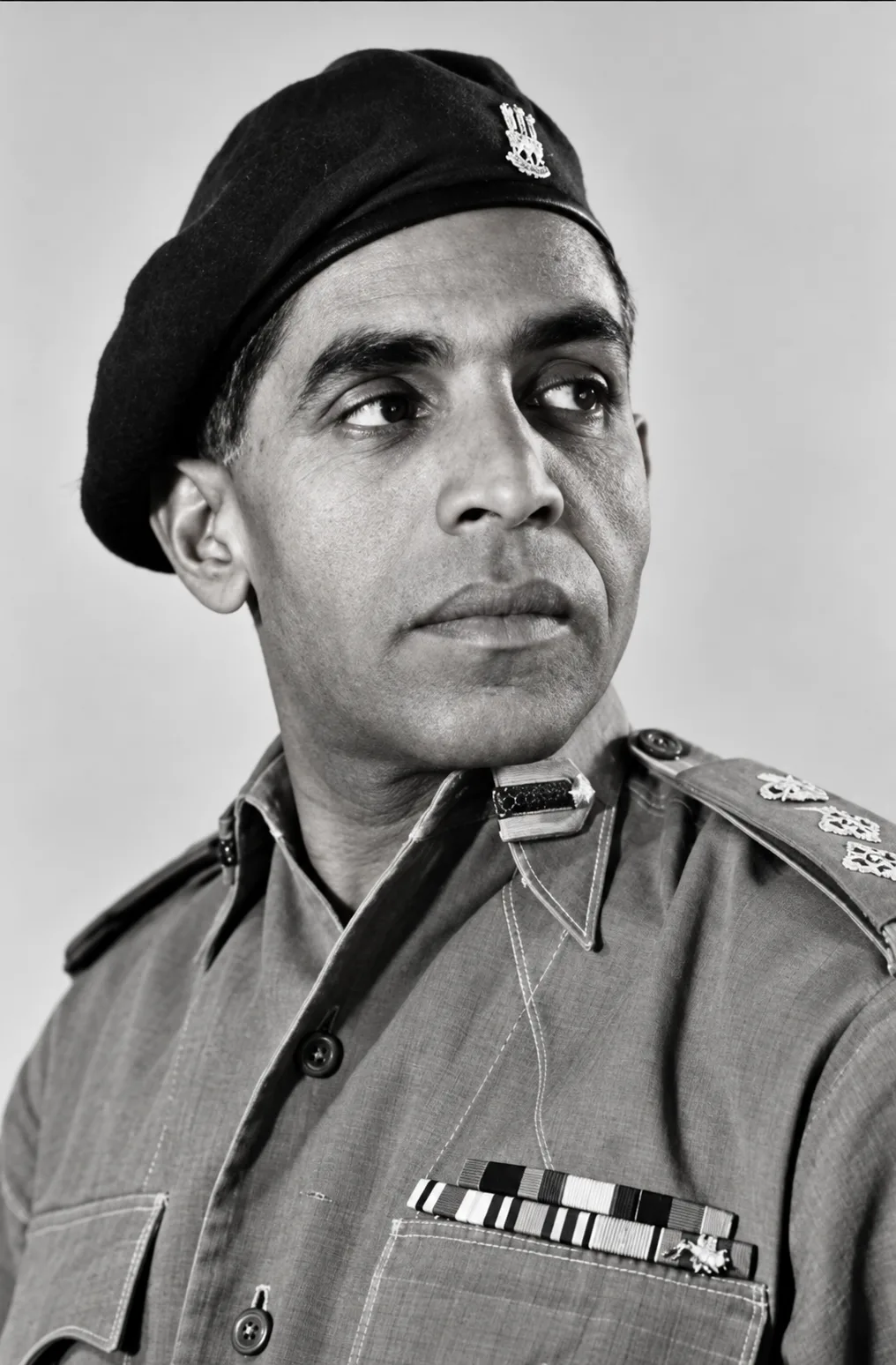
Brigadier Mohammad Usman stands among the most celebrated military figures in the early history of independent India. Born in 1912 in the United Provinces of British India and trained at the Indian Military Academy at Dehradun and later at the Royal Military Academy at Sandhurst, he served in the British Indian Army for over a decade before the subcontinent's partition in August 1947 forced upon him a choice that defined the remainder of his brief life. As a Muslim officer of the undivided Indian Army, he was expected by many — and in some accounts pressured — to transfer to the newly formed Pakistani Army. He refused, choosing instead to serve the Indian Union, a decision he articulated in terms of personal loyalty, professional commitment, and a vision of Indian nationhood that transcended religious community.
His decision proved consequential almost immediately. Within weeks of partition, the First Kashmir War began when tribal militias supported by Pakistan invaded the princely state of Jammu and Kashmir, whose Maharaja had not yet acceded to either dominion. Indian troops were rushed to defend Srinagar and halt the tribal advance. In this environment of crisis and urgency, Brigadier Usman's military qualities — his tactical skill, his personal courage, his ability to inspire troops in adverse conditions — were tested to their limits and found to be extraordinary.
The Battle of Naushera in February 1948 was the defining engagement of his wartime career. Commanding a sector under intense pressure from massed Pakistani tribal forces, he organized and led a defense and counterattack that inflicted severe casualties on the attackers and secured a strategic position that had seemed on the verge of falling. The victory earned him the title "Hero of Naushera" from the Indian press and public, and Jawaharlal Nehru himself praised his leadership. He was killed in action on 3 July 1949, struck by an artillery shell during the fighting around Tithwal. He was thirty-six years old. His death was mourned across India, and he was accorded a state funeral with full military honors — one of the very few officers in Indian military history to receive such recognition. He was posthumously awarded the Maha Vir Chakra, at the time India's highest wartime decoration for gallantry.
Brigadier Usman's life and death occupy a significant place in the history of modern India not only for his military achievements but for the symbolic weight his choices have carried in subsequent decades. A Muslim officer who chose India over Pakistan, who fought and died for the Indian state at a moment of its extreme vulnerability, he has been invoked repeatedly in debates about Indian Muslim identity, national loyalty, and the meaning of secular nationalism. His story has been told and retold in different registers — as a tale of military heroism, as evidence of Muslim patriotism, as a counterpoint to communal division — and each retelling reflects the concerns of the moment as much as the historical facts.
Early Life and Background
Mohammad Usman was born on 18 July 1912 in Bibipur village in the Mau district of the United Provinces (present-day Uttar Pradesh, India). His family was of respectable social standing in the Muslim community of the region, with a tradition of public service and a high valuation of education. The United Provinces in the early twentieth century was a region of considerable cultural richness and political ferment — the heartland of the Urdu literary tradition, the center of the Aligarh Movement for Muslim educational uplift, and a crucible of the early Indian nationalist movement. Growing up in this environment, Usman would have been exposed from an early age to the complex interplay of Islamic cultural identity, Indian national consciousness, and British imperial authority that characterized the lives of educated Muslims in the region.
Details of his early schooling are not extensively documented in available sources, but it is known that he pursued his education with sufficient distinction to qualify for admission to the Prince of Wales Royal Indian Military College in Dehradun, the feeder institution for the Indian Military Academy. This college, established in 1922, was designed to prepare Indian boys for careers as officers in the British Indian Army at a time when the Indianization of the officer corps was a stated policy goal, however slowly and reluctantly implemented in practice. Admission required both academic competence and the physical qualities associated with military fitness, and the students who attended came from families that valued professional achievement in the imperial service.
His acceptance into the military college and subsequently into the Indian Military Academy at Dehradun placed him in the first generation of officers trained entirely in India for commission in the Indian Army. The Indian Military Academy was established in 1932, and its early graduates — the Pioneers, as they were known — held a special place in the history of the institution. Usman was among these early graduates, commissioned into the Indian Army in 1934. His commission placed him in a small but growing cohort of Indian officers who were beginning to fill positions that had previously been reserved exclusively for British officers, navigating the complex social and professional dynamics of a military institution still substantially defined by British traditions and assumptions about race, class, and imperial loyalty.
Military Training and Early Career
Following his commissioning in 1934, Mohammad Usman pursued the path of professional military development that was available to the most promising officers of the Indian Army. He was sent to the Royal Military Academy at Sandhurst in England — the institution that trained officers for the British Army and, by extension, for the imperial military system — for further training, an experience that exposed him to the traditions and methods of the British military at their metropolitan source rather than merely in their colonial application.
The interwar years in which Usman developed as an officer were a period of considerable institutional evolution within the British Indian Army. The army was being gradually transformed from an instrument of imperial policing into a more modern fighting force capable of conventional warfare, a transformation accelerated by the outbreak of the Second World War in 1939. Indian officers like Usman found themselves caught between the traditions of a colonial military hierarchy, in which British officers occupied the senior positions and Indian officers were only gradually achieving parity in rank and responsibility, and the emerging reality of an Indian national military establishment that would eventually replace the British imperial structure entirely.
During the Second World War, Usman served with distinction. He participated in operations in the Burma campaign, one of the most grueling and complex military operations of the entire conflict. The Burma campaign pitted Allied forces — primarily British, Indian, and later American — against the Japanese Imperial Army in the dense jungles and difficult terrain of the Southeast Asian theater. Fighting in Burma required not merely conventional military skill but the particular qualities demanded by jungle warfare: physical endurance, tactical adaptability, the ability to maintain unit cohesion under conditions of extreme privation and persistent danger. Usman's performance in this theater contributed to his reputation as an officer of unusual quality and established the professional credentials that would later bring him to command in the Kashmir conflict.
He was also associated with the paratroopers, an elite formation that represented some of the most demanding military training available within the Indian Army. Parachute units required a combination of physical excellence and professional skill that set their officers and men apart from the broader military establishment, and Usman's association with this formation — he would eventually command the 50th Parachute Brigade — reflected his standing among the most capable officers of his generation.
By the time the Second World War ended and Indian independence became imminent, Usman held the rank of Lieutenant Colonel and had compiled a service record that placed him among the most distinguished Indian officers of his cohort. He was known within the army for his professional competence, his personal integrity, his demanding but fair approach to the soldiers under his command, and his refusal to allow the communal tensions that were increasingly affecting Indian civil life to influence the professional relationships within his unit.
The Partition Decision
The partition of British India in August 1947 confronted every officer of the undivided Indian Army with a choice: which dominion to serve. The division of the army itself was one of the most complex and painful aspects of the partition process. Units with long histories were split along religious lines, with Muslim officers and soldiers directed toward Pakistan and Hindu and Sikh officers and soldiers toward India. The process was administratively chaotic, humanly traumatic, and in many cases the source of lasting bitterness.
For Muslim officers like Usman, the expectation — formalized in the procedures for division of the army — was that they would opt for Pakistan. The Pakistani Army, inheriting a substantial proportion of the British Indian Army's personnel and equipment, was actively seeking qualified Muslim officers, and the prospect of senior positions in a newly formed national army held obvious professional attractions. Many Muslim officers of comparable or lesser rank did indeed choose Pakistan, and some went on to distinguished careers in the Pakistani military.
Usman's choice to remain in India was therefore a deliberate rejection of the path most naturally available to him. The precise reasoning he articulated for this choice is recorded in various accounts, though the sources vary in their details and some may reflect retrospective embellishment. What is consistently reported is that he declined overtures to join the Pakistani Army, stating that his loyalty was to India — the country of his birth and the country he had served throughout his military career — and that he did not believe his religious identity as a Muslim should determine his national allegiance. He is reported to have said that he would prefer to serve India even as a private soldier rather than accept senior rank in Pakistan.
The decision carried significant personal cost. Usman was leaving behind a military system in which his professional network, his senior relationships, and his institutional knowledge were concentrated. He was choosing to serve a new military establishment — the Indian Army — in which the departure of so many Muslim officers created both professional opportunities and a certain social isolation. He was also making a choice that, in the charged communal atmosphere of partition, would be interpreted by different audiences in different ways: as evidence of genuine Indian nationalism, as naive idealism, as political calculation, or as betrayal of Muslim solidarity, depending on who was doing the interpreting.
In India itself, his decision was welcomed both professionally and symbolically. The Indian Army needed experienced officers, and a Muslim officer of Usman's quality and seniority choosing to serve India had obvious value as evidence that the new state's secular nationalist vision — the idea that India belonged to all its citizens regardless of religion — was not merely rhetorical. Jawaharlal Nehru and other Congress leaders were acutely aware of this symbolic dimension, and Usman's choice was noted and appreciated at the highest levels of the Indian political establishment.
The First Kashmir War: Context and Beginning
The First Kashmir War, which began in October 1947 and continued until January 1949, when a United Nations-brokered ceasefire came into effect, was the first major military conflict of independent India and Pakistan. Its origins lay in the unresolved status of the princely state of Jammu and Kashmir, whose Maharaja, Hari Singh, had failed to accede to either dominion by the time partition occurred. The state's population was majority Muslim, but its ruler was Hindu, and both India and Pakistan had strong interests in its accession.
The immediate trigger for war was the invasion of Kashmir in October 1947 by large numbers of Pashtun tribal fighters from the North-West Frontier Province of Pakistan — fighters who came to be known collectively as lashkars, or armed bands. These forces, equipped and in some cases accompanied by Pakistani military personnel, swept through much of western Kashmir, committing widespread atrocities against the civilian population and advancing rapidly toward Srinagar, the state capital. The speed of the advance and the scale of the violence precipitated a crisis that forced Maharaja Hari Singh's hand: facing imminent capture of his capital, he signed the Instrument of Accession to India on 26 October 1947, and Indian troops were airlifted to Srinagar the following day to halt the tribal advance.
The airlifted Indian forces managed to stop the lashkars at the outskirts of Srinagar and begin the process of pushing them back. But the conflict that followed was neither quick nor clean. The terrain of Kashmir — high mountain passes, deep valleys, limited road networks — favored defenders and made rapid offensive operations difficult. The tribal forces, though irregular, were numerous, determined, and fighting on terrain many of them knew well. Pakistani regular army units were present in varying degrees throughout the conflict, though Pakistan officially denied direct military involvement for most of the war's duration.
The Battle of Naushera
The Battle of Naushera, fought in February 1948, was one of the most significant engagements of the Kashmir War and the action for which Brigadier Usman became most celebrated. Naushera was a town in the Mirpur district of Jammu and Kashmir, located in the Jammu region south of the Pir Panjal range. The area had strategic significance as a gateway to the Jammu region, and its loss to the tribal forces would have threatened Indian positions across a wide front.
By early 1948, tribal forces had assembled in considerable strength in the area and were mounting sustained attacks on Indian positions around Naushera. The attacks were intensive and in some cases coordinated with a sophistication that reflected the presence of military advisors. Indian forces defending the sector were under significant pressure, and the situation was considered serious at the higher command levels.
Usman, commanding the sector, responded to the threat with a combination of defensive preparation and offensive action. He organized his forces to channel the attacking tribal fighters into areas where Indian firepower could be brought to bear most effectively, used the terrain to his advantage, and maintained the morale of his troops through his personal presence in forward positions — a practice that was both a tactical choice and a statement to his men about the seriousness with which their commander took the defense they were being asked to mount.
The battles around Naushera in February 1948 involved fighting of considerable intensity. The tribal forces mounted repeated attacks, some of them in massed formations that sacrificed tactical subtlety for weight of numbers. Usman's forces repulsed these attacks, inflicting heavy casualties on the attackers and eventually forcing a withdrawal. The scale of the losses suffered by the tribal forces — estimates vary but are consistently described as severe — represented a significant blow to the capacity of the lashkars to mount sustained offensive operations in the Jammu sector.
The victory at Naushera had both immediate tactical and broader strategic significance. Tactically, it secured the Jammu sector and removed the threat to Indian positions in the region. Strategically, it demonstrated that Indian forces could not only halt but decisively defeat the tribal forces in conventional engagements, and it provided a morale boost to the Indian Army at a critical stage of the war. The Indian press and public responded enthusiastically, and it was in this context that Usman acquired the title "Hero of Naushera." Jawaharlal Nehru publicly praised his leadership, and his name became widely known beyond military circles.
The victory also had a personal dimension. Pakistani sources later reported that a substantial reward — various accounts mention figures ranging from fifty thousand to one hundred thousand rupees — had been placed on Usman's head by Pakistani commanders, a recognition of the threat his leadership posed to operations in the Jammu sector. Whether or not the specific figures are accurate, the accounts reflect the degree to which his effective opposition to the tribal forces had made him a known and feared adversary.
The Tactical Dimensions of Naushera
A fuller understanding of the Battle of Naushera requires attention to the specific tactical challenges and solutions that characterized the fighting. The terrain around Naushera was broken and hilly, with limited road access and significant dead ground that an attacker could use to approach Indian positions without being observed. The tribal forces were experienced fighters accustomed to this kind of terrain and capable of moving through it quickly and quietly.
Usman's defensive dispositions took account of these factors. He positioned his forces to cover the most likely avenues of approach while maintaining reserves that could be committed to threatened points. He paid close attention to the management of artillery and mortar support, ensuring that fire plans were developed that could break up massed attacks before they reached the defensive perimeter. He maintained communications between his various sub-units with a rigor that was not always achievable in the difficult terrain and with the communications equipment available at the time.
His personal leadership style during the battle was characterized by forward deployment — he was consistently at or near the front line rather than managing the battle from a secure command post. This approach carried obvious risks, as it exposed him to the same dangers his soldiers faced, but it had tactical and morale advantages. His presence at critical points of the battle allowed him to assess the situation with his own eyes rather than relying on reports that might be delayed or incomplete, and it communicated to his troops that their commander shared their danger and trusted them to perform under pressure.
The counterattacks that followed the defensive phase of the battle were carefully planned and timed to exploit the disruption caused by the repulse of the attacking waves. Usman coordinated infantry, artillery, and in some accounts armored elements to strike the tribal forces as they were withdrawing and off-balance, converting what might have been a simple defensive success into a more comprehensive defeat that inflicted lasting damage on the attacking forces' cohesion and morale.
Operations After Naushera
The Battle of Naushera was the most famous but not the only significant action of Usman's Kashmir War service. Following the February 1948 battles, he continued to command in the Jammu sector, overseeing operations that gradually consolidated Indian control over areas that had been threatened or contested. The pace of operations varied with the season — the Himalayan winter imposed constraints on large-scale military action that both sides had to accommodate — and the political context shifted as United Nations involvement in the Kashmir dispute increased following India's reference of the matter to the Security Council in January 1948.
Throughout this period, Usman maintained the professional standards and personal conduct that had characterized his earlier service. He was known for his care about the welfare of his troops, his insistence on proper military discipline, and his refusal to countenance any conduct toward civilian populations that violated the standards he held the Indian Army to. In the communally charged atmosphere of the Kashmir conflict — where both sides had committed atrocities against civilian populations and where the line between military and communal violence was often blurred — his maintenance of professional standards had practical as well as moral significance.
He also continued to engage personally with the spiritual dimensions of his life. Various accounts describe him as a man of genuine religious conviction who prayed regularly and who found in his faith a source of equanimity in the face of the violence and uncertainty of war. He reportedly kept his will prepared and expressed a readiness to die in the service of India that, in retrospect, reads as a kind of premonition of the death that came in July 1949.
The Tithwal Operations and Death
By mid-1949, the Kashmir War had entered a more positional phase. The ceasefire negotiations that would eventually produce the United Nations Military Observer Group in India and Pakistan (UNMOGIP) and the Line of Control were underway, but fighting continued along the contested front lines. The area around Tithwal, in the northwestern corner of the Kashmir Valley near the Kishanganga River, was one of the sectors where active operations were ongoing in the summer of 1949.
Tithwal had been the scene of significant fighting throughout the war. Its strategic location, overlooking key passes and routes into the Kashmir Valley, made it a position that both sides sought to control or at least deny to the other. Indian forces had captured Tithwal in May 1948, but Pakistani forces had subsequently mounted determined efforts to retake it, and the fighting in the area continued intermittently.
On 3 July 1949, Brigadier Mohammad Usman was killed in action in the Tithwal sector. He was struck by an artillery shell — accounts differ on whether it was Pakistani field artillery or a mortar round — while conducting what appears to have been a forward reconnaissance of positions in the sector. The shell struck his jeep or the area immediately around it, and the wounds he received were fatal. He died at the scene or shortly thereafter. He was thirty-six years old.
The circumstances of his death — struck down while personally reconnoitering forward positions rather than directing the battle from the safety of a command post — were entirely consistent with the leadership style he had demonstrated throughout his military career. He died as he had fought: in the front lines, exposed to the same dangers as his soldiers, doing the work of personal reconnaissance that he apparently considered inseparable from effective command.
The State Funeral and National Mourning
The death of Brigadier Mohammad Usman was treated by the Government of India as a matter of national significance. He was accorded a state funeral — a rare honor in the Indian military tradition, and at the time almost unprecedented for an officer of his rank — that reflected both the gravity of the loss and the symbolic importance of his life and choices. Prime Minister Jawaharlal Nehru attended the funeral, a gesture that underscored the personal respect in which Usman was held at the highest levels of the Indian government and the recognition that his life had represented something more than military achievement alone.
The funeral was attended by political leaders, senior military officers, and large numbers of civilians who had followed his career with admiration. The coverage in the Indian press was extensive and largely uncritical, portraying him as a hero who had given his life for India and whose sacrifice embodied the values of the secular Indian republic. The emotional response to his death crossed communal lines in a way that was genuinely remarkable given the violent communal tensions that had characterized the preceding two years.
His body was returned to his home in Mau, Uttar Pradesh, for burial. The choice of burial place — his ancestral home rather than a military cemetery — was in accordance with his wishes as reportedly expressed before his death. His grave became a site of local veneration, and he was remembered in his home region with a pride that combined local patriotism with the larger national narrative of his military service.
The Maha Vir Chakra
Brigadier Mohammad Usman was posthumously awarded the Maha Vir Chakra, India's second-highest wartime gallantry decoration. The award recognized the extraordinary distinction of his service during the Kashmir War, and particularly the leadership he had demonstrated at Naushera and in subsequent operations. At the time of the award, the Maha Vir Chakra was effectively the highest gallantry decoration available, as the Param Vir Chakra — which superseded it as the highest decoration — was also awarded for the first time for the Kashmir War, to other recipients.
The Maha Vir Chakra is awarded for acts of conspicuous gallantry in the presence of the enemy. In Usman's case, the citation would have encompassed not a single dramatic act but the sustained pattern of courageous and effective leadership that characterized his entire Kashmir War service — the forward leadership at Naushera, the direction of defensive and offensive operations under fire, the personal conduct that inspired his troops and ultimately contributed to his death. The posthumous award acknowledged that his greatest act of gallantry was the life he had led as a soldier rather than any single moment of individual heroism.
The award was presented to his family by the President of India in ceremonies that attracted public attention and reinforced the narrative of his sacrifice as a defining example of military service to the Indian nation. The Maha Vir Chakra that he was awarded became part of the family's heritage and an object of considerable emotional significance in the subsequent decades.
Character and Personal Life
The portrait of Brigadier Usman that emerges from the various accounts of his life — military histories, journalistic profiles, oral traditions in his home region and in the Indian Army — is of a man of unusual integrity and coherence. Those who served with him consistently describe a leader who demanded high standards from his soldiers but held himself to higher standards still, who treated all his men with equal respect regardless of their religious or regional background, and who maintained a personal life of simplicity and discipline that contrasted with the more elaborate social habits of some of his contemporaries in the officer class.
His religious observance was described as genuine and regular. He prayed the five daily prayers, observed the fasts of Ramadan, and maintained the practices of his faith with a consistency that those around him respected even when they did not share his convictions. His faith was not, by the accounts available, a matter of public performance or social signaling but of private conviction, and it coexisted without apparent tension with his professional identity as an Indian Army officer and his political identity as an Indian nationalist.
He remained unmarried throughout his life, a fact that various accounts attribute to different causes — his total dedication to his military career, the disruptions of the Second World War and the Kashmir conflict, personal disposition — without reaching consensus. Whatever the reason, his bachelorhood meant that his personal legacy passed not to children of his own but to the broader community of his family, his regiment, and the nation that he had chosen to serve.
His personal effects at the time of his death were reportedly simple and few. He was known to have kept a will prepared and to have expressed, to those close to him, an equanimity about the prospect of death in battle that reflected both his religious conviction about the afterlife and his professional acceptance of the risks inherent in the kind of forward leadership he practiced.
The story of his refusal to join the Pakistani Army has been elaborated in various ways across different tellings. Some accounts report that he was visited by Pakistani representatives who offered him senior rank and significant emoluments. Others suggest that family members or community leaders urged him to reconsider his choice to serve India. In all these accounts, his response was consistent: he had given his loyalty to India, and he would not withdraw it for personal advantage or communal pressure. Whether or not these specific episodes occurred exactly as reported, they reflect a consistent pattern of behavior that was widely attested by those who knew him.
Legacy in the Indian Army
Brigadier Mohammad Usman's legacy within the Indian Army has been carefully maintained over the decades since his death. His name is prominently associated with the Naushera sector, where the town of Naushera has a market named after him, and his portrait hangs in military installations associated with his service. The 50th Parachute Brigade, which he commanded, preserves his memory in its institutional culture. The Indian Military Academy at Dehradun, where he trained, honors him among the distinguished alumni whose careers exemplify the professional ideals the institution seeks to instill.
His example has been invoked repeatedly in the Indian Army's internal culture as a model of the qualities considered essential to military leadership: professional competence, personal courage, care for the welfare of soldiers, integrity in all dealings, and the ability to inspire performance under the most demanding conditions. That these qualities were embodied by a Muslim officer who chose India over Pakistan has given his legacy a resonance that extends beyond purely military circles into the broader national conversation about the values and identity of the Indian republic.
In the years following Indian independence, as the Indian Army developed its own traditions distinct from the British Indian Army heritage, figures like Usman became important reference points for the institution's self-understanding. He represented a kind of officer the Indian Army aspired to produce: a product of Indian military education, tested in the crucibles of the Second World War and the Kashmir conflict, who had brought honor to the institution and to the nation.
Legacy in Indian Muslim Identity
The significance of Brigadier Usman's choices and actions for subsequent discussions of Indian Muslim identity has been considerable, though not uncomplicated. In the decades following independence, as the position of Muslims in India became a subject of persistent political debate, his name was frequently invoked as evidence that Indian Muslims had fought and died for India, that their patriotism was genuine and demonstrable, and that their commitment to the Indian nation was not conditional on the nation's treatment of them.
This invocation of his example has served different purposes in different contexts. In periods of communal tension, his story has been used to argue for the inclusion of Muslims in the national narrative and to counter accusations that Indian Muslims were inherently suspect in their loyalties. In educational contexts, his life has been presented to younger generations as a model of how religious identity and national commitment can coexist without contradiction.
More critical perspectives have noted that the use of Usman's example in these debates sometimes serves to place an undue burden on Indian Muslims — requiring them to prove their patriotism through extraordinary sacrifice rather than enjoying the unconditional belonging that the citizenship of a secular democracy should entail. This perspective argues that the celebration of Usman as the Muslim who chose India implies that choosing India was an act requiring special explanation or justification, whereas for non-Muslim Indians, loyalty to India is simply assumed as the default condition of citizenship.
These debates are not resolvable by reference to Usman's own words or intentions, which are available to us only in fragmentary form. What can be said is that his choices were made in extraordinary circumstances — the violent rupture of partition, the immediate military crisis of the Kashmir War — and that they reflected personal qualities of integrity, professional commitment, and national vision that would have distinguished him in any context.
Historical Assessment
Any full historical assessment of Brigadier Mohammad Usman must engage with both the military and the symbolic dimensions of his significance.
As a military figure, his record is substantial. He was a product of the best professional military training available to Indian officers of his generation, a combat veteran of the Second World War's most demanding theater, and a brigade commander who demonstrated real tactical skill and personal courage in the Kashmir War. The Battle of Naushera was a genuine military achievement that had significant operational consequences, and his performance throughout the Kashmir conflict was recognized by his peers and superiors as of the highest order.
As a symbolic figure, he has been used — inevitably, given the circumstances of his life and death — in ways that sometimes serve present concerns as much as historical understanding. The tendency to present him primarily as "the Muslim who chose India" can obscure his individual complexity and reduce his multidimensional life to a single symbolic gesture. He was more than the fact of his partition choice: he was a skilled professional soldier, a man of genuine religious conviction, a product of a particular moment in the history of Indian Islam, and a human being whose inner life we can only partially reconstruct from the surviving sources.
What cannot be disputed is the quality of his military service, the courage of his personal example, and the significance of the choice he made in 1947 in circumstances where many equally capable and honorable officers made the opposite choice. His death at Tithwal at the age of thirty-six cut short a career that might have reached the highest levels of the Indian military establishment, and the loss of his leadership was genuinely felt by the army and the nation he served.
Memorials and Commemorations
Brigadier Mohammad Usman has been commemorated in multiple ways since his death in 1949. In Naushera, the town in which his most celebrated military engagement was fought, a chowk (public square) and market are named in his honor, and his memory is maintained in the local traditions of the area. In Mau, his birth district in Uttar Pradesh, he is remembered as the most distinguished son of the region, and various local institutions bear his name or maintain connections to his memory.
At the national level, the Indian government has recognized his contribution through the posthumous Maha Vir Chakra and through the inclusion of his name in the official narratives of the Indian Army's history. His portrait appears in military museums and installations, and his example is cited in the professional military education provided to Indian Army officers.
In 2020, the Indian government issued a postage stamp commemorating Brigadier Mohammad Usman as part of a series honoring Indian military heroes. This recognition, more than seven decades after his death, reflected the enduring significance of his example in the national imagination and the continued relevance of his story to contemporary India's understanding of its own history and values.
Various proposals have been made over the years to create more substantial memorials to his contribution — naming military installations, establishing educational scholarships, creating museums or exhibitions dedicated to his life and career. The response to these proposals has been uneven, reflecting the complex politics of military commemoration in a democracy with multiple competing claims on public attention and resources.
Conclusion
Brigadier Mohammad Usman's life was short — thirty-six years from his birth in the United Provinces of British India to his death on a Kashmir hillside — but it was lived with an intensity, a clarity of purpose, and a willingness to accept personal risk that few lives of any length can match. He made a defining choice in 1947 and then spent the remaining two years of his life demonstrating, through his actions on the battlefield, that the choice had been made with full understanding of its implications and full commitment to its consequences.
His military legacy is secure. The Battle of Naushera was a genuine achievement that influenced the course of the Kashmir War and demonstrated the quality that the Indian Army could bring to bear when well led. His conduct throughout the conflict, and the manner of his death in forward operations rather than in the safety of a rear command post, exemplify the professional qualities that military institutions aspire to cultivate in their officers.
His broader legacy is more complex, because it has been freighted with meanings that go beyond his individual life. He has been made to carry the weight of arguments about Indian Muslim loyalty, national identity, and the relationship between religious community and political belonging. These arguments are real and important, but they should not be allowed to reduce him to a symbol. He was a man — skilled, courageous, principled, and human — who made the choices that were available to him with as much integrity as the circumstances allowed. That is both enough and more than enough.
References and Further Reading
Primary Islamic Sources
- Quran, Surah Al-Baqarah (2:190) — "Fight in the way of Allah those who fight you but do not transgress." (Islamic principles of defensive warfare)
- Quran, Surah An-Nisa (4:75) — "And what is [the matter] with you that you fight not in the cause of Allah and [for] the oppressed among men, women, and children."
- Quran, Surah Al-Anfal (8:60) — "And prepare against them whatever you are able of power and of steeds of war." (Military preparedness as duty)
- Sahih al-Bukhari, Book of Jihad, Hadith 2785 — "Guarding the frontier for a day in the cause of Allah is better than the world and what is in it."
- Sahih Muslim, Book of Government (Kitab al-Imarah), Hadith 1902 — "Whoever dies without having fought or having resolved to fight has died on a branch of hypocrisy." (Duty of national defence)
Classical Islamic Sources
- Al-Sarakhsi, Shams al-Din. Sharh al-Siyar al-Kabir. [Original 11th century CE — classical Islamic text on military ethics and the laws of war]
- Ibn Qudamah, Muwaffaq al-Din. Al-Mughni, Kitab al-Jihad. [Original 12th century CE — Hanbali jurisprudence on the ethics of combat and the obligations of a soldier]
- Al-Mawardi, Abu al-Hasan. Al-Ahkam al-Sultaniyyah. [Original 11th century CE — governance, military command, and the duties of those in authority]
Academic and Scholarly Sources
- Cardozo, Major General Ian. Param Vir: Our Heroes in Battle. New Delhi: Lotus Collection, Roli Books, 2003.
- Prasad, S.N. History of the Custodian Force (India) in Korea, 1953–54. New Delhi: Historical Section, Ministry of Defence, 1976.
- Sandhu, Gurcharn Singh. The Indian Armour: History of the Indian Armoured Corps, 1941–1971. New Delhi: Vision Books, 1987.
- Thorat, S.P.P. From Reveille to Retreat. New Delhi: Allied Publishers, 1986.
- Bammi, Y.M. Kargil 1999: The Impregnable Conquered. Noida: Gorkha Publishers, 2002.
- Indian Ministry of Defence. Official History of Operations in Jammu and Kashmir, 1947–48. New Delhi: Ministry of Defence, 1987.
Further Reading
- Singh, Harbaksh. War Despatches: Indo-Pak Conflict 1965. New Delhi: Lancer Publishers, 1991.
- Palit, Major General D.K. War in High Himalaya: The Indian Army in Crisis, 1962. New Delhi: Lancer International, 1991.
- Nawaz, Shuja. Crossed Swords: Pakistan, Its Army, and the Wars Within. Oxford: Oxford University Press, 2008.
- Raghavan, Srinath. War and Peace in Modern India. London: Palgrave Macmillan, 2010.
Mentioned In
1 article references this topic