Zakir Husain Khan: Educationist, Philosopher, and President of India
Dr. Zakir Husain Khan (1897–1969) was an educationist, philosopher, and statesman of independent India. A founder and Vice-Chancellor of Jamia Millia Islamia, Vice-Chancellor of Aligarh Muslim University, and the third President of India, he united Islamic humanism with modern democracy.
Introduction
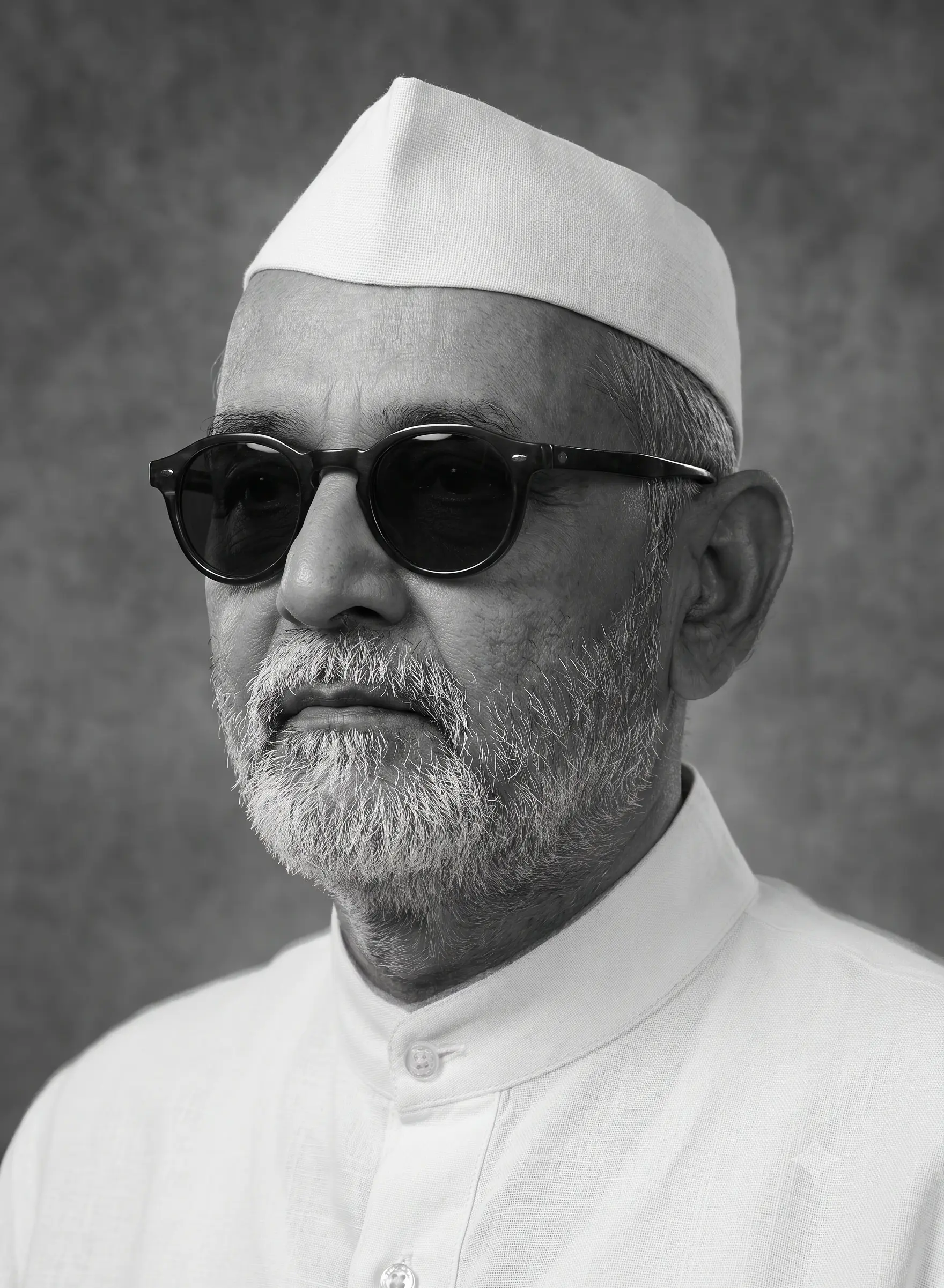
Dr. Zakir Husain Khan occupies a singular position in the history of modern India. He was, across a public career spanning more than four decades, successively an educationist of international standing, a philosopher of education whose ideas shaped Indian schooling for generations, a university builder who rescued and rebuilt two of the most important Muslim educational institutions in the subcontinent, a Gandhian collaborator who helped translate an abstract educational philosophy into a practical national curriculum, a constitutional officeholder at both state and national levels, and finally, as the third President of India, the first Muslim to hold that office. He died in the Presidential Palace in May 1969, the first Indian president to die in office, a death that was mourned across the country with a genuine grief that testified to the depth of affection and respect he had earned across communal, political, and professional boundaries.
What unifies these various dimensions of his life is a commitment to education as the foundational activity of civilized human life — the process through which human beings are made capable of participating fully in the moral, intellectual, and productive dimensions of their world. This commitment was not merely professional or ideological but deeply personal, rooted in his own experience as a student and as a teacher and in a philosophical tradition that drew on both the Islamic humanist inheritance of Neoplatonic and rationalist scholarship and the progressive educational philosophy of European thinkers from Rousseau and Pestalozzi through John Dewey. He brought these traditions into conversation with the specific conditions of Indian society in the twentieth century, and the synthesis he produced had lasting effects on Indian education that are still visible.
His life also bears witness to the possibilities and the difficulties of the secular nationalist project in India. As a Muslim of deep personal faith who chose to work within the framework of the Indian National Congress, who collaborated intimately with Mahatma Gandhi and Jawaharlal Nehru, and who ultimately became the symbolic head of the Indian state, he represented a certain vision of what Indian nationhood could mean — a vision in which religious identity and national belonging were not in tension but were expressions of the same fundamental commitments to human dignity, intellectual development, and the pursuit of justice. That this vision was not universally shared, and that the communal tensions his life sought to transcend continued to shape Indian politics after his death, does not diminish the significance of his achievement.
Early Life and Family Background
Zakir Husain was born on 8 February 1897 in Hyderabad, in the Deccan region of India, into a family with roots in the Qaimganj area of Farrukhabad in the United Provinces. His father, Fida Husain Khan, was a prosperous man of affairs associated with the court of the Nizam of Hyderabad, and the family background combined the cultural refinements of the Mughal-derived ashraf tradition with the commercial and administrative competence that had sustained Muslim professional families through the transitions of the nineteenth century.
The family's move from Hyderabad to Etawah in the United Provinces when Zakir Husain was a child brought him into the heartland of north Indian Muslim cultural life — the region where Urdu had achieved its highest literary development, where the Aligarh Movement had its origins and its institutional center, and where the debates about Muslim identity, education, and political strategy that would shape the twentieth century were being conducted with the greatest intensity. His early schooling was in Etawah, and he subsequently studied at the Islamia High School in Etawah, where he received a grounding in both traditional Islamic learning and the modern subjects that the reformed educational institutions of the period were beginning to incorporate.
His father died when Zakir Husain was still a child, a loss that imposed early responsibilities on him and that, by various accounts, deepened the seriousness and self-discipline that characterized his adult personality. He was raised in a household that valued learning highly, and the combination of early loss, family tradition, and institutional education produced in him a quality of intellectual purposefulness that distinguished him even among talented contemporaries.
In 1915, Zakir Husain enrolled at Muhammadan Anglo-Oriental College at Aligarh — the institution that Syed Ahmad Khan had founded in 1875 and that had become the preeminent center of Muslim higher education in India. The Aligarh college occupied an extraordinary position in the intellectual life of Indian Muslims in the early twentieth century. It was simultaneously a center of modern education, a hotbed of political debate, a social institution that shaped the professional aspirations and cultural identities of its students, and a site where the tensions between different visions of Muslim identity — modernist versus traditionalist, nationalist versus communalist, Anglophile versus pan-Islamic — were being worked out in the daily lives of students and faculty.
Aligarh and the Non-Cooperation Movement
Zakir Husain's years at Aligarh coincided with one of the most turbulent periods in the institution's history. The end of the First World War, the political mobilization associated with the Khilafat Movement, and Mahatma Gandhi's launch of the Non-Cooperation Movement in 1920 created conditions in which the question of whether to cooperate with or resist British colonial authority became unavoidable for every educated Indian. At Aligarh, as at other institutions across India, this question divided students and faculty into competing camps.
In 1920, Zakir Husain was among the students who responded to Gandhi's call to withdraw from British-administered educational institutions. Along with a group of fellow students and some faculty members, he left Aligarh College as part of the Non-Cooperation Movement's educational dimension. This act of institutional withdrawal was significant not merely as a political gesture but as a practical commitment: leaving Aligarh meant abandoning the most established pathway to professional advancement in Muslim India and accepting the uncertainty and difficulty of building alternative institutions.
The alternative they built was Jamia Millia Islamia — the National Muslim University. Founded in October 1920 at Aligarh and subsequently relocated to Delhi, Jamia Millia was established as a specifically nationalist Muslim educational institution that would be financially independent of the colonial government and philosophically committed to the national movement. The institution's name itself — Jamia (university), Millia (national), Islamia (Islamic) — reflected its founders' attempt to hold together Islamic identity and Indian nationalism in a single institutional project, rejecting the dichotomy that the Muslim League and others were insisting upon.
The early years of Jamia Millia were desperate. The institution had almost no money, no buildings of its own, and a student body that had sacrificed their existing educational positions without any guarantee of what would replace them. The commitment required of its founders and faculty was extraordinary. Zakir Husain, still a student himself at the time of the institution's founding, became one of its most important figures — contributing not merely his intellectual energies but his organizational ability and his personal credibility in raising funds and maintaining the morale of students and staff through years of acute difficulty.
Education in Germany: The Berlin Years
In 1922, Zakir Husain traveled to Germany to pursue doctoral studies at the University of Berlin. This decision to seek advanced education in Germany rather than Britain reflected both personal preference and the specific intellectual currents of the period. Germany in the early 1920s was a center of intense intellectual ferment — the Weimar Republic was struggling to establish itself politically, but German universities remained among the world's leading centers of research and scholarship, and German philosophy, economics, and educational theory were influential far beyond Germany's borders.
At the University of Berlin, Zakir Husain pursued studies in economics and philosophy under teachers who represented the highest standards of German academic scholarship. He completed his doctoral dissertation on a topic in economic history and philosophy, receiving his doctorate in 1926. The German experience shaped him in multiple dimensions. He absorbed the disciplined scholarly methodology of the German academic tradition, developed a sophisticated understanding of European philosophy and its relationship to educational theory, and formed relationships with German scholars and intellectuals that would influence his thinking throughout his subsequent career.
His doctoral work also deepened his engagement with the philosophical questions about the relationship between education and human development that would preoccupy him for the rest of his life. German philosophy of education, drawing on the traditions of Kant, Herbart, and more recently Dewey's American pragmatist adaptation of European ideas, offered frameworks for thinking about these questions with a rigor and depth that Zakir Husain found intellectually compelling. The synthesis he would eventually develop — combining European progressive educational philosophy with Islamic humanist traditions and the specific conditions of Indian society — had its foundations in the Berlin years.
He returned to India in 1926 with his doctorate and with a clarity of intellectual purpose that made him, at twenty-nine, one of the most intellectually equipped educational thinkers in India. He returned to Jamia Millia, which had by this time relocated to Delhi and was struggling to survive financially while attempting to develop a serious educational program. His return gave the institution an infusion of both intellectual leadership and organizational energy that would prove decisive for its survival and eventual flourishing.
Building Jamia Millia Islamia
Zakir Husain served as Vice-Chancellor of Jamia Millia Islamia from 1926 to 1948 — twenty-two years of continuous leadership that transformed the institution from a precarious experiment into one of India's most respected educational institutions. This achievement required not merely educational vision but extraordinary administrative skill, financial ingenuity, and the ability to maintain institutional coherence through external crises — including the Second World War, the Quit India Movement, and ultimately the partition of India — that repeatedly threatened the institution's existence.
Financial Reconstruction
When Zakir Husain assumed the vice-chancellorship, Jamia Millia was on the verge of closure for lack of funds. The institution had no reliable income, no endowment, and no government support — indeed, its founding commitment to financial independence from the colonial government made it ineligible for many forms of official support. Zakir Husain's approach to this crisis combined systematic fundraising with a radical reduction of the institution's cost base.
He enlisted the support of prominent Indians across the political and business spectrum, appealing to the institution's nationalist credentials and to the broader case for investment in education as the foundation of national development. Mahatma Gandhi was a crucial ally in these fundraising efforts; Gandhi's endorsement of Jamia Millia — which he described as one of the finest educational experiments in India — gave the institution a credibility and visibility that enabled fundraising from across the country. Zakir Husain was personally present at many of these fundraising events, combining his genuine intellectual distinction with an unpretentious personal style that made him an effective advocate.
He also transformed the internal culture of the institution, insisting that faculty accept lower salaries than they might have commanded elsewhere in exchange for the opportunity to participate in an educational experiment that was philosophically serious and nationally significant. This approach — appealing to idealism rather than material interest — attracted a remarkable cohort of talented educators who shared Zakir Husain's commitment to educational excellence and national service.
Educational Philosophy at Jamia
The educational philosophy that Zakir Husain developed and implemented at Jamia Millia was distinctive and carefully considered. He argued that education should address the whole person — intellectual, moral, physical, aesthetic, and spiritual — rather than merely transmitting a defined body of knowledge or preparing students for specific professional roles. This holistic vision drew on the Islamic educational tradition, with its emphasis on the development of adab (moral refinement and cultivated behavior) alongside intellectual accomplishment, as well as on the European progressive tradition from Pestalozzi through Dewey.
He was particularly concerned with the relationship between education and productive work. Against the prevailing tendency in Indian higher education to treat intellectual and manual work as fundamentally different activities — the former noble and the latter degrading — he insisted that genuine education required engagement with practical productive labor as part of the learning process. Students at Jamia Millia participated in the manual tasks associated with maintaining and developing the institution's physical environment, and this participation was framed not as a punishment or an economic necessity but as an integral part of their educational experience.
The curriculum he developed at Jamia balanced the traditional Islamic disciplines — Quranic study, Arabic, Islamic history, jurisprudence — with modern subjects in science, mathematics, history, economics, and the arts. Instruction was conducted primarily in Urdu, reflecting the institution's commitment to the development of an indigenous educational culture, but English was taught seriously as a medium of access to international knowledge. The institution's graduates were expected to be both rooted in their own cultural heritage and capable of participating effectively in the wider intellectual world.
Collaboration with Gandhi: Basic Education
The most nationally significant dimension of Zakir Husain's educational work in the 1930s and 1940s was his collaboration with Mahatma Gandhi on what came to be known as Basic Education — the Nai Talim (New Education) scheme that Gandhi proposed as the basis for a national educational system for independent India. Gandhi's educational philosophy was rooted in his broader social vision: a critique of industrial civilization and the educational systems it produced, and a proposal for an alternative rooted in the productive life of the village and the integration of education with craft and agricultural work.
Gandhi articulated the broad outlines of his educational philosophy at the Wardha Education Conference in 1937, proposing a scheme of basic education centered on craft activity through which children would learn academic subjects while developing practical skills. The proposal was compelling as a statement of values but required detailed elaboration as a practical curriculum if it was to be implemented across India's enormously diverse educational landscape.
Zakir Husain was appointed to chair the committee charged with developing the Basic Education curriculum in detail. The Zakir Husain Committee, as it came to be known, produced a comprehensive report in 1938 that translated Gandhi's philosophical vision into a detailed and implementable educational program. The report specified the craft activities around which the curriculum should be organized, the academic subjects to be integrated with each craft, the methods of teaching and assessment appropriate to the approach, and the training required for teachers to implement it effectively.
The Basic Education scheme was adopted as official Congress educational policy and was implemented in several provinces where the Congress had formed governments following the 1937 elections. Its implementation was uneven — the demands it placed on teacher training and institutional reorganization were substantial, and the disruptions of the Second World War and the independence movement interrupted many of its initiatives — but it had a genuine influence on Indian educational thinking and practice that extended well beyond the specific programs in which it was formally adopted.
The collaboration with Gandhi deepened Zakir Husain's personal relationship with the Congress leadership and enhanced his visibility as a figure whose educational work was of national significance. It also reinforced his commitment to a vision of education as a practice rooted in the specific social and cultural conditions of the community it serves, rather than an abstract universal standard to be applied uniformly regardless of local context.
Vice-Chancellor of Aligarh Muslim University
In 1948, Zakir Husain left Jamia Millia to take up the Vice-Chancellorship of Aligarh Muslim University. The transition was significant in multiple respects. Jamia Millia had been, from its foundation, a nationalist institution whose identity was tied to opposition to the Muslim League's communalist politics. Aligarh Muslim University had been, for much of the preceding decades, a stronghold of Muslim League support and a center of the intellectual arguments for Pakistan.
By 1948, with partition having already occurred, Aligarh was in a state of institutional crisis. Many of its most prominent faculty members and students had gone to Pakistan. Its finances were disrupted. Its political identity — as a Muslim university in a secular Indian republic — was suddenly uncertain in ways that created anxiety among those who remained. The appointment of Zakir Husain as Vice-Chancellor was a deliberate choice to bring a figure whose credentials as a Muslim educationist were unimpeachable, but whose national commitment was also beyond question, to stabilize and reorient the institution.
His tenure at Aligarh, from 1948 to 1956, was a period of institutional reconstruction analogous in some ways to his earlier work at Jamia Millia. He worked to restore the institution's academic standards, to rebuild its faculty, to clarify its mission in the new national context, and to restore the confidence of Indian Muslims that Aligarh — the institution that Syed Ahmad Khan had founded for their educational advancement — would continue to serve them as a center of excellence and a symbol of their community's intellectual aspirations.
His approach to this challenge was characteristically thoughtful. He resisted both the temptation to suppress Aligarh's distinctive Muslim character in the interest of a superficial integration and the opposite temptation to allow Aligarh to become a communal enclave whose primary loyalty was to the Muslim community rather than to the Indian nation. He argued, as he had throughout his career, that these were not genuine alternatives — that a Muslim university of genuine excellence was an asset to all of India, and that Aligarh's service to the Indian nation was most effectively rendered by being the best Muslim university it could be rather than by pretending to be something other than what it was.
Governor of Bihar and Vice President of India
Zakir Husain's transition from educational administration to constitutional office came in 1957, when he was appointed Governor of Bihar. The governorship of a state in the Indian constitutional system is a position of considerable symbolic importance and limited direct power — the Governor represents the President of the Republic in the state and performs various constitutional functions but does not govern in the executive sense. For Zakir Husain, the appointment represented a recognition of his national standing and an invitation to participate in the constitutional life of the republic he had helped build through his educational work.
His tenure as Governor of Bihar from 1957 to 1962 was notable for the dignity and intellectual seriousness with which he discharged the role. He was attentive to the educational conditions of Bihar — one of India's most populous and least educated states — and used the platform of the governorship to advocate for educational investment and reform with an authority derived from his lifetime of professional work in the field.
In 1962, Zakir Husain was elected Vice President of India, a position he held until 1967. The Vice Presidency of India combines the ceremonial role of Chairman of the Rajya Sabha (the upper house of Parliament) with a broader function as a symbol of constitutional continuity and national unity. Zakir Husain brought to the position the same qualities of intellectual distinction, personal dignity, and genuine democratic commitment that had characterized all his previous roles.
His tenure as Vice President coincided with significant political turbulence in India — the 1962 Chinese military conflict, which severely damaged India's national confidence and the political position of Jawaharlal Nehru, and Nehru's death in 1964 and the subsequent succession struggles within the Congress Party. Through these events, Zakir Husain maintained the constitutional impartiality appropriate to his office while continuing to represent, through his personal example, a vision of Indian public life in which intellectual integrity and national commitment were inseparable.
President of India
In 1967, Zakir Husain was elected the third President of India, becoming the first Muslim to hold the office. His election was supported by the ruling Indian National Congress, led by Prime Minister Indira Gandhi, and reflected both his personal distinction and the Congress's commitment to maintaining the secular character of the Indian state. His principal opponent in the election was V.V. Giri, who had the support of various opposition parties.
The presidency of India is, under the constitutional arrangement, largely a ceremonial and symbolic office. The executive power of the Union is vested in the Cabinet, and the President's role in day-to-day governance is limited. But the symbolic dimensions of the presidency are of genuine importance: the President represents India as a nation, embodies the constitutional commitments of the republic, and exercises a form of moral authority that derives from the manner in which the office is held rather than from formal powers.
Zakir Husain approached the presidency with the same seriousness and personal integrity that had characterized his entire career. He was particularly attentive to the educational dimensions of his role, using the platform of the presidency to speak consistently about the importance of education, the value of intellectual life, and the responsibility of the Indian state to invest in the development of its citizens' capacities. He received foreign dignitaries and heads of state with a scholarly sophistication that reflected both his personal education and his deep familiarity with the world of ideas.
His presidency was brief. He had been in uncertain health for some time before assuming office, and the demands of the position placed additional strain on a constitution that was no longer robust. He died in Rashtrapati Bhavan — the Presidential Palace — on 3 May 1969, less than two years after taking office. He was seventy-two years old. He was the first President of India to die in office.
Personal Character and Intellectual Life
The portrait of Zakir Husain that emerges from the accounts of those who knew him is of a man of rare intellectual quality combined with remarkable personal humility and warmth. He was widely read across disciplines and traditions — Islamic philosophy and jurisprudence, European philosophy and educational theory, literature in Urdu, Persian, Arabic, German, and English — and he brought this breadth of learning to bear with a lightness of touch that made him an engaging conversationalist rather than an intimidating authority.
His personal style was notably simple. Despite the successive positions of prestige and authority he occupied — Vice-Chancellor, Governor, Vice President, President — he maintained habits of life that were unpretentious almost to the point of austerity. He was known for his accessibility to students, his willingness to engage with junior colleagues on terms of intellectual equality, and his refusal to use the trappings of institutional authority to create distance between himself and those around him.
His religious practice was regular and genuine. He prayed the five daily prayers, observed the fasts and obligations of Islamic practice, and maintained a personal relationship with the spiritual dimensions of Islam that coexisted naturally with his sophisticated engagement with European secular philosophy. He did not understand these as being in tension — for him, the Islamic commitment to the pursuit of knowledge ('ilm) and the European commitment to rational inquiry were expressions of the same fundamental human impulse toward understanding, and both were enriched by the other.
He was a considerable scholar in his own right, not merely an administrator of other people's scholarship. His doctoral dissertation and subsequent writings on economic philosophy, his detailed work on educational theory and curriculum development, and his contributions to Urdu intellectual life through essays and speeches constitute a body of work that would have established an independent scholarly reputation even without the public career that overshadowed it.
His marriage to Shahjehan Begum produced children who continued to be involved in educational and public life after his death, maintaining the family's connection to the worlds of learning and service that had defined his career.
Educational Philosophy: A Systematic Account
Zakir Husain's educational philosophy deserves extended treatment as an intellectual system rather than merely as a background to his administrative achievements. It is a coherent body of thought that draws on multiple traditions and addresses fundamental questions about the purposes and methods of education with sophistication and depth.
The Purposes of Education
At the foundation of Zakir Husain's educational philosophy was the conviction that the primary purpose of education is the development of the whole human person — not the transmission of specific knowledge, not the preparation of workers for an economy, not even the inculcation of particular values, but the development of capacities: the capacity for critical thinking, the capacity for aesthetic appreciation, the capacity for moral judgment, the capacity for productive work, and the capacity for spiritual development. Each of these capacities was, in his view, equally important, and an education that developed some at the expense of others was defective regardless of its technical achievements.
This holistic vision drew on the Islamic concept of tarbiyah — the comprehensive moral and intellectual cultivation of the person — as well as on the European progressive tradition from Pestalozzi through Froebel and Dewey. What distinguished his synthesis from either source alone was the attention he paid to the specific conditions of Indian society. Education in India could not simply replicate European models, because Indian social conditions — the caste system, the village economy, the multilingual cultural landscape, the coexistence of deep religiosity and secular intellectual life — were fundamentally different from the European contexts in which progressive educational philosophy had been developed.
Education and Social Transformation
Zakir Husain was acutely aware of the relationship between education and social structure. He argued that education could not be understood in isolation from the social conditions in which it occurs, and that educational reform undertaken without attention to social reform would be incomplete at best and counterproductive at worst. At the same time, he rejected the reductive view that education was merely a reflection of existing social structures with no independent transformative potential. He believed that genuinely excellent education — education that developed the capacities for critical thinking, moral judgment, and productive work — was itself a form of social transformation, creating individuals capable of participating in the reformation of the social conditions they inhabited.
This position required careful navigation of the tensions between adaptation to existing conditions and aspiration to better ones. In his work on Basic Education, this navigation found expression in the curriculum that centered craft work: craft work was simultaneously a recognition of the agricultural and artisanal foundations of Indian village life and a commitment to the dignity and intelligence of manual labor that challenged the caste-based hierarchies that devalued it.
Education and the Islamic Tradition
Zakir Husain's engagement with the Islamic educational tradition was scholarly and nuanced rather than merely conventionally pious. He was familiar with the classical literature of Islamic pedagogy — the Ihya Ulum al-Din of al-Ghazali, the educational writings of Ibn Khaldun, the philosophical traditions of the Islamic Golden Age that had made scholarship a religious obligation — and he drew on this literature to argue that Islamic tradition was not in tension with progressive educational philosophy but was, in its best expressions, a precursor of it.
The Islamic tradition's emphasis on the pursuit of knowledge as a religious duty (talab al-'ilm), its historical commitment to the integration of rational and revelatory knowledge, its development of institutional forms — the madrasa, the library, the hospital — that combined intellectual and practical activity, all provided Zakir Husain with resources for developing an educational philosophy that was both deeply Islamic and genuinely modern. He resisted the dichotomy — common in both traditional Islamic educational circles and Western secular ones — between Islamic learning and modern knowledge, arguing that this dichotomy was a product of historical circumstances rather than of any inherent incompatibility.
Language and Education
Zakir Husain was a passionate advocate for the use of the mother tongue as the primary medium of instruction, a position with obvious implications for the status of Urdu in the Indian educational system. He argued that genuine intellectual development required thinking in one's own language — that forcing children to learn through a foreign medium (whether English or a second language) imposed an unnecessary cognitive burden and prevented the kind of deep engagement with ideas that education at its best should produce.
This position was politically sensitive in the post-independence context, where the status of Urdu — simultaneously the literary language of a major strand of Indian Muslim culture and the official language of Pakistan — was contested terrain. Zakir Husain's advocacy for Urdu as a medium of instruction was not communal in his own understanding of it: he was making an educational argument about the conditions of effective learning rather than a political argument about Muslim identity. But in the charged atmosphere of post-partition India, the distinction was not always easy to maintain.
Legacy in Indian Education
Zakir Husain's influence on Indian education operates at multiple levels. The most direct is through the institutions he built: Jamia Millia Islamia, which he rescued and built into a nationally respected university that was later granted the status of a central university by the Indian government; and Aligarh Muslim University, which he stabilized and redirected at a critical moment in its history.
The influence of Basic Education, the curriculum he helped develop with Gandhi, was more diffuse but arguably more significant in its reach. Basic Education became a reference point for all subsequent debates about elementary education in India, and its central insights — about the integration of academic learning with productive activity, about the importance of the child's immediate environment as the starting point for learning, about the dignity of manual work — have continued to influence educational thinking even when the specific programs associated with the Wardha scheme were modified or abandoned.
His influence on the philosophy of education in India was also transmitted through the generations of students he taught, the teachers he trained, and the colleagues he worked with at Jamia and Aligarh. Many of those who received their educational formation under his influence went on to positions of influence in Indian educational administration, teacher training, and academic life, carrying forward ideas and commitments that originated in his work.
Zakir Husain National College of Education in Delhi is one of several institutions named in his honor, reflecting the recognition of his unique contribution to the theory and practice of education in India.
Political Legacy and National Significance
As the first Muslim President of India, Zakir Husain occupied a symbolic position of unusual significance. His election to the presidency in 1967 was read, by many observers at the time and subsequently, as an affirmation of the secular character of the Indian republic and as an acknowledgment that the contribution of Indian Muslims to national life deserved recognition at the highest constitutional level.
His brief presidency — less than two years, ending in his death in office — did not allow him to develop the kind of sustained programmatic legacy that a longer tenure might have produced. But the fact of his presidency, and the manner in which he discharged it, has remained a significant reference point in Indian political culture. He is frequently cited in discussions about the relationship between Indian national identity and Muslim religious identity, about the possibilities of secular democratic politics in a society marked by religious diversity, and about the kind of public figure that the Indian republic at its best is capable of producing.
He was awarded the Padma Vibhushan — India's second-highest civilian honor — in 1954, and the Bharat Ratna — India's highest civilian honor — posthumously in 1963 (the Bharat Ratna was awarded to him while he was still alive, in 1963, before his presidency). He remains one of the relatively small number of Indians who have held both the Bharat Ratna and the highest constitutional office.
Criticisms and Limitations
Any honest assessment of Zakir Husain's life and legacy must acknowledge the criticisms and limitations that accompanied his achievements.
The most substantive criticism of his educational work concerns the practical outcomes of Basic Education. Critics argued that while the philosophical vision of the Wardha scheme was admirable, its implementation was deeply uneven, that the craft-centered curriculum often worked better in theory than in practice, and that its emphasis on the dignity of manual work could, in the wrong hands and the wrong context, become a mechanism for limiting the aspirations of children from lower-caste and lower-class backgrounds rather than developing them. These criticisms were made by serious educators and were not easily dismissed, and Zakir Husain himself acknowledged the difficulties of implementation even while defending the basic soundness of the philosophical approach.
His tenure at Aligarh has been criticized from certain quarters for not going far enough in challenging the institution's communal aspects and from others for going too far in accommodating the demands of the Indian state at the expense of Aligarh's distinctive Muslim character. This criticism reflects the genuine difficulty of the position he occupied rather than personal failing — navigating between these competing demands was an inherently difficult task that probably could not have been performed to everyone's satisfaction.
His political career has been assessed by some historians as insufficiently independent — as too closely tied to the Congress political establishment, and particularly to the Nehru family, to exercise the kind of independent moral authority that figures of his intellectual distinction might have brought to bear. Against this criticism, it can be argued that his positions within the constitutional framework necessarily required a degree of partisan alignment, and that the specific forms of influence he was able to exercise — particularly through his advocacy for education — were more effectively pursued from within the political mainstream than from a position of principled opposition.
Death and Mourning
Zakir Husain's death in Rashtrapati Bhavan on 3 May 1969 was the occasion of genuine national mourning across India. Tributes came from political leaders of all parties, from educators and scholars, from religious figures of multiple traditions, and from ordinary citizens who had followed his career with admiration. Prime Minister Indira Gandhi spoke movingly of the loss to the nation. Messages of condolence arrived from world leaders and foreign governments.
He was buried in the grounds of Jamia Millia Islamia in Delhi — the institution he had spent so much of his life building — a choice that reflected his own wishes and his identification with the institution as the defining project of his professional life. His grave became a site of pilgrimage for those who admired him, and the campus of Jamia Millia Islamia has maintained his memory with particular care, given the depth of the institution's debt to his leadership.
The choice of Jamia Millia as his burial place rather than a more prominent national site speaks to something essential about his character: despite all the honors he had received and the positions he had held, he identified himself primarily as an educator, and it was among the students and teachers of the institution he had built that he wished to rest.
Conclusion
Dr. Zakir Husain Khan lived a life of remarkable integrity and achievement across an extraordinary range of activities. As an educationist, he developed a philosophical vision of learning that was simultaneously rooted in Islamic humanist traditions and engaged with the best of European progressive educational thought, and he translated this vision into institutional reality through decades of patient, skilled, and dedicated work. As a statesman, he brought intellectual distinction and personal integrity to offices that, in other hands, might have been discharged more routinely. As a Muslim and an Indian, he embodied a vision of national belonging in which religious identity and civic commitment were not in tension but were mutually reinforcing expressions of the same fundamental human dignity.
His life has been honored and his memory maintained with genuine warmth across India, and the institutions he built — Jamia Millia Islamia above all — stand as his most durable monument. But perhaps his most significant legacy is more intangible: the demonstration, through the example of a single life, that the ideals of the secular Indian republic — a state that belongs to all its citizens regardless of religion, that values knowledge and education as the foundations of a just society, that aspires to governance by figures of genuine intellectual and moral distinction — were not merely rhetorical but were achievable in practice. He achieved them, and in doing so gave those ideals a reality and a human face that endures.
References and Further Reading
Primary Islamic Sources
- Quran, Surah Al-Alaq (96:1–5) — "Read in the name of your Lord who created... Taught man that which he knew not." (The first revelation — foundational to Zakir Husain's philosophy of education as divine imperative)
- Quran, Surah Az-Zumar (39:9) — "Are those who know equal to those who do not know?" (Central verse in Islamic educational philosophy)
- Quran, Surah Ta-Ha (20:114) — "And say: My Lord, increase me in knowledge." (The Prophetic prayer for knowledge)
- Sunan Ibn Majah, al-Muqaddimah (Introduction), Hadith 224 — "Seeking knowledge is an obligation upon every Muslim." The opening clause is accepted by the hadith scholars on the strength of its multiple corroborating chains. The report is frequently attributed to Sahih al-Bukhari; that attribution is mistaken.
- Sahih al-Bukhari, Kitab al-Ilm (Book of Knowledge), Hadith 79 — the parable likening the guidance and knowledge the Prophet was sent with to abundant rain falling on different kinds of ground
- Sahih Muslim, Book of Dhikr, Hadith 2699 — "Whoever treads a path seeking knowledge, Allah will make easy for him a path to Paradise."
- Sunan Ibn Majah, Introduction, Hadith 224 — "Seek knowledge even unto China." (Widely cited in Islamic educational discourse)
Classical Islamic Sources
- Al-Ghazali, Abu Hamid. Ihya Ulum al-Din (The Revival of the Religious Sciences), Kitab al-Ilm. [Original 12th century CE — systematic classification of knowledge and the ethics of learning and teaching]
- Ibn Khaldun, Abd al-Rahman. Al-Muqaddimah, Chapter 6 (On the Sciences). [Original 14th century CE — sociological analysis of education, pedagogy, and the conditions for intellectual development]
- Al-Zarnuji, Burhan al-Din. Ta'lim al-Muta'allim (Instruction of the Student). [Original 13th century CE — the classical Islamic handbook on pedagogy and the student-teacher relationship]
Academic and Scholarly Sources
- Husain, Zakir. The Dynamic University. New Delhi: Asia Publishing House, 1965.
- Mujeeb, Mohammad. Dr. Zakir Husain: A Biography. New Delhi: National Book Trust, 1972.
- Zakir Husain Committee. Basic National Education: Report of the Zakir Husain Committee. Wardha: Hindustani Talimi Sangh, 1938.
- Minault, Gail. Secluded Scholars: Women's Education and Muslim Social Reform in Colonial India. New Delhi: Oxford University Press, 1998.
- Lelyveld, David. Aligarh's First Generation: Muslim Solidarity in British India. Princeton: Princeton University Press, 1978.
- Hasan, Mushirul. A Moral Reckoning: Muslim Intellectuals in Nineteenth-Century Delhi. New Delhi: Oxford University Press, 2005.
- Noorani, A.G. Islam and Jihad: Prejudice versus Reality. New Delhi: Penguin, 2002.
- Government of India. Zakir Husain: A Commemorative Volume. New Delhi: Publications Division, Ministry of Information and Broadcasting, 1969.
Further Reading
- Kumar, Krishna. Political Agenda of Education: A Study of Colonialist and Nationalist Ideas. New Delhi: Sage Publications, 1991.
- Qureshi, M.A. Some Aspects of Muslim Education. Baroda: Centre of Advanced Study in Education, 1970.
- Mujeeb, Mohammad. The Indian Muslims. London: George Allen & Unwin, 1967.
- Faruqi, Zia-ul-Hasan. The Deoband School and the Demand for Pakistan. Bombay: Asia Publishing House, 1963.
Mentioned In
6 articles reference this topic