Ertuğrul Ghazi: Father of the Ottoman Dynasty
Ertuğrul Ghazi was leader of the Kayı tribe of Oghuz Turks and father of Osman I, founder of the Ottoman Empire. Operating on the Seljuk-Byzantine frontier in thirteenth-century Anatolia, his modest gains at Söğüt laid the groundwork for an enduring Islamic empire.
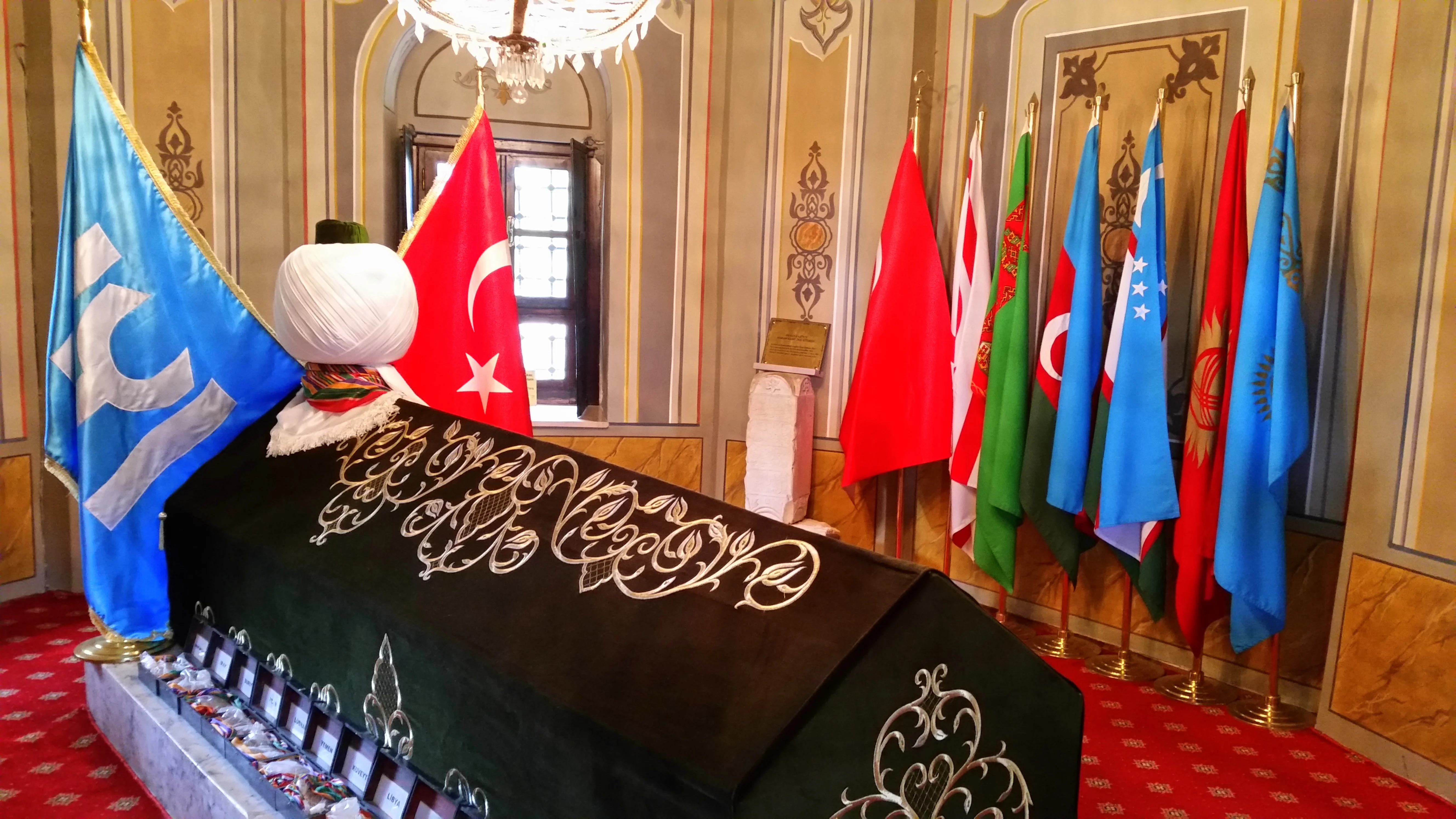
Ertuğrul Ghazi (Turkish: Ertuğrul Gazi; c. 1191–1281 CE) was the leader of the Kayı tribe of Oghuz Turks and the father of Osman I, the founder of the Ottoman Empire. Although the historical record surrounding Ertuğrul is sparse and often intertwined with legend, he occupies a foundational position in Ottoman and Turkish historiography as the patriarch whose frontier leadership, military prowess, and strategic alliances laid the groundwork for one of history's most powerful and enduring Islamic empires. His life unfolded during a period of immense upheaval in Anatolia—the Mongol invasions that shattered the Seljuk Empire, the fragmentation of Turkmen political authority, and the ongoing struggle between Muslim frontier warriors (ghazis) and the declining Byzantine Empire.
The question of Ertuğrul's historical reality versus his legendary portrayal is one of the enduring challenges in Ottoman studies. The earliest Ottoman chronicles, composed more than a century after his death, present him through the lens of dynastic legitimation, while modern scholarship has worked to disentangle the historical kernel from later accretions. What emerges is the portrait of a Turkmen tribal chief operating on the Byzantine-Seljuk frontier in northwestern Anatolia during the thirteenth century—a man whose modest territorial achievements would, through his son Osman, give rise to an empire that lasted over six centuries and shaped the destinies of three continents.
Historical Context: Anatolia in the Thirteenth Century
The Seljuk Sultanate of Rum
To understand Ertuğrul's world, one must first appreciate the political landscape of thirteenth-century Anatolia. The Seljuk Sultanate of Rum, established after the Battle of Manzikert in 1071 CE, had by the early thirteenth century reached its zenith under Sultan Kayqubad I (r. 1220–1237 CE). The sultanate, with its capital at Konya, presided over a prosperous and culturally vibrant realm that integrated Turkish military power with Persian administrative traditions and Islamic scholarly culture. The Seljuks of Rum controlled much of central and eastern Anatolia, maintaining a complex relationship with the Byzantine Empire to their west and the various Turkmen tribal confederations that occupied the frontier regions.
The sultanate's relationship with the Turkmen nomads was inherently ambivalent. On one hand, these tribal groups provided essential military manpower and served as a buffer against Byzantine incursions on the frontier (the uc, or borderlands). On the other hand, their semi-nomadic lifestyle, independent political traditions, and occasional raids on settled populations created tensions with the centralized Seljuk state. The sultans attempted to manage these groups through a combination of land grants (ikta), formal appointments, and periodic military expeditions against overly assertive tribal leaders.
The Seljuk Sultanate of Rum reached its cultural and political apogee in the early decades of the thirteenth century. Sultan Alaeddin Kayqubad I extended Seljuk authority to the Mediterranean coast, captured the port of Alanya, and built a powerful fleet. Konya, Kayseri, Sivas, and other Anatolian cities flourished as centres of trade, scholarship, and architectural patronage. The famous Mevlevi order, founded by Jalal al-Din Rumi, took root in Konya during this period, while the sultanate's madrasas, caravanserais, and mosques reflected the synthesis of Turkic, Persian, and Islamic cultural traditions.
The Mongol Catastrophe
This relative stability was shattered by the Mongol invasions. In 1243 CE, at the Battle of Köse Dağ, the Mongol forces under Bayju Noyan decisively defeated the Seljuk army under Sultan Kaykhusraw II. The defeat was catastrophic: the sultan fled the battlefield, and the Seljuk state was effectively reduced to a Mongol vassal. The Ilkhanid Mongols, who controlled Persia and much of the eastern Islamic world, imposed heavy tribute on the sultanate and increasingly intervened in its internal affairs, appointing and deposing sultans at will.
The consequences of Köse Dağ for the Turkmen frontier tribes were profound. As Seljuk central authority disintegrated over the following decades, the frontier regions of western Anatolia experienced a power vacuum. Turkmen groups that had previously operated under loose Seljuk suzerainty now found themselves increasingly autonomous. The border between the collapsing Byzantine territories and the fragmented Muslim principalities became a zone of intense activity—raiding, settlement, alliance-building, and religious warfare. It was in this environment of flux and opportunity that Ertuğrul and his Kayı tribesmen established themselves.
The Byzantine Frontier
The Byzantine Empire in the thirteenth century was itself in a state of profound weakness. The Latin conquest of Constantinople in 1204 during the Fourth Crusade had shattered the empire into rival successor states: the Empire of Nicaea in northwestern Anatolia, the Empire of Trebizond on the Black Sea coast, and the Despotate of Epirus in Greece. Although Michael VIII Palaiologos recaptured Constantinople in 1261 and restored the Byzantine Empire, the reconstituted state was a shadow of its former self, lacking the resources to defend its Anatolian frontiers effectively.
The Byzantine territories in northwestern Anatolia—the regions of Bithynia, Phrygia, and the approaches to the Marmara Sea—were particularly vulnerable. The imperial government, focused on European threats and internal dynastic struggles, could not adequately garrison the Anatolian border. Local populations, including both Greeks and already-settled Turks, lived in a state of uncertainty as Turkmen raiding parties probed deeper into formerly secure territories. It was precisely this frontier zone that would become Ertuğrul's domain and, ultimately, the birthplace of the Ottoman state.
The Kayı Tribe: Origins and Migration
Oghuz Turkish Heritage
The Kayı (also spelled Kayıg or Qayı) tribe was one of the twenty-four branches of the Oghuz Turks, a major Turkic tribal confederation originating in the steppes of Central Asia. According to the legendary genealogy preserved in Rashid al-Din's Jami' al-Tawarikh (Compendium of Chronicles, composed c. 1310 CE) and in the earlier Dede Korkut epic traditions, the Oghuz tribes descended from a legendary ancestor named Oghuz Khan. The twenty-four tribes were divided into two main branches: the Bozok (Grey Arrow) and the Üçok (Three Arrows). The Kayı tribe belonged to the Bozok branch and held a position of particular prestige, being associated with the right wing—the traditional place of honour in Turkish tribal hierarchy.
The name "Kayı" is generally interpreted as meaning "he who has power and authority" or "the mighty one," derived from the Old Turkish root qay-, connoting strength and sovereignty. In the Oghuz tribal system, each tribe had its own tamga (brand mark) and ongon (totemic bird); the Kayı tamga consisted of two arrows and a bow, while their ongon was the white falcon (şahin). These symbols would later be adopted and adapted by the Ottoman dynasty as markers of their ancestral heritage.
The Question of Migration
The migration of the Kayı tribe from Central Asia to Anatolia is one of the most debated topics in early Ottoman historiography. The traditional narrative, as presented in Ottoman chronicles from the fifteenth century onwards, describes a westward migration driven by the Mongol invasions of the early thirteenth century. According to this account, the Kayı, along with other Turkmen groups, fled the advancing Mongol armies under Genghis Khan and his successors, moving through Persia and into Anatolia.
The fifteenth-century chronicler Aşıkpaşazade provides one of the earliest detailed accounts of this migration. He records that the Kayı tribe, under the leadership of Ertuğrul's father Süleyman Shah (also called Gündüz Alp in some sources), migrated from Khorasan in northeastern Persia. According to this narrative, Süleyman Shah led approximately four hundred tents (a unit of nomadic population measurement) westward, eventually reaching the Euphrates River, where he drowned while attempting to cross. After his death, the tribe split: some members returned eastward, while Ertuğrul led a smaller group of approximately four hundred horsemen further westward into Anatolia.
Modern scholars have approached this migration narrative with considerable scepticism. The historian Colin Imber has argued that the entire genealogy connecting the Ottomans to the Kayı tribe and, through them, to Oghuz Khan, was a later fabrication designed to provide the Ottoman dynasty with a prestigious tribal pedigree. Imber notes that the earliest Ottoman sources (the so-called Anonymous Chronicles and the chronicle of Ahmedi, both from the early fifteenth century) do not mention the Kayı tribal affiliation, and that the connection first appears in later works seeking to legitimate Ottoman rule over other Turkish dynasties.
Cemal Kafadar, in his influential study Between Two Worlds: The Construction of the Ottoman State (1995), takes a more nuanced position. He argues that while the specific details of the migration narrative may be legendary, the general pattern—of Turkmen groups moving westward under pressure from Mongol expansion and gradually establishing themselves on the Seljuk-Byzantine frontier—is historically plausible and consistent with broader demographic movements in thirteenth-century Anatolia. The question, for Kafadar, is not whether there was a migration but how much of the specific narrative can be verified.
Süleyman Shah and Ertuğrul's Father
The identity of Ertuğrul's father remains a matter of scholarly debate. The traditional Ottoman narrative identifies him as Süleyman Shah, a tribal leader who supposedly drowned in the Euphrates River (at a location later known as Türk Mezarı, "the Turk's Grave," in northern Syria). However, other early sources name Ertuğrul's father as Gündüz Alp, and some scholars have questioned whether Süleyman Shah was a historical figure at all or a later legendary addition to the genealogy.
The tomb attributed to Süleyman Shah, located at Jaber Castle (Qal'at Ja'bar) on the Euphrates in Syria, became a significant symbol of Ottoman heritage. Under the terms of the Treaty of Ankara (1921) between the nascent Turkish Republic and France (which then controlled Syria), Turkey was granted the right to maintain a small military garrison at the tomb—one of the few extraterritorial rights retained by the new republic. This arrangement persisted until 2015, when Turkish forces relocated the tomb within Syria due to security concerns during the Syrian civil war.
Ertuğrul's Life and Career
The Problem of Sources
Any attempt to reconstruct the historical Ertuğrul must begin with an honest acknowledgment of the severe limitations of the available sources. No contemporary documents from Ertuğrul's lifetime mention him by name. The earliest surviving Ottoman historical works were composed more than a century after his death, and they reflect the concerns and perspectives of their authors' own times rather than providing objective accounts of thirteenth-century events.
The principal sources for Ertuğrul's life include:
The Anonymous Ottoman Chronicles (Tevārīḫ-i Āl-i ʿOs̲mān), the earliest of which date to the early fifteenth century, provide brief references to Ertuğrul as the father of Osman and the leader who first settled in the Söğüt region. These chronicles are terse and provide few details about Ertuğrul's life beyond his role as a transitional figure between the tribal migration and Osman's foundation of the beylik.
Ahmedi's İskendernâme (Book of Alexander, completed c. 1410 CE) contains an appendix on Ottoman history that briefly mentions Ertuğrul, making it one of the earliest literary references to the dynasty's progenitor.
Aşıkpaşazade's Tevārīḫ-i Āl-i ʿOs̲mān (History of the House of Osman, composed c. 1484 CE) provides a more detailed narrative of Ertuğrul's migration, his alliance with the Seljuk sultan, and his establishment in the Söğüt region. Aşıkpaşazade, who claimed descent from a companion of Ertuğrul, had personal reasons to elaborate the founding narrative.
Neşri's Kitāb-ı Cihān-nümā (Book of World Display, late fifteenth century) offers another version of the early Ottoman narrative, drawing on earlier sources but adding details and interpretations that reflect the political concerns of his era.
Ibn Bibi's El-Evamirü'l-Ala'iye fi'l-Umuri'l-Ala'iye (a history of the Seljuk Sultanate of Rum completed in the late thirteenth century) is significant primarily for what it does not say: despite covering the period in which Ertuğrul supposedly operated, it does not mention him or the Kayı tribe, an omission that has fueled scholarly debate about the historicity of the traditional narrative.
Later Ottoman historians, including Oruç Bey, İdris-i Bitlisi, and Kemalpaşazade (all writing in the late fifteenth and early sixteenth centuries), provide increasingly elaborate accounts of Ertuğrul's life, but these later works must be treated with particular caution as they reflect the growing tendency toward dynastic mythologization.
Relationship with the Seljuk Sultanate
According to the Ottoman chroniclers, Ertuğrul established a relationship of service and vassalage with the Seljuk Sultanate of Rum. The traditional narrative, as reported by Aşıkpaşazade and later historians, describes a pivotal encounter: while migrating westward with his followers, Ertuğrul came upon a battle between two armies. Without knowing which side was which, he chose to assist the losing side—which turned out to be the Seljuk forces. This act of chivalry earned him the gratitude of Sultan Alaeddin Kayqubad I (or, in some versions, Kayqubad's successor), who rewarded Ertuğrul with a grant of land on the Byzantine frontier.
The historicity of this episode is questionable. The story has the character of a foundation legend, designed to establish the Ottoman dynasty's loyal service to the Seljuk sultans and to justify their later claim to be the legitimate successors of Seljuk authority in Anatolia. As Rudi Paul Lindner has observed, such narratives of alliance between nomadic tribal leaders and established sultanates follow well-established literary conventions in Islamic historiography.
What can be said with greater confidence is that by the mid-thirteenth century, a Turkmen group led by someone named Ertuğrul had established itself in the region around Söğüt and Domaniç in northwestern Anatolia. This was frontier territory, located between the declining Seljuk domains to the east and the Byzantine territories to the west and north. The region was characterized by mixed populations, fluid boundaries, and a culture of raiding and counter-raiding between Christian and Muslim frontier communities.
The Söğüt Region: A Strategic Frontier
Söğüt (modern Bilecik Province, Turkey) and the surrounding highlands of Domaniç occupied a position of considerable strategic importance. Located on the northwestern edge of the Anatolian plateau, the region commanded the approaches to the wealthy Byzantine lowlands of Bithynia, including the cities of Nicaea (İznik), Bursa, and eventually Constantinople itself. The terrain was mountainous and forested, providing excellent pasture for the Turkmen nomads' flocks in summer (the yaylak, or summer pastures, in the highlands of Domaniç) and sheltered valleys for winter encampment (the kışlak, in the lower elevations around Söğüt).
The Seljuk sultans had reason to place a loyal Turkmen group in this location. The frontier needed defenders—warriors who could both protect settled Muslim populations from Byzantine raids and extend Muslim territory through their own offensive operations. The Turkmen nomads, with their martial traditions, mobility, and motivation (a combination of desire for plunder and religious zeal for ghaza, or holy war), were ideal frontier guardians. In exchange for their military service, they received formal or informal grants of territory and the right to keep whatever they could seize from the enemy.
Ertuğrul's territory, while modest in extent, was well-positioned for future expansion. To the north and west lay the weakly-defended Byzantine frontier, offering opportunities for raiding and gradual territorial encroachment. To the south and east lay the trade routes connecting the Anatolian interior to the Marmara coast and Constantinople. As Halil İnalcık has emphasized, control of these routes and the ability to interdict or facilitate trade gave even minor frontier lords a source of revenue and influence disproportionate to their territorial holdings.
Military Campaigns and Ghazi Activities
The Ottoman chronicles attribute various military campaigns and raids (akın) to Ertuğrul, though the specific details vary between sources and are difficult to verify independently. The general picture that emerges is of a frontier warrior engaged in the characteristic activities of the Anatolian uc: seasonal raiding against Byzantine territories, small-scale skirmishes with local Christian lords, and the gradual expansion of Muslim settlement into previously contested borderlands.
The concept of ghaza—religiously-motivated warfare against non-Muslims—was central to the self-identity of frontier warriors like Ertuğrul. The title "Ghazi" (warrior for the faith) attached to his name in Ottoman tradition reflects this identity. However, modern scholarship has debated the extent to which religious motivation actually drove frontier warfare in thirteenth-century Anatolia. Paul Wittek's influential "Ghazi thesis," first articulated in 1938, argued that the early Ottoman state was fundamentally a ghazi principality, motivated primarily by religious zeal for holy war. This interpretation dominated scholarship for decades but has been significantly qualified by later historians.
Rudi Paul Lindner, in his Nomads and Ottomans in Medieval Anatolia (1983), challenged Wittek's thesis by arguing that the early Ottoman polity was primarily a tribal confederation driven by economic motivations (access to pasture and plunder) rather than religious ideology. Cemal Kafadar, in Between Two Worlds (1995), offered a synthesis, suggesting that the frontier warriors operated in a "liminal" zone where religious, economic, and political motivations were intertwined and not easily separable. The ghazi identity was real, Kafadar argued, but it coexisted with pragmatic considerations including alliance with Christians, employment of Christian warriors, and intermarriage across religious boundaries.
For Ertuğrul specifically, the sources describe raids against Byzantine settlements and fortifications in the Eskişehir-Bilecik-İnönü region. The chroniclers mention clashes with local Byzantine tekfurs (military governors) and the capture of small fortresses and villages. These were not large-scale military campaigns but rather the low-intensity frontier warfare characteristic of the uc—seasonal raids that combined economic predation with territorial encroachment, gradually pushing the boundary of Muslim settlement westward.
Relations with Neighbouring Powers
Ertuğrul's political world was not limited to the binary of Muslim versus Christian. The frontier society of thirteenth-century Anatolia was characterized by complex, overlapping relationships between multiple actors: the Seljuk sultanate (increasingly weakened and subject to Mongol control), other Turkmen beyliks, Byzantine local authorities, and the Mongol Ilkhanate whose shadow loomed over the entire region.
Relations with Other Turkmen Tribes: The Kayı were not the only Turkmen group operating in northwestern Anatolia. Other tribes and their leaders—including the Germiyan, Karesi, and various smaller groups—occupied adjacent or overlapping territories. Relations between these groups were characterized by a mixture of cooperation, competition, and conflict. The Ottoman chronicles occasionally mention clashes between Ertuğrul and rival Turkmen leaders, particularly over pasture rights and territorial boundaries. However, there were also patterns of intermarriage, alliance, and shared enterprise (particularly joint raiding expeditions against Byzantine targets).
The identity of Ertuğrul's wife and Osman's mother is itself a matter of dispute. Some traditions identify her as Halime Hatun, a woman of either Kayı or allied tribal origin. Other traditions name her as Hayme Ana (Mother Hayme), who is sometimes identified as Ertuğrul's mother rather than his wife. The confusion in the sources about the women of the founding generation reflects both the patriarchal focus of Ottoman historiography and the oral nature of the earliest traditions, which were not committed to writing until long after the events they describe.
Relations with the Seljuk State: The later Ottoman narrative emphasizes Ertuğrul's loyal service to the Seljuk sultans, portraying the relationship as one of formal vassalage in which the Kayı leader received lands in exchange for frontier defence. This portrayal served Ottoman legitimation needs—by establishing continuity with the Seljuk state, the Ottomans could claim to be the rightful successors of Seljuk authority in Anatolia. The historical reality was likely more complex, with frontier chiefs like Ertuğrul exercising considerable autonomy while maintaining nominal allegiance to whichever central power could offer protection or reward.
Relations with the Byzantines: While the overall trajectory of Ertuğrul's career was one of conflict with Byzantine authorities, frontier relations were never purely antagonistic. The uc was a zone of cultural exchange as well as conflict, and there is evidence from the broader Anatolian frontier context (though not specifically documented for Ertuğrul) of trade, temporary truces, and even cooperation between Turkmen and Byzantine frontier communities. Some Byzantine border populations converted to Islam and were absorbed into Turkmen society, while Turkmen groups employed Greek-speaking Christians as intermediaries and administrators.
The Mongol Factor: After the Battle of Köse Dağ (1243 CE) and the subsequent reduction of the Seljuk sultanate to Mongol vassalage, the Ilkhanid presence became an inescapable factor in Anatolian politics. The Mongols extracted tribute, appointed and deposed Seljuk sultans, and periodically sent military expeditions into Anatolia to enforce their authority. For frontier chiefs like Ertuğrul, the Mongol overlordship of the Seljuk state created both risks and opportunities. The weakening of central Seljuk authority gave frontier leaders greater autonomy, but Mongol punitive expeditions against recalcitrant vassals remained a constant threat.
The northwestern frontier, where Ertuğrul operated, was relatively distant from the main centres of Mongol power, which were concentrated in eastern Anatolia and Iran. This geographical distance afforded some protection and allowed frontier beyliks to develop with less direct Mongol interference than those closer to the Ilkhanid centre. Some scholars have suggested that the location of the early Ottoman territory—at the farthest remove from Mongol control—was a significant factor in the dynasty's eventual success, allowing it to grow relatively unmolested during its formative decades.
The Ghazi Ethos and Frontier Culture
The Meaning of Ghaza
The title "Ghazi" (Arabic: غازي; Turkish: Gazi), meaning "warrior for the faith" or "one who participates in ghaza (raid/holy war)," is inseparable from Ertuğrul's historical identity as preserved in Ottoman tradition. The concept of ghaza in the Anatolian context drew upon both the broader Islamic tradition of jihad and the specific Turkic warrior culture of the Central Asian steppes. For frontier warriors like Ertuğrul, ghaza represented a convergence of religious duty, martial honour, and economic necessity.
The ghazi ethos provided a powerful ideological framework for frontier warfare. It transformed raids for plunder and territory into acts of religious merit, offered spiritual justification for the hardships and dangers of frontier life, and created bonds of solidarity among warriors from diverse tribal backgrounds who shared a common commitment to expanding the dar al-Islam (the realm of Islam). The frontier gazis attracted followers not only from established Turkmen tribes but also from displaced populations, adventurers, religious enthusiasts, and even converted Christians who found opportunities in the fluid frontier society.
Frontier Society: The Uc
The uc (frontier or march) was more than a geographical boundary—it was a distinctive social and cultural world with its own norms, institutions, and values. Life in the uc was characterized by:
The prominence of military values: skill in horsemanship, archery, and hand-to-hand combat were essential survival skills and sources of social prestige. The tribal warrior (alp) who distinguished himself in battle gained followers, wealth, and political authority. Leadership in the uc was fundamentally meritocratic in a way that more settled societies were not—a successful war leader could attract followers from multiple tribal groups, building a following that transcended traditional kinship bonds.
Religious pluralism and syncretism: the frontier was a zone of encounter between Islam, Christianity, and older Turkic shamanistic traditions. While the dominant ideology was Islamic, the actual religious life of frontier communities was often characterized by heterodox practices, reverence for holy men (dervishes and abdals) whose spirituality blended Islamic Sufism with pre-Islamic Turkic elements, and a relative tolerance toward Christians who cooperated with or submitted to Muslim authority.
Economic mobility: the frontier offered opportunities for enrichment through raiding, trade, and the acquisition of land. Unlike the more rigid social structures of the Seljuk heartland, the uc rewarded initiative and boldness. A successful frontier leader could rapidly accumulate wealth, followers, and territory—the essential building blocks of a nascent principality.
Demographic dynamism: the frontier attracted a diverse population of Turkmen nomads, displaced peasants from both sides of the religious divide, wandering dervishes, merchants, and adventurers. This demographic mixing created a society that was culturally creative but also unstable, where political fortunes could rise and fall with remarkable speed.
The Role of Dervishes and Holy Men
The frontier warriors did not operate in isolation from religious authority. Sufi dervishes, particularly those belonging to heterodox orders such as the Bektashis, Babais, and Qalandaris, played a crucial role in frontier society. These wandering holy men served as spiritual guides, mediators, and moral authorities for the ghazi warriors. They blessed military expeditions, offered prayers for victory, ministered to the spiritual needs of isolated frontier communities, and helped integrate newcomers—including converts from Christianity—into the Muslim community.
Later Ottoman traditions associate various dervish figures with Ertuğrul's time, most notably Sheikh Edebali, who would become Osman I's father-in-law and spiritual mentor. While Edebali's historical connection to Ertuğrul is uncertain, the broader pattern of alliance between frontier military leaders and Sufi holy men is well-attested and was clearly a feature of the society in which Ertuğrul operated.
The Baba İlyas revolt of 1240 CE—a massive Turkmen uprising against Seljuk authority led by a charismatic Sufi sheikh—demonstrates both the spiritual power of frontier dervishes and the latent tensions between the Turkmen tribal population and the centralized Seljuk state. While there is no evidence that Ertuğrul participated in this revolt, it occurred in his broader milieu and illustrates the volatile religious and political atmosphere of mid-thirteenth-century Anatolia.
Ertuğrul's Legacy and the Foundation of the Ottoman State
The Transition to Osman
Ertuğrul's greatest legacy was not any particular military victory or territorial acquisition—it was his son, Osman (c. 1258–1326 CE), who transformed a minor frontier principality into the nucleus of a world empire. The transition from Ertuğrul to Osman represents one of the most consequential moments in Islamic history, yet its details remain frustratingly obscure.
According to the traditional chronology, Ertuğrul died around 1281 CE (some sources give dates ranging from 1280 to 1288) at an advanced age, possibly around ninety years. He was succeeded as tribal leader by Osman, who gradually expanded the small patrimony into a beylik (principality) of significant size and power. The precise date of Osman's succession and the formal establishment of the Ottoman beylik have been conventionally placed at 1299 CE, though modern scholars have questioned the precision of this date.
What Ertuğrul bequeathed to Osman was not merely a territory but a social and political infrastructure: a core of loyal tribal followers, established relationships with neighbouring Turkmen and Christian communities, a reputation for martial prowess, familiarity with the frontier terrain, and the prestige that came from decades of successful leadership. The transition from father to son was apparently smooth—there is no indication in the sources of any succession dispute—suggesting that Ertuğrul had effectively prepared Osman for leadership.
What Made the Ottomans Different?
One of the central questions in Ottoman historiography is why Osman's principality succeeded where so many other Anatolian beyliks failed. Why did the modest inheritance from Ertuğrul become the foundation of a six-century empire, while contemporary principalities of equal or greater initial power—the Germiyanids, Karamanids, Mentesheids, and others—were eventually absorbed?
Several factors have been proposed:
Geographical advantage: Ertuğrul's establishment in the Söğüt-Domaniç region placed his successors in direct contact with the weakest section of the Byzantine frontier, offering maximum opportunity for expansion with minimal competition from other Muslim powers. The principalities to the south and east faced other Turkmen beyliks as rivals, but the Ottomans could expand almost exclusively at Byzantine expense.
Inclusivity and flexibility: From the very beginning, the Ottoman polity was characterized by a willingness to incorporate diverse populations—Turkmen from various tribes, converted Christians, Greek-speaking administrators, and dervishes of multiple Sufi orders. This openness, which scholars trace back to the heterogeneous character of frontier society in Ertuğrul's time, gave the Ottomans access to a broader pool of human resources than more tribally exclusive principalities.
The ghazi reputation: Ertuğrul's identification as a ghazi and the continuation of this identity by Osman and his successors attracted warriors from across Anatolia and beyond who sought opportunities for holy war and plunder. The frontier position maximized the dynasty's ability to project this image, drawing fighters away from other beyliks that lacked comparable access to non-Muslim territory.
Distance from Mongol power: As noted above, the northwestern location of the Ottoman territory placed it at maximum distance from the Mongol Ilkhanate, whose punitive expeditions disrupted and weakened beyliks in central and eastern Anatolia. This relative security in the early decades allowed the Ottoman polity to consolidate without the catastrophic interruptions experienced by some competitors.
Leadership continuity: From Ertuğrul through Osman, Orhan, Murad I, and Bayezid I, the early Ottoman dynasty benefited from a succession of capable leaders without the destructive succession crises that plagued many Turkish principalities. While this was partly a matter of good fortune, it also reflects effective mechanisms for leadership selection and preparation—mechanisms that may have originated in the tribal governance practices of Ertuğrul's era.
Ertuğrul's Sons
The sources mention several sons of Ertuğrul in addition to Osman. The most commonly named are:
Osman (c. 1258–1326 CE): The eldest son who succeeded his father and founded the Ottoman beylik. His expansion of the family's territories, capture of Byzantine fortresses, and establishment of an independent principality represented the decisive transformation from tribal chieftaincy to proto-state.
Gündüz Bey: Often mentioned as Ertuğrul's second son, who served alongside his brother Osman. Some chronicles describe him as initially being passed over for the leadership in favour of Osman, though without any resulting conflict. He and his descendants continued to hold positions of importance in the early Ottoman polity.
Saru Batu (or Savci Bey): Another son mentioned in some sources, whose descendants also played roles in early Ottoman history. The details vary considerably between chronicles, reflecting the general uncertainty surrounding the genealogy of the founding generation.
Historical Debates and Scholarly Interpretations
The "Black Hole" of Early Ottoman History
The period of Ertuğrul's life has been described by scholars as a "black hole" in Ottoman history—a period for which reliable contemporary documentation is essentially absent. This absence has generated a rich scholarly debate about what can and cannot be known about the earliest phase of Ottoman history.
The fundamental problem is one of sources. The earliest Ottoman chronicles were composed in the early fifteenth century—more than a hundred years after Ertuğrul's death and at least seventy years after the death of Osman. During this interval, the historical memory of the founding generation was preserved primarily through oral tradition, which is inherently susceptible to embellishment, conflation, and the imposition of later political concerns on earlier events. By the time the first written histories appeared, the Ottoman state had grown from a minor frontier principality into a major regional power, and the chroniclers had strong incentives to present the dynasty's origins in the most impressive and legitimate light possible.
Colin Imber, in his provocatively titled essay "The Ottoman Dynastic Myth" (1987), argued that virtually nothing in the traditional foundation narrative can be accepted as historical fact. He suggested that the entire genealogy connecting the Ottomans to the Kayı tribe and to Oghuz Khan was a fabrication, that the details of the founding story were modelled on conventional literary prototypes, and that the historical Ertuğrul and even Osman may have been quite different from their literary representations.
The Wittek Thesis and Its Critics
Paul Wittek's The Rise of the Ottoman Empire (1938) proposed that the Ottoman state emerged from a community of ghazi warriors committed to holy war against Christendom. In this interpretation, Ertuğrul and Osman were primarily religious warriors whose state-building was driven by ideological commitment to expanding Islam. Wittek based his argument partly on a late-thirteenth-century inscription from the mosque of Osman's contemporary (and rival) in Karacahisar, which uses the title "sultan of the ghazis" and "ghazi son of ghazi"—phrases that Wittek took as evidence of a self-conscious ghazi ideology from the earliest period.
Wittek's thesis was enormously influential but has been subjected to sustained criticism since the 1980s. Lindner pointed out that the earliest Ottoman polity included significant numbers of Christians—as allies, subjects, and even military participants—which sat uncomfortably with the idea of a state primarily defined by religious warfare against Christians. Kafadar acknowledged the reality of ghazi ideology but argued it was one element among many, operating alongside tribal solidarity, economic opportunism, and political pragmatism.
Halil İnalcık, the doyen of Ottoman studies, offered his own interpretation in numerous works. He emphasized the role of the "marcher lord" (uc beyi) tradition, in which Ertuğrul and Osman functioned as frontier military commanders under nominal Seljuk suzerainty. İnalcık stressed the institutional continuity between Seljuk frontier organization and the early Ottoman polity, arguing that the Ottomans inherited not only territory but administrative practices and political concepts from the Seljuk system.
Modern Reassessments
Recent scholarship has moved beyond the binary debate between "ghazi thesis" and "tribal thesis" toward more nuanced interpretations that emphasize the multifaceted character of frontier society. Heath Lowry's The Nature of the Early Ottoman State (2003) argued that the early Ottoman polity was best understood as a "predatory confederacy"—a loose alliance of diverse elements (Turkmen nomads, settled Muslims, converted Christians, dervishes, and others) united primarily by the prospect of material gain from raiding and conquest.
Lindner's emphasis on the nomadic and pastoral elements of early Ottoman society has also been influential. He argued that the Kayı tribe (if indeed that was their tribal affiliation) were primarily pastoralists seeking grazing land, and that their westward movement was driven more by the need for summer and winter pastures than by religious ideology. The transition from pastoral nomadism to settled rulership, in Lindner's view, was a gradual process that unfolded over several generations.
What emerges from these scholarly debates is a picture of Ertuğrul not as the founder of an empire—a role more properly attributed to Osman and his successors—but as a transitional figure: a tribal leader of modest means and limited territory who nonetheless positioned his family advantageously for future growth. His achievement was not dramatic but foundational: he brought his people to the right place at the right time, established viable relationships with both the declining Seljuk state and the weakening Byzantine frontier, and raised a son capable of capitalizing on the opportunities that geography and history provided.
Death and Burial
Traditional Accounts
The Ottoman chronicles record that Ertuğrul died at an advanced age, with most sources placing his death around 1281 CE. Some traditions assert he lived to be ninety years old, though such longevity claims in medieval sources must be treated with caution. The circumstances of his death are not recorded in detail—he apparently died of natural causes rather than in battle, which would be consistent with a very elderly man.
The question of the exact date of Ertuğrul's death has implications for the chronology of early Ottoman history. If Ertuğrul died in 1281, and if the conventional date of 1299 for the formal establishment of the Ottoman beylik is accepted, then there is an eighteen-year gap between father's death and son's proclamation of independence. This gap may represent a period during which Osman gradually consolidated his position, expanded his territory, and accumulated the resources and prestige necessary to claim autonomous status. Alternatively, it may simply reflect the uncertainty inherent in the chronology—the "1299" date itself is a conventional marker rather than a precisely documented event.
Some scholars have proposed that the formal recognition of Osman's independent authority came earlier—perhaps shortly after Ertuğrul's death—and that the 1299 date represents a later rationalization. Others have suggested that Ertuğrul may have lived longer than the traditional chronology allows, with his death occurring in the late 1280s rather than 1281. These are ultimately irresolvable questions given the state of the sources.
Ertuğrul was reportedly buried in Söğüt, the town that had served as the centre of his territory. His tomb (türbe) became a site of reverence for the Ottoman dynasty and remains an important historical monument in modern Turkey. The tomb was renovated and expanded multiple times over the centuries, reflecting the growing prestige of the dynasty's progenitor as the Ottoman Empire reached the heights of its power.
The Tomb in Söğüt
The Ertuğrul Gazi Türbesi (Tomb of Ertuğrul Ghazi) in Söğüt, Bilecik Province, Turkey, is the most significant physical monument associated with Ertuğrul. The structure that exists today dates primarily from Ottoman-era renovations rather than the original thirteenth-century burial. The tomb complex includes a small mosque, a courtyard, and the graves of other members of the early Ottoman family and their companions. Ottoman sultans, particularly from the fifteenth century onwards, invested in maintaining and embellishing the tomb as a marker of dynastic continuity and filial piety.
The tomb's architecture reflects the successive periods of Ottoman patronage. The core structure is relatively modest—a square-plan türbe with a domed roof, consistent with the convention of Anatolian Turkish mausoleum architecture. However, additions and renovations over the centuries, including walls, gardens, and ancillary buildings, have transformed it into a more substantial complex. The grave of Ertuğrul is marked by a wooden cenotaph within the türbe, surrounded by the graves of members of his family and close companions.
Söğüt itself has become a pilgrimage and commemoration site. Annual ceremonies are held in September to honour the memory of Ertuğrul and the founding generation of the Ottoman dynasty, attracting dignitaries, military officers, and citizens. The town contains several monuments and museums related to early Ottoman history, including a museum dedicated to Ertuğrul and the Kayı tribe's heritage. It attracts both Turkish visitors motivated by national heritage and international tourists drawn by popular cultural representations of the Ottoman founding narrative.
The significance of Söğüt as a memorial site has grown considerably since the early 2000s, partly in response to the broader resurgence of interest in Ottoman heritage within Turkey and partly due to the international popularity of the Diriliş: Ertuğrul television series. The Turkish government has invested in infrastructure improvements and tourism development in the town, recognising its potential as both a domestic heritage site and an international cultural tourism destination.
Ertuğrul in Ottoman Memory and Legitimation
Dynastic Mythology
As the Ottoman Empire grew into a world power, the figure of Ertuğrul became increasingly important as an element of dynastic legitimation. The chronicles and official histories of the fifteenth and sixteenth centuries presented him as a noble ancestor whose virtues—piety, martial courage, generosity, and wisdom—prefigured the greatness of his descendants. His story was shaped and reshaped to serve the political needs of successive generations.
The connection to the Kayı tribe and through them to Oghuz Khan served to establish Ottoman superiority over other Turkish dynasties. In the competitive world of Turco-Mongol politics, genealogical prestige was a significant source of legitimacy. By claiming descent from the premier Oghuz tribe, the Ottomans asserted not merely military superiority but an inherent right to rule over other Turks—a claim of particular importance during their wars against the Timurids, Karamanids, and other Turkish rivals.
The narrative of Ertuğrul's loyal service to the Seljuk sultans served a different legitimation function: it established the Ottomans as the rightful inheritors of Seljuk authority in Anatolia, successors appointed by the last legitimate Muslim state rather than mere usurpers who seized power through force. This claim was particularly important in the fourteenth and fifteenth centuries, when the Ottomans were still consolidating their control over Anatolia and needed to justify their authority over formerly independent beyliks.
The Dream of Osman
One of the most famous episodes in Ottoman foundation mythology is the "Dream of Osman"—a prophetic dream reportedly experienced by Osman before his rise to power. In the most common version of this story, Osman dreamed that he was a guest in the house of Sheikh Edebali, a holy man and scholar. While sleeping, Osman saw a full moon rise from Edebali's breast and enter his own, from which a great tree grew. The tree's branches spread across the world, covering mountains, valleys, and seas, while beneath its shade peoples of many nations gathered. A wind arose and turned the leaves of the tree into sword blades, all pointing toward Constantinople.
While this dream is attributed to Osman rather than Ertuğrul, it reflects the Ottoman understanding of their dynasty's divinely-ordained destiny—a destiny that was prepared by Ertuğrul's generation and fulfilled by his descendants. The dream narrative, which appears in chronicles from the fifteenth century onwards, served to present Ottoman expansion as the fulfilment of divine will rather than mere human ambition, and to legitimate each new conquest as part of a providential plan foretold from the dynasty's earliest days.
Modern Cultural Representations
Ertuğrul in Turkish National Identity
In the modern Republic of Turkey, Ertuğrul occupies an important but complex position. The early Republican period (1920s–1940s) under Mustafa Kemal Atatürk tended to downplay the Ottoman dynastic heritage in favour of a broader Turkish national identity rooted in pre-Islamic Central Asian traditions. However, from the 1950s onwards, and particularly in recent decades, there has been a renewed emphasis on Ottoman heritage as a component of Turkish national identity, and Ertuğrul has benefited from this trend.
Söğüt hosts annual commemorative festivals honouring Ertuğrul and the Ottoman founding, which attract both Turkish nationalists and international visitors. Streets, neighbourhoods, and institutions across Turkey bear his name. In the Turkish national imagination, Ertuğrul represents the virtues of frontier heroism, Islamic devotion, and tribal solidarity that are seen as foundational to Turkish identity.
Television and Popular Culture
The most dramatic modern representation of Ertuğrul is the Turkish television series Diriliş: Ertuğrul (Resurrection: Ertuğrul), which aired from 2014 to 2019 over five seasons and 150 episodes. Produced by Tekden Film for the Turkish state broadcaster TRT, the series presents a heavily dramatized and fictionalized account of Ertuğrul's life, depicting him as a heroic warrior, devoted Muslim, and wise leader who overcomes countless enemies and conspiracies to establish the foundations of the Ottoman state.
The series achieved enormous international popularity, particularly in the Muslim world, being broadcast or streamed in countries across the Middle East, South Asia, Central Asia, and Africa. It was dubbed into dozens of languages and attracted hundreds of millions of viewers worldwide. In Pakistan, the series was promoted at the highest governmental levels and achieved unprecedented viewership, resonating with audiences who saw in it themes of Islamic heroism, resistance to oppression, and Muslim unity.
From a historical perspective, the series must be understood as historical fiction rather than documentary. It incorporates characters, events, and plotlines that have no basis in the historical record, compresses or rearranges chronology for dramatic effect, and presents a version of Ertuğrul—as a sophisticated political actor engaging in complex intrigues with Mongols, Crusaders, and rival tribes—that goes far beyond anything that can be substantiated from the sources. The series also reflects contemporary political and cultural concerns, including Turkish neo-Ottomanism, pan-Islamic sentiment, and anti-Western narratives that are products of the twenty-first century rather than the thirteenth.
Historians have offered varied assessments of the series' impact. Some have praised it for generating public interest in Ottoman history and Islamic heritage, while others have expressed concern about the confusion between historical drama and historical fact, and about the series' promotion of a particular political interpretation of the Ottoman past. The distinction between the historical Ertuğrul—a figure about whom very little is known with certainty—and the television character must be maintained in any serious engagement with the topic.
The Sequel: Kuruluş: Osman
The success of Diriliş: Ertuğrul led to a sequel series, Kuruluş: Osman (Establishment: Osman), which premiered in 2019 and continues the narrative with Ertuğrul's son Osman as the protagonist. This series similarly dramatizes and fictionalizes the early Ottoman period, continuing the themes established in the earlier show. The two series together have created a powerful popular narrative of Ottoman origins that, while historically unreliable, has significantly shaped public understanding of figures like Ertuğrul in the Muslim world and beyond.
The Economy of the Frontier
Pastoral Nomadism and Seasonal Migration
Understanding Ertuğrul's world requires appreciation of the economic foundations of Turkmen frontier society. The Kayı and their fellow tribesmen were pastoral nomads—their wealth was measured in flocks of sheep and goats, herds of horses, and cattle. This pastoral economy required seasonal migration between summer pastures (yaylak) in the mountain highlands and winter quarters (kışlak) in the sheltered lowland valleys. The Domaniç highlands, which figure prominently in Ottoman traditions about Ertuğrul, provided excellent summer grazing at elevations between 1,000 and 1,500 metres, while the Söğüt valley offered milder winter conditions.
This transhumant lifestyle was not primitive subsistence—it was a sophisticated adaptation to the ecological conditions of Anatolia's diverse terrain. The pastoral economy produced wool, leather, dairy products, and meat for both consumption and trade. Turkmen pastoralists maintained trading relationships with settled agricultural communities and urban markets, exchanging animal products for grain, metal goods, textiles, and other necessities. The economy of the frontier was thus not autarkic but integrated, to varying degrees, into broader regional trade networks.
The pastoral economy also had direct military implications. Turkmen pastoralists were essentially mounted warriors by training and inclination—horsemanship was a daily necessity rather than a specialized military skill. The tribal militia system, in which every adult male was a potential warrior, gave frontier groups like the Kayı a military capability disproportionate to their population. When combined with their mobility and knowledge of the terrain, this made them formidable opponents for the more heavily-armed but less mobile Byzantine forces.
Raiding as Economic Activity
For frontier Turkmen communities, raiding (akın) against Byzantine territories was not merely a military or religious activity—it was a central component of the economic system. Successful raids yielded plunder in the form of livestock, captives (who could be ransomed or sold), moveable goods, and sometimes control of agricultural land or trade routes. The distribution of plunder followed established customary norms: the tribal leader received a share (typically one-fifth, following Islamic precedent), with the remainder divided among participants according to their contribution and status.
The raiding economy created a cycle of activity that shaped frontier life. Raids were typically conducted in spring and summer, when weather conditions favoured military movement and when the harvest season in Byzantine agricultural territories offered rich targets. The proceeds of successful raids attracted additional followers—warriors from other tribes, adventurers, and the dispossessed—who swelled the ranks of successful leaders. Success bred success, as a leader with a reputation for profitable raids could build a following far larger than his own tribal kinship group.
This dynamic helps explain how minor frontier chiefs like Ertuğrul could gradually accumulate the manpower and resources needed for more ambitious territorial expansion. Each successful raid enhanced the leader's reputation, attracted new followers, and provided the material resources (particularly horses and weapons) needed for further military activity. The process was cumulative and self-reinforcing, though also precarious—a serious military defeat could scatter followers as quickly as success had gathered them.
Trade and Commercial Activity
Beyond raiding, the frontier economy included legitimate trade. The regions of northwestern Anatolia through which Ertuğrul operated sat astride important trade routes connecting the Anatolian interior to the ports of the Marmara Sea and, ultimately, to Constantinople—the greatest market in the eastern Mediterranean. Goods flowing along these routes included silk and spices from the East, wool and hides from the pastoral hinterland, slaves from various sources, and manufactured goods from the cities.
Frontier lords who could control or tax these trade routes gained a source of revenue that supplemented (and eventually surpassed) the proceeds of raiding. While there is no specific evidence for Ertuğrul's involvement in trade, the later Ottoman state's careful attention to commercial infrastructure—the construction of caravanserais, the maintenance of road security, and the regulation of markets—suggests that awareness of trade's economic importance was present from an early period.
Ertuğrul in Comparative Perspective
Dynastic Founders in Islamic History
Ertuğrul's position in Ottoman history—as the father of the dynastic founder rather than the founder himself—has parallels in other Islamic dynasties. In many cases, the individual who actually established a dynasty built upon foundations laid by a father or predecessor who did not achieve sovereign status but who created the conditions for later success. The relationship between Ertuğrul and Osman echoes, in structural terms, the relationship between other pre-dynastic patriarchs and their state-founding sons throughout Islamic history.
The Seljuk dynasty itself offers a parallel: Seljuk ibn Duqaq, the eponymous ancestor of the Great Seljuk Empire, was a tribal leader who converted to Islam and established his clan in a strategic position, but it was his grandsons Tughril and Chaghri who actually created the Seljuk state. Similarly, in the Mughal context, Babur's father Umar Sheikh Mirza ruled a small principality that provided the base from which Babur eventually conquered India.
What distinguishes Ertuğrul from these parallels is the extreme paucity of reliable information about him. While the pre-dynastic ancestors of the Seljuks, Mughals, and other dynasties are also partially obscured by legend, the case of Ertuğrul is particularly severe. His entire life falls within a documentary gap that no amount of scholarly ingenuity has been able to fill completely.
The Anatolian Beyliks Context
Ertuğrul's career must also be understood within the broader context of the Anatolian beyliks—the numerous Turkmen principalities that emerged from the collapse of Seljuk authority in the late thirteenth century. At least a dozen significant beyliks established themselves across Anatolia during this period, including the Germiyanids (centred on Kütahya), the Karamanids (in central Anatolia), the Mentesheids (in southwestern Anatolia), the Aydınids (in the Aegean region), and the Karesids (in the Marmara region).
Each of these beyliks had its own founding figure—a tribal leader or military commander who carved out a territory during the chaotic decades following the Mongol conquest. Many of these founders were Ertuğrul's contemporaries, operating in similar circumstances and facing similar challenges. What made Ertuğrul's legacy exceptional was not any obvious superiority during his own lifetime but the extraordinary success of his descendants, who absorbed the other beyliks one by one over the following century and a half.
The comparison highlights an important point: Ertuğrul's historical significance is retrospective. He is important because his son founded the Ottoman Empire, not because his own achievements were notably greater than those of his contemporaries. Had Osman failed—had the Ottoman beylik been absorbed by the Germiyanids or Karamanids, as was entirely possible—Ertuğrul would be no more than an obscure footnote in the history of Anatolian Turkmen tribes, if he were remembered at all.
Parallels with Other Frontier Traditions
The Anatolian frontier experience that shaped Ertuğrul's career has parallels in other Islamic and non-Islamic contexts. The Spanish Reconquista produced a similar frontier culture on the Iberian Peninsula, with Christian warrior lords pushing into Muslim territory through a combination of raiding, settlement, and gradual territorial expansion. The ribāṭ tradition in North Africa, the march lords (margraves) of Carolingian Europe, and the Cossack frontiersmen of the Russian steppe all represent variations on the theme of frontier military communities that combined warfare, pastoral economy, and a sense of religious or civilizational mission.
In the Islamic world specifically, the concept of the thaghr (frontier fortress) and the ghāzī warrior had deep historical roots, extending back to the early Arab-Byzantine frontier of the seventh and eighth centuries. The Umayyad and Abbasid caliphates had maintained elaborate frontier defence systems manned by volunteer warriors motivated by a combination of religious zeal and material incentive. The Anatolian frontier of the thirteenth century represented a later manifestation of this same tradition, adapted to the specific conditions of Turkmen nomadic society and the post-Mongol political landscape.
The Question of Religion and Identity
Islam on the Frontier
The religious identity of frontier Turkmen communities like Ertuğrul's Kayı was significantly different from the orthodox, scholarly Islam of the Seljuk urban centres. Frontier Islam was characterized by a blend of Sunni Muslim belief with older Turkic spiritual traditions, Sufi mysticism, and the practical necessities of life in a multi-religious environment. The wandering dervishes who ministered to frontier communities often practised forms of devotion that would have been considered heterodox by the urban ulama (religious scholars), incorporating elements of shamanism, nature mysticism, and ecstatic practice.
This frontier Islam was nonetheless genuine and deeply felt. The ghazi warriors understood themselves as servants of Islam, extending the realm of the faith through their military activities. Their piety was expressed through the construction of simple mosques and zawiyas (Sufi lodges) in newly-conquered territories, the support of wandering holy men, and the observance of Islamic ritual obligations adapted to the demands of nomadic and martial life. The frontier dervishes served not only as spiritual guides but as practical facilitators of conversion—integrating Christian populations into the Muslim community through a process that was often gradual and syncretistic rather than sudden and complete.
The Ahi brotherhood—a guild-like organization combining Islamic ethics with professional solidarity—also played a role in frontier society, particularly in semi-urban contexts. The Ahis maintained lodges that served as hostelries for travellers, venues for communal meals, and centres of social organization. Their combination of economic activity, religious devotion, and martial readiness made them natural allies of frontier military leaders, and later Ottoman tradition associates them with the earliest period of Ottoman state formation.
The Christian Dimension
One of the most significant features of frontier society in Ertuğrul's time was the presence of substantial Christian populations—both as adversaries and as participants in Turkmen political life. The Byzantine territories that bordered Ertuğrul's domain were inhabited by Greek-speaking Christians who had lived in Anatolia for centuries. As Turkmen settlement expanded, these Christian communities faced a range of outcomes: some fled westward, some were killed or enslaved in raids, but many remained in place and gradually accommodated themselves to Muslim rule.
The accommodation took various forms. Some Christians converted to Islam—whether through conviction, social pressure, economic advantage, or intermarriage. Others maintained their Christian faith while accepting the political authority of Turkmen lords, paying tribute in exchange for protection and the right to continue their religious practice. Still others served Turkmen rulers in specialized capacities—as administrators, interpreters, craftsmen, or even military auxiliaries.
This Christian dimension of early Ottoman society is well-documented for the period of Osman and his successors, and it is reasonable to project similar patterns back into Ertuğrul's time. The frontier was not a sharp dividing line between monolithically Muslim and monolithically Christian communities but rather a zone of gradual transition, cultural mixing, and pragmatic coexistence alongside periodic violence. The Ottoman Empire's later capacity for governing religiously diverse populations—the millet system, the employment of Christian administrators, the acceptance of Christian auxiliary troops—had its roots in the frontier society of Ertuğrul's era.
Chronology and Key Dates
The chronology of Ertuğrul's life is necessarily approximate, given the limitations of the sources. The following dates represent the scholarly consensus where one exists, with the caveat that all are subject to significant uncertainty:
- c. 1191 CE: Approximate birth date (highly uncertain; some traditions place it earlier or later)
- c. 1230s CE: Migration of the Kayı tribe to Anatolia (traditional dating; the precise timing and route are debated)
- c. 1231 CE: Traditional date of Süleyman Shah's death at the Euphrates (legendary; historicity disputed)
- c. 1236 CE: Possible establishment in the Söğüt-Domaniç region under Seljuk patronage
- 1243 CE: Battle of Köse Dağ; Mongol defeat of the Seljuk Sultanate (a watershed event that reshaped Anatolian politics)
- c. 1258 CE: Approximate birth of Osman, Ertuğrul's son and future founder of the Ottoman state
- c. 1281 CE: Traditional date of Ertuğrul's death (some sources suggest dates between 1280 and 1288)
Assessment and Significance
Ertuğrul Ghazi occupies a unique position in Islamic and world history. He is simultaneously one of the most celebrated and one of the least documented figures of the medieval period. The empire that bore his grandson's name (Osmanlı, or Ottoman) endured for more than six centuries, ruled three continents, served as the seat of the Islamic Caliphate for four hundred years, and shaped the modern political geography of southeastern Europe, the Middle East, and North Africa. Yet the man credited as the patriarch of this dynasty remains a figure more of legend than of documented history.
What can be said with reasonable confidence is this: a Turkmen tribal leader named Ertuğrul, operating in the mid-to-late thirteenth century, established his people in the strategically significant frontier region of northwestern Anatolia, near the modern town of Söğüt. He maintained a position on the border between the declining Seljuk Sultanate and the weakening Byzantine Empire, engaging in the frontier warfare and alliance-building characteristic of the Anatolian uc. He raised a son, Osman, who proved capable of transforming this modest patrimony into a dynamic, expanding state.
Beyond these bare facts, the historical Ertuğrul dissolves into the mists of legend, dynastic mythology, and scholarly conjecture. The Ottoman chronicles, written generations after his death, present him through the lens of later political needs and literary conventions. Modern television and film have added further layers of fiction. The challenge for the historian—and for the educated reader—is to appreciate both the genuine historical significance of this figure (as the father of one of history's most consequential dynasties) and the honest limitations of what can be known about him.
Ertuğrul's story is ultimately a reminder that great historical transformations often have humble and obscure origins. The Ottoman Empire, which would conquer Constantinople, dominate the Mediterranean, and serve as the political centre of the Islamic world for centuries, began with a small band of Turkmen nomads on a remote frontier. That this beginning is shrouded in legend only adds to its fascination—and imposes on historians and readers alike the obligation to distinguish carefully between what is known, what is plausible, and what is imagined.
References and Further Reading
Primary Islamic Sources
- Aşıkpaşazade. Tevārīḫ-i Āl-i ʿOs̲mān (History of the House of Osman). Composed c. 1484 CE. One of the earliest detailed Ottoman chronicles; provides the traditional narrative of Ertuğrul's migration and settlement.
- Neşri, Mehmed. Kitāb-ı Cihān-nümā (Book of World Display). Late 15th century. An early Ottoman chronicle offering an alternative version of the founding narrative.
- Ahmedi. İskendernâme (Book of Alexander). Completed c. 1410 CE. Contains an appendix on Ottoman history with early references to Ertuğrul.
- Anonymous Ottoman Chronicles (Tevārīḫ-i Āl-i ʿOs̲mān). Early 15th century. The earliest surviving Ottoman historical texts; provide brief references to Ertuğrul.
- Oruç Bey. Tevārīḫ-i Āl-i ʿOs̲mān. Late 15th century. Offers additional details on the early Ottoman period.
- Ibn Bibi. El-Evamirü'l-Ala'iye fi'l-Umuri'l-Ala'iye. Late 13th century. A history of the Seljuk Sultanate of Rum; notable for its silence regarding Ertuğrul and the Kayı.
Classical Islamic Sources
- Rashid al-Din Fazlullah. Jami' al-Tawarikh (Compendium of Chronicles). c. 1310 CE. Provides the genealogy of the Oghuz Turkish tribes, including the Kayı.
- İdris-i Bitlisi. Heşt Behişt (Eight Paradises). Early 16th century. An official Ottoman history written in Persian, providing a court-sanctioned version of the dynasty's origins.
- Kemalpaşazade (Ibn Kemal). Tevārīḫ-i Āl-i ʿOs̲mān. Early 16th century. An important official chronicle that elaborates on the early Ottoman narrative.
- Hoca Sadeddin Efendi. Tācü't-Tevārīḫ (Crown of Histories). Late 16th century. A comprehensive Ottoman history that incorporates earlier traditions about Ertuğrul.
- Müneccimbaşı Ahmed Dede. Jami' al-Duwal (Collection of Dynasties). Late 17th century. A universal history that contextualizes Ottoman origins within broader Islamic historiography.
Academic and Scholarly Sources
- İnalcık, Halil. The Ottoman Empire: The Classical Age 1300–1600. London: Weidenfeld and Nicolson, 1973. The foundational modern study of Ottoman political and social history.
- Kafadar, Cemal. Between Two Worlds: The Construction of the Ottoman State. Berkeley: University of California Press, 1995. A seminal reinterpretation of the Ottoman founding period.
- Lindner, Rudi Paul. Nomads and Ottomans in Medieval Anatolia. Bloomington: Indiana University Press, 1983. Challenges the ghazi thesis with emphasis on nomadic and pastoral elements.
- Imber, Colin. "The Ottoman Dynastic Myth." Turcica 19 (1987): 7–27. A critical examination of the reliability of Ottoman foundation narratives.
- Imber, Colin. The Ottoman Empire, 1300–1650: The Structure of Power. 2nd ed. Basingstoke: Palgrave Macmillan, 2009. A comprehensive analytical history of the Ottoman state.
- Wittek, Paul. The Rise of the Ottoman Empire. London: Royal Asiatic Society, 1938. The classic statement of the "ghazi thesis" regarding Ottoman origins.
- Lowry, Heath W. The Nature of the Early Ottoman State. Albany: State University of New York Press, 2003. Proposes the "predatory confederacy" model for early Ottoman state formation.
- Cahen, Claude. Pre-Ottoman Turkey: A General Survey of the Material and Spiritual Culture and History, c. 1071–1330. New York: Taplinger, 1968. Essential background on the Seljuk and beylik periods.
- Peacock, A.C.S. The Great Seljuk Empire. Edinburgh: Edinburgh University Press, 2015. Provides context for understanding Seljuk-Turkmen relations.
Further Reading
- Finkel, Caroline. Osman's Dream: The History of the Ottoman Empire. New York: Basic Books, 2006. An accessible narrative history with coverage of Ottoman origins.
- Fleet, Kate. "The Turkish Economy, 1071–1453." In The Cambridge History of Turkey, Vol. 1: Byzantium to Turkey, 1071–1453, edited by Kate Fleet, 227–265. Cambridge: Cambridge University Press, 2009.
- Jennings, Ronald C. "Some Thoughts on the Gazi-Thesis." Wiener Zeitschrift für die Kunde des Morgenlandes 76 (1986): 151–161.
- Köprülü, Mehmed Fuad. The Origins of the Ottoman Empire. Translated by Gary Leiser. Albany: State University of New York Press, 1992. A classic Turkish scholarly perspective on Ottoman origins.
- Mélikoff, Irène. "Le problème Kızılbaş." Turcica 6 (1975): 49–67. Discusses heterodox religious elements in early Anatolian Turkish society.
- Zachariadou, Elizabeth. "The Emirate of Karasi and That of the Ottomans: Two Rival States." In The Ottoman Emirate (1300–1389), edited by Elizabeth Zachariadou, 225–236. Rethymnon: Crete University Press, 1993.
Mentioned In
1 article references this topic