The Kingdom of Mysore: Dynasty and State
The Kingdom of Mysore, ruled by the Hindu Wodeyar dynasty from 1399, became the most powerful state in southern India under its Muslim rulers Hyder Ali and Tipu Sultan before its defeat by the British in 1799.
Introduction
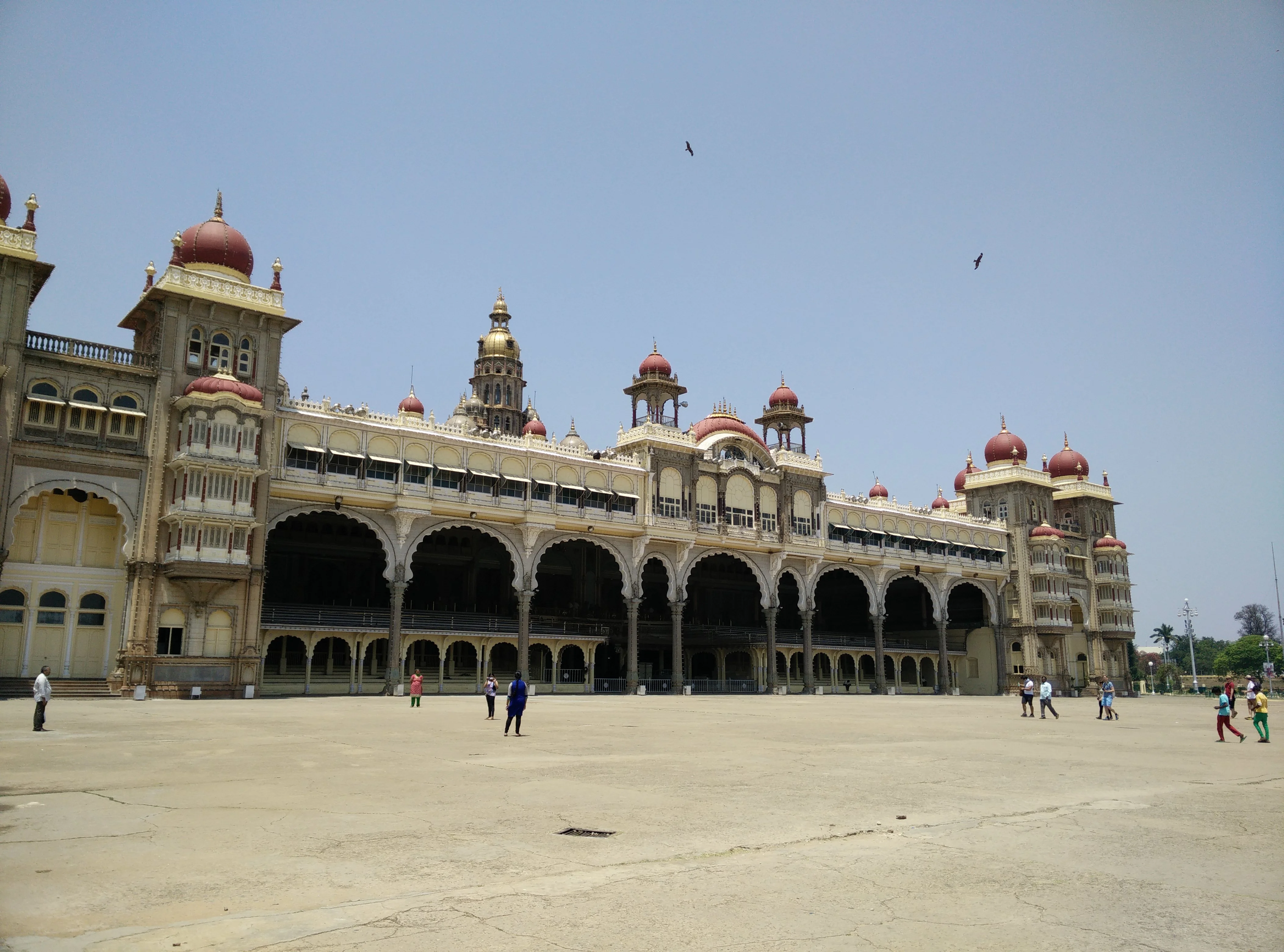
The Kingdom of Mysore was a South Indian state ruled, for most of its five-and-a-half centuries of existence, by the Hindu Wodeyar dynasty, and for a consequential four decades in the eighteenth century by two Muslim rulers, Hyder Ali and his son Tipu Sultan, who took it from a middling regional power to the foremost military state in southern India. It was under Hyder Ali and Tipu Sultan that Mysore mounted the most sustained indigenous military challenge the British East India Company faced anywhere in India, in the four wars historians call the Anglo-Mysore Wars, and it is this period — well documented in the approved historical record — that forms the substance of this article.
The kingdom's outer history is more thinly recorded. The Wodeyar dynasty was founded at Mysore in 1399, according to Encyclopaedia Britannica, and after the interruption of Hyder Ali's and Tipu Sultan's rule it continued, restored under British paramountcy, until the kingdom's accession to the Indian Union following independence. Between the founding and the accession lie long stretches for which reliable, properly sourced historical narrative was not available for this article, and rather than fill those stretches with unverified material, they are treated here only as briefly as the evidence allows, bounded plainly at the points where the record runs out.
Origins and the Vijayanagara Period
The Wodeyar dynasty was established at Mysore in 1399. For the two and a half centuries that followed, reliable narrative detail is not available from the sources consulted for this article. What can be said with reasonable confidence, corroborated by an approved external source, is that Mysore existed during this period as one of a number of small principalities in the southern Deccan, that it survived the collapse of the Vijayanagara Empire at the Battle of Talikota in 1565 as an independent entity rather than being absorbed by a neighbour, and that its capital had become the island fortress of Srirangapatna, on the Kaveri River, well before the end of the seventeenth century.
Chikkadevaraja Wodeyar and the Mughal Alliance (1672–1704)
The reign of Chikkadevaraja Wodeyar, who came to the throne of Mysore in 1672, is the first period of the kingdom's history for which this article can draw on a properly sourced account, and it is generally reckoned the most successful reign of the independent Wodeyar dynasty.
Mysore's principal external threat in this period came from the Marathas. Kanthirava Narasa Raja Wodeyar, a predecessor on the Mysore throne, had already defeated an attack on Srirangapatna in 1639 by the forces of the Bijapur Sultanate under Randaulah Khan, supported by the Maratha chief Shahji, father of Shivaji, and a raiding party of Maratha soldiers en route to their own territory at Ginjee was defeated at Srirangapatna again in 1696. Under Chikkadevaraja, who inherited a state under continuing Maratha pressure — Shivaji himself is recorded as having attacked Srirangapatna in August 1677, retiring to loot the surrounding country once Mysore's forces had beaten him back — the kingdom sought a counterweight in alliance with the Mughal Empire.
The alliance grew out of the Mughal advance into the southern Deccan under Aurangzeb. After Aurangzeb took Bijapur in person and marched south to capture the town of Sira in 1687, a new Mughal province, the Subah of Sira, was constituted there, and Mysore was among six neighbouring states taken under its protection as a tributary. Aurangzeb's first governor of the new province, Khasim Khan, became Chikkadevaraja's point of contact with the Mughal court; among his earliest acts as governor, Khasim Khan seized the commercially important town of Bengaluru — then held by the Maratha chief Venkoji, who had been in the process of selling it to Mysore — and sold it to Chikkadevaraja himself for three lakh rupees. Through this relationship, Mysore secured a period of protection from Maratha pressure that let it expand its own territory undisturbed.
After Khasim Khan's death at the siege of Ginjee, Chikkadevaraja moved to secure the relationship directly with the emperor, sending an embassy to Aurangzeb's court at Ahmednagar in 1699. It returned the following year bearing the emperor's authorisation for Chikkadevaraja to sit on an ivory throne and an official title, rendered as Jaga Deva Raja — "king of the world." The embassy's return prompted a set of administrative reforms at Mysore modelled explicitly on Mughal governance: in 1701 Chikkadevaraja established the Athara Kacheri, eighteen departments through which the state's affairs were organised, among them the Benne Chavadi, a department of animal husbandry responsible for the kingdom's indigenous cattle herds. That department outlasted its founder by more than a century; it passed eventually into the hands of Hyder Ali and then Tipu Sultan, who renamed and reorganised it as the Amrut Mahal. Chikkadevaraja also built and restored Hindu temples across his territory during the years of the Mughal alliance, and patronised Kannada and Sanskrit literature at his court. He died in 1704, three years before Aurangzeb.
The Decline of Wodeyar Authority
Between Chikkadevaraja's death in 1704 and the middle of the eighteenth century, reliable narrative detail is again limited in the sources available for this article. What is documented, from the perspective of the man who would end it, is the terminal phase of this decline: by the 1750s, effective power in the Mysore state had passed from the Wodeyar kings to a succession of ministers holding the office of Dalawai, and it was against this backdrop — a treasury drained by the demands of the Nizam of Hyderabad and the Marathas, and an army repeatedly left unpaid — that Hyder Ali built the personal military following that would eventually bring him to power. That process, and Hyder Ali's own military service under the Dalawais Nanjaraj and Devaraj through the 1740s and early 1750s, is recounted at length in the article on Hyder Ali.
The immediate crisis came in the years after 1757, when Devaraj retired from political life and Nanjaraj, his authority discredited by military reverses, resigned as well. Hyder Ali, summoned from his own command to help resolve the state's financial disorder, discharged the army's arrears and reconciled the estranged ministers, and stepped into the vacancy their departure left. His position was challenged almost at once by a palace conspiracy in August 1760, organised by his own diwan, Khande Rao, in league with Maharani Lakshmi Ammanni, the widow of a Wodeyar king who had never ceased striving for her family's restoration to real power; when that conspiracy failed, the Rani turned instead to the British at Madras, offering a Company official, through her agent, one crore of rupees toward the maintenance of the Company's army in return for support against Hyder Ali — an offer that came to nothing when the official in question was recalled. By 1761, having put down this and other challenges, Hyder Ali had become the undisputed ruler of Mysore, governing nominally in the name of the Wodeyar raja while exercising sovereign authority in every substantive respect.
The identity of the Wodeyar raja in whose name Hyder Ali governed shifted more than once during his reign. The Turkish Encyclopaedia of Islam records that the young raja Hyder Ali had rescued from his minister's domination on his own rise to power was Chikka Krishnaraja, who reigned until his death in 1766; Hyder Ali then installed his son, Nanjaraj — a name he shared with the earlier Dalawai — as raja in his place, and, when the Marathas invaded in response, bought peace with an indemnity of three and a half million rupees. The same source records that in 1770–1772, during renewed wars with the Marathas, Hyder Ali had this second raja put to death for favouring the Maratha side and replaced him with his brother, Chamaraj. This account rests on that single approved source, which cites Bowring and Sinha's biography of Hyder Ali for it; Mohibbul Hasan's History of Tipu Sultan, the fuller source for this reign, does not address the question of the Wodeyar succession at all, neither confirming nor contradicting it.
The Sultanate of Hyder Ali and Tipu Sultan (1761–1799)
Transformation of the State
The four decades of rule by Hyder Ali and his son Tipu Sultan transformed Mysore from a regional power troubled by Maratha extortion into the most formidable military state in southern India, and this transformation is the best-documented period of the kingdom's history.
Hyder Ali built, from the personal military household he had assembled as a Dalawai officer, a standing army trained and equipped along lines drawn substantially from European practice: disciplined infantry drilled by French, Dutch, and other European advisors in his service; artillery cast at arsenals he established at Srirangapatna and elsewhere; and a dedicated corps of iron-cased war rockets, unprecedented in scale and organisation among Indian armies of the period, which would later be studied by British engineers after the fall of the kingdom and would influence the development of the Congreve rocket. Territorially, Hyder Ali brought the wealthy former Nayaka kingdom of Bednur under his control in 1763, campaigned twice into Malabar on the western coast, and built a network of alliances and rivalries with the Nizam of Hyderabad and the Maratha Confederacy that dominated Mysorean diplomacy for the rest of the century — episodes recounted in full in the article on Hyder Ali.
Tipu Sultan, who succeeded his father in December 1782 during the prosecution of the Second Anglo-Mysore War, continued and extended this programme of military and administrative reform. He reorganised the state's provincial administration, reformed its currency and calendar, developed the rocket corps his father had founded, and pursued an ambitious diplomatic programme aimed at securing an alliance against the British — sending a large embassy of some seven hundred men to Ottoman Constantinople in 1786, by way of Muscat, Bushire, Basra, and Baghdad, and a separate embassy to revolutionary France, among other courts. The Ottoman embassy sought military and commercial support against the British and, according to the Turkish Encyclopaedia of Islam, also asked the Ottoman sultan for a formal diploma of caliphal recognition — the only occasion on which any Indian Muslim ruler is recorded as having made such a request of the Ottomans, though the Sublime Porte, then at war with Russia and unwilling to provoke Britain, offered only counsel rather than the military aid Tipu sought. His reign and its full detail, including his administrative reforms and his diplomacy, are the subject of the article on Tipu Sultan.
The Anglo-Mysore Wars
The kingdom's confrontation with British power unfolded across four wars. The First Anglo-Mysore War (1767–1769) was fought against a coalition of the British, the Nizam, and the Marathas; Hyder Ali detached the Nizam from the coalition through diplomacy, fought the British to a standstill, and concluded the war by leading a cavalry raid to the vicinity of Madras itself, dictating the Treaty of Madras (1769) from a position of evident strength. The British failure to honour that treaty's defensive alliance clause, when the Marathas invaded Mysore in 1771, left a lasting grievance that Hyder Ali carried into the Second Anglo-Mysore War (1780–1784), the conflict in which Mysorean forces destroyed a British column at the Battle of Pollilur (1780) — one of the most serious defeats British arms suffered in India in the eighteenth century — and in the course of which Hyder Ali died, on 7 December 1782, leaving the war to be concluded on largely equal terms by Tipu Sultan at the Treaty of Mangalore (1784).
The Third Anglo-Mysore War (1790–1792), provoked by Tipu Sultan's invasion of the British-allied state of Travancore, saw a coalition of the British, the Nizam, and the Marathas invade Mysore from multiple directions and drive Tipu back to Srirangapatna itself; the resulting Treaty of Seringapatam (1792) cost Tipu half his territory, a large indemnity, and two of his sons as hostages. During this war, Mysorean officers mounted a defence that the approved sources describe in some detail: Bahadur Khan, the killedar of Bangalore fort, died after a three-week defence there and was honoured for his bravery even by the opposing commander, Lord Cornwallis, and Badruzzaman held the fort at Dharwar against the combined Maratha and Bombay forces for six months. Even so, the invading Maratha contingent under Parashuram Bhau inflicted extensive destruction on towns and villages across the Mysorean countryside in the course of the campaign, by the account of the British officer Edward Moor, who served alongside it.
The Fourth Anglo-Mysore War (1799) was the kingdom's last as an independent Muslim-ruled state. Alarmed by Tipu Sultan's continuing diplomatic contact with France, the Governor-General, Lord Wellesley, assembled an overwhelming force — the Nizam now an ally rather than an adversary, and the Marathas neutral — and invaded Mysore in February 1799. Srirangapatna was stormed on 4 May 1799; Tipu Sultan died fighting near the fortress's northern gate.
The Fall of Srirangapatna and the Restoration of the Wodeyars
The fall of Srirangapatna was hastened by a conspiracy among some of Tipu's own senior officers. Correspondence between several of them — Mir Sadiq, Purnaiya, Qamar-ud-din Khan, and others — and the English, the Nizam, and the Marathas had first been intercepted as early as 1797; those implicated were imprisoned, but were released and reinstated after pledging their loyalty to the Sultan. The pledge did not hold. In 1798 Qamar-ud-din Khan opened a fresh, separate correspondence with the Nizam's minister, offering to deliver Tipu in exchange for a jagir, and at the final storming of Srirangapatna in May 1799 he offered no resistance to the attackers, for which the Nizam awarded him the jagir of Gurramkonda after the fort fell. Mir Sadiq's part in the same betrayal cost him his life: Mysorean soldiers, believing correctly that he had betrayed the Sultan, killed him as he tried to escape to the English lines, and his body was subjected to public abuse for days afterward before the English intervened to stop it. Purnaiya — who had also been among those implicated in 1797, and who had served at Hyder Ali's own deathbed in 1782 — was made chief minister of the restored Wodeyar administration once the fort had fallen. His appointment was the practical conclusion of a restoration effort that had been pursued, on and off, since the very beginning of Hyder Ali's rule: Maharani Lakshmi Ammanni's failed approach to the British in 1760 had been an earlier attempt at exactly the outcome that arrived, by a different route, thirty-nine years later, and a further approach from the same quarter, to Arthur Wellesley's brother Henry, is recorded as late as August 1801.
Mysore's territories were partitioned among the victors. The British and the Nizam divided the greater part of Tipu's former dominions between them, and what remained — reduced from the kingdom Hyder Ali and Tipu Sultan had built, but still a substantial territory in the Karnataka plateau — was reconstituted as the Kingdom of Mysore under a restored Wodeyar prince, with British paramountcy now established over what had, for four decades, been an independent and formidably capable rival power. The state's own library at Srirangapatna, which Tipu Sultan had built up, was dispersed in the aftermath: part of it was carried to London in 1806, and part to the Asiatic Society of Bengal at Calcutta in 1808.
The Later Princely State
For the century and a half between the 1799 restoration and the kingdom's accession to the Indian Union, reliable narrative detail was not available from the sources consulted for this article, and none is offered here beyond the two dates that mark its boundaries. Encyclopaedia Britannica records that the Wadiyar dynasty — as it renders the family name — continued to reign at Mysore through this period until Indian independence. The internal history of the restored kingdom under British paramountcy, including its long period of direct British administration and its later reputation as a well-governed princely state, is not covered in this article; a properly sourced account of it would need sources beyond those available here.
Legacy
The Kingdom of Mysore's place in Indian history rests overwhelmingly on the four decades of Hyder Ali's and Tipu Sultan's rule. It was in this period that an Indian state assembled, on its own initiative, a military establishment capable of meeting European-trained forces on equal terms, humiliated the British East India Company at the gates of its own capital, and inflicted on British arms one of the most serious defeats they suffered anywhere in India before the nineteenth century. The kingdom's earlier centuries under the independent Wodeyar dynasty, and its long later life as a restored princely state, both remain part of its history, but a properly sourced account of either lies beyond what the material available for this article could establish.
References and Further Reading
Classical Islamic Sources
- Kirmani, Mir Husain Ali. Nishan-i-Haidari. Contemporary Persian chronicle by a writer who knew both Hyder Ali and Tipu Sultan personally, translated into English by W. Miles.
- Shustari, Zain-ul-Abidin. Fath-ul-Mujahidin. Persian manuscript account of the Mysorean campaigns by a writer who entered Hyder Ali's own service.
Academic and Scholarly Sources
- Hasan, Mohibbul. History of Tipu Sultan. Calcutta and Dacca: The Bibliophile Ltd., 1951.
- Panikkar, K.M. A History of Kerala, 1498-1801. Annamalainagar: The Annamalai University, 1960.
Approved Web Sources
- Ahmed, Ameen. "Aurangzeb's friendly relations with Mysore Kingdom's most successful Hindu King Chikkadevaraja Wodeyar." historyofislam.com, 14 December 2020.
- Ahmed, Ameen. "Maratha raids on Hindu temples and shrines in South India and Tipu Sultan's defense of the temples." historyofislam.com.
- Encyclopaedia Britannica. "Wadiyars."
- Özcan, Azmi. "Meysûr." TDV İslâm Ansiklopedisi. Ankara: Türkiye Diyanet Vakfı, 2004, vol. 29, pp. 510–511.
- Özcan, Azmi. "Tîpû Sultan." TDV İslâm Ansiklopedisi. Istanbul: Türkiye Diyanet Vakfı, 2012, vol. 41, pp. 192–193.
- Taşağıl, Ahmet. "Haydar Ali Han." TDV İslâm Ansiklopedisi. Istanbul: Türkiye Diyanet Vakfı, 1998, vol. 17, pp. 25–26.
Further Reading
- Bowring, Lewin B. Haidar Ali and Tipu Sultan and the Struggle with the Musalman Powers of the South. Oxford: Clarendon Press, 1893.
- Wilks, Mark. Historical Sketches of the South of India in an Attempt to Trace the History of Mysoor. 3 vols. London: Longman, Hurst, Rees, Orme and Brown, 1810–1817.
- Rice, B. Lewis. Mysore: A Gazetteer Compiled for Government. 2 vols. Westminster: Archibald Constable, 1897.
For the fuller biographical detail of the kingdom's two most consequential rulers, see the articles on Hyder Ali and Tipu Sultan. For the Mughal alliance's context from the imperial side, see the article on Aurangzeb.
Mentioned In
2 articles reference this topic