Baghdad
Baghdad, founded in 762 CE by Caliph al-Mansur, served as the capital of the Abbasid Caliphate and became the intellectual, cultural, and economic center of the Islamic world during the Islamic Golden Age, reaching a population of over one million before its destruction by the Mongols in 1258 CE.
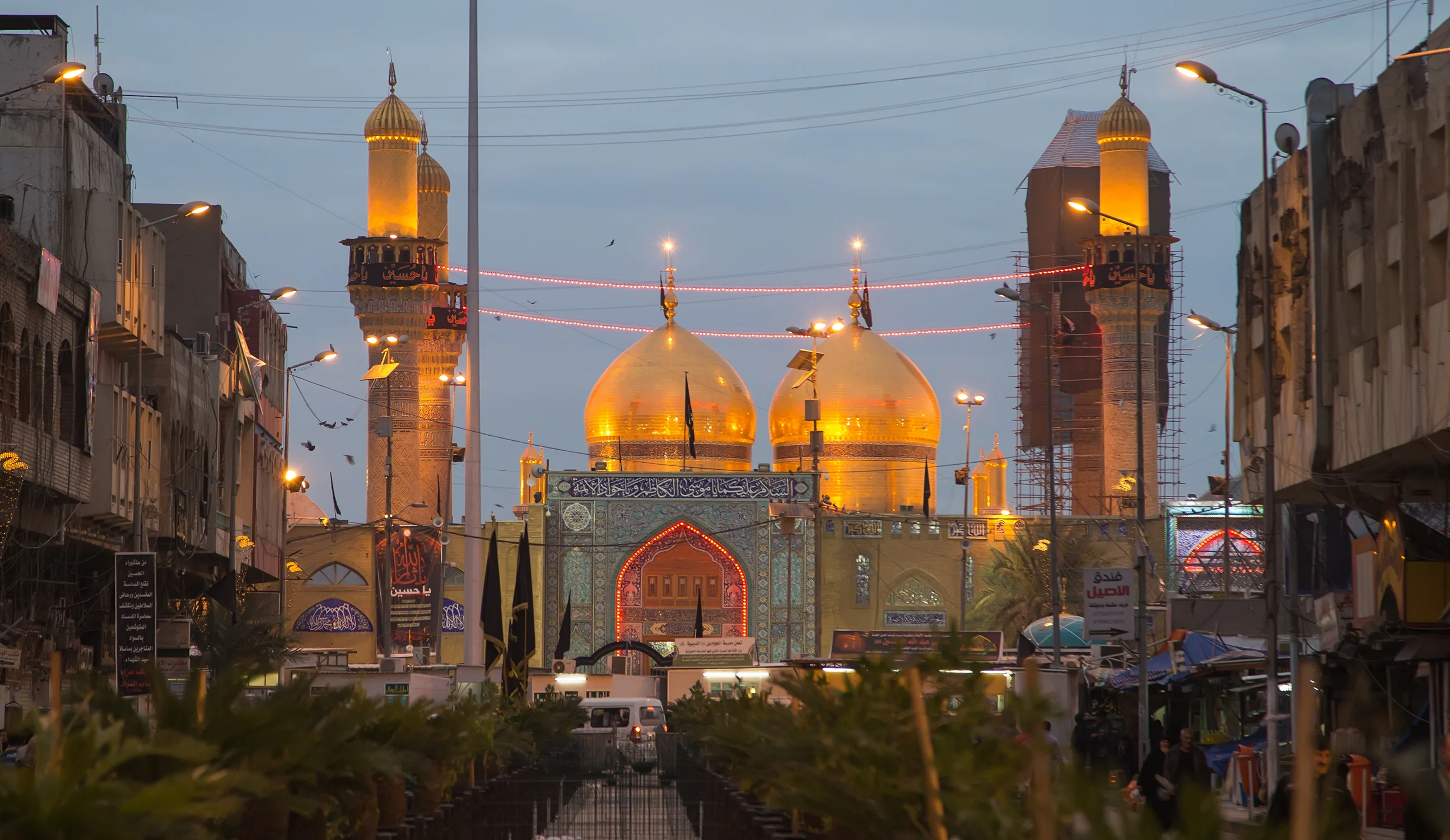
Baghdad (Arabic: بغداد) was founded in 762 CE by the Abbasid Caliphate's second caliph, al-Mansur, on the western bank of the Tigris River in present-day Iraq. Within a generation it had grown from a planned administrative capital into one of the largest and most consequential cities in the medieval world. At its height, under the caliphs Harun al-Rashid and al-Ma'mun, Baghdad was home to more than a million people, housed the greatest library and research institution of the age in the House of Wisdom, and served as the intellectual, commercial, and political center of the Islamic Golden Age. Its destruction by the Mongols in 1258 CE marked one of the most devastating events in Islamic history and the symbolic close of the classical Abbasid era.
The Abbasid Revolution and the Need for a New Capital
To understand why Baghdad was built, it is necessary to understand the revolution that made it possible. The Abbasid Caliphate came to power in 750 CE by overthrowing the Umayyad Caliphate, which had ruled from Damascus for nearly a century. The Abbasid revolution drew its strength from the eastern provinces — particularly Khorasan in northeastern Persia — and from the widespread resentment of non-Arab Muslims who had been treated as second-class subjects under Umayyad rule. When the Abbasids took power, they represented a genuinely different vision of the Islamic state: more cosmopolitan, more Persian in its administrative culture, and more committed to the idea that all Muslims, regardless of ethnic origin, were equal members of the community.
Damascus, the old Umayyad capital, was politically and symbolically unsuitable for this new dynasty. It was too closely associated with Umayyad power, too far from the eastern provinces that had made the revolution possible, and too exposed to Byzantine military pressure from the north. The Abbasids needed a capital that was their own — one that expressed their vision of Islamic empire and was positioned to govern the vast territories stretching from Spain to Central Asia.
Al-Mansur, who became caliph in 754 CE after the brief reign of his brother al-Saffah, was the dynasty's true architect. He was a man of formidable intelligence, administrative ability, and political ruthlessness, and he understood that a great dynasty required a great capital. He spent years searching for the right location before settling on a site near the ancient Persian city of Ctesiphon, where the Tigris and Euphrates rivers run close together and the land is exceptionally fertile. The site had been inhabited for millennia — Babylonian, Assyrian, and Sassanian civilizations had all flourished in the same river valley — and it sat at the natural crossroads of trade routes connecting the Mediterranean world to Persia, Central Asia, and India.
The Round City: Design and Construction
The city al-Mansur built was unlike anything that had existed before. He called it Madinat al-Salam — the City of Peace — though it would become known to the world simply as Baghdad, after the Persian village that had previously occupied the site. Its most distinctive feature was its shape: a perfect circle, approximately two kilometers in diameter, surrounded by three concentric rings of walls with a deep moat on the outside.
At the center of the circle stood the caliph's palace, the Qasr al-Dhahab (Palace of the Golden Gate), topped by a great green dome that was visible from miles away. Beside it stood the main congregational mosque. From the palace, four straight roads ran outward like the spokes of a wheel, passing through the residential and commercial zones of the inner city and exiting through four great gates, each named for the direction it faced and the region it connected to: the Khurasan Gate to the northeast, the Basra Gate to the southeast, the Kufa Gate to the south, and the Damascus Gate to the west. Between the roads, the inner ring was divided into wedge-shaped residential quarters for the caliph's family, his guards, and senior officials.
The outer ring, between the second and third walls, was given over to markets and commercial activity. This arrangement — with commerce at the periphery and power at the center — was both practical and symbolic. It expressed the Abbasid understanding of the caliph's role: not a merchant-king embedded in the bustle of trade, but a sacred ruler at the still center of a perfectly ordered world.
The construction was a project of extraordinary scale. Al-Mansur reportedly employed 100,000 workers — architects, engineers, craftsmen, and laborers drawn from across the empire. The foundations were laid in 762 CE, and the city was substantially complete within four years. Al-Mansur is said to have personally supervised the planning, walking the site with his engineers and approving the placement of every major structure. The circular design drew on Persian and Sassanian architectural traditions, but the scale and ambition were entirely new.
Growth Beyond the Walls
The Round City was designed as an administrative and ceremonial center, not as a commercial metropolis. Almost immediately, it proved too small for the city that was growing around it. Markets were moved outside the walls when they became too noisy and crowded for the caliph's comfort. New residential districts spread along both banks of the Tigris. The eastern bank, known as al-Rusafa, developed rapidly under Harun al-Rashid, who built a palace complex there and effectively created a second city across the river.
By the early ninth century, Baghdad had become a sprawling urban agglomeration that bore little resemblance to al-Mansur's original plan. The Round City remained the symbolic heart, but the real life of the city had long since overflowed its walls. The Tigris waterfront was lined with docks, warehouses, and the residences of wealthy merchants. Bridges of boats connected the two banks. Neighborhoods had developed their own characters — some were known for particular crafts or trades, others for the communities that lived in them. The city had grown into something organic and unplanned, a true metropolis rather than a designed capital.
Contemporary geographers described Baghdad in terms that convey genuine awe. The tenth-century geographer al-Muqaddasi wrote that he had never seen a city more beautiful, more prosperous, or more full of learned men. Ibn Hawqal, another tenth-century traveler, described the markets as containing goods from every corner of the known world. These accounts, while inevitably colored by admiration, reflect a real phenomenon: Baghdad in its prime was genuinely extraordinary.
The Barmakids and the Court of Harun al-Rashid
The reign of Harun al-Rashid (786–809 CE) represents Baghdad at its most legendary. Harun is the caliph of the Thousand and One Nights, the ruler whose court became synonymous in both Islamic and European imagination with wealth, sophistication, and the pleasures of civilization. The reality was more complex and more interesting than the legend.
Harun's court was genuinely brilliant, but much of its administrative genius belonged to the Barmakid family — a Persian dynasty of Buddhist origin that had converted to Islam and risen to become the most powerful viziers in the Abbasid state. Yahya ibn Khalid al-Barmaki served as Harun's chief minister for nearly two decades, and his sons Fadl and Jafar held positions of extraordinary influence. The Barmakids were patrons of learning on a scale that transformed Baghdad's intellectual life. They funded translations of Greek and Persian texts, supported scholars and physicians, and created the administrative infrastructure that allowed the caliphate to function effectively across its vast territories.
In 803 CE, Harun suddenly and violently destroyed the Barmakid family — arresting Yahya and his sons, executing Jafar, and confiscating the family's enormous wealth. The reasons remain debated by historians; the sources offer various explanations, none entirely convincing. What is clear is that the fall of the Barmakids was a shock to Baghdad's intellectual and administrative culture, and that Harun's later years were marked by increasing instability.
Harun's reign also saw Baghdad's first serious engagement with the wider world. He exchanged diplomatic missions with Charlemagne, the Frankish king who was simultaneously building his own empire in Western Europe. The gifts Harun sent — including, according to Frankish sources, a water clock and an elephant named Abul-Abbas — became famous in European chronicles as symbols of the Islamic world's sophistication and wealth.
Al-Ma'mun and the House of Wisdom
If Harun al-Rashid gave Baghdad its legendary reputation, his son al-Ma'mun (813–833 CE) gave it its intellectual identity. Al-Ma'mun came to power after a civil war against his brother al-Amin — a conflict that caused significant destruction in Baghdad itself, with the Round City damaged by siege. But al-Ma'mun's reign became one of the most intellectually productive in Islamic history.
Al-Ma'mun transformed the royal library established by his father into the House of Wisdom (Bayt al-Hikma), a comprehensive research institution that combined a library, translation bureau, and observatory. He sent emissaries to Constantinople and other centers of learning to acquire Greek manuscripts, and he paid translators by the weight of their output in gold. The scholars who worked at the House of Wisdom included some of the greatest minds of the medieval world.
Al-Khwarizmi, working in Baghdad under al-Ma'mun's patronage, wrote the treatise that gave the world algebra — the word itself derives from al-jabr, one of the operations he described. His work on the Hindu-Arabic numeral system introduced the decimal place-value notation and the concept of zero to the Arabic-speaking world, and through later Latin translations, to Europe. Al-Kindi, the first major Islamic philosopher, wrote on mathematics, optics, music theory, and cryptography from his base in Baghdad. Hunayn ibn Ishaq, a Nestorian Christian physician, translated the complete medical corpus of Galen into Arabic and Syriac, making the full range of Greek medicine available to Islamic scholars for the first time.
Al-Ma'mun was also deeply engaged with the theological controversies of his time. He imposed the Mihna — a theological inquisition requiring scholars to affirm that the Quran was created rather than eternal — a policy that generated fierce resistance and damaged his reputation among later Sunni historians. The most famous resister was Ahmad ibn Hanbal, who refused to affirm the Mu'tazilite position and was imprisoned and flogged. When al-Ma'mun's successor al-Mutawakkil ended the Mihna in 848 CE, Ibn Hanbal emerged as a hero, and the theological tide turned against the rationalist school that al-Ma'mun had championed.
A City of Scholars and Physicians
Baghdad's intellectual life was not confined to the House of Wisdom. The city was home to dozens of independent scholars, physicians, and teachers who worked outside the court's direct patronage. The great physician al-Razi (854–925 CE), known in the Latin West as Rhazes, worked in Baghdad and served as chief physician of the city's main hospital. His clinical observations on smallpox and measles — distinguishing the two diseases for the first time — and his encyclopedic medical works became standard references in both the Islamic world and medieval Europe.
Al-Farabi (872–950 CE), the philosopher known as the "Second Teacher" after Aristotle, developed his systematic philosophical works in Baghdad, engaging with the full range of Greek philosophy and working out its relationship to Islamic thought. His influence on Ibn Sina and Ibn Rushd — the two greatest Islamic philosophers of the following centuries — was direct and acknowledged.
Baghdad's hospitals deserve particular mention. The city had several public hospitals (bimaristans) that provided free medical care to all patients regardless of religion or social status. These institutions, funded by the state and by private endowments, were among the first public hospitals in history. They had separate wards for different conditions, trained physicians, and pharmacies. The model of the Baghdad hospital influenced medical institutions across the Islamic world and, eventually, in medieval Europe.
The city's markets of knowledge were as remarkable as its markets of goods. Booksellers' streets (suq al-warraqin) were a distinctive feature of Baghdad's commercial life. Scribes copied manuscripts to order, and the trade in books was substantial. A scholar arriving in Baghdad could find texts that were unavailable anywhere else in the world, and the city's libraries — both the House of Wisdom and numerous private collections — represented an accumulation of knowledge without parallel in the medieval world.
Trade, Commerce, and the City's Economy
Baghdad's intellectual brilliance rested on an economic foundation of extraordinary productivity. The city sat at the intersection of the most important trade routes of the medieval world. Goods from China and Central Asia arrived via the Silk Road through Samarkand and Bukhara. Indian spices, textiles, and luxury goods came up the Persian Gulf and along the Tigris. Mediterranean products arrived from the west. The city's markets offered silk, cotton, spices, precious metals, glassware, ceramics, manuscripts, and slaves from every corner of the known world.
The Tigris waterfront was the commercial heart of the city. Hundreds of boats — some sources say thousands — were moored along the river at any given time, loading and unloading goods. The city had specialized markets for different commodities: a market for books, a market for birds, a market for horses, a market for jewels. The great covered bazaars were centers of social as well as commercial life, where merchants, scholars, and ordinary citizens mingled.
Baghdad's economy also benefited from the enormous revenues of the Abbasid state. The caliphal court was the largest single consumer in the city, employing thousands of servants, craftsmen, soldiers, and administrators. The court's demand for luxury goods — fine textiles, metalwork, ceramics, perfumes, and exotic foods — sustained entire industries. The salaries paid to scholars, physicians, and translators at the House of Wisdom and other institutions circulated through the city's economy, supporting the booksellers, scribes, and craftsmen who served the learned community.
Political Decline and the Weakening of the Caliphate
The ninth and tenth centuries saw Baghdad's political importance gradually diminish even as its cultural life continued to flourish. After al-Ma'mun, the Abbasid caliphs increasingly lost real power to their Turkish military commanders, who had been recruited as elite soldiers but gradually became the true rulers of the state. By the mid-ninth century, caliphs were being made and unmade by Turkish generals, and the office had become largely ceremonial.
In 945 CE, the Buyid dynasty — a Persian Shia family from the Caspian region — captured Baghdad and reduced the Abbasid caliph to a figurehead. The Buyids ruled as sultans while the caliph retained his religious prestige but exercised no political power. This arrangement, while humiliating for the Abbasid dynasty, did not immediately damage Baghdad's cultural life. The Buyid rulers were themselves patrons of learning, and the city continued to attract scholars. Al-Farabi worked in Baghdad during the early Buyid period, and the philosopher and physician Ibn Sina spent time there, though he found more stable patronage elsewhere.
The Seljuk Empire displaced the Buyids in 1055 CE, bringing Sunni Turkish rulers to Baghdad. The Seljuks restored Sunni orthodoxy and built the Nizamiyyah madrasa network — the great chain of educational institutions founded by the vizier Nizam al-Mulk — with a major institution in Baghdad itself. The theologian al-Ghazali taught at the Baghdad Nizamiyyah at the height of his fame before his famous spiritual crisis and withdrawal in 1095 CE. Under the Seljuks, the Abbasid caliphs gradually recovered some political influence, and the late Abbasid period (roughly 1100–1258 CE) saw a modest revival of caliphal authority in Baghdad.
The Mongol Destruction of 1258
The fall of Baghdad in February 1258 CE was one of the most catastrophic events in Islamic history. The Mongol forces of Hulagu Khan — grandson of Genghis Khan and brother of the Great Khan Mongke — had been advancing westward through Persia for several years, destroying cities and demanding submission. The last Abbasid caliph, al-Musta'sim, refused to submit and failed to organize an adequate defense. His decision-making in the final months before the siege remains a subject of historical debate; some sources suggest he was poorly advised, others that he simply underestimated the Mongol threat.
Hulagu's army besieged Baghdad in late January 1258. The city's defenses, weakened by decades of political instability and inadequate maintenance, could not hold. On February 10, 1258, the Mongols breached the walls. What followed was a week of systematic destruction. The caliph al-Musta'sim was captured and executed — reportedly wrapped in felt and trampled by horses, so that his blood would not touch the ground, in accordance with a Mongol taboo against spilling royal blood directly. His family and most of the Abbasid court were killed.
The destruction of the city was immense. Medieval sources describe the Tigris running black with ink from the manuscripts thrown into the river, and red with the blood of the slain. Modern historians treat the most extreme figures — some sources claim hundreds of thousands killed — with caution, recognizing that medieval accounts of catastrophes tend toward exaggeration. But the destruction was real and severe. The irrigation systems that had sustained the agriculture of the Tigris-Euphrates valley for millennia were damaged and in some areas permanently destroyed. The population of the city collapsed. The House of Wisdom and the great libraries were lost.
The symbolic weight of the event was enormous. The Abbasid Caliphate, which had been the nominal center of Sunni Islamic political life for five centuries, was extinguished. The office of caliph — the successor to Prophet Muhammad as leader of the Muslim community — had no incumbent for the first time since the death of the Prophet himself. The Islamic Golden Age, already in decline, found its institutional center destroyed. Scholarship and cultural life continued in other cities — in Cairo under the Mamluks, in Cordoba and Samarkand and Bukhara — but the particular civilization that Baghdad had embodied was gone.
A branch of the Abbasid family was subsequently established as a ceremonial caliphate in Cairo under Mamluk protection, providing a symbolic continuity of the office until the Ottoman conquest of Egypt in 1517. But this was a shadow of the original institution, and Baghdad itself never recovered its former status as the center of the Islamic world.
Legacy
Baghdad's legacy in Islamic civilization is profound and multidimensional. The city was the crucible in which the Islamic Golden Age took shape — the place where Greek, Persian, Indian, and Syriac knowledge was translated, synthesized, and extended into new discoveries that shaped the subsequent history of science, medicine, mathematics, and philosophy. The works produced in Baghdad by scholars like al-Khwarizmi, al-Kindi, al-Razi, and al-Farabi were transmitted to the Islamic world and, through Latin translations, to medieval Europe, where they contributed to the intellectual transformation that historians call the twelfth-century Renaissance.
The city also demonstrated what Islamic civilization could achieve when political power, economic prosperity, and intellectual ambition were aligned. The Abbasid caliphs' investment in scholarship — their willingness to pay translators, fund observatories, and support scholars across every discipline — created conditions for intellectual progress that were unusual in the medieval world. The model of the House of Wisdom, the public hospital, and the booksellers' market all reflected a civilization that valued knowledge as a public good.
Baghdad's physical legacy is largely lost. The Round City was destroyed by the Mongols and never rebuilt. The House of Wisdom is gone. The great mosques and palaces of the Abbasid period survive only in descriptions and archaeological traces. What remains is the memory of what the city was — a memory preserved in the works of its scholars, in the accounts of travelers who visited it, and in the enduring influence of the knowledge it produced on the civilization that followed.
The name Baghdad itself became, in Islamic historical consciousness, a byword for the heights of human achievement. When later Islamic writers wanted to evoke a golden age of learning, prosperity, and cultural sophistication, they invoked Baghdad. The city's story — its brilliant founding, its extraordinary flourishing, and its catastrophic destruction — became one of the defining narratives of Islamic civilization, a reminder of both what had been achieved and what had been lost.
References and Further Reading
Primary Islamic Sources
- Al-Khatib al-Baghdadi. Tarikh Baghdad (History of Baghdad). 14 vols. Cairo: Maktabat al-Khanji, 1931. [Original c. 1071 CE]
- Al-Tabari, Muhammad ibn Jarir. Tarikh al-Rusul wa al-Muluk, sections on the founding of Baghdad. Cairo: Dar al-Ma'arif, 1960. [Original c. 915 CE]
- Al-Ya'qubi, Ahmad ibn Abu Ya'qub. Kitab al-Buldan (Book of Countries), description of Baghdad's founding and layout. Leiden: Brill, 1892. [Original c. 891 CE]
- Ibn al-Jawzi, Abd al-Rahman. Al-Muntazam fi Tarikh al-Muluk wa al-Umam, sections on Baghdad. Beirut: Dar al-Kutub al-Ilmiyyah, 1992. [Original c. 1200 CE]
- Al-Mas'udi, Ali ibn al-Husayn. Muruj al-Dhahab, descriptions of Abbasid Baghdad. Beirut: Dar al-Andalus, 1966. [Original c. 947 CE]
Classical Islamic Sources
- Ibn Khaldun, Abd al-Rahman. Al-Muqaddimah, sections on Baghdad as an urban center. [Original c. 1377 CE]
- Yaqut al-Hamawi. Mu'jam al-Buldan (Dictionary of Countries), entry on Baghdad. Beirut: Dar Sadir, 1977. [Original c. 1224 CE]
- Ibn Jubayr, Muhammad. Rihlat Ibn Jubayr, description of Baghdad in the 12th century. [Original c. 1185 CE]
- Ibn Battuta. Rihlat Ibn Battuta, description of Baghdad in the 14th century. [Original c. 1355 CE]
Academic and Scholarly Sources
- Lassner, Jacob. The Topography of Baghdad in the Early Middle Ages. Detroit: Wayne State University Press, 1970.
- Le Strange, Guy. Baghdad During the Abbasid Caliphate. Oxford: Clarendon Press, 1900.
- Kennedy, Hugh. When Baghdad Ruled the Muslim World: The Rise and Fall of Islam's Greatest Dynasty. Cambridge: Da Capo Press, 2004.
- Cooperson, Michael. Al-Ma'mun. Oxford: Oneworld, 2005.
- Gutas, Dimitri. Greek Thought, Arabic Culture: The Graeco-Arabic Translation Movement in Baghdad. London: Routledge, 1998.
- El-Hibri, Tayeb. Reinterpreting Islamic Historiography: Harun al-Rashid and the Narrative of the Abbasid Caliphate. Cambridge: Cambridge University Press, 1999.
Further Reading
- Lyons, Jonathan. The House of Wisdom: How the Arabs Transformed Western Civilization. New York: Bloomsbury Press, 2009.
- Hodgson, Marshall G.S. The Venture of Islam, Vol. 1. Chicago: University of Chicago Press, 1974.
- Lapidus, Ira M. A History of Islamic Societies. 3rd ed. Cambridge: Cambridge University Press, 2014.
- Starr, S. Frederick. Lost Enlightenment: Central Asia's Golden Age. Princeton: Princeton University Press, 2013.
Mentioned In
134 articles reference this topic
and 122 more articles