The Mughal Empire: Three Centuries of Islamic Rule in the Indian Subcontinent
The Mughal Empire (1526-1857) ruled most of the Indian subcontinent for three centuries, creating a distinctive Indo-Islamic civilization with magnificent architecture, sophisticated administration, and lasting cultural achievements blending Persian, Central Asian, and Indian traditions.
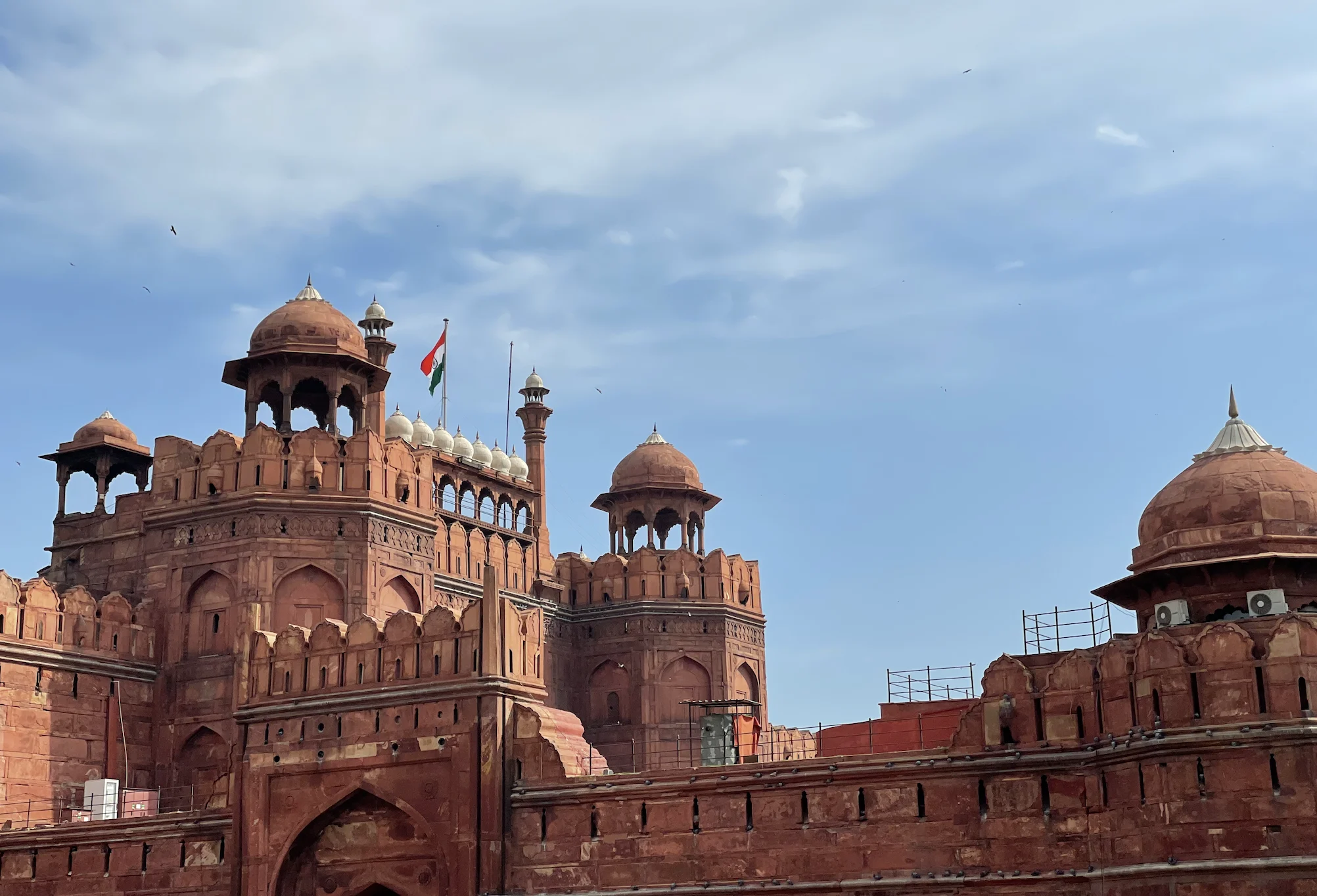
The Mughal Empire ruled most of the Indian subcontinent from 1526 to 1857, and for much of that span was among the wealthiest and most populous states in the world. Founded by Babur, a Timurid prince descended from Timur and Genghis Khan, the empire reached its greatest territorial extent under Aurangzeb in the late seventeenth century, before contracting over the following century and a half into a nominal sovereignty that the British East India Company finally abolished after the 1857 Uprising.
Babur, Humayun, Jahangir, Shah Jahan, Aurangzeb, Akbar II, and Bahadur Shah Zafar each have a dedicated article treating their own reign at length; this article is not a summary of those, but the connecting dynastic narrative that runs between them — the wars that made and unmade Mughal power, the marriages and children through whom the throne passed, the administrative and religious system that held the empire together, and its place in the history of Islam in the subcontinent, drawn from the same chronicle sources — chiefly Abu'l-Fazl's Akbarnama, Bada'uni's Muntakhab al-Tawarikh, Jauhar Aftabchi's memoir of Humayun's exile, and the Shah Jahan-era chronicles collected by Elliot and Dowson — that ground the individual emperors' own articles. Akbar, whose near half-century reign (1556–1605) shaped the empire's institutions, religious character, and territorial extent more than any other single reign, has no dedicated article of his own at present, and his reign is accordingly treated in this article at the fuller depth that fact requires rather than in summary. Where a fact belongs properly to one of the other reigns, it is given here in the depth the dynastic narrative requires and cross-referenced to the fuller treatment in that emperor's article.
Babur and the Founding of the Empire, 1526–1530
From Fergana to Kabul
Zahir al-Din Muhammad Babur was a Timurid prince, descended from Timur on his father's side and from Genghis Khan on his mother's, who had lost his ancestral principality of Fergana in Central Asia to the Uzbeks and failed, after repeated attempts, to hold Samarkand. He took Kabul in 1504 and ruled it as a base from which he raided, and eventually invaded, the plains of Hindustan.
Panipat, 1526
Babur crossed into India in 1526 to confront Ibrahim Lodi, the Sultan of Delhi. The disparity in force was extreme: Babur's whole army, drawn from a territory limited to Badakhshan, Kabul, and Kandahar, numbered under twelve thousand men, against an army Abu'l-Fazl's Akbarnama puts at "nearly 100,000 cavalry and 1,000 war-elephants." Bada'uni's Muntakhab al-Tawarikh records the tactical method that closed the gap: Babur resolved to encamp with the town of Panipat at his army's rear, using a line of gun-carriages chained together, in the Ottoman manner, as a defensive front from which his cavalry and infantry could fire and charge — a device managed by his artillerist Ustad Ali Quli, who chained the carriages together "in the form of a whip-lash."
The armies met on 21 April 1526 (8 Rajab 932 AH per Bada'uni's dating). Abu'l-Fazl's account of the result is direct: "Sultan Ibrahim was slain unrecognised and in a corner, and numerous Afghans were the harvest of the royal sword... Near the body of Sultan Ibrahim, there lay on one spot five or six thousand dead. The sun had mounted spear-high when the onset of battle began and at noon there blew the breeze of victory." Abu'l-Fazl explicitly ranks the scale of the victory against the conquests of Mahmud of Ghazni and Timur, measured by the size of the army overcome.
Babur entered Delhi on 25 April and Agra on 4 May 1526. Four days later the treasure of the conquered sultanate was distributed: Humayun received seventy lakh tankas, and Babur's kinsmen governing Badakhshan, Kabul, and Kandahar — Kamran among them, with seventeen lakh — received grants in proportion to their standing. Ibrahim Lodi's mother was assigned a pension of seven lakh tankas. Among the treasure was a celebrated diamond, taken from the family of Raja Bikramajit of Gwalior, which Humayun presented to his father; Babur, in a gesture the chroniclers record approvingly, returned it to his son.
Khanwa, 1527
The Rajput confederacy under Rana Sanga of Mewar, alarmed at the new power established at Delhi and Agra, moved against the frontier fortress of Biana. Babur marched from Agra on 11 February 1527 to meet him, and the two armies engaged at the village of Khanwa, in the district of Biana, on 16 March 1527.
The Akbarnama preserves, evidently drawing on Babur's own memoir, an unusually detailed order of battle on both sides. Rana Sanga's dominion, "yielding ten krors of revenue," furnished a hundred thousand horse, with named contingents under Silahu'd-din of Raisin and Sarangpur (thirty thousand horse), Rawal Uday Singh of Nagaur (twelve thousand), and Hasan Khan Mewati of Mewat (twelve thousand), among others — a combined force the chronicle puts at "two lakhs and 1,000 horse." Babur again used the chained gun-carriage line, under the command of Nizam al-Din Ali Khalifa, with Ustad Ali Quli again directing the artillery. The fighting itself is described in verse quoted in the chronicle: "On each side arose a war-cry, / Two seas of hate foamed at the lips, / The steel-shod hoofs of the chargers / Reddened the ground with the blood of the brave." Hasan Khan Mewati was killed by a bullet; Rawal Uday Singh and several other named chiefs fell; Rana Sanga himself escaped the field, and Babur is recorded as afterward regretting that he had not led the pursuit in person: "The time was critical, I should have gone myself and not have trusted to others." Babur followed the victory with the capture of Alwar on 7 April 1527, securing Mewat.
Babur's Family
Babur's own account of his family, preserved in a genealogical note in the Akbarnama, records four sons and three daughters who survived him: Humayun, by his wife Maham Begum; Kamran and Askari, by Gulrukh; and Hindal, together with three daughters — Gulrang, Gulchihra, and Gulbadan Begum — by Dildar Begum. Maham Begum also bore Babur a son, Muhammad Faruq, born at Kabul in August 1526, who died in 1528 before his father had ever seen him. A further marriage, contracted during Babur's 1519 campaign at Bhira for the sake of a political alliance, is recorded to a wife named Bibi Mubarak; no children of that marriage are recorded in the sources consulted for this article. Gulbadan Begum, one of the three daughters, later wrote the Humayun-nama, a memoir of the imperial household from a woman's vantage that has no parallel elsewhere in the dynasty's early historiography; she is recorded elsewhere in the chronicles making the pilgrimage to Mecca in the 1570s together with Salima Sultan Begum, once the wife of Bairam Khan and by then a consort of Akbar.
Character, Rule, and Death
The library available for this article does not preserve a developed narrative of Babur's brief administration of Hindustan, which lasted barely four years and was concerned chiefly with securing what he had won. What survives is the Akbarnama's obituary assessment: Babur is credited with literary as well as political distinction, "high rank as a poet and a prose-writer, and especially in Turki poetry," the author of a Diwan in Turki, a Masnavi entitled Mubin, and the memoir of his own reign, the Waqi'at — the Baburnama — which Abu'l-Fazl calls "an Institute for all earthly sovereigns" for the "fidelity" and "lucid and eloquent style" of its narration. Jawaharlal Nehru's later assessment in The Discovery of India, drawing on Babur's own memoir in English translation, describes "a typical Renaissance prince, bold and adventurous, fond of art and literature and good living," who nonetheless missed Fergana keenly: he "longed for the snow and ice of the northern highlands, for the good flesh and flowers and fruits of Ferghana," even as he acknowledged that "Hindustan is a remarkably fine country."
Babur's death is the most fully preserved episode of his life in the chronicles, because it was remembered as an act of paternal devotion rather than of statecraft. When Humayun fell gravely ill at Agra and the court physicians could do nothing, a holy man advised that a sacrifice of great value be offered to God. Babur is quoted directly in the Akbarnama: "I am the most valuable thing that Humayun possesses; than me he has no better thing; I shall make myself a sacrifice for him. May God the Creator accept it." When courtiers suggested a valuable diamond be given in charity instead, he refused: "What value has worldly wealth? and how can it be a redemption for Humayun? I myself shall be his sacrifice." He then walked three times around his son's sickbed and is recorded as crying out, "We have borne it away." Humayun recovered; Babur, from that time, visibly declined. Before his household he named Humayun his heir, with the instruction the Akbarnama records as his last: "Do naught against your brothers even though they may deserve it" — a charge Abu'l-Fazl explicitly connects to Humayun's later forbearance toward Kamran and Askari despite their repeated rebellions.
Babur died in the Charbagh, the garden he had made on the bank of the Yamuna at Agra, on 26 December 1530. His body remained in that garden for several years until, after Humayun's own flight from India following the defeat at Kannauj, his widow Bika Begum had it carried to Kabul for burial, a fact the Akbarnama's editor cross-references to Jahangir's own memoir.
Humayun and the Interregnum, 1530–1556
Humayun inherited an unconsolidated conquest, encumbered from the outset by the Central Asian custom of dividing the ruling family's resources among its adult men: Kamran held Kabul, Kandahar, and eventually the Punjab; Askari and Hindal held assignments within India; and none of the three could be relied on when Humayun needed them most.
Marriage to Hamida Banu Begum and the Birth of Akbar
At Pat in 1541, during the years of his eastern campaigning, Humayun attended an entertainment given by Dildar Begum — the mother of his brother Hindal — and there met Hamida Banu Begum, the daughter of Hindal's own religious preceptor. Jauhar Aftabchi, who served Humayun as aftabchi (ewer-bearer) and later wrote an eyewitness memoir of these years, records Humayun's declaration on the spot, "I will marry her," and the anger it provoked in Hindal, who had hoped the visit was one of honour to himself: "I thought you came here to do me honour, not to look out for a young bride... if you commit this action, I will leave you." Dildar Begum reconciled the two men, and the marriage went ahead, with the Akbarnama recording that Mir Abu'l-Baqa took part in the ceremony and that two lakh rupees were settled as dower.
Their only child, Akbar, was born at the desert outpost of Umarkot in Sindh, during Humayun's flight from Sher Shah Suri, on the night of 15 October 1542 — the Akbarnama preserves the hour with an astrologer's precision, "8 hours 20 minutes" into the night.
Chausa, Kannauj, and Exile
Sher Shah Suri, an Afghan noble who had built a power base in Bihar and Bengal, defeated Humayun in successive battles at Chausa in 1539 and Kannauj in 1540, forcing him out of India entirely. Humayun spent the following fifteen years first as a fugitive in Sindh, and then as a guest of the Safavid shah Tahmasp in Persia, whose military assistance let him recover Kandahar and then Kabul from his brother Kamran by 1545.
The Persian years left a lasting mark on Mughal civilisation independent of their political outcome. Painters and craftsmen who entered Mughal service from the Safavid court in this period, and in the years following Humayun's return, became the founders of the imperial painting workshop under Akbar, and the fusion of Persian pictorial technique with Indian colour and subject that defines Mughal art afterward begins substantially from this contact.
Humayun recovered Delhi in July 1555, with the generalship of his commander Bairam Khan, fifteen years after he had lost it — but died within six months, in January 1556, from injuries sustained in a fall on the library stairs of his own citadel at Delhi. He was succeeded by his thirteen-year-old son Akbar, under Bairam Khan's regency. Humayun's own article treats the exile, the Safavid alliance, and the years in Kabul in full detail.
Akbar and the Consolidation of Empire, 1556–1605
Accession and the Regency
Bairam Khan secured the throne for the boy Akbar by defeating the rival claimant Hemu at the second Battle of Panipat in November 1556, and governed in Akbar's name for the following four years. He was afterward pensioned and sent toward Mecca; a subsequent regency under Akbar's foster-brother Adham Khan ended when Akbar removed him once his conduct became intolerable, and from that point Akbar governed in his own right.
Conquests
Over the following four decades Akbar extended Mughal authority further than either his grandfather or his father had achieved. Malwa, held by Baz Bahadur, son of Shujawal Khan, was the first target: Adham Khan and Pir Muhammad Khan defeated Baz Bahadur's forces near Sarangpur in 1561, taking his retinue, servants, and wives prisoner.
The Siege of Chitor, 1567–1568
The reduction of the Rajput fortress of Chitor, the seat of Rana Udai Singh of Mewar, was among the longest and most costly operations of Akbar's reign, and Bada'uni's Muntakhab al-Tawarikh — Bada'uni was present at Akbar's court through these years, though not himself on the campaign — preserves an unusually detailed account of the siege. Akbar took Bayana from Haji Muhammad Khan Sistani and assigned it, together with Basawar and Wazirpur Mandalgarh, to Asaf Khan as a forward base from which to gather provisions and siege material, then marched on the fortress himself. Rana Udai Singh withdrew into the mountains and jungle around Udaipur and Kumbhalgarh rather than defend the fortress in person, leaving its defence to Rai Jaimal — a commander Bada'uni introduces as one who had already distinguished himself breaking out of a siege at Merta.
The imperial engineers built sabats, covered approach-trenches wide enough for ten horsemen to ride abreast and tall enough for a man mounted on an elephant to pass beneath, walled with planks and raw hide, and pushed them forward under fire until they reached the foot of the walls; Bada'uni records that the bodies of soldiers killed in the work were used in place of stone and brick to keep the trenches advancing. When two adjoining towers were mined, one fuse burned faster than the other: the first tower went up before the storming party was ready, and in the confusion of the breach the second mine detonated as well, killing attackers and defenders together and throwing stones weighing up to two hundred man as far as three or four kos. After a siege of some six months, on the night of 25 Sha'ban 975 AH the imperial troops breached the wall and stormed the fortress. Bada'uni's account of the fortress's fall is direct: Jaimal, recognisable in the light of the guns, was struck in the forehead by a bullet and killed; the garrison, seeing their commander dead, fled to their houses, gathered their families and property, and burned them in the rite Bada'uni's translation renders as jauhar; by his count, eight thousand Rajput defenders were killed in the storming and its aftermath. Akbar returned to the camp, halted the sack after midday, and remained a further three days before sending letters announcing the victory throughout the empire. In fulfilment of a vow, he walked the entire distance from Chitor to Ajmer on foot to visit the shrine of Mu'in al-Din Chishti, arriving in the month of Ramzan, before returning to Agra. Rantambhor, defended for Rana Udai Singh's cause but a separate operation, fell in the same year, 977 AH; Bada'uni notes that the news of both fortresses' capture reached other regional rulers still holding out, among them Raja Ram Chand of Bhath, who thereupon sent the keys of his own fortress of Kalinjar to Akbar's court rather than face a similar siege. It was in the same period, at the hermitage of Shaikh Salim Chishti at Fatehpur Sikri, that Akbar's son and heir Prince Salim — the future Jahangir — was born.
Gujarat, Bengal, and the Northwest
Gujarat was annexed in 1573 and Bengal in 1574. In 1581 the occupation of Lahore by his half-brother Mirza Hakim drew Akbar to that city, which he made his base for fifteen years while extending control into Kashmir, Sindh, Baluchistan, and Makran in the early 1590s, and taking Kandahar from the Safavids in 1595. In 1591 he invited the Deccan sultanates — successor states to the Bahmani kingdom — to submit to Mughal overlordship; when they refused, he campaigned against Ahmadnagar, taking it in 1596 despite a determined defence led by its regent, Chand Bibi. By his return to Agra in 1601 the empire extended across north and central India, Gujarat, Bengal, Sindh, Baluchistan, and Afghanistan, with a population historyofislam.com's account of the reign estimates at some eighty million — comparable, at the time, to the population of the whole of Europe.
Marriages and Children
Akbar's marriages were, in a documented instance, instruments of the same policy of incorporation that governed his treatment of defeated rulers. Bada'uni's Muntakhab al-Tawarikh index identifies Rajah Bihari Mal (given in the text as "Paharah Mall") as governor of the Rajput state of Amber, and Nehru's Discovery of India records the resulting marriage directly: "He married a Rajput princess, and his son and successor, Jehangir, was thus a half Mughal and half Rajput Hindu." The Amber alliance brought Raja Bhagwan Das and his son, the general Raja Man Singh, into high Mughal service, and the marriage connection continued into the next generation: Bada'uni records that on the 19th of Rajab, Akbar "married the daughter of Rai Singh Bhatta to the Prince Sultan Salim," and that Salim's own eldest son, Sultan Khusrau, was born to him "by the daughter of Rajah Bhagwan Das" — the Amber house again — an event for which "the Emperor gave a great feast."
Akbar's sons by name in the chronicles are Prince Salim, the future Jahangir, born as noted above at Shaikh Salim Chishti's hermitage; Prince Murad, whose military and administrative postings are recorded through the 1580s, including the governorship of Malwa; and Prince Daniyal, sent to Ajmer under his tutors Shaikh Faizi and Shaikh Jamal Bakhtyar and later given frontier and administrative commands. Both Murad and Salim were named, in the naming customs the court observed, after living Sufi shaikhs — Salim after Shaikh Salim Chishti, and Daniyal after a different shaikh of that name recorded in Bada'uni's account of the custom.
Administration
Akbar's lasting administrative achievement was the mansab and jagir system: nobles held rank (mansab) proportional to the cavalry they were obliged to furnish the crown, and were assigned the revenue of specified land (jagir) to support that obligation — an arrangement that bound a religiously and ethnically diverse nobility, Persian, Central Asian, Afghan, Rajput, and Indian Muslim alike, into a single structure of imperial service. The empire was divided into provinces (subas), subdivided into districts (sarkars) and sub-districts (parganas), each town under a kotwal and its surrounding country under a foujdar.
Religious Policy: The Ibadat Khana and the Din-i Ilahi
Akbar's religious policy was distinctive among the rulers of Muslim India, and it is documented directly in Bada'uni's Muntakhab al-Tawarikh, whose author attended the court through the years it developed and recorded it with evident personal unease at where it led.
Akbar abolished the jizya, the tax traditionally levied on non-Muslim subjects, and forbade the practice of sati. At Fatehpur Sikri he built the Ibadat Khana, a house for religious discussion, to which he at first summoned Muslim scholars; when their debates, in Bada'uni's account, dissolved into acrimony rather than illumination, Akbar broadened the invitation to Hindu, Jain, and Zoroastrian representatives, and — after his own approach to the Portuguese governor of Goa — to Jesuit priests, whose beliefs, Bada'uni records, Akbar "enquired into," judging them "based upon reason." Bada'uni describes the process by which the emperor's own religious position shifted over these debates: "His Majesty had also the early history of Islam read out to him, and soon began to think less of the Companions. Soon after, the observance of the five prayers, and the fasts, and the belief in everything connected with the Prophet, were put down as vain superstitions, and man's reason, not tradition, was acknowledged as the only basis of religion." Bada'uni names the courtiers he blamed for this direction — Abu'l-Fazl, his brother Faizi, the physician Hakim Abu'l-Fath, and the court wit Birbal among them — with an open bitterness his translators have generally read as the aggrieved orthodoxy of a career religious scholar watching his own profession's authority dissolve at court.
A separate and much-discussed controversy, recorded independently in both Bada'uni's chronicle and the Akbarnama, concerned the phrase Allahu Akbar ("God is Great," or, read differently, "Akbar is God"). Bada'uni records that Akbar once asked how people would receive an order to have the phrase cut into the imperial seal and coinage; when the scholar Haji Ibrahim of Sirhind objected that the phrase was ambiguous and might be read as a claim to divinity, "the Emperor was much displeased, and said it was surely sufficient that no man who felt his weakness would claim Divinity; he merely looked to the propriety of the words." The Akbarnama's own record of the same exchange is consistent with Bada'uni's, and both sources agree that Akbar denied any intention of claiming divine status even as he kept the phrase for what he maintained was its innocent meaning.
Out of the Ibadat Khana debates Akbar drew the Din-i Ilahi, an ethical code that Abu'l-Fazl's Ain-i-Akbari grounds, according to historyofislam.com's account of the Ain's own claim, in the philosopher Nasir al-Din al-Tusi's writings on ethics. Those who accepted it related to Akbar as a Sufi disciple relates to his pir, not as a follower relates to a prophet, and wore a medallion bearing the phrase Allahu Akbar as the mark of that relationship. The policy provoked determined opposition from more strictly orthodox quarters, particularly the Naqshbandi Sufi Khwaja Baqi Billah and, after him, Shaikh Ahmad Sirhindi, whose criticism of the court's religious direction shaped a current of Indian Islamic reform whose influence long outlasted Akbar's own reign. Bada'uni's own account of Shaikh Badr al-Din — son of Shaikh Islam Chishti, summoned to the Ibadat Khana, who found the court's changed etiquette so uncongenial that he left for Ajmer, then Gujarat, and finally sailed alone to Mecca — gives a personal instance of the same reaction from within the religious establishment Akbar's policy had displaced.
Akbar's own devotion, distinct from this court controversy, ran to the Chishti Sufi order: he walked annually to the shrine of Mu'in al-Din Chishti at Ajmer, and it was in honour of Shaikh Salim Chishti that his son and heir was named Salim. Akbar died at Agra in 1605 and was buried at Sikandra.
Jahangir, 1605–1627
Prince Salim succeeded his father as Jahangir in 1605, taking a regnal name meaning "world-seizer." His reign was marked by the rebellion of his own eldest son Khusrau — born, as noted above, to a wife of the Amber Rajput house — suppressed with Sikh support that Jahangir moved swiftly to put down; by a long contest with the Abyssinian-born Deccan general Malik Ambar, in the course of which Jahangir's own son Khurram earned the title Shah Jahan for a successful 1608 campaign against him; and by his 1611 marriage to Mihr al-Nisa, given the title Nur Jahan, who was given a substantial voice in imperial affairs thereafter. Jahangir maintained correspondence and exchanged envoys with the Safavid court over Kandahar, received the English ambassador Sir Thomas Roe, and kept a personal memoir, the Tuzk-i Jahangiri, valued for its record of the arts — Mughal painting reached one of its historic peaks under his patronage — as much as for its record of politics.
He died in 1627 while travelling from Kashmir toward Lahore. His death precipitated an immediate succession crisis that the Shah Jahan-era chronicles collected by Elliot and Dowson describe in close detail: Nur Jahan, who had held real influence through much of the reign, attempted to retain it by summoning her son-in-law Prince Shahryar — derided in the same chronicle as "Na-shudani," good-for-nothing, "from his want of capacity and intelligence" — to Lahore to press his own claim, while the ministers Asaf Khan and Iradat Khan moved to secure the young princes Dara Shukoh, Shah Shuja, and Aurangzeb, then children still in the harem with Nur Jahan, removed her from the palace, and briefly placed Khusrau's son Bulaki on the throne as a stopgap until Shah Jahan could reach Agra from the Deccan. Jahangir's own article treats his reign, his family, and his patronage of the arts in full.
Shah Jahan and the Architecture of Empire, 1628–1658
Shah Jahan, born Prince Khurram, was enthroned at Agra in February 1628 once Asaf Khan had secured the succession against Shahryar's rival claim. His wife Arjumand Banu Begum, given the title Mumtaz Mahal, died on 17 June 1631 "in the fortieth year of her age," as the Badshah-nama records, "to the great grief of her husband the Emperor," in the course of bearing her fourteenth child; a footnote to the same chronicle, citing Khafi Khan's later history, confirms that she died in childbirth. The Badshah-nama records that she had borne Shah Jahan eight sons and six daughters in total, and names the birth order of four: "the third child and eldest son was Muhammad Dara Shukoh, the fourth Muhammad Shah Shuja, the sixth Muhammad Aurangzeb, the tenth Murad Bakhsh."
His reign brought Mughal architecture to its height: the mausoleum of the Taj Mahal at Agra, built for Mumtaz Mahal; the new walled capital of Shahjahanabad at Delhi, with its Red Fort and Jama Masjid; and the Shalimar gardens at Lahore. Militarily the reign annexed Ahmadnagar outright in 1636 and reduced Bijapur and Golconda to tributary status, but three successive expeditions to recover the frontier fortress of Kandahar from the Safavids — in 1649, 1651–52, and 1652–53, the last under Prince Dara Shukoh with an exceptionally large siege train — all failed for want of a siege train adequate to the fortifications and a campaigning season long enough to complete the siege before winter closed the passes.
When Shah Jahan fell seriously ill in September 1657, each of his four surviving sons by Mumtaz Mahal moved to claim the throne. Muhammad Kazim's Alamgir-nama — composed under Aurangzeb's own patronage, and read here only for its dateable facts rather than its characterisation of the losing side — records that Dara Shukoh, at court in Delhi, took charge of the administration during his father's illness and restricted the flow of news to the provinces, while, in the provinces themselves, "Murad Bakhsh took his seat upon the throne, had the khutba read and coins struck in his name, and assumed the title of King" at Ahmedabad, and Shah Shuja did the same in Bengal before marching on Patna and then Benares. The war that followed ended with Aurangzeb victorious. Shah Jahan was deposed and confined in Agra Fort for the last eight years of his life; Dara Shukoh was captured and executed; Shah Shuja was defeated and driven into Arakan, where he died; and Murad Bakhsh, Aurangzeb's own early ally in the war, was tried by a qazi on an old charge of murder and executed at Gwalior in 1662, together with Dara Shukoh's son Sulaiman Shukoh, who died in the same prison "from the treatment of his jailors" and was buried beside him. Shah Jahan's own article treats the reign, the succession war, and the architecture in full.
Aurangzeb and the Empire's Greatest Extent, 1658–1707
Aurangzeb's reign of nearly fifty years, the longest of any Mughal emperor, brought the empire to its widest territorial reach. His own eldest son, Muhammad Sultan, commanded the advance into the Golconda kingdom's territory during the Deccan campaigns, before falling from favour: he and a full brother, Sultan Muhammad, were sent under guard to Gwalior fort on Aurangzeb's own order, to be, in the Elliot and Dowson translation's plain phrase, "fed with koknar" — a slow poison prepared from poppy, as the translator's note explains — the same fortress in which Dara Shukoh's son had earlier died a prisoner. Aurangzeb's Deccan campaigns annexed Bijapur and Golconda outright in the 1680s, while the Maratha confederacy under Shivaji and his successors mounted a sustained resistance in the same region that occupied the last decades of the reign. Aurangzeb's own dedicated article, sourced in part from external academic material the owner has separately authorised, treats his administration, his legal patronage — notably the compilation of the Fatawa-i Alamgiri — his campaigns, and the historiographical controversy that surrounds his religious policy, and this overview accordingly does not repeat that material.
Aurangzeb was succeeded in 1707 by his son Muazzam, who reigned as Bahadur Shah I; the Deoband histories consulted for this article fix his reign at 1706 to 1712 by the Hijri calendar's reckoning. His death was followed by a rapid contraction of effective central authority. Regional Mughal governors, the Maratha confederacy, the Sikh community of the Punjab, and Afghan and Rajput powers all asserted increasing independence over the following decades. Nadir Shah of Persia's invasion and sack of Delhi in 1739, in which the jewelled Peacock Throne commissioned by Shah Jahan was carried off, and Ahmad Shah Durrani's repeated invasions from Afghanistan in the 1750s and 1760s, further demonstrated and deepened Mughal weakness, even as the imperial throne itself continued to pass from father to son at Delhi.
Later Emperors and the End of the Empire
The eighteenth and early nineteenth centuries saw a succession of Mughal emperors whose authority contracted to Delhi and its immediate environs, while the British East India Company expanded its own territorial power from its base in Bengal, secured by its 1757 victory over the Nawab of Bengal, Siraj-ud-Daulah, at Plassey. By the reign of Shah Alam II, blinded by the Rohilla chief Ghulam Qadir in 1788, the emperor's writ was said in Delhi to run no further than from the city to the nearby village of Palam. His son Akbar Shah II, reigning from 1806 to 1837, presided over a court still ceremonially received by the British Resident as a sovereign while forfeiting, year by year, the substance of that sovereignty: the East India Company ended the ceremonial nazr gift in 1832 and removed the emperor's name from its coinage in 1833.
Akbar Shah II's son Bahadur Shah Zafar, known by his pen-name Zafar, succeeded in 1837 and reigned as the last Mughal emperor. A calligrapher, Sufi, and poet of real accomplishment, he presided over a Delhi court of considerable literary distinction — his own court poet Zauq and the poet Ghalib both wrote under his patronage — while holding no effective power beyond the walls of the Red Fort. In May 1857 mutinous sepoys entered Delhi and declared him their leader; he accepted the role with genuine reluctance, seeing in it the only remaining hope of preserving his dynasty. When the British retook Delhi in September 1857, Zafar was captured, tried, and transported to Rangoon in British Burma, where he died in 1862. The Mughal dynasty's formal end came with his deposition; his own article treats the reign, the 1857 Uprising, and his trial and exile in full.
The Empire's Character
Economy and Administration
Across its three centuries the Mughal Empire's wealth rested chiefly on agricultural revenue. Akbar's finance minister Raja Todar Mal carried out a comprehensive land measurement and revenue settlement, recorded in Bada'uni's Muntakhab al-Tawarikh: every pargana in the empire, cultivated or not, was to be measured and divided into units assessed at a fixed yield, each placed under an officer called a krori, so that uncultivated land could be brought under the plough within three years and the public treasury replenished. Bada'uni, who witnessed the settlement's early administration falter through the corruption of the kroris themselves before Todar Mal brought the officers responsible to account, records the human cost of the reform alongside its intent. Trade supplemented this agricultural base: Jawaharlal Nehru's Discovery of India records that the East India Company's first Indian factory was established at Surat in the reign of Jahangir, following Sir Thomas Roe's embassy of 1615, and that Madras followed in 1639 — the small beginnings from which British commercial and eventually territorial power in India grew. The mansab and jagir system Akbar established provided the empire's military and administrative backbone through the seventeenth century, and the Shah Jahan-era Lubbu-t Tawarikh-i Hind, excerpted in the Elliot and Dowson compilation, records that revenue continued to grow under strong central administration: a pargana that had yielded three lakh rupees under Akbar yielded ten lakh under Shah Jahan, on that chronicle's telling, through the diligence of the officers Shah Jahan appointed and his own attention to the annual revenue statements submitted to him.
Contribution to Islam in the Subcontinent
The dynasty's contribution to Islam in the subcontinent is treated at greater length in the articles on the individual emperors, but its shape across the three centuries is worth setting out together. The patronage extended to the Chishti Sufi order by both Akbar and Jahangir gave that order's shrines at Ajmer and elsewhere an imperial standing they had not previously held. Shah Jahan's reign produced the most extensive mosque-building of the dynasty, the Delhi Jama Masjid foremost among the buildings raised. Under Aurangzeb the legal compilation known as the Fatawa-i Alamgiri gave Hanafi jurisprudence in India a systematic reference work whose influence long outlasted the empire itself, a subject his own article treats fully.
Set against this, Akbar's Din-i Ilahi and the religious debates that produced it represent the one sustained departure, within the ruling house itself, from the pattern the other reigns show, and the reaction it provoked — from Bada'uni at court and from the Naqshbandi shaikhs outside it — is itself part of the history of Islamic revival in the subcontinent: the same current of reform that objected to Akbar's innovations runs forward, through Shaikh Ahmad Sirhindi and later Shah Waliullah, into the eighteenth- and nineteenth-century reform movements that the History of the Dar al-Ulum Deoband traces to their own institutional founding.
Marriage Across the Muslim-Rajput Line
The dynasty's marriages, repeatedly contracted across the Muslim-Rajput line from Akbar's reign onward, made the Mughal imperial family itself a place where that religious and cultural mixing was worked out in practice, most visibly in the succession of emperors, from Jahangir onward, each born of a Rajput mother in immediate or recent descent. Nehru's observation on the point is direct: Jahangir was "half Mughal and half Rajput Hindu," and "Jehangir's son, Shah Jehan, was also the son of a Rajput mother" — a fact that did not prevent Shah Jahan's own reign from being, as his article sets out, more explicitly Islamic in its court ceremonial than his grandfather's had been.
Historiographical Note
The chronicle sources for the empire's founding and its high point are unusually rich, and where this article draws on them it has generally followed the same discipline observed in the individual emperors' own articles: quoting a chronicle's own words for a contested or vivid episode, and using its narrative framework for the connecting sequence of events. Bada'uni's Muntakhab al-Tawarikh deserves a particular note, since it is the principal source used here for Akbar's religious policy: Bada'uni was a serving court official and a trained religious scholar who watched the Ibadat Khana debates develop from within the institution they were displacing, and his account is coloured throughout by his own dismay at where they led — he names the courtiers he holds responsible in terms his own translators have read as personal grievance as much as historical record. This article has used his chronicle for the sequence of events or Akbar's own recorded statements, which Abu'l-Fazl's independently authored Akbarnama corroborates at the points where the two sources overlap, such as the Allahu Akbar seal controversy, rather than for Bada'uni's characterisation of the courtiers around Akbar, which this article does not repeat.
Genuine gaps in the approved library should be recorded rather than filled from outside knowledge. Babur's well-known renunciation of wine before the Battle of Khanwa, recorded in his own memoir, is not present in the extracted chronicles consulted for this article and is accordingly not asserted here. Several figures commonly named in general accounts of the dynasty — Akbar's principal wife by the name Mariam-uz-Zamani, Jahangir's son Parviz, Khusrau's rebellion and blinding, Shah Jahan's daughters Jahanara, Roshanara, and Gauhara, and Aurangzeb's wives and several of his other children by name — do not appear in the passages of the approved library located for this article, and this article accordingly does not name them; their fuller treatment, where it exists, belongs to the individual emperors' own articles and to further research against the approved source base as it grows.
References and Further Reading
Primary Islamic Sources
- Quran, Surah An-Nisa (4:58) — on rendering trusts and judging with justice, a standard repeatedly invoked in Indo-Persian writing on the duties of Muslim rulers
- Quran, Surah Al-Imran (3:26) — on sovereignty given and taken away by God, invoked in the Mughal chronicles at both accession and deposition
- Babur. Baburnama (Tuzuk-i Baburi). [Composed c. 1529] — referenced in the Akbarnama's own account of Babur's family and character
- Abu'l-Fazl ibn Mubarak. Akbarnama, translated by H. Beveridge. Calcutta: Asiatic Society (Bibliotheca Indica), 1907. [Compiled c. 1590s]
Classical Islamic Sources
- Bada'uni, Abd al-Qadir. Muntakhab al-Tawarikh, translated by George Ranking and W.H. Lowe. Calcutta: Asiatic Society, 1898. [Compiled c. 1595]
- Jauhar Aftabchi. Tazkirat al-Waqi'at, translated by Charles Stewart. London: Oriental Translation Fund, 1832. [Composed 1587]
- Khwandamir. Qanun-i Humayuni, edited by M. Hidayat Hosain. Calcutta: Royal Asiatic Society of Bengal, 1940. [Composed c. 1534]
- Lahori, Abdul Hamid, Inayat Khan, and Muhammad Kazim, excerpted and translated in Elliot, H.M., and Dowson, John. The History of India as Told by Its Own Historians, vol. VII. London: Trubner and Co., 1877.
- Jahangir. Tuzk-i Jahangiri, translated by Alexander Rogers and Henry Beveridge. London: Royal Asiatic Society, 1909–1914.
Academic and Scholarly Sources
- Nehru, Jawaharlal. The Discovery of India. [approved PDF library:
sources/study/] - Dalrymple, William. The Last Mughal: The Fall of a Dynasty, Delhi, 1857. London: Bloomsbury, 2006.
- Ahmed, Nazeer. "Akbar, the Great Moghul." historyofislam.com. [approved external web source, §4A.1a]
- Rizvi, Sayyid Mahboob. History of the Dar al-Ulum Deoband, Volume 1. [approved PDF library:
sources/study/]
Further Reading
- Koch, Ebba. Mughal Architecture: An Outline of Its History and Development. Munich: Prestel, 1991.
- Asher, Catherine B. Architecture of Mughal India. Cambridge: Cambridge University Press, 1992.
- Truschke, Audrey. Aurangzeb: The Life and Legacy of India's Most Controversial King. Stanford: Stanford University Press, 2017.
- Beveridge, Annette S., trans. The History of Humayun by Gul-Badan Begam. London: Royal Asiatic Society, 1902.
Mentioned In
32 articles reference this topic
and 20 more articles