Abd al-Rahman ibn Awf: The Merchant of Paradise
Abd al-Rahman ibn Awf (c. 580-652 CE) was among the earliest converts to Islam and one of the Ten Promised Paradise. A renowned merchant who built great wealth in Medina and gave lavishly in charity, he served on the council that chose the third caliph, Uthman.
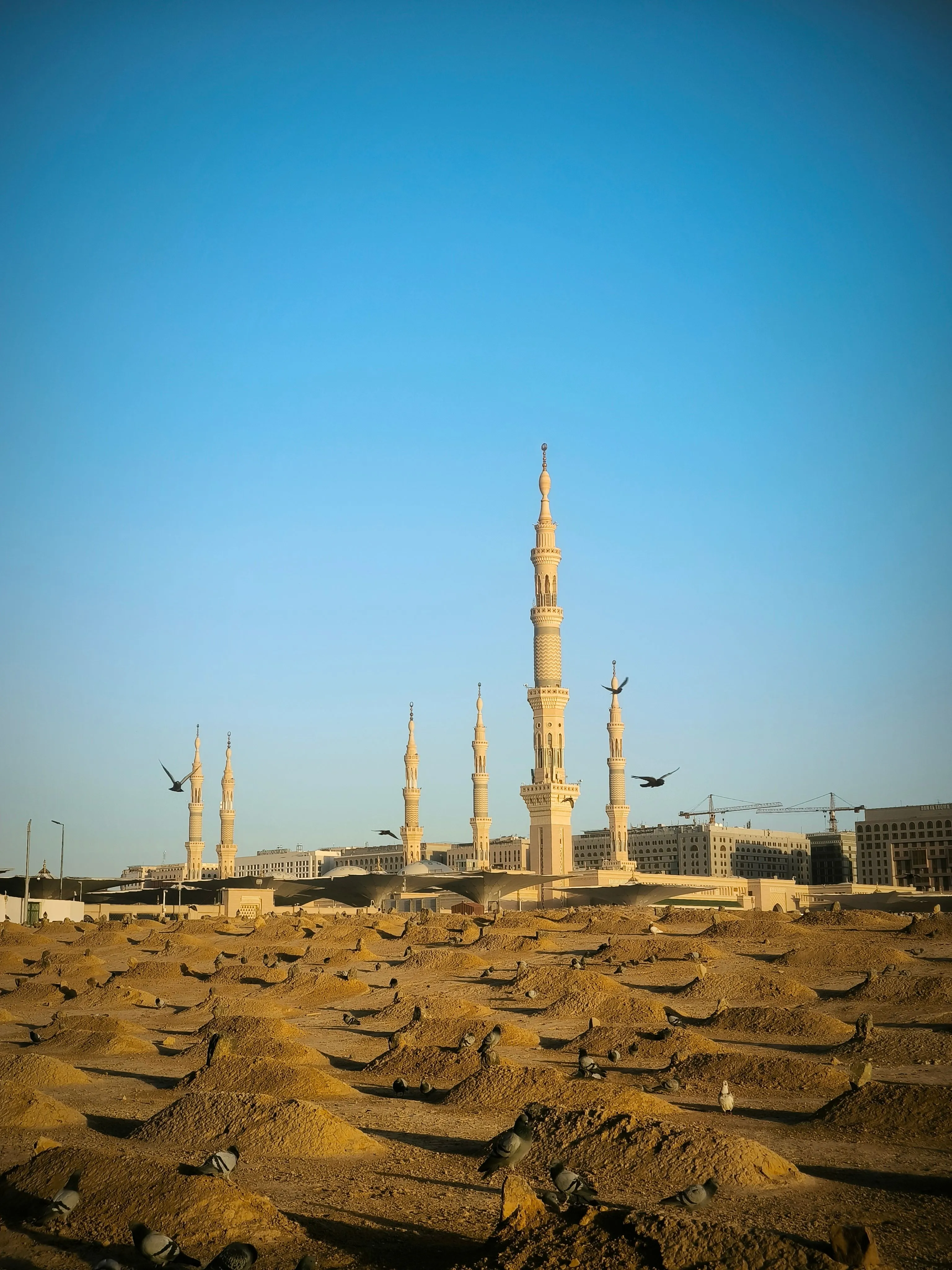
Abd al-Rahman ibn Awf (c. 580-652 CE) was one of the most distinguished companions of Prophet Muhammad ﷺ, counted among the earliest converts to Islam, one of the famed Ten Promised Paradise (al-'Ashara al-Mubashshara), and one of the six members of the consultative council (shura) entrusted with selecting the successor to Umar ibn al-Khattab. He is remembered above all as the merchant who built an enormous fortune from nothing after migrating to Medina, and who then poured that wealth into the service of Islam with a generosity so vast that it became legendary in the early Muslim community.
His life illustrates a central theme of early Islamic history: that material success and spiritual devotion were not opposites but could be united in a single person who treated wealth as a trust from God rather than a possession to be hoarded. Abd al-Rahman participated in every major event of the Prophetic era, from the secret beginnings of the faith in Mecca through the migrations to Abyssinia and Medina, the Battle of Badr, the Battle of Uhud, and the consolidation of the Islamic state under the Rashidun Caliphate. Yet what set him apart was not military command or political office but the quiet, persistent excellence of a man who succeeded in commerce, gave away what he earned, and used his standing to serve the unity of the community at one of its most delicate moments.
Lineage and Early Life
Birth and Family Origins
Abd al-Rahman ibn Awf was born in Mecca around 580 CE, roughly a decade after the Year of the Elephant, into the Banu Zuhra clan of the Quraysh tribe. The Banu Zuhra held a position of honor among the Quraysh, for it was the clan of Aminah bint Wahb, the mother of Prophet Muhammad. This kinship connection, though not a close one, situated Abd al-Rahman within the extended web of relationships that bound the leading families of Mecca together and gave the Banu Zuhra a recognized place in the political and commercial life of the city.
His father was Awf ibn Abd Awf ibn Abd al-Harith, and his mother was al-Shifa bint Awf, also of the Banu Zuhra. The family traced its lineage back to Kilab ibn Murrah, where it converged with the ancestry of the Prophet, making Abd al-Rahman a distant relative of Muhammad through the maternal line. In a society where genealogy determined status, alliance, and identity, this connection mattered, and it would later be noted by those who recorded the merits of the companions.
In the period before Islam, Abd al-Rahman was known by a different name. Sources record that his name in the age of ignorance (Jahiliyyah) was Abd Amr or, according to other accounts, Abd al-Ka'ba — names that reflected the pagan environment of pre-Islamic Mecca, where the worship of idols and the veneration of the Ka'ba's pantheon shaped even the names parents gave their children. After he embraced Islam, the Prophet gave him the name Abd al-Rahman, meaning "servant of the Most Merciful," replacing a name associated with idolatry with one that affirmed the oneness and mercy of God. This renaming was itself a small but significant act, marking the transformation of identity that conversion to Islam represented.
Character Before Islam
Even before his conversion, Abd al-Rahman was known as a man of measured temperament, sound judgment, and commercial aptitude. The Banu Zuhra were merchants, and Abd al-Rahman grew up in the trading environment that defined Meccan life, learning the rhythms of the caravan trade, the management of capital, and the careful cultivation of trust that successful commerce demanded. He was not among the wealthiest of the Quraysh in these early years, but he possessed the qualities — diligence, honesty, and a keen eye for opportunity — that would later make him one of the richest men in the Muslim community.
Descriptions of his physical appearance survive in the biographical literature: he is said to have been tall, of fair complexion and broad face, with a limp and missing teeth from the wounds of Uhud. These particulars come from Ibn Sa'd and al-Dhahabi rather than from hadith. One detail of his physical condition is attested in both Sahih collections, however: he and Zubayr ibn al-Awwam suffered from a persistent itching complaint, and the Prophet granted the two of them a concession to wear silk shirts, which the ordinary rule forbade to men. Anas said he saw them wearing such shirts on campaign (Sahih al-Bukhari 2919; Sahih al-Bukhari 2920; Sahih Muslim 2076). The exemption became a standard case in Islamic law on necessity overriding a prohibition.
His manner was gentle and unassuming, and he was known for avoiding conflict and seeking reconciliation, a disposition that would serve the community well during the succession crisis after Umar's death.
Conversion to Islam
Among the First Believers
Abd al-Rahman ibn Awf holds the distinction of being among the very first people to accept Islam. He was one of the small group — traditionally numbered among the first eight — who embraced the faith in the earliest days of the Prophet's mission, before the message had become public and while the community of believers could still be counted on the fingers of two hands. His conversion came through the agency of Abu Bakr al-Siddiq, the closest companion of the Prophet, whose gentle persuasion and respected character brought many of the early converts to Islam.
Abu Bakr, recognizing in Abd al-Rahman a man of integrity and openness to truth, invited him to consider the message of Muhammad. Like the other early converts who came through Abu Bakr — including Uthman ibn Affan, Zubayr ibn al-Awwam, Talha ibn Ubaydullah, and Sa'd ibn Abi Waqqas — Abd al-Rahman responded to the call without the prolonged resistance that characterized many later conversions. His acceptance of Islam placed him within the innermost circle of the early community, the Sabiqun al-Awwalun (the foremost and first), whose precedence in faith was honored throughout Islamic history and praised in the Quran.
Persecution in Mecca
The early Muslims of Mecca faced mounting hostility as their numbers grew and the Quraysh leadership recognized the threat that Islam posed to the established order — to the idol worship that sustained Mecca's religious prestige, to the social hierarchies that privileged the powerful, and to the economic interests bound up with the pilgrimage to the Kaaba. The believers were mocked, ostracized, boycotted, and in many cases physically tortured. Those without powerful tribal protection, particularly the enslaved and the poor, suffered the most brutal persecution.
Abd al-Rahman, as a member of the Banu Zuhra, possessed a degree of tribal protection, but he was not spared the pressures and dangers that accompanied open allegiance to the new faith. He endured the hostility of the Quraysh alongside his fellow believers, maintaining his commitment to Islam through a period when doing so carried real risk and offered no worldly advantage. His steadfastness during these years of persecution established his credentials as a believer whose faith was tested and proven before the community ever achieved security or power.
Migration to Abyssinia
As persecution intensified, the Prophet advised a group of his followers to seek refuge in the Christian kingdom of Abyssinia (modern Ethiopia), ruled by a just king known as the Negus (al-Najashi). This migration, which took place in two waves beginning around 615 CE, was the first hijra in Islamic history — the first time Muslims left their homeland to preserve their faith and escape oppression. Abd al-Rahman ibn Awf was among those who undertook this journey, leaving behind the only home he had known to seek safety in a distant land across the Red Sea.
The migration to Abyssinia was a formative experience for the early community. The Negus, after hearing the Muslims explain their faith and listening to a recitation from the Quran concerning Jesus and Mary, granted them protection and refused to surrender them to the Quraysh delegation that had been sent to demand their return. For Abd al-Rahman and his companions, this episode demonstrated that the message of Islam could find a sympathetic hearing beyond Arabia and that the protection of a just ruler could shelter the vulnerable. The experience of exile, of building a temporary life in a foreign land while maintaining the bonds of faith, prepared the early Muslims for the greater migration that would soon transform their community.
The Hijra to Medina
The Great Migration
When the Prophet received divine permission to migrate to the city of Yathrib — which would become known as Medina, the City of the Prophet — Abd al-Rahman ibn Awf was among the Muhajirun, the emigrants who left Mecca to establish the first Muslim polity in 622 CE. This migration, the Hijra, marked the beginning of the Islamic calendar and the transformation of the Muslim community from a persecuted minority into a self-governing society with the Prophet as its leader.
Like the other emigrants, Abd al-Rahman left behind his property, his commercial networks, and his place in Meccan society to begin anew in Medina. The sacrifice involved in the Hijra was considerable: the Muhajirun abandoned the wealth and security they had built in Mecca, trusting in God and in the new community they would help to create. For a merchant like Abd al-Rahman, whose livelihood depended on established relationships and accumulated capital, the loss was particularly acute. He arrived in Medina with little more than his faith, his skills, and his determination.
The Bond of Brotherhood
Upon the arrival of the Muhajirun in Medina, the Prophet instituted one of the most remarkable social arrangements in Islamic history: the pairing of each Meccan emigrant with a Medinan helper (Ansari) in a bond of brotherhood (mu'akhah). This system created ties of mutual support and obligation that transcended tribal affiliation, binding the community together and providing the destitute emigrants with the means to rebuild their lives. The Ansar, the Muslims of Medina who had invited the Prophet and pledged to protect him, opened their homes and shared their wealth with the newcomers.
Abd al-Rahman ibn Awf was paired in brotherhood with Sa'd ibn al-Rabi, a wealthy and prominent member of the Ansar. The encounter between the two men is recorded in Sahih al-Bukhari in more than half a dozen places, and became one of the most celebrated illustrations of both Ansari generosity and Muhajir dignity. Sa'd ibn al-Rabi, saying that he was the richest of the Ansar, offered to divide his wealth with his new brother in two halves, and further offered to divorce whichever of his two wives Abd al-Rahman preferred so that he might marry her once her waiting period was complete (Sahih al-Bukhari 2048).
Abd al-Rahman's response revealed the character that would define his life. Rather than accepting the gift, he prayed for Sa'd — "May Allah bless you in your family and your wealth" — and then made a request that would echo through Islamic history: "Show me the way to the marketplace." He was directed to the market of Banu Qaynuqa, and returned from it that same day with a surplus of dried yoghurt (aqit) and clarified butter (samn) (Sahih al-Bukhari 2048; Sahih al-Bukhari 3937). He did not wish to live on the charity of others, however generously offered. He wished to work, to trade, to earn his own livelihood and rebuild his fortune through his own effort. This response embodied a profound principle — that dignity lay in self-reliance and productive labor, and that the believer should seek to give rather than to receive.
Building a Fortune from Nothing
True to his word, Abd al-Rahman went to the marketplace of Medina and began to trade. He started with the smallest of capital, dealing in dried yoghurt, clarified butter, and other modest goods, buying and selling with the skill and honesty that had marked his commercial conduct in Mecca. He kept returning to the market each morning, and his business acumen, combined with his reputation for fair dealing, allowed his trade to grow quickly. Within a remarkably short time he had accumulated enough to marry, and the Prophet saw on him the traces of the yellow perfume (sufra) used in wedding celebrations.
Asked what this was, Abd al-Rahman replied that he had married a woman of the Ansar. The Prophet asked what he had given her, and he answered: gold to the weight of a date-stone. The Prophet said, "May Allah bless you. Give a wedding feast, even if with one sheep" (Sahih al-Bukhari 3937; Sahih al-Bukhari 5155; Sahih Muslim 1427a). This exchange, recorded in both of the Sahihayn and repeated across nine separate chapters of Bukhari alone, became a touchstone in Islamic law and ethics, establishing the recommendation of the wedding feast (walima) and illustrating the Islamic valuation of honest enterprise.
Abd al-Rahman's commercial success in Medina was extraordinary. His caravans grew, his capital multiplied, and within a few years he had become one of the wealthiest men in the entire Muslim community. Yet this wealth, far from corrupting him or distancing him from his faith, became the instrument through which he expressed his devotion, for he gave away in charity sums that astonished his contemporaries.
Military Service Alongside the Prophet
The Battle of Badr
Abd al-Rahman ibn Awf participated in the Battle of Badr in 624 CE (2 AH), the first major military confrontation between the Muslims of Medina and the Quraysh of Mecca. This battle, in which a small and poorly equipped Muslim force defeated a much larger and better-armed Meccan army, was regarded by Muslims as a decisive vindication of their faith and a manifestation of divine support. To have fought at Badr was among the highest honors a companion could claim, and the veterans of Badr (ahl Badr) held a special rank in the community for the rest of their lives.
Abd al-Rahman fought in the front lines at Badr, contributing to the victory that secured the survival of the nascent Muslim state and shattered the prestige of the Quraysh. The participation of a man of his standing — wealthy, respected, and of noble lineage — alongside the freedmen and the poor of the community demonstrated the egalitarian solidarity that bound the early Muslims together. At Badr, distinctions of wealth and class dissolved before the shared commitment to the defense of the faith.
The most vivid account of Badr from Abd al-Rahman's own mouth is preserved in Sahih Muslim. Standing in the battle line, he looked to his right and left and found himself between two boys of the Ansar, very young in years, and privately wished he were flanked by stronger men. One of them nudged him and asked whether he knew Abu Jahl by sight. Told that he did, the boy explained that he had heard Abu Jahl insulted the Messenger of God, and swore that if he saw him he would not part from him until whichever of them was to die sooner had died. The other boy then said the same. When Abu Jahl came into view moving among the enemy, Abd al-Rahman pointed him out, and the two youths — Mu'adh ibn Amr ibn al-Jamuh and Mu'awwidh ibn Afra — rushed him and struck him down with their swords (Sahih Muslim 1752; see also Sahih al-Bukhari 3964). The report captures both the ferocity of the youngest believers and Abd al-Rahman's own candour about his misgivings in the line, a frankness that argues for the authenticity of his account rather than against it.
He also recounted that he had held a standing agreement with Umayya ibn Khalaf, by which each man would look after the other's family and property in his own city. Umayya and his son were killed at Badr, and the report preserves Bilal's reaction to the news, a reminder that the early battles pitted former associates against one another and that Umayya had been Bilal's tormentor in Mecca (Sahih al-Bukhari 3971).
The Battle of Uhud
At the Battle of Uhud in 625 CE (3 AH), Abd al-Rahman ibn Awf displayed conspicuous bravery and paid a heavy physical price for his devotion. Uhud was a far more difficult engagement than Badr. After an initial Muslim advantage, a portion of the army's archers abandoned their assigned positions to gather spoils, allowing the Meccan cavalry under Khalid ibn al-Walid — who had not yet embraced Islam — to wheel around and attack the Muslims from the rear. The Muslim formation collapsed into chaos, the Prophet himself was wounded, and a rumor spread that he had been killed.
In the desperate fighting that followed, Abd al-Rahman stood firm and was severely wounded. That he was wounded is established beyond the biographical literature: Ibn Abbas reported that the Quranic clause permitting fighters to lay aside their arms "if you are troubled by rain or are ill" (Quran 4:102) was revealed in connection with Abd al-Rahman ibn Awf having been wounded (Sahih al-Bukhari 4599). The biographers add fuller detail — Ibn Sa'd and al-Dhahabi record a great number of wounds across his body, the loss of front teeth, and a lasting limp — and these particulars come from the tabaqat literature rather than from hadith. His endurance at Uhud, where so many faltered and fled, marked him as one of the steadfast believers who remained loyal in the community's darkest hour.
The wounds Abd al-Rahman bore from Uhud were lifelong testimonies to his sacrifice. Like Talha ibn Ubaydullah, whose hand was crippled shielding the Prophet at the same battle, Abd al-Rahman wore the marks of his service openly. These were not sources of shame but of honor, physical reminders that he had given his body in the cause of Islam when the cause seemed most imperiled.
The Expedition to Dumat al-Jandal
The biographical literature records that the Prophet entrusted Abd al-Rahman with command of an expedition to Dumat al-Jandal, an oasis settlement on the northern frontier of Arabia associated with the Christian Banu Kalb. This account comes from Ibn Sa'd and the maghazi literature rather than from the hadith collections, and it is presented here on that basis.
The conduct expected of a commander sent out by the Prophet is, by contrast, established in Sahih Muslim, in the form the Prophet used whenever he appointed a leader over an army or a detachment. Narrated by Buraydah, it instructs the commander to fear God and to treat well the Muslims under him, then continues: fight in the name of God and in His way; do not embezzle the spoils; do not break faith; do not mutilate bodies; do not kill children. It goes on to require that the enemy first be invited to Islam, and only fought if all offered terms are refused (Sahih Muslim 1731). These directives, given to commanders in general rather than to Abd al-Rahman by name, encapsulate the principles of restraint that governed Muslim campaigns in the Prophet's lifetime.
A report that the Prophet wound a turban about Abd al-Rahman's head, letting the ends hang before and behind, is transmitted in Sunan Abu Dawud, where it is graded weak (da'if), and it does not in any case name Dumat al-Jandal (Sunan Abu Dawud 4079). It is recorded here as a weak transmission and no conclusion is drawn from it.
According to the biographers, the expedition ended in the submission of the people of Dumat al-Jandal, and their leader's daughter, Tumadir bint al-Asbagh al-Kalbiyya, became Abd al-Rahman's wife. She was the mother of his son Abu Salama ibn Abd al-Rahman, who grew up to be one of the most respected jurists of Medina in the following generation and a transmitter of a large body of hadith — his name appears in the isnads of Sahih Muslim, including for reports he took directly from Aisha and from Abu Hurayrah.
The Prophet's Prayer Behind Abd al-Rahman
Among the most remarkable honors that Abd al-Rahman ibn Awf received was an event during the expedition to Tabuk, the great campaign toward the Byzantine frontier in 630 CE (9 AH), which is recorded in Sahih Muslim on the authority of al-Mughira ibn Shu'ba, who witnessed it. Before the dawn prayer the Prophet went apart from the camp to relieve himself, and al-Mughira carried a water vessel for him and helped him perform ablution. By the time the two of them rejoined the army, the congregation had already begun the prayer with Abd al-Rahman ibn Awf leading it, and he had completed one cycle (rak'ah) with them.
When Abd al-Rahman became aware of the Prophet's presence he began to withdraw from the leading position, but the Prophet signalled to him to continue, and prayed the remaining cycle behind him as an ordinary member of the congregation. Al-Mughira adds in a second transmission that he himself had intended to hold Abd al-Rahman back, and that the Prophet said, "Leave him." After Abd al-Rahman gave the closing salutation, the Prophet stood to complete the cycle he had missed — which alarmed the Muslims, many of whom began to glorify God aloud. When he had finished, he turned to them and told them they had done well, or had done the right thing, in praying at the appointed hour (Sahih Muslim 274).
The point the Prophet made was about punctuality in prayer rather than about rank: the congregation had been right not to delay the prayer past its time on account of his absence. Even so, the sight of the Messenger of God praying as a follower behind one of his own companions was without parallel, and the tradition is placed by the collectors among the distinctions of Abd al-Rahman ibn Awf.
The Wealth and Generosity of Abd al-Rahman
A Fortune Devoted to God
Abd al-Rahman ibn Awf became, through his commercial genius and the blessing of God upon his ventures, one of the wealthiest men in the entire Muslim community. Yet the defining feature of his wealth was not its size but the openhandedness with which he disposed of it. He understood his fortune as a trust from God, to be employed in the service of the faith and the relief of the community, and he gave away sums in charity that astonished his contemporaries and that remained proverbial in the historical memory of the early Muslims.
His largest single act of charity that can be traced to a graded source concerned the Mothers of the Believers, the widows of the Prophet. Aisha reported that the Prophet used to say to his wives that their situation after him was a matter of concern to him, and that none would be able to bear patiently with them except the patient. Aisha afterwards said to Abu Salama, Abd al-Rahman's son, "May God give your father to drink from the Salsabil of Paradise" — Salsabil being the spring named in Quran 76:18 — and the tradition records that Abd al-Rahman had settled property on the Prophet's widows which had been sold for forty thousand (Jami' at-Tirmidhi 3749, graded hasan). This is the sole gift of his for which both the amount and the recipients are preserved in a graded transmission.
The classical biographers record further acts on a larger scale still, the most famous being the arrival in Medina of a trading caravan of his said to number seven hundred camels, which he gave away entire. That account comes from Ibn Sa'd and the later biographical compilations rather than from the hadith collections, and it is reported here as their testimony. A frequently repeated report that the Prophet said he saw Abd al-Rahman entering Paradise crawling under the weight of his wealth is not established in the canonical collections and is not relied upon in this article.
Supporting the Army of Hardship
When the Prophet called upon the community to equip the army for the expedition to Tabuk — known as the Army of Hardship (Jaysh al-'Usra) because of the extreme heat, the great distance, and the scarcity of resources — Abd al-Rahman ibn Awf was among the foremost contributors. The financing of this campaign placed enormous strain on the community, and the Prophet appealed to the believers to give generously from their wealth. Uthman ibn Affan famously equipped a third of the army; Abu Bakr gave the whole of his wealth; and Abd al-Rahman contributed a very large sum, recorded in the sources as two hundred uqiyah of gold, one of the largest individual donations to the campaign.
His generosity toward the Tabuk expedition was conspicuous enough to draw comment from the disaffected in Medina, who insinuated that so vast a donation was made for display. The classical commentators — al-Tabari and Ibn Kathir among them — connect the verse rebuking "those who criticise the believers who give charity voluntarily, and ridicule those who have nothing to give but their own labour" (Quran 9:79) with this class of accusation against the large donors to the campaign. The connection is a matter of tafsir rather than of an explicit statement in the verse itself, and it is reported here on that footing.
Charity in Life and at Death
Throughout his life, Abd al-Rahman ibn Awf maintained a pattern of continuous giving. He freed slaves, supported the poor, contributed to military campaigns, and extended generosity to the families of the Prophet. The care he took of the Mothers of the Believers is the strand of this best attested, and it was Aisha bint Abu Bakr who identified him as the man the Prophet had in view when he spoke of who would bear patiently with his widows after him (Jami' at-Tirmidhi 3749). The biographers add that he sold land for a very large sum and distributed the whole of it among the Banu Zuhra, the poor, and the Prophet's widows, keeping nothing back.
At his death, Abd al-Rahman left an estate of immense value, but he had arranged through his bequests that much of it would continue to serve the community. He bequeathed substantial sums in the cause of God. He left a large gift for the veterans of Badr who survived him — said to be around a hundred men — each receiving a generous portion. He made provision for the Mothers of the Believers, granting them a bequest so substantial that Aisha prayed for him on receiving it. So vast was his estate that the division of his wealth among his heirs left each of his four wives a fortune in itself, with reports that each widow's share amounted to tens of thousands of dinars.
The Burden of Wealth
Despite his success, Abd al-Rahman ibn Awf was not at ease with his riches, and the clearest evidence of it is a scene recorded twice in Sahih al-Bukhari. Food was brought to him while he was fasting, and instead of eating he began to speak of the dead. Mus'ab ibn Umayr, he said, was killed and was better than he was, and was shrouded in a single cloak so short that if his head were covered his feet showed, and if his feet were covered his head showed. Hamza too was killed, and was better than he was. "Then such worldly wealth was spread out for us as has been spread out" — and he said that he feared their good deeds had been hastened to them in this life. He then wept until he left the food untouched (Sahih al-Bukhari 1275; Sahih al-Bukhari 4045).
The two men he named were both killed at the Battle of Uhud — Mus'ab ibn Umayr, who had carried the Muslim standard there, and Hamza ibn Abdul Muttalib, the Prophet's uncle — and both had died with nothing. The comparison he drew was not false modesty but a specific fear with a theological basis: that reward given in this world might be reward subtracted from the next. This anxiety about the spiritual danger of wealth, rather than complacent enjoyment of it, defined his relationship to his fortune.
This tension — between the blessing of wealth and the peril it posed to the soul — animated Abd al-Rahman's relentless charity. His giving was not merely benevolence but a kind of spiritual discipline, a constant effort to lighten the burden of his riches and to convert worldly abundance into eternal reward. In this he became a model for later generations of how a wealthy believer ought to relate to material success: with gratitude, with anxiety lest it corrupt, and with a determination to spend it in the path of God.
One of the Ten Promised Paradise
Abd al-Rahman ibn Awf is one of the ten companions named in a single tradition as being in Paradise — the al-'Ashara al-Mubashshara, the Ten Promised Paradise. The report is preserved in Jami' at-Tirmidhi, in the chapter devoted to Abd al-Rahman's own virtues, and it is he who narrates it: the Prophet said that Abu Bakr is in Paradise, Umar is in Paradise, Uthman is in Paradise, Ali is in Paradise, Talha is in Paradise, al-Zubayr is in Paradise, Abd al-Rahman ibn Awf is in Paradise, Sa'd ibn Abi Waqqas is in Paradise, Sa'id ibn Zayd is in Paradise, and Abu Ubaydah ibn al-Jarrah is in Paradise (Jami' at-Tirmidhi 3747, graded sahih). That Abd al-Rahman is both the narrator of the tradition and one of the men it names is a feature of the report rather than an objection to it: the hadith scholars accepted his transmission, and Tirmidhi placed it under his own merits. The ten are Abu Bakr, Umar ibn al-Khattab, Uthman ibn Affan, Ali ibn Abi Talib, Talha ibn Ubaydullah, Zubayr ibn al-Awwam, Sa'd ibn Abi Waqqas, Sa'id ibn Zayd, Abu Ubaydah ibn al-Jarrah, and Abd al-Rahman himself.
To be named among the ten was the highest commendation a companion received in the hadith literature. The naming is a prophetic statement, not a passage of revelation, and this article does not describe it as one. For Abd al-Rahman, the report is connected in the sources with the totality of his service: his precedence in faith as one of the first converts, his endurance of persecution, his participation in the migrations to Abyssinia and Medina, his bravery at Badr and Uhud, his extraordinary generosity, and the trust the Prophet placed in him. The promise of Paradise affirmed that despite the great wealth that might have endangered a lesser soul, Abd al-Rahman had remained a righteous and devoted believer whose ultimate destiny was secure.
The standing conferred by this honor gave Abd al-Rahman immense moral authority in the community. When grave decisions had to be made — above all the selection of a caliph — the word of a man promised Paradise carried a weight that few others could match. His membership in this select group was not merely a personal distinction but a qualification that the community recognized when it entrusted him with pivotal responsibilities in the years after the Prophet's death.
Service During the Rashidun Caliphate
Under Abu Bakr and the Ridda Wars
After the death of the Prophet in 632 CE, Abd al-Rahman ibn Awf pledged his allegiance to Abu Bakr as the first caliph and supported the new leader during the perilous early months of his reign. Abu Bakr faced an immediate crisis as numerous Arabian tribes, believing that their allegiance had been personal to the Prophet and had lapsed with his death, renounced their obligations to the Muslim state and, in some cases, abandoned Islam altogether. The campaigns to restore the unity and authority of the Islamic polity, known as the Ridda Wars, were the defining challenge of Abu Bakr's brief caliphate.
Abd al-Rahman counseled and supported Abu Bakr through this period. As one of the most senior and respected companions, his backing lent legitimacy and stability to the caliph's resolute response to the rebellions. When Abu Bakr determined to fight the tribes who refused to pay the obligatory alms (zakat), insisting that he would not separate what the Prophet had joined together, Abd al-Rahman was among the senior figures whose support helped carry the difficult decision. The successful suppression of the apostasy and the reunification of Arabia under Islamic authority preserved the community Abd al-Rahman had helped to build.
Trusted Advisor to Umar
It was during the caliphate of Umar ibn al-Khattab (634-644 CE) that Abd al-Rahman ibn Awf attained his greatest prominence in the public affairs of the Islamic state. Umar held him in the highest regard, drawing him into the innermost circle of counsel and consulting him on the gravest matters of state. Abd al-Rahman was among the small group of senior companions whose opinions Umar sought before making major decisions, and his judgment was valued for its moderation, its prudence, and its grounding in the example of the Prophet.
This was not a vague reputation for wisdom but a documented working relationship, and several of its episodes are preserved in the Sahihayn. Umar entrusted him with the escort of the Prophet's widows when he permitted them to perform the pilgrimage in the last Hajj he led, sending Uthman ibn Affan and Abd al-Rahman with them (Sahih al-Bukhari 1860). On the same journey, when Umar was at Mina and intended to make a public pronouncement, Abd al-Rahman advised him against it: the pilgrimage season gathered a crowd of all sorts, and it would be better to wait until Medina, the home of the Hijra and of the Sunna, where the matter could be put before the jurists and men of judgment. Umar accepted, saying he would speak at the first opportunity he had in Medina (Sahih al-Bukhari 3928).
Abd al-Rahman also shaped the law on a point of penal practice. Sahih Muslim records that the Prophet had punished the drinking of wine with palm branches and sandals, and Abu Bakr had given forty lashes; when Umar consulted the companions after the conquests had brought Muslims into the settled towns, it was Abd al-Rahman who proposed that the penalty be fixed at the level of the lightest of the prescribed punishments, and Umar accordingly set it at eighty (Sahih Muslim 1706). In another matter he supplied the evidentiary basis for policy rather than the opinion: Umar did not levy the jizya on the Zoroastrians until Abd al-Rahman ibn Awf testified that the Prophet had taken it from the Zoroastrians of Hajar (Sahih al-Bukhari 3156).
The best-known instance of the same pattern is the plague at Sargh. Travelling toward Syria, Umar was met near the frontier by Abu Ubaydah ibn al-Jarrah and the army commanders with news that an epidemic had broken out. Umar summoned first the earliest emigrants, then the Ansar, and both groups divided: some argued he should not abandon the purpose he had set out for, others that he should not lead the surviving companions of the Prophet into a plague. He then summoned the older Quraysh of the later migration, who advised unanimously that he turn back, and he announced that he would ride for Medina in the morning. Abu Ubaydah objected: "Are you fleeing from the decree of God?" Umar answered that he would rather someone other than Abu Ubaydah had said it, and that they were fleeing from the decree of God to the decree of God — as a man grazing camels in a valley with one green slope and one barren chooses by God's decree either way.
At that point Abd al-Rahman ibn Awf, who had been absent on some errand, arrived and said that he had knowledge of the matter: he had heard the Messenger of God say that if you hear of plague in a land you should not go to it, and if it breaks out in a land where you are, you should not flee from it. Umar praised God and returned (Sahih al-Bukhari 5729; Sahih Muslim 2219; also Sahih al-Bukhari 5730 and Muwatta Malik, Book 45). The episode shows what Umar valued in him: not eloquence in council, where the others had already spoken at length, but the possession of a specific prophetic report that settled the question.
The Shura Council
The most consequential service of Abd al-Rahman ibn Awf's life came at the end of Umar's reign. When Umar was mortally wounded by an assassin in 644 CE, he was asked to name his successor. Unwilling to impose a single choice upon the community, yet equally unwilling to leave the succession to chaos, Umar devised a solution: he appointed a council of six of the most eminent surviving companions and charged them with selecting the next caliph from among themselves within three days. The six were Uthman ibn Affan, Ali ibn Abi Talib, Talha ibn Ubaydullah, Zubayr ibn al-Awwam, Sa'd ibn Abi Waqqas, and Abd al-Rahman ibn Awf.
This council, the shura, was composed entirely of men from among the Ten Promised Paradise, reflecting Umar's determination that the leadership of the community should pass to one of its most honored members. Umar stipulated procedures to break a deadlock and entrusted the council with a responsibility of the gravest kind: to choose, in the space of three days, the man who would lead the rapidly expanding Islamic empire. The deliberations of this council would shape the future of the Muslim community, and Abd al-Rahman ibn Awf would play the decisive role within it.
Choosing the Third Caliph
Within the six-member council, Abd al-Rahman ibn Awf made a decision of profound importance: he withdrew himself from candidacy for the caliphate. By removing himself from the contest, he transformed his role from that of a candidate into that of an arbiter, and the other members agreed to entrust him with the authority to investigate the community's preferences and to select the next caliph. This act of self-effacement — declining the highest office in Islam in order to serve as an honest broker — was characteristic of the man and earned him the trust of all parties.
Abd al-Rahman took his charge with the utmost seriousness. Over the course of three days and nights, he consulted widely and tirelessly. He went from person to person, from group to group, seeking the views of the senior companions, the leaders of the Muhajirun and the Ansar, and the ordinary believers of Medina. He questioned men and women, the prominent and the obscure, gathering the sense of the community on whom they wished to lead them. The accounts record that he scarcely slept during these nights, so devoted was he to discharging his responsibility faithfully. He asked both Ali ibn Abi Talib and Uthman ibn Affan, the two leading candidates, whether they would govern according to the Quran, the example of the Prophet, and the precedents established by Abu Bakr and Umar.
After this extensive consultation, Abd al-Rahman concluded that the community's preference inclined toward Uthman ibn Affan, and he pronounced Uthman the new caliph, pledging his own allegiance first and calling upon the others to do the same. The selection of Uthman as the third caliph was thus the direct result of Abd al-Rahman's careful and conscientious arbitration. Although the succession would later become a subject of controversy, and the divisions that emerged in Uthman's reign would eventually lead to civil war, Abd al-Rahman's conduct of the shura was widely regarded as a model of consultative decision-making, conducted with fairness, diligence, and a sincere effort to ascertain and honor the will of the community.
Final Years and Death
Withdrawal and Later Life
In the years following the selection of Uthman, Abd al-Rahman ibn Awf lived in Medina as one of the most senior and venerated figures of the community. He had reached an advanced age, and the wounds of Uhud and the accumulated weight of a long life of service inclined him toward a quieter existence. He continued his charitable activities, maintained his vast commercial enterprises, and remained a respected elder whose counsel was sought, but he gradually withdrew from the active political role he had played under Umar.
The sources record that in his final years a degree of coolness developed between Abd al-Rahman and the caliph Uthman, arising from disagreements over certain policies and appointments. Some accounts suggest that Abd al-Rahman came to feel that Uthman had departed in some respects from the conditions on which he had been selected, and that this caused tension between the two men. Whatever the precise nature of these differences, they did not erupt into open conflict, and Abd al-Rahman died before the crisis of Uthman's reign reached its tragic climax in the caliph's assassination. He was thus spared the agony of the civil strife (fitna) that would soon engulf the community and claim the lives of several of his fellow members of the Ten Promised Paradise.
Death and Burial
Abd al-Rahman ibn Awf died in Medina around 652 CE (32 AH), at approximately seventy-two to seventy-five years of age. He had lived a full life that spanned the entire arc of the early Islamic experience — from the secret beginnings of the faith in Mecca, through the migrations and the battles, to the establishment of a vast empire. He was among the senior companions who passed away during the caliphate of Uthman, before the outbreak of the civil wars.
He was buried in the cemetery of al-Baqi in Medina, the resting place of so many of the Prophet's companions and family members. The caliph Uthman, or according to some accounts another senior companion, led the funeral prayer over him. The community mourned the loss of one of its most distinguished members, a man whose generosity had benefited countless people and whose steady wisdom had served the state through its formative decades. The Mothers of the Believers, who had been the objects of his particular care, grieved his passing, and the recipients of his charity throughout Medina remembered the man whose wealth had so often relieved their need.
The Disposition of His Estate
The wealth that Abd al-Rahman left behind became itself a final testimony to the scale of his success and the breadth of his generosity. His estate was so vast that its division generated reports that became famous in the historical literature. He left gold that had to be divided with axes, so the saying went, and his bequests provided for the cause of God, for the surviving veterans of Badr, and for the Mothers of the Believers. His four wives, upon the division of his estate, each received a share amounting to a very large fortune.
Yet these accounts of his riches were always recounted alongside the record of his giving, for the two were inseparable in the memory of the community. Abd al-Rahman was remembered not as a man who hoarded wealth but as one who accumulated it in order to give it away, who feared its spiritual dangers even as he profited from it, and who used it throughout his life and in his death to serve the faith and the people he loved. His estate, vast as it was, represented only a fraction of what had passed through his hands over a lifetime of commerce and charity.
Legacy and Historical Significance
The Model of the Believing Merchant
Abd al-Rahman ibn Awf occupies a distinctive and important place in Islamic history as the supreme example of the believing merchant — the man who pursued worldly success through honest commerce while maintaining the highest standards of faith and devotion. In a tradition that honored both the renunciant who abandoned the world and the warrior who fought for the faith, Abd al-Rahman demonstrated a third path: the sanctification of productive economic activity, the conversion of commercial profit into spiritual reward through charity, and the integration of material success with religious devotion.
His famous response to Sa'd ibn al-Rabi — "Show me the way to the marketplace" — became an emblem of the Islamic valuation of self-reliance, honest labor, and economic dignity. He did not seek to live on the generosity of others, however legitimately offered, but to earn his own way and to become a giver rather than a receiver. This ideal — that the believer should strive to be productive, self-sufficient, and generous — found in Abd al-Rahman its most celebrated embodiment. For Muslim merchants and entrepreneurs across the centuries, he served as a model of how worldly enterprise could be reconciled with, and even made an instrument of, the demands of faith.
A Steward of Community Unity
Beyond his commercial legacy, Abd al-Rahman ibn Awf is remembered for the service he rendered to the unity and stability of the Muslim community at one of its most critical junctures. His conduct of the shura council after the death of Umar — his withdrawal from candidacy, his exhaustive consultation, and his careful selection of a successor — represented a model of consultative governance and selfless public service. He placed the welfare of the community above his own ambition, declining the highest office in Islam in order to ensure an orderly and legitimate succession.
This dimension of his legacy resonated through Islamic political thought, where the shura he conducted became a reference point in discussions of consultation, consensus, and the proper means of selecting a leader. Although the outcome of the succession would later be contested, and the reign of Uthman would end in tragedy, the manner in which Abd al-Rahman discharged his trust was widely admired as an example of integrity in public life. He demonstrated that the highest service one could render the community was sometimes not to rule but to ensure that the community was justly led.
Veneration in Islamic Tradition
In Sunni Islamic tradition, Abd al-Rahman ibn Awf is venerated as one of the greatest companions of the Prophet, a member of the Ten Promised Paradise, and a paragon of generosity and faith. His name appears throughout the literature of hadith, biography, and history as a transmitter of prophetic traditions and as a participant in the foundational events of Islam. The traditions concerning his charity, his commercial success, the Prophet's prayer behind him, and his conduct of the shura are recounted in the most authoritative collections and serve as sources of moral instruction.
The lessons drawn from his life have remained influential: that wealth is a trust to be spent in the service of God, that honest enterprise is honorable, that generosity purifies riches, that self-reliance is a virtue, and that the highest public service is performed in a spirit of selflessness. Abd al-Rahman ibn Awf is remembered as a man who possessed great wealth without being possessed by it, who achieved worldly success without sacrificing his faith, and who used the abundance God gave him to lighten the burdens of others. In the gallery of the Prophet's companions, he stands as the merchant of Paradise — a figure who proved that the marketplace, no less than the battlefield or the mosque, could be a field of devotion.
Participation in the Prophet's Campaigns
The Battle of the Trench
Beyond Badr and Uhud, Abd al-Rahman ibn Awf was present at the Battle of Khandaq, the Battle of the Trench, in 627 CE (5 AH), when a great confederation of Quraysh, allied tribes, and their supporters laid siege to Medina in a final attempt to destroy the Muslim community. On the advice of Salman al-Farsi, the Muslims dug a trench around the exposed approaches to the city, a strategy unfamiliar to Arabian warfare that frustrated the besieging cavalry and held the confederates at bay. Abd al-Rahman took his place among the defenders during the weeks of cold, hunger, and tension that the siege imposed, sharing in the hardship that tested the faith and resolve of the entire community. The eventual withdrawal of the confederate army, scattered by a bitter wind and by the collapse of their fragile alliance, marked the failure of the last great offensive against Medina and shifted the balance of power decisively toward the Muslims.
Hudaybiyyah and Khaybar
Abd al-Rahman ibn Awf accompanied the Prophet on the expedition that produced the Treaty of Hudaybiyyah in 628 CE (6 AH), when the Muslims set out to perform the lesser pilgrimage and were halted by the Quraysh at the boundary of the sacred precinct. The treaty that resulted, though it seemed to many believers to impose humiliating terms, proved to be a strategic triumph that opened a period of peace during which Islam spread rapidly. Abd al-Rahman was among the senior companions who witnessed the pledge of allegiance beneath the tree (the Bay'at al-Ridwan), the oath of loyalty that the Quran later praised and that bound the believers to the Prophet in a moment of crisis. Participation in this pledge was counted among the highest distinctions a companion could hold, and the veterans of Hudaybiyyah were honored throughout Islamic history.
Following Hudaybiyyah, the Muslims turned to the fortified oasis of Khaybar, held by hostile groups who had supported the confederates against Medina. Abd al-Rahman shared in the campaign that reduced the strongholds of Khaybar and secured the northern approaches to Medina. The conquest brought substantial resources to the community and removed a persistent threat, and Abd al-Rahman's participation added to a military record that now encompassed nearly every major engagement of the Medinan period.
The Conquest of Mecca, Hunayn, and Tabuk
Abd al-Rahman ibn Awf was present at the conquest of Mecca in 630 CE (8 AH), the triumphant and largely bloodless entry of the Muslims into the city that had once driven them out. For Abd al-Rahman, who had migrated first to Abyssinia and then to Medina, the return to Mecca as part of a victorious Muslim community was the vindication of decades of struggle and sacrifice. He witnessed the cleansing of the Kaaba of its idols and the Prophet's proclamation of amnesty for his former persecutors, a demonstration of mercy that drew many of the Quraysh into Islam.
Shortly afterward, when the newly conquered Meccans and the Muslim army faced the powerful tribes of Hawazin and Thaqif at the Battle of Hunayn, Abd al-Rahman stood among the believers during the initial confusion and the subsequent rally that produced victory. He then accompanied the Prophet on the arduous expedition to Tabuk in 630 CE (9 AH), the Army of Hardship, to which he had contributed one of the largest individual donations. It was during this campaign that the celebrated incident of the Prophet praying behind him occurred. Across this full sweep of campaigns — the Trench, Hudaybiyyah, Khaybar, Mecca, Hunayn, and Tabuk — Abd al-Rahman ibn Awf demonstrated a steadfast and continuous service that placed him among the most committed of the Prophet's companions, present at the decisive moments of the community's military and political consolidation.
Family, Marriages, and Descendants
His Wives and the Households He Built
Abd al-Rahman ibn Awf married a number of women over the course of his long life. His first marriage after the Hijra, to a woman of the Ansar for a dowry of gold the weight of a date-stone, is the one recorded in the Sahihayn (Sahih al-Bukhari 3937).
Two of his wives are named in Sahih Muslim. Umm Habiba bint Jahsh was his wife, and she was the sister of Zaynab bint Jahsh and so a sister-in-law of the Prophet; Aisha reported that she suffered prolonged bleeding beyond the menstrual period for seven years and sought a ruling from the Prophet, who told her that this was not menstruation but a vein, and that she should wash and pray. The report adds that she bathed in a tub in her sister Zaynab's apartment (Sahih Muslim 334). The ruling she obtained became a foundational text in the law of istihada. Separately, Fatima bint Qays reported that when she was widowed Abd al-Rahman ibn Awf sent her a proposal of marriage, which she did not accept; she married Usama ibn Zayd instead, on the Prophet's recommendation (Sahih Muslim 2942).
The biographers add Tumadir bint al-Asbagh al-Kalbiyya, daughter of the leader of the Banu Kalb, noted as the first woman of that tribe married into the Quraysh, and record further marriages to women of various tribes.
At his death, Abd al-Rahman left four wives, and the division of his vast estate among them became one of the famous illustrations of his wealth, for each widow's share amounted to a fortune. His domestic life reflected the patterns of the age, and the households he established produced a numerous progeny who would play their own roles in the religious and intellectual life of early Islam.
His Children and Their Place in Islamic History
Abd al-Rahman ibn Awf fathered many children, several of whom became figures of note in the generation that followed the companions. The most distinguished of his sons was Abu Salama ibn Abd al-Rahman, born of his marriage to Tumadir bint al-Asbagh, who grew up to become one of the foremost jurists and scholars of Medina among the generation of the Successors (Tabi'un). Abu Salama transmitted a large body of hadith and was counted among the leading authorities on law and tradition in the city, ensuring that the household of Abd al-Rahman contributed not only wealth and service but also learning to the building of Islamic civilization.
Other sons of Abd al-Rahman, including Mus'ab, Ibrahim, and Abu Bakr, took part in the events of the following decades, and his descendants remained a prominent family in Medina. Through his son Abu Salama in particular, the name of Abd al-Rahman ibn Awf became associated with the transmission of religious knowledge, so that the legacy of the great merchant-companion was carried forward not only in the memory of his generosity but in the scholarship of his offspring. The continuity between the companion who had given so lavishly and the scholar-son who preserved the prophetic tradition exemplified the way in which the founding generation passed its inheritance, material and spiritual, to those who came after.
The Conduct of His Commerce
Principles of Honest Trade
The commercial success of Abd al-Rahman ibn Awf was inseparable from the ethical principles that governed his conduct in the marketplace. He had been known in Mecca, even before Islam, for honesty and fair dealing, and these qualities followed him into the markets of Medina, where he rebuilt his fortune from the smallest beginnings. His trade was marked by transparency, the avoidance of deception, and a refusal to exploit the ignorance or desperation of others — principles that Islam elevated into religious obligations and that Abd al-Rahman embodied in practice.
The sources preserve his reputation as a merchant who profited without cheating, who fulfilled his contracts faithfully, and whose word in business was as reliable as a written bond. He is reported to have said that he never engaged in a transaction in which he hoped for more than a fair profit, and that he preferred a modest gain honestly earned to a large one obtained through trickery. This integrity, far from hindering his success, was the foundation of it, for the trust he inspired drew partners and customers to him and allowed his enterprises to flourish. His career stood as a practical demonstration that commercial success and ethical conduct were not in tension but could reinforce one another.
The Blessing Upon His Wealth
Abd al-Rahman attributed his remarkable prosperity not merely to his own skill but to the blessing (baraka) of God upon his ventures, a blessing he connected to the Prophet's prayer for him at the time of the bond of brotherhood. When Sa'd ibn al-Rabi had offered to share his wealth and Abd al-Rahman had instead asked to be shown the marketplace, the Prophet had prayed that God would bless him in his family and his wealth. Abd al-Rahman regarded this supplication as the source of his subsequent success, remarking that everything he touched in trade seemed to prosper. The story became a lesson in the Islamic understanding of provision (rizq): that honest effort, undertaken with trust in God and accompanied by the prayers of the righteous, would be met with divine blessing. Yet Abd al-Rahman never allowed this prosperity to make him complacent, for he understood that wealth was a test as much as a gift, and that the manner of its earning and spending would be the measure of its worth.
Worship, Humility, and the Fear of God
A Devout and Humble Servant
For all his wealth and standing, Abd al-Rahman ibn Awf was known for his humility, his devotion to worship, and his unease about the spiritual dangers of riches. He did not carry himself with the arrogance that often accompanied great fortune, and he was said to be difficult to distinguish from his servants when seen among them, so plain was his manner and so free of ostentation. He shunned the trappings of luxury that his wealth could easily have afforded, and he directed his resources toward charity and the service of the community rather than toward personal indulgence.
His worship was constant and sincere. That the congregation at Tabuk put him forward to lead the dawn prayer in the Prophet's absence indicates the standing he held among the emigrants, since the leading of prayer went by precedence in faith and in Quranic knowledge (Sahih Muslim 274). He combined the active life of the merchant and the soldier with the discipline of the worshipper, demonstrating that engagement with the world need not come at the expense of attention to the soul.
The Anguish of Abundance
The fasting-day scene recorded in Sahih al-Bukhari and discussed above is the fullest evidence of Abd al-Rahman's anxiety about his fortune, and it is worth noting what it does and does not say. It records a specific theological fear — that reward given in this world may be reward withheld in the next — expressed by a man who had watched better men die with nothing. It does not report any prophetic statement condemning wealth as such, and a widely repeated claim that the Prophet warned Abd al-Rahman personally that he would enter Paradise crawling under the weight of his riches is not established in the canonical collections.
A separate tradition in Sahih Muslim shows that the concern was not his alone, and that it had been raised with him directly. The Prophet asked the companions how they would be when Persia and Rome were conquered for them. Abd al-Rahman answered that they would say what God had commanded them and give thanks. The Prophet replied that it would not be so: they would compete with one another, then envy one another, then turn their backs on one another, then hate one another, and would go among the poor emigrants and set some of them over the necks of others (Sahih Muslim 2962). Abd al-Rahman lived to see the conquests he had been asked about, and the wealth they brought him was precisely the wealth the warning concerned. His weeping over a plate of food is best read against that exchange.
The Shura: A Closer Examination
The Charge of Umar
The role of Abd al-Rahman ibn Awf in selecting the third caliph deserves closer examination, for it was the most consequential public act of his life and a defining episode in the political history of early Islam. When Umar ibn al-Khattab lay dying from the wounds inflicted by his assassin in 644 CE, he refused to name a successor outright, yet he would not leave the community without guidance. He named six of the most eminent surviving companions — Uthman, Ali, Talha, Zubayr, Sa'd ibn Abi Waqqas, and Abd al-Rahman ibn Awf — and charged them to choose one of their own number within three days, stipulating procedures to resolve any deadlock and appointing a group to enforce the decision.
Umar's confidence in Abd al-Rahman was evident in the arrangements he made. He indicated that should the council divide evenly, the side that included Abd al-Rahman should prevail, a mark of the trust the dying caliph placed in his judgment and impartiality. This provision effectively positioned Abd al-Rahman as the pivotal figure in the deliberations, and the events that followed confirmed that he would indeed determine the outcome.
Three Days of Consultation
Abd al-Rahman ibn Awf discharged his responsibility with extraordinary diligence. His first and most significant act was to withdraw his own name from consideration, renouncing any claim to the caliphate in order to serve as an impartial arbiter. The other members, recognizing his integrity, agreed to delegate to him the task of investigating the community's preferences and arriving at a decision. From that moment, the selection of the caliph rested in his hands.
Over the course of three days and the intervening nights, Abd al-Rahman consulted ceaselessly. He met with the leading companions individually, sounded out the commanders and the notables of Medina, and sought the views of ordinary believers — men and women alike. The accounts emphasize that he scarcely slept, going from house to house and gathering to gathering, so determined was he to ascertain the true sentiment of the community. He questioned people about whom they favored, weighing the responses and forming a picture of where the consensus lay. He also put a crucial question to the two leading candidates, Ali and Uthman: whether, if chosen, they would govern according to the Book of God, the example of the Prophet, and the precedents established by Abu Bakr and Umar. Their answers, and the broader sense of the community he had gathered, formed the basis of his decision.
The Selection of Uthman
On the final day, Abd al-Rahman gathered the people in the Prophet's mosque and announced his decision. Having determined that the community's preference inclined toward Uthman ibn Affan, he took Uthman by the hand and pledged his allegiance, calling upon the assembly to do the same. Uthman thus became the third caliph through the arbitration of Abd al-Rahman ibn Awf, in a process that, whatever the controversies it later generated, was conducted with conspicuous fairness and care.
The decision was momentous and, in time, contested. The reign of Uthman would end in tragedy with his assassination, and the divisions that emerged during his caliphate would help to ignite the civil wars that permanently fractured the community. Some later observers questioned the outcome of the shura, and the partisans of Ali in particular regarded the selection of Uthman as a missed opportunity. Yet the conduct of Abd al-Rahman himself was widely admired, for he had sought no advantage, had renounced his own candidacy, and had labored sincerely to discover and honor the will of the community. His arbitration became a reference point in later Islamic discussions of consultation (shura) and the legitimate means of selecting a leader, an early and influential example of consensual decision-making in the political tradition of Islam.
A Transmitter of Prophetic Tradition
Abd al-Rahman ibn Awf transmitted comparatively few hadith, and the reason is itself recorded. Al-Sa'ib ibn Yazid said that he kept the company of Talha ibn Ubaydullah, Sa'd, al-Miqdad ibn al-Aswad, and Abd al-Rahman ibn Awf, and heard none of them narrate anything from the Messenger of God — the one exception being Talha speaking about the day of Uhud (Sahih al-Bukhari 2824). Several of the most senior companions were markedly reluctant to narrate, understanding the responsibility of attributing words to the Prophet, and Abd al-Rahman belonged to that group.
The consequence is that his surviving reports are few but weighty, and they tend to appear at moments when a ruling turned on them. The plague tradition he produced at Sargh redirected a caliph's journey and became the basis of Islamic practice in epidemics (Sahih al-Bukhari 5729). His testimony that the Prophet had taken jizya from the Zoroastrians of Hajar settled the status of a whole community under Umar's administration (Sahih al-Bukhari 3156). He also narrated the tradition naming the ten companions promised Paradise (Jami' at-Tirmidhi 3747), and his own eyewitness account of the killing of Abu Jahl at Badr is preserved in Sahih Muslim (Sahih Muslim 1752).
His role as a narrator connected him to the great enterprise of preserving the Sunnah, the example of the Prophet that, alongside the Quran, would guide the Muslim community for all time. The companions who had known the Prophet directly were the indispensable link between his life and the generations that followed, and their testimony formed the foundation of Islamic law and practice. Abd al-Rahman's contributions to this body of tradition, transmitted through his sons and other students, ensured that his knowledge of the Prophet's teachings did not perish with him but became part of the permanent inheritance of the community.
Reputation Among the Companions
The standing of Abd al-Rahman ibn Awf among his fellow companions was exceptionally high, reflecting both his precedence in faith and the qualities of character that distinguished him. Umar ibn al-Khattab held him in the highest regard, counting him among the small circle of advisors whose counsel he valued most and entrusting him with the pivotal role in the succession. The Prophet's act of praying behind him, the honor of leading the expedition to Dumat al-Jandal, and his inclusion among the Ten Promised Paradise all testified to the esteem in which he was held.
His fellow members of the shura, men of the first rank in Islam, deferred to his judgment in the selection of the caliph, a measure of the trust they placed in his impartiality and wisdom. Aisha bint Abu Bakr prayed for him on account of his generosity toward the Mothers of the Believers (Jami' at-Tirmidhi 3749).
Two further traditions show his place in the Prophet's own household circle. When the Prophet's infant son Ibrahim was dying, Abd al-Rahman was present and saw the Prophet weep; it was to him that the remark was addressed, "O Ibn Awf, this is mercy," followed by the words that the eye sheds tears and the heart grieves, but that they would say nothing displeasing to their Lord (Sahih al-Bukhari 1303). And when a quarrel arose between him and Khalid ibn al-Walid, in which Khalid spoke against him, it was that incident which occasioned one of the most consequential statements about the Companions as a body: that none should revile them, for were a man to spend gold equal to Uhud he would not attain the measure of one of them (Sahih Muslim 2541). The tradition is usually quoted on its own; that it arose from a dispute involving Abd al-Rahman places him at its origin and indicates the rank the Prophet accorded the earliest emigrants.
Throughout the community, he was known as a man of integrity, generosity, and quiet excellence, whose wealth never corrupted him and whose success never made him proud.
Historiographical Note
The life of Abd al-Rahman ibn Awf is recorded across the major works of early Islamic biography and history, from the Tabaqat of Ibn Sa'd, which preserves detailed accounts of his conversion, commerce, and family, to the histories of al-Tabari, which document his pivotal role in the succession. Later biographical dictionaries — the Isti'ab of Ibn Abd al-Barr, the Usd al-Ghaba of Ibn al-Athir, the Siyar A'lam al-Nubala' of al-Dhahabi, and the Isaba of Ibn Hajar al-Asqalani — gathered and sifted the traditions concerning him, transmitting a consistent portrait of the wealthy, generous, and devout companion.
Modern historians have drawn upon these sources to situate Abd al-Rahman within the broader social and economic history of early Islam. His career illuminates the commercial world of seventh-century Arabia, the role of trade in the life of the early Muslim community, and the ways in which wealth was understood, accumulated, and dispersed in a religious framework that demanded its use in the service of God. His part in the shura has attracted particular attention from scholars of early Islamic political history, including Wilferd Madelung, whose study of the succession examines the deliberations of the council in detail. Across this literature, Abd al-Rahman ibn Awf emerges as a figure of unusual significance — not a caliph or a great general, but a merchant and elder whose wealth, generosity, and integrity made him one of the pillars of the early community, and whose conduct at a critical moment helped to shape the political destiny of Islam.
References and Further Reading
Primary Islamic Sources
- Quran, Surah al-Tawbah (9:79) — understood by the commentators in connection with those who gave generously in charity and were slandered by the hypocrites, including the great donations to the Tabuk expedition
- Quran, Surah al-Hashr (59:9) — concerning the love of the Ansar for the Muhajirun and their preference for others over themselves, illustrated by the bond of brotherhood between Abd al-Rahman and Sa'd ibn al-Rabi
- Quran 4:102 — the permission to lay aside arms when troubled by rain or illness, which Ibn Abbas reported was revealed in connection with Abd al-Rahman ibn Awf having been wounded (Sahih al-Bukhari 4599)
- Quran 76:18 — the spring of Salsabil, named in Aisha's supplication for him (Jami' at-Tirmidhi 3749)
- Sahih al-Bukhari 2048, 2049, 2293, 3780, 3781, 3937, 5072, 5153, 5155, 5167, 6386 — the bond of brotherhood with Sa'd ibn al-Rabi, the request to be shown the marketplace of Banu Qaynuqa, the date-stone dowry, and the instruction to hold a wedding feast. Sahih Muslim 1427 carries the same material
- Sahih al-Bukhari 1275, 4045 — Abd al-Rahman weeping over food while fasting, naming Mus'ab ibn Umayr and Hamza as better than himself, and fearing his good deeds had been hastened to him in this life
- Sahih al-Bukhari 5729, 5730, 6973; Sahih Muslim 2219; Muwatta Malik, Book 45 — the plague at Sargh and his report of the Prophet's instruction on epidemics, on which Umar turned back
- Sahih al-Bukhari 3156, 3157 — Bajala's narration that Umar levied the jizya on the Zoroastrians only after Abd al-Rahman testified the Prophet had taken it from the Zoroastrians of Hajar
- Sahih al-Bukhari 1303 — the death of the Prophet's son Ibrahim, and the words addressed to Abd al-Rahman, "O Ibn Awf, this is mercy"
- Sahih al-Bukhari 1860, 3928 — Umar sending him with Uthman as escort for the Prophet's widows on pilgrimage, and his advice that Umar defer a public pronouncement until Medina
- Sahih al-Bukhari 2824 — al-Sa'ib ibn Yazid's testimony that Abd al-Rahman, Sa'd, and al-Miqdad did not narrate from the Prophet in his hearing, evidence of their restraint in transmission
- Sahih al-Bukhari 2919, 2920, 2921; Sahih Muslim 2076 — the concession permitting him and al-Zubayr to wear silk on account of a skin complaint
- Sahih al-Bukhari 3964, 3971 — his account of Badr, and his standing agreement with Umayya ibn Khalaf
- Sahih Muslim 274 — the Prophet praying the second cycle behind Abd al-Rahman at Tabuk, narrated by al-Mughira ibn Shu'ba, with the addition at 274m that the Prophet said, "Leave him"
- Sahih Muslim 334 — the ruling given to his wife Umm Habiba bint Jahsh on prolonged bleeding (istihada)
- Sahih Muslim 1706 — his proposal that the penalty for drinking wine be fixed at the lightest of the prescribed punishments, which Umar set at eighty
- Sahih Muslim 1731 — the Prophet's standing instructions to any commander he appointed, narrated by Buraydah: no embezzlement of spoils, no breach of faith, no mutilation, no killing of children
- Sahih Muslim 1752 — his own eyewitness narration of Badr and the killing of Abu Jahl by Mu'adh ibn Amr and Mu'awwidh ibn Afra
- Sahih Muslim 2541 — "None should revile my Companions," occasioned by an altercation between Khalid ibn al-Walid and Abd al-Rahman ibn Awf
- Sahih Muslim 2942 — Fatima bint Qays's report that Abd al-Rahman proposed marriage to her after she was widowed
- Sahih Muslim 2962 — the Prophet's question about how the community would behave once Persia and Rome were conquered, and Abd al-Rahman's answer
- Jami' at-Tirmidhi 3747 — the naming of the ten companions given glad tidings of Paradise (al-'Ashara al-Mubashshara), narrated by Abd al-Rahman ibn Awf and placed by Tirmidhi in the chapter on his own virtues. Graded sahih (Darussalam). The report is not in Sahih al-Bukhari or Sahih Muslim
- Jami' at-Tirmidhi 3749 — Aisha's supplication that God give Abd al-Rahman to drink from the Salsabil of Paradise, and the record of property he settled on the Prophet's widows sold for forty thousand. Graded hasan (Darussalam)
- Sunan Abu Dawud 4079 — the report that the Prophet wound a turban about his head. Graded da'if (al-Albani), and noted as such in the body; no claim rests on it
Classical Islamic Sources
- Ibn Sa'd, Muhammad. Al-Tabaqat al-Kubra. Edited by Eduard Sachau. Leiden: Brill, 1904–1940. [Compiled c. 845 CE] — detailed biography of Abd al-Rahman ibn Awf
- Al-Tabari, Muhammad ibn Jarir. Tarikh al-Rusul wa al-Muluk. Edited by M.J. de Goeje. Leiden: Brill, 1879–1901. [Completed c. 915 CE] — the shura council and the selection of Uthman
- Ibn Abd al-Barr, Yusuf. Al-Isti'ab fi Ma'rifat al-Ashab. Cairo: Nahdat Misr, 1960. [Compiled c. 1070 CE]
- Al-Dhahabi, Shams al-Din. Siyar A'lam al-Nubala'. Beirut: Mu'assasat al-Risalah, 1981–1988. [Compiled c. 1348 CE]
- Ibn Kathir, Ismail. Al-Bidaya wa al-Nihaya. Beirut: Dar al-Kutub al-Ilmiyyah, 1994. [Compiled c. 1373 CE]
- Ibn Hajar al-Asqalani. Al-Isabah fi Tamyiz al-Sahabah. Beirut: Dar al-Kutub al-Ilmiyyah, 1995. [Compiled c. 1449 CE]
- Ibn al-Athir, Ali. Usd al-Ghaba fi Ma'rifat al-Sahaba. Cairo: 1869–1871. [Compiled c. 1230 CE]
Academic and Scholarly Sources
- Madelung, Wilferd. The Succession to Muhammad: A Study of the Early Caliphate. Cambridge: Cambridge University Press, 1997.
- Kennedy, Hugh. The Great Arab Conquests: How the Spread of Islam Changed the World We Live In. London: Weidenfeld and Nicolson, 2007.
- Watt, W. Montgomery. Muhammad at Medina. Oxford: Oxford University Press, 1956.
- Donner, Fred M. The Early Islamic Conquests. Princeton: Princeton University Press, 1981.
- Lings, Martin. Muhammad: His Life Based on the Earliest Sources. Cambridge: Islamic Texts Society, 1983.
- Haykal, Muhammad Husayn. The Life of Muhammad. Translated by Isma'il Razi al-Faruqi. Indianapolis: North American Trust Publications, 1976.
Further Reading
- Khalid, Khalid Muhammad. Men Around the Messenger. Cairo: Dar al-Manarah, 1998.
- Rogerson, Barnaby. The Heirs of the Prophet Muhammad: Islam's First Century and the Origins of the Sunni-Shia Split. London: Little, Brown, 2006.
- al-Sallabi, Ali Muhammad. The Biography of Uthman ibn Affan (Dhun-Noorayn). Riyadh: Darussalam, 2007.
- Numani, Shibli. Al-Faruq: The Life of Umar the Great. Lahore: Sh. Muhammad Ashraf, 1962.
Mentioned In
20 articles reference this topic
and 8 more articles