Bayezid I: The Thunderbolt
Bayezid I (r. 1389-1402), known as Yildirim, the Thunderbolt, expanded the Ottoman state across the Balkans and Anatolia before his defeat and capture by Timur at the Battle of Ankara in 1402. His reign marks both the zenith of early Ottoman expansion and its fragility.
Introduction
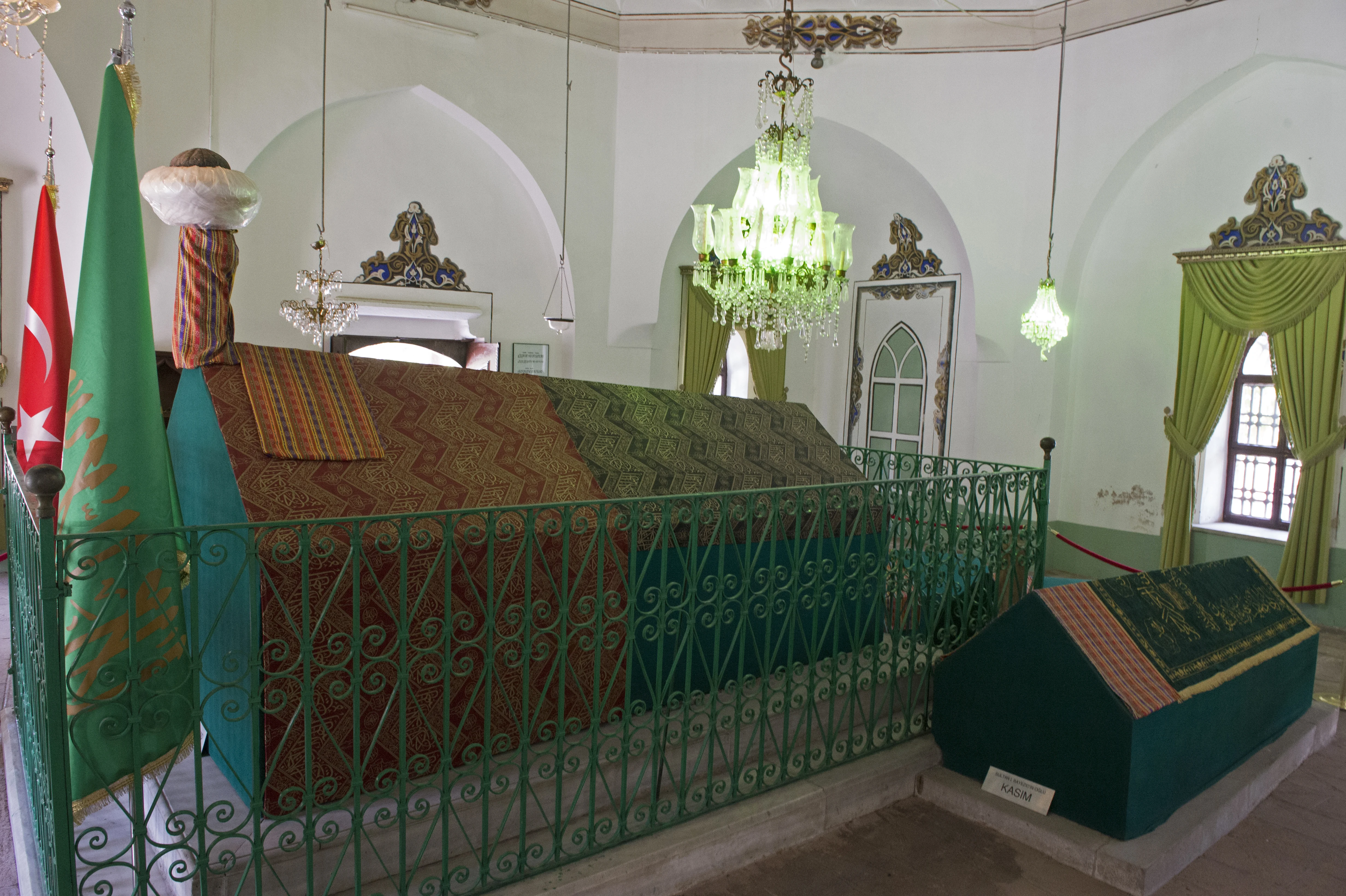
Bayezid I (Ottoman Turkish: بايزيد اول, modern Turkish: I. Bayezid), known by the epithet Yıldırım ("the Thunderbolt"), was the fourth sultan of the Ottoman Empire, reigning from 1389 until his defeat and capture in 1402. His reign constitutes one of the most dramatic chapters in Ottoman history — a period of breathtaking military expansion followed by equally spectacular collapse. In the span of thirteen years, Bayezid transformed the Ottoman state from a powerful but still regional Balkan-Anatolian polity into what appeared to be an incipient world empire, only to see his achievements shattered on the plains of Ankara by the forces of Timur (Tamerlane).
Born around 1360 in the Ottoman capital of Bursa, Bayezid ascended to the throne on the battlefield of Kosovo in June 1389, immediately following the assassination of his father Murad I. His reign was characterized by relentless military activity on multiple fronts simultaneously — a feat that earned him his famous sobriquet. In the Balkans, he reduced the remaining Serbian, Bulgarian, and Byzantine territories to vassalage or direct Ottoman control. In Anatolia, he systematically absorbed the independent Turkish beyliks (principalities) that had coexisted with the Ottomans since the fragmentation of the Seljuk Empire. His decisive victory over a major European crusading army at the Battle of Nicopolis in 1396 sent shockwaves through Christendom and established the Ottomans as the preeminent military power in southeastern Europe.
Yet Bayezid's very successes sowed the seeds of his downfall. His aggressive annexation of the Anatolian beyliks displaced Turkish dynasties that subsequently appealed to Timur for restoration. His diplomatic provocations and refusal to acknowledge Timurid suzerainty led inexorably to the catastrophic Battle of Ankara on 20 July 1402, where Bayezid's army disintegrated and the sultan himself was captured — an almost unprecedented humiliation for an Ottoman sovereign. His death in captivity in March 1403 inaugurated the Ottoman Interregnum (Fetret Devri), a decade-long civil war among his sons that nearly destroyed the dynasty. Only the eventual triumph of Mehmed I (r. 1413–1421) preserved the Ottoman state, which would ultimately recover and go on to achieve the conquest of Constantinople in 1453 and reach its apogee under Süleyman the Magnificent.
Birth, Lineage, and Early Life
Bayezid was born circa 1360 in the city of Bursa, which had served as the Ottoman capital since its capture by Orhan Gazi in 1326. His father was Sultan Murad I (r. 1362–1389), the third Ottoman sultan and the ruler who had transformed the Ottoman beylik into a genuine state with permanent institutions, a standing army, and an increasingly centralized administrative apparatus. His mother was Gülçiçek Hatun, a woman whose precise origins remain debated among historians — some sources identify her as of Greek or Byzantine background, possibly a convert to Islam, while others suggest she was of Turkish origin. The question of maternal lineage in the early Ottoman dynasty is complicated by the fact that the Ottomans practiced political marriage alliances with both Christian and Muslim ruling families, and the chroniclers of subsequent centuries sometimes obscured or embellished these connections.
Bayezid grew up during a period of extraordinary Ottoman dynamism. His father Murad I had crossed the Dardanelles in the early 1350s (initially under Orhan's direction) and established permanent Ottoman footholds in Thrace. By the time of Bayezid's birth, the Ottomans had already captured Adrianople (Edirne) in 1361 or 1362 and were rapidly expanding through the southern Balkans. The young prince would thus have been raised in an environment suffused with the ideology of gaza (holy war) and frontier expansion, though the Ottoman enterprise was always as much pragmatic state-building as it was religiously motivated conquest.
As was customary for Ottoman princes, Bayezid was appointed to a provincial governorship (sancak beyliği) to gain administrative and military experience. He served as sancak beyi of Kütahya in western Anatolia, a strategically significant province that bordered several independent Turkish beyliks. This appointment was not merely ceremonial; the prince was expected to administer justice, collect revenues, maintain troops, and participate in military campaigns. Bayezid's tenure in Kütahya brought him into direct contact with the complex political dynamics of Anatolia, where numerous small Turkish principalities — the Germiyanids, Karamanids, Sarukhanids, Aydınids, Menteşeoğulları, and others — maintained precarious independence between the expanding Ottoman and Karaman states.
A significant event of Bayezid's early career was his marriage to Devlet Hatun, daughter of the Germiyanid ruler Süleyman Shah. This marriage, arranged around 1381, was part of a diplomatic agreement by which the Germiyanids ceded the towns of Kütahya, Tavşanlı, Emet, and Simav to the Ottomans as a dowry. The arrangement typified Murad I's strategy of absorbing neighboring principalities through a combination of marriage diplomacy, purchase, and — when necessary — military force. For Bayezid, the Germiyanid marriage provided both territorial resources and a claim to legitimacy among the Anatolian Turkish dynasties that would prove important in his later career.
Bayezid also married Olivera Despina (known in Ottoman sources as Despina Hatun), daughter of the Serbian prince Lazar Hrebeljanović, though this marriage is more securely dated to after the Battle of Kosovo in 1389. Some sources suggest an earlier Byzantine marriage connection as well, reflecting the Ottoman practice of building dynastic networks across religious and political boundaries. What is clear is that by the time Bayezid assumed the throne, he possessed both military experience and an extensive web of marital and political relationships that connected him to the major power centers of the Balkans and Anatolia.
Bayezid participated in several of his father's military campaigns during the 1380s. He was present at the Battle of Pločnik (Ploşnik) in 1386, where an Ottoman force was defeated by a Serbian coalition — one of the rare Ottoman reverses of this period. He also participated in the first Ottoman campaign against the Karamanid emirate in 1386–1387, when Murad I moved to punish the Karamanid ruler Alaeddin Ali Bey for his attacks on Ottoman territory during the Balkan campaigns. These early experiences gave Bayezid firsthand knowledge of both Balkan and Anatolian warfare, the challenges of coordinating multi-front operations, and the political complexities of managing vassal relationships — all skills that would define his sultanate.
Accession to the Throne: The Battle of Kosovo (1389)
The circumstances of Bayezid's accession to power were dramatic and violent, setting the tone for his entire reign. On 15 June 1389 (28 Jumada al-Ula 791 AH), the Ottoman army under Sultan Murad I met a coalition of Serbian, Bosnian, and allied Christian forces under Prince Lazar Hrebeljanović on the Field of Kosovo (Kosovo Polje), near the modern city of Prishtina. The battle, which would become the defining event in Serbian national memory, was also a transformative moment for the Ottoman dynasty.
The course of the Battle of Kosovo remains disputed among historians, with Serbian, Ottoman, and other sources offering contradictory accounts. What is generally accepted is that the battle was fiercely contested and initially appeared uncertain in outcome. At some point during or immediately after the engagement, Sultan Murad I was killed — most accounts agree that he was assassinated by a Serbian noble, Miloš Obilić (or Kobilović), who either approached the sultan under the pretense of surrender or broke through the Ottoman lines in a suicidal attack. Some Ottoman sources suggest Murad was killed while inspecting the battlefield after the fighting had concluded.
The death of a reigning sultan in battle was an extraordinary crisis for the Ottoman state, which lacked a formalized law of succession. Ottoman practice followed the Turco-Mongol tradition by which all sons of the ruler had equal claim to the throne, with succession typically determined by which prince could seize power first. Bayezid moved immediately to secure his position. According to the Ottoman chroniclers Neşri and Aşıkpaşazade, Bayezid was informed of his father's death during the battle and took command of the army, driving the engagement to a decisive Ottoman victory. The Serbian prince Lazar was captured and executed, and the Serbian forces were destroyed as a coherent military force.
However, Bayezid's accession was accompanied by an act that would establish a grim precedent in Ottoman dynastic history. His brother Yakub Çelebi, who had also fought bravely at Kosovo and commanded one wing of the Ottoman army, was strangled on Bayezid's orders shortly after the battle. The chroniclers present this fratricide variously — some justify it as a necessary measure to prevent civil war, others attribute the initiative to senior Ottoman commanders (particularly the powerful frontier lord Evrenos Bey) who feared that division of the realm between two princes would weaken the state. Whatever the precise circumstances, this act established the principle that the new sultan would eliminate rival brothers to secure uncontested rule — a practice that would be formalized under Mehmed II as the infamous "law of fratricide" (kardeş katli) and would haunt the Ottoman dynasty for centuries.
The Battle of Kosovo gave Bayezid not only the throne but also strategic dominance over Serbia. Prince Lazar's son, Stefan Lazarević, was compelled to accept Ottoman suzerainty, provide military contingents for Ottoman campaigns, and — according to most sources — send his sister Olivera Despina as a bride for the new sultan. Serbia thus passed from an independent state to an Ottoman vassal, retaining nominal autonomy but subordinated to Ottoman strategic requirements. Stefan Lazarević would prove one of the most loyal Ottoman vassals, providing Serbian heavy cavalry for Bayezid's campaigns for over a decade.
Balkan Campaigns and Consolidation (1389–1395)
Bayezid's immediate priority upon securing the throne was to consolidate Ottoman control over the Balkans, where his father's conquests had created a patchwork of direct Ottoman provinces, vassal states, and unconquered territories. The speed and energy with which Bayezid pursued this consolidation earned him the epithet "Yıldırım" — the Thunderbolt — a name that reflected both his rapid movement between theaters of war and the devastating force of his attacks.
In 1390, Bayezid moved against the remaining independent Bulgarian territories. The Second Bulgarian Empire, once a powerful Balkan state, had been progressively dismembered throughout the fourteenth century. Tsar Ivan Shishman, ruling from his capital at Nikopol (Nicopolis), controlled only a rump state in northern Bulgaria. Bayezid's forces besieged and captured Nikopol, and Ivan Shishman was executed — the last ruler of a dynasty that had governed Bulgaria for over two centuries. The remnant Bulgarian state at Vidin, under Ivan Stratsimir, held out somewhat longer but was also absorbed into the Ottoman domains by 1396. With these conquests, Bulgaria ceased to exist as an independent entity and was organized into Ottoman provinces (sancaks), a condition that would persist until the nineteenth century.
Simultaneously, Bayezid expanded Ottoman power in Macedonia, Thessaly, and southern Greece. Ottoman raiders (akıncıs) penetrated deep into the Peloponnese (Morea), terrifying the local Byzantine and Frankish populations. The Duchy of Athens, the Principality of Achaea, and various other Crusader-era Latin states found themselves increasingly unable to resist Ottoman pressure. Thessaly was brought under direct Ottoman control, and the important port city of Thessaloniki (Salonika), though nominally Byzantine, was effectively surrounded by Ottoman territory.
The Byzantine Empire itself, reduced to Constantinople and its immediate environs plus a few scattered territories, found its position increasingly desperate under Bayezid's pressure. Emperor Manuel II Palaiologos (r. 1391–1425), who had initially served as an Ottoman vassal under Murad I, attempted to assert Byzantine independence upon his own accession. Bayezid responded with immediate aggression, demanding that Manuel accept tighter Ottoman oversight, pay increased tribute, and allow the establishment of an Ottoman quarter and qadi (Islamic judge) within Constantinople. When Manuel resisted, Bayezid initiated what would become a prolonged blockade of the imperial capital, beginning around 1394.
This blockade of Constantinople represented a fundamental escalation of Ottoman ambitions. While previous Ottoman rulers had been content to reduce Byzantium to vassal status, Bayezid appeared determined to eliminate the empire entirely. He constructed the fortress of Anadoluhisarı on the Asian shore of the Bosphorus around 1393–1394, which allowed the Ottomans to control maritime traffic through the strait and tighten the noose around the city. The blockade would continue intermittently throughout Bayezid's reign, lifting only temporarily during the Nicopolis crisis and then resuming until the disaster at Ankara in 1402 forced a general Ottoman withdrawal.
In Wallachia, Bayezid asserted Ottoman suzerainty over the ruling voivode Mircea the Elder (Mircea cel Bătrân). After an initial Ottoman defeat at the Battle of Rovine in 1395 — where Mircea's forces used the forested and marshy terrain of Wallachia to neutralize Ottoman numerical superiority — Bayezid eventually forced Mircea to accept vassal status and installed a compliant candidate on the Wallachian throne. The relationship between the Ottomans and Wallachia would remain contentious for generations, but Bayezid's campaigns established the principle of Ottoman suzerainty over the Danubian principalities.
Bosnia similarly fell under increasing Ottoman pressure during this period. The Bosnian kingdom, weakened by internal divisions between its Catholic, Orthodox, and Bogomil populations, was unable to mount effective resistance. Ottoman raids devastated Bosnian territory, and local lords began accepting Ottoman suzerainty or converting to Islam to preserve their estates. While the formal conquest of Bosnia would not occur until 1463 under Mehmed II, Bayezid's campaigns established the pattern of gradual Ottoman penetration that would culminate in annexation.
Albania and the Adriatic coast also felt Bayezid's reach. Ottoman forces captured territories in central Albania and raided the coastline, alarming the Republic of Venice, which maintained commercial colonies in the region. The Venetians, primarily concerned with protecting their maritime interests, began a complex diplomatic relationship with the Ottomans that combined trade agreements with occasional military confrontation.
Anatolian Expansion and Absorption of the Beyliks (1389–1399)
While simultaneously prosecuting campaigns in the Balkans, Bayezid undertook the systematic annexation of the independent Turkish principalities (beyliks) of Anatolia. This dual-front strategy — campaigning in Europe and Asia within the same campaigning season — was what truly earned Bayezid the "Thunderbolt" sobriquet, as he demonstrated an extraordinary ability to move his army rapidly between theaters separated by the Dardanelles and the Bosphorus.
The Anatolian beyliks were the successor states of the Seljuk Empire of Rum, which had fragmented in the late thirteenth century following the Mongol invasions. By the mid-fourteenth century, approximately a dozen Turkish principalities controlled western and southern Anatolia, of which the Ottoman beylik was merely the most successful. Relations between the Ottomans and their Anatolian neighbors had traditionally been regulated by a combination of marriage alliances, mutual respect for territorial boundaries, and occasional military conflict. Murad I had already begun the process of annexation — absorbing parts of the Germiyanid and Hamidoğulları territories through purchase and marriage — but he had generally respected the independence of the remaining beyliks. Bayezid abandoned this cautious approach entirely.
In 1390, immediately after securing his Balkan position, Bayezid turned east. He rapidly annexed the beyliks of Aydın, Saruhan, Menteşe, and Germiyan in rapid succession. The Aydınoğulları beylik, centered on the Aegean port of Ayasuluk (modern Selçuk), was absorbed along with the commercially important cities of İzmir (Smyrna) and Efes. The Saruhanoğulları beylik, based at Manisa, was annexed without significant resistance. The Menteşeoğulları territories in southwestern Anatolia, including the ports of Milas and Muğla, were similarly incorporated. The remaining Germiyanid territories around Kütahya, which had not already been absorbed through Bayezid's marriage to Devlet Hatun, were now taken by force.
The Hamidoğulları beylik in the Lake District region around Isparta and Eğirdir had already been partially purchased by Murad I in 1374; Bayezid now completed the annexation of its remaining territories. The Candaroğulları (Jandarid) beylik in the Pontic region around Kastamonu and Sinop, which controlled important Black Sea ports, was also subjected to Ottoman pressure, though its complete annexation would not be finalized until later in Bayezid's reign.
The most significant and consequential of Bayezid's Anatolian campaigns were those directed against the Karamanid emirate. The Karamanids, based at Konya (the former Seljuk capital) and Larende (modern Karaman), were the most powerful of the Anatolian beyliks and had long considered themselves the legitimate successors to the Seljuk sultanate. They maintained an implacable hostility toward Ottoman expansion and repeatedly attacked Ottoman territories when the sultans were committed to Balkan campaigns. The Karamanid-Ottoman rivalry was one of the defining geopolitical conflicts of fourteenth-century Anatolia.
Bayezid moved against the Karamanids in 1390–1391, following Karamanid provocations during his Balkan campaigns. The Karamanid ruler Alaeddin Ali Bey had attacked Ottoman territories in Murad I's absence, and Bayezid was determined to end this threat permanently. The Ottoman army invaded Karamanid territory, defeated their forces in battle, and occupied Konya. Alaeddin Ali Bey was captured and executed in 1391 — a decision that shocked the Turkish world, as it violated the traditional norms of dynastic solidarity among the Anatolian beyliks. Bayezid annexed much of the Karamanid territory directly, though he eventually installed a compliant member of the Karamanid dynasty as a subordinate ruler.
In 1392, Bayezid extended his reach into central and eastern Anatolia by annexing the territories of the Kadı Burhaneddin state, centered on Sivas and Tokat. Kadı Burhaneddin Ahmed, a remarkable figure who combined scholarly learning with military prowess, had created a significant power in central Anatolia. After Kadı Burhaneddin's death in 1398 at the hands of the Akkoyunlu Turkmens, Bayezid absorbed his territories, pushing the Ottoman frontier eastward to the Euphrates region.
By 1399, Bayezid had effectively unified western and central Anatolia under Ottoman control for the first time since the fall of the Seljuk sultanate. The former beyliks were reorganized as Ottoman sancaks, their ruling families dispersed, exiled, or executed. This was an achievement of enormous historical significance, but it came at a terrible political cost. The displaced beylik dynasties — particularly the Karamanid, Germiyanid, Aydınoğulları, and Saruhanoğulları families — sought refuge at the court of Timur, where they lobbied incessantly for restoration. Their grievances provided Timur with both a casus belli and a ready-made network of collaborators for his invasion of Ottoman territory. Furthermore, the populations of the annexed beyliks, accustomed to the rule of their own dynasties, remained ambivalently loyal to the Ottomans at best. When the crisis of 1402 came, many of these territories would revolt and restore their former rulers, demonstrating how shallow Ottoman integration remained.
The Battle of Nicopolis (1396)
The Battle of Nicopolis, fought on 25 September 1396 on the banks of the Danube near the Bulgarian fortress city of Nikopol, was the defining military triumph of Bayezid's reign and one of the most significant engagements of the late medieval period. The battle pitted Bayezid's Ottoman army against the largest crusading expedition sent against the Ottomans to date — a multinational European force assembled in response to Ottoman expansion in the Balkans and Bayezid's siege of Constantinople.
The crusade of Nicopolis was called in response to desperate appeals from the Byzantine emperor Manuel II and King Sigismund of Hungary, who faced Ottoman pressure along his southern frontier. Pope Boniface IX issued a crusading bull, and the call was taken up enthusiastically by the chivalric nobility of Western Europe, particularly France and Burgundy. The French contingent, led by Jean de Nevers (son of Philip the Bold, Duke of Burgundy), the Constable of France Philippe d'Artois, Marshal Jean II Le Maingre (known as Boucicaut), and Admiral Jean de Vienne, represented the flower of Franco-Burgundian chivalry. Additional contingents came from England, Germany, Bohemia, Poland, the Knights Hospitaller of Rhodes, the Republic of Venice (which provided a naval squadron), and various Italian states.
King Sigismund of Hungary served as the nominal commander of the crusading army, which also included his substantial Hungarian forces along with Wallachian troops under Mircea the Elder and contingents from the Hospitallers. Estimates of the crusading army's total strength vary widely in the sources, from 10,000 to wildly exaggerated figures of 100,000 or more; modern historians generally estimate between 12,000 and 20,000 combatants, making it a large but not overwhelming force by the standards of the period.
The crusading army descended the Danube in September 1396, capturing several Ottoman-held fortresses before arriving at Nikopol, which they besieged. Bayezid, who had been campaigning in Anatolia, moved with characteristic speed to relieve the fortress. Ottoman sources describe his march as covering an extraordinary distance in minimal time — the kind of rapid strategic movement that defined his military reputation. His army, including Serbian vassal contingents under Stefan Lazarević, numbered perhaps 15,000–20,000 men, roughly equivalent to the crusading force.
The battle itself was decided by a combination of crusader indiscipline and Ottoman tactical superiority. The French knights, eager for glory and contemptuous of their Muslim opponents, insisted on leading the attack despite Sigismund's counsel to allow the Hungarian infantry to engage first and probe the Ottoman positions. The French heavy cavalry charged uphill against the Ottoman position, breaking through the first line of Ottoman light infantry (azabs) and a line of sharpened stakes. However, this initial success exhausted the knights' horses and disordered their formation. As they crested the hill, they encountered Bayezid's main force — the sipahi cavalry of the provincial armies and the elite Janissary infantry — fresh, organized, and deployed in depth.
The French charge was halted, surrounded, and destroyed. Jean de Vienne was killed fighting; Nevers, Boucicaut, and numerous other French nobles were captured. When Sigismund attempted to engage with the Hungarian forces, the battle was already lost. The Ottoman sipahis and Stefan Lazarević's Serbian heavy cavalry swept around the crusader flanks, causing a general rout. Sigismund himself barely escaped, fleeing by boat down the Danube to the Black Sea and eventually reaching Constantinople by a circuitous route through the Aegean.
The aftermath of Nicopolis was brutal even by medieval standards. Enraged by heavy Ottoman casualties in the initial French assault and by reports that the crusaders had massacred Ottoman prisoners earlier in the campaign, Bayezid ordered a mass execution of captives. Thousands of prisoners were beheaded before the sultan, with only the most valuable nobles — those who could command substantial ransoms — being spared. Jean de Nevers and approximately two dozen high-ranking prisoners were eventually ransomed for 200,000 gold ducats, an enormous sum that strained the resources of the Burgundian ducal treasury.
The consequences of Nicopolis were far-reaching. For Western Christendom, the defeat effectively ended large-scale crusading efforts against the Ottomans for half a century, until the ill-fated Crusade of Varna in 1444. The disaster discredited the ideal of chivalric warfare against the Turks and demonstrated that the Ottomans were not a barbarian horde to be easily swept aside but a sophisticated military power capable of defeating the best armies Europe could field. For Bayezid, the victory confirmed Ottoman dominance in the Balkans and freed him to intensify his siege of Constantinople, which he pursued with renewed energy after 1396. The victory also enhanced Bayezid's prestige throughout the Islamic world, as he could now credibly claim to be the foremost champion of Islam against the Crusaders — a title that carried both religious legitimacy and political weight.
Following Nicopolis, Bayezid reportedly sent messengers to the Abbasid caliph in Cairo (who resided under Mamluk protection) requesting the title of "Sultan of Rum" — a formal recognition of his sovereignty over the former Seljuk lands of Anatolia and his status as the leading Muslim ruler in the confrontation with Christendom. The sources disagree on whether this title was formally granted, but the request itself reflects Bayezid's growing ambitions and his desire to legitimize his rule in Islamic legal and political terms.
Administrative Policies and State Building
Bayezid's reign was not solely defined by military conquest; he also presided over significant developments in Ottoman state administration and governance. While his father Murad I had laid the institutional foundations of the Ottoman state — including the creation of the devshirme system and the Janissary corps — Bayezid expanded and consolidated these institutions while introducing new elements that reflected the changing nature of Ottoman sovereignty.
One of Bayezid's most consequential administrative decisions was the centralization of authority in the sultan's person at the expense of the frontier lords (uç beyleri) and the Turkmen aristocracy. The early Ottoman state had functioned as a confederation of frontier warriors, with powerful lords like Evrenos Bey, Gazi Timurtaş, and Hacı İlbey commanding semi-independent forces along the borders. Bayezid increasingly marginalized these figures, concentrating military authority in the central army — the Janissaries and the kapıkulu (household) cavalry — which answered directly to the sultan. This centralization reflected both Bayezid's personal temperament and the political logic of governing an expanding empire, but it alienated elements of the Turkmen military aristocracy that had been the backbone of early Ottoman expansion.
Bayezid expanded the Janissary corps and the devshirme system that supplied it. The devshirme — the periodic levy of Christian boys from Balkan populations who were converted to Islam and trained for military or administrative service — provided the sultan with a slave army personally loyal to him and independent of the Turkish aristocratic factions. Under Bayezid, the Janissaries grew from a relatively small bodyguard into a significant military force, deployed as the core of the Ottoman infantry in major engagements. Their disciplined volley fire and steadfast defense proved decisive at Nicopolis and other battles.
The administrative system was also formalized during Bayezid's reign. The timar system — the assignment of agricultural revenue grants to cavalrymen (sipahis) in return for military service — was extended throughout the newly conquered territories in both the Balkans and Anatolia. This system provided the Ottoman state with a large cavalry army that was self-financing and locally resident, capable of rapid mobilization without the expense of a standing force. The timar-holding sipahis formed the bulk of the Ottoman provincial armies and were essential to the empire's ability to fight on multiple fronts simultaneously.
Bayezid's court at Edirne and Bursa reflected his increasingly imperial ambitions. He patronized scholars, poets, and religious figures, and constructed mosques, madrasas (Islamic colleges), and other pious foundations (vakıf). His most notable architectural commission was the Ulu Cami (Grand Mosque) of Bursa, completed in 1400 — a magnificent twenty-domed congregational mosque that remains one of the finest examples of early Ottoman architecture. According to tradition, Bayezid vowed to build twenty mosques after his victory at Nicopolis; when his advisors suggested that a single mosque with twenty domes would be more impressive and practical, he accepted the suggestion. The Ulu Cami served both as a religious statement and a declaration of royal magnificence, demonstrating that the Ottoman sultans were not merely frontier warriors but sovereigns worthy of comparison with the great Muslim dynasties of the past.
Bayezid also presided over a significant development in Ottoman legal and religious policy. He appointed the first Ottoman şeyhülislam (chief religious authority), a position that would become central to the Ottoman religious establishment. He also expanded the system of medrese education, endowing colleges in Bursa and other cities that trained the religious scholars (ulema) and judges (kadıs) who staffed the Ottoman judicial system. These developments reflected the transformation of the Ottoman state from a frontier principality into a settled Islamic empire with permanent institutions.
However, Bayezid's personal habits were a source of controversy both during his lifetime and in subsequent historiography. Ottoman and other Muslim sources report that Bayezid was fond of wine and maintained a court life that some considered excessively luxurious and insufficiently pious. These reports, while possibly exaggerated by hostile chroniclers (particularly those writing after the Ankara disaster, when Bayezid's reputation suffered), suggest that the sultan's personal conduct was not universally admired. The contrast between Bayezid's military achievements as a ghazi warrior and his reported personal indulgences created tension within the Ottoman religio-political framework, which expected the sultan to embody Islamic virtue as well as military prowess.
The Siege of Constantinople (1394–1402)
Bayezid's prolonged blockade and intermittent siege of Constantinople represents one of the most sustained strategic enterprises of his reign and a direct precursor to the successful conquest of Constantinople by his great-grandson Mehmed II in 1453. While Bayezid never achieved the conquest itself, his systematic pressure brought the Byzantine Empire closer to extinction than at any previous point and established the strategic framework that subsequent Ottoman sultans would inherit.
The Ottoman blockade of Constantinople intensified from around 1394, when Bayezid constructed the fortress of Anadoluhisarı (Güzelce Hisar) on the Asian shore of the Bosphorus. This fortification, positioned at the narrowest point of the strait, allowed Ottoman forces to monitor and control maritime traffic between the Black Sea and the Mediterranean — a lifeline for Constantinople, which depended on grain imports from the Black Sea littoral. Combined with Ottoman control of the surrounding Thracian countryside, the fortress enabled a comprehensive, if not watertight, blockade of the imperial capital.
Emperor Manuel II Palaiologos found himself in an increasingly desperate position. Constantinople's population had dwindled from its medieval peak of several hundred thousand to perhaps 50,000 inhabitants. Its celebrated walls, though still formidable, enclosed vast empty areas of gardens and orchards where neighborhoods had once stood. The imperial treasury was empty, the army negligible, and the navy non-existent. Manuel's only resources were his diplomatic skill, the city's geographical strength, and the intermittent assistance of Western Christian powers.
Bayezid's demands upon the Byzantines escalated over time. Initially, he required the establishment of an Ottoman judicial presence (a kadı court) within Constantinople and the creation of a Muslim quarter with a mosque — demands that would have formalized Ottoman sovereignty over the city while leaving the Byzantine government nominally intact. When these demands were rejected, Bayezid shifted to outright conquest as his objective. He assembled siege equipment and attempted several assaults on the land walls between 1394 and 1402, though the formidable Theodosian fortifications — triple walls with a wide moat — proved beyond the capability of his siege technology to breach.
The Ottoman pressure on Constantinople prompted Manuel II to undertake an extraordinary diplomatic odyssey. In 1399, the emperor left Constantinople (leaving his nephew John VII as regent) and traveled to Western Europe, visiting Venice, Paris, and London in search of military aid. Manuel was received with great honor — King Charles VI of France entertained him lavishly, and King Henry IV of England provided financial gifts — but no substantial military assistance materialized. The Western powers were preoccupied with their own conflicts (the Hundred Years' War, the Great Western Schism) and unwilling to commit resources to a distant Eastern enterprise. Manuel's journey, while diplomatically significant and culturally fascinating (providing Western Europeans with rare direct contact with a Byzantine emperor), produced no strategic results.
The French did dispatch a small military force under Marshal Boucicaut, who had been ransomed after his capture at Nicopolis. Boucicaut's expedition reached Constantinople in 1399 and conducted several naval raids on Ottoman coastal positions, but it was too small to break the Ottoman blockade or significantly alter the strategic balance. Boucicaut eventually returned to France with Manuel II, having accomplished little of lasting military value.
The siege of Constantinople was only lifted by the catastrophe at Ankara in 1402. When news of Bayezid's defeat and capture reached the Balkans, the Ottoman blockade of Constantinople collapsed immediately, as Ottoman commanders withdrew to secure their own positions in the ensuing civil war. Constantinople received an unexpected reprieve that extended Byzantine survival by half a century — though the empire that survived was merely a shadow, subsisting on Ottoman sufferance until Mehmed II completed what Bayezid had begun.
Growing Conflict with Timur (1399–1402)
The confrontation between Bayezid and Timur (Tamerlane) was not the result of a single provocation but rather the culmination of a series of escalating tensions that had built throughout the 1390s. Understanding the origins of this conflict requires appreciating both the geopolitical dynamics of the late fourteenth-century Islamic world and the personal temperaments of the two rulers involved.
Timur, the great Central Asian conqueror who claimed descent from the Mongol imperial family and had rebuilt an empire stretching from India to the Mediterranean, initially had no particular quarrel with the Ottomans. His primary concerns in the 1380s and early 1390s had been the conquest of Persia, the destruction of the Golden Horde, and his campaigns in India. The Ottoman frontier was distant from his Central Asian base, and the two powers had maintained correct if not warm diplomatic relations during Murad I's reign.
The first source of friction was Bayezid's annexation of the Anatolian beyliks, particularly the territories of the Karamanids and the Kadı Burhaneddin state. Several of the displaced beylik rulers — including members of the Karamanid, Germiyanid, and Aydınoğulları dynasties — fled eastward and sought refuge at Timur's court in Samarkand. They petitioned Timur to intervene on their behalf, restore their territories, and punish Bayezid's aggression. Timur, whose political system rested in part on the maintenance of client dynasties, was receptive to these appeals, which provided him with both a legitimate grievance against Bayezid and potential allies within Ottoman territory.
A second source of conflict was the fate of Sultan Ahmad Jalayir of Baghdad and Qara Yusuf of the Kara Koyunlu Turkmen confederation. Both rulers had been driven from their domains by Timur's campaigns and had sought refuge with Bayezid. Timur demanded their extradition; Bayezid refused, viewing their presence at his court as both an obligation of hospitality and a useful diplomatic lever. This refusal was a direct challenge to Timurid authority and was perceived as such.
The diplomatic correspondence between Bayezid and Timur, preserved in various sources, reveals a progressive deterioration of relations marked by increasingly insulting language on both sides. Timur's letters tended toward grandiose assertions of suzerainty, demanding that Bayezid acknowledge Timurid overlordship and return the conquered beyliks to their former rulers. Bayezid's responses were defiant and contemptuous, asserting his own sovereignty, boasting of his victories against the Crusaders, and — according to some accounts — including deliberately provocative personal insults. The exact content of these letters is uncertain, as different sources preserve different versions, but the general trajectory from formal diplomatic exchange to mutual provocation is clear.
Timur's first direct move against Ottoman territory came in 1400, when he invaded eastern Anatolia. His forces besieged and captured the city of Sivas — which had been an Ottoman possession since the death of Kadı Burhaneddin in 1398 — in August 1400. The fall of Sivas was accompanied by a notorious massacre: Timur reportedly buried alive the members of the garrison who had surrendered on terms, though the details of this atrocity vary between sources. Among those killed at Sivas was Bayezid's eldest son Ertuğrul, who had been serving as the province's governor. The destruction of Sivas was both a strategic strike and a deliberate provocation, demonstrating Timur's ability to reach deep into Ottoman territory.
However, after taking Sivas, Timur did not immediately press his advantage against Bayezid. Instead, he turned south to campaign against the Mamluk Sultanate in Syria, sacking Aleppo, Hama, Homs, and Damascus in late 1400 and early 1401. He then moved to Baghdad, which he captured and devastated in July 1401. These campaigns, while not directed against Bayezid, further demonstrated Timur's overwhelming military power and isolated the Ottomans by eliminating potential allies in Syria and Iraq.
Throughout 1401, diplomatic exchanges between the two rulers continued, with each seeking to justify his position and perhaps avoid a direct confrontation whose outcome was uncertain for both parties. Timur demanded that Bayezid restore the Anatolian beyliks, surrender the refugees at his court, and acknowledge Timurid suzerainty. Bayezid refused all conditions, reportedly declaring that he would rather fight than submit to such humiliation. By early 1402, it was clear that diplomacy had failed and that a military resolution was inevitable.
The Battle of Ankara (20 July 1402)
The Battle of Ankara (Turkish: Ankara Savaşı), fought on 20 July 1402 (19 Dhu al-Hijjah 804 AH) on the plain of Çubuk, northeast of Ankara, was one of the most decisive battles in the history of the Islamic world. It resulted in the complete destruction of Bayezid's army, the capture of the sultan himself, and the temporary disintegration of the Ottoman state. The battle remains one of the very few occasions in Ottoman history when a reigning sultan was defeated and captured in the field.
In the spring of 1402, Timur moved his army westward from his winter quarters, crossing the Euphrates and advancing into central Anatolia with a force that most modern historians estimate at between 100,000 and 140,000 men — an army drawn from across his vast empire, including contingents from Transoxiana, Persia, Afghanistan, the Caucasus, and various Turkish and Mongol tribal groups. Crucially, Timur's army also included contingents from the dispossessed Anatolian beyliks, whose former rulers marched with Timur in expectation of being restored to their territories.
Bayezid, who had been conducting operations in the Balkans and maintaining his blockade of Constantinople, moved his army east to confront Timur. The Ottoman force was large but significantly smaller than Timur's — modern estimates range from 60,000 to 85,000 men. It included the Janissary corps, the kapıkulu cavalry, the Anatolian and Rumelian sipahi armies, and vassal contingents from Serbia (under Stefan Lazarević) and other Balkan subjects. However, the army's composition contained a fatal weakness: many of the Anatolian sipahis had been recruited from the recently annexed beyliks and remained loyal to their former rulers rather than to Bayezid.
The strategic situation was further complicated by Timur's calculated preliminary move. Rather than advancing directly toward Bayezid's position, Timur maneuvered around the Ottoman army and seized the city of Ankara itself, cutting off Bayezid's water supply and forcing the Ottomans to fight on ground of Timur's choosing. This strategic masterstroke — typical of Timur's operational brilliance — placed Bayezid's thirsty army at an immediate disadvantage, as the July heat of the central Anatolian plateau was intense and water sources in the area had been deliberately contaminated or diverted by Timurid engineers.
The battle itself opened with an Ottoman advance against Timur's prepared positions. The initial clash was fiercely contested, with both sides committing their forces progressively. However, the battle's outcome was decided early by a catastrophic development on the Ottoman side: the Anatolian troops — sipahis from the former Aydınoğulları, Saruhanoğulları, Menteşeoğulları, and Germiyanid territories — recognized their former rulers in Timur's ranks and defected en masse to the Timurid side. This mass desertion, which may have involved 20,000 or more men, tore open the Ottoman battle line and exposed Bayezid's center and remaining flanks to encirclement.
The Serbian contingent under Stefan Lazarević fought with exceptional valor and loyalty, covering Bayezid's flank and eventually cutting their way out of the encirclement to retreat in good order — an act of fidelity that Serbian tradition celebrates and that Ottoman sources also acknowledge with respect. The Janissaries, true to their reputation, held their ground around the sultan and fought virtually to the last man, refusing to surrender or retreat. But the battle was irretrievably lost once the Anatolian defections began.
By the end of the day, Bayezid's army had been destroyed. The sultan himself, surrounded by the remnants of his Janissary guard, either was captured during the fighting or surrendered after being cornered with no possibility of escape. Sources differ on the exact circumstances of his capture — some describe him being taken while attempting to flee, others portray a more dignified surrender after continued resistance became impossible. In any case, by nightfall on 20 July 1402, the fourth Ottoman sultan was a prisoner of the most powerful conqueror of the age.
Several of Bayezid's sons were also captured or scattered in the battle's aftermath. Musa Çelebi was captured alongside his father. Süleyman Çelebi managed to escape with a portion of the Rumelian army and fled to the Balkans, where he established himself at Edirne. Mehmed Çelebi escaped eastward. İsa Çelebi fled to the former Byzantine territories. These sons would spend the next decade fighting each other for supremacy in the devastating Ottoman Interregnum (Fetret Devri, 1402–1413).
Captivity and Death (1402–1403)
Bayezid's captivity at the hands of Timur is one of the most discussed episodes in Ottoman and Timurid historiography, surrounded by legend, propaganda, and genuine uncertainty. The period between his capture in July 1402 and his death in March 1403 — a span of approximately eight months — has been the subject of intense historical debate regarding the conditions of his imprisonment and the treatment he received.
The most famous and dramatic account of Bayezid's captivity is the story of the "iron cage" (kafes). According to this tradition, Timur humiliated Bayezid by confining him in an iron cage or litter, carrying him from place to place as a trophy of victory, and forcing him to witness the degradation of his former power. This story was widely circulated in Western European sources and became a staple of Renaissance literature and art — Christopher Marlowe's "Tamburlaine the Great" (1587) dramatized the episode, as did numerous other literary and artistic works. The image of the mighty sultan caged like an animal served Western authors as a morality tale about the fall of the proud.
However, modern historians have largely rejected the "iron cage" story as either a fabrication or a gross exaggeration. The most authoritative Timurid sources — particularly the court historians Sharaf al-Din Ali Yazdi (in his "Zafarnama") and Nizām al-Din Shāmi — describe Bayezid being treated with relative dignity, as was appropriate for a captured sovereign under the conventions of Turco-Mongol warfare. According to these accounts, Timur initially received Bayezid with honor, engaged him in conversation, and allowed him certain privileges. It is possible that Bayezid was confined in a barred litter (rather than a cage) during travel for security purposes, and that this practical arrangement was later exaggerated into a deliberate humiliation by hostile or sensationalist chroniclers.
Ottoman sources from the period are more circumspect, with some acknowledging harsh treatment without endorsing the most extreme versions of the story. The fifteenth-century Ottoman historian Neşri and others describe Bayezid's captivity as deeply demeaning but stop short of the full "iron cage" narrative. It is notable that Ottoman authors had their own reasons for either minimizing the humiliation (to preserve dynastic dignity) or exaggerating it (to absolve Bayezid of responsibility for the disaster by portraying him as a victim of extraordinary cruelty).
What is more securely established is that Bayezid's mental and physical health deteriorated rapidly during his captivity. The sources agree that the formerly vigorous and energetic sultan fell into a deep depression following his defeat and capture. Whether this was caused by the conditions of his imprisonment, the psychological shock of his fall from supreme power to helpless captivity, or underlying health conditions is impossible to determine from the available evidence. Some sources mention that Bayezid had suffered from gout or other ailments prior to the battle, which may have been exacerbated by the stress of imprisonment.
Bayezid I died in captivity on 8 March 1403 (14 Sha'ban 805 AH) at the city of Akşehir in central Anatolia, approximately eight months after his capture. The cause of death is uncertain — some sources suggest he died of an apoplectic seizure, others that he took his own life (by dashing his head against the bars of his enclosure, according to one account), and still others that he simply wasted away from despair and illness. The dramatic nature of his death — a mighty conqueror dying as a broken prisoner — has made it a subject of literary and philosophical reflection for six centuries.
Timur reportedly expressed genuine regret at Bayezid's death, recognizing both the former sultan's martial qualities and the damage that his death might cause to the region's stability. He ordered that Bayezid's body be treated with honor and sent to Bursa for burial. Bayezid was eventually interred in a türbe (mausoleum) adjacent to his Ulu Cami in Bursa, where his tomb remains today — a testament to both his achievements and his tragic end.
The Ottoman Interregnum (1402–1413)
The immediate consequence of Bayezid's defeat and death was the collapse of the Ottoman state into civil war — a period known in Ottoman historiography as the Fetret Devri (Interregnum) or "Period of Crisis," lasting from 1402 to 1413. This decade-long struggle among Bayezid's surviving sons nearly destroyed the Ottoman dynasty and fundamentally reshaped the empire's political geography.
Timur, having defeated Bayezid, did not attempt to permanently occupy Ottoman territory or destroy the Ottoman state entirely. Instead, he pursued a policy of fragmentation: restoring the former Anatolian beyliks to their pre-Ottoman status, releasing various Ottoman princes to compete against each other, and effectively dismantling Bayezid's unified Anatolian empire while leaving the Balkan territories in a state of contested authority. This approach served Timur's interests by eliminating a potential rival on his western flank without requiring permanent occupation of distant territories that would be difficult to hold.
The principal contenders in the subsequent civil war were four of Bayezid's sons: Süleyman Çelebi, who controlled the European (Rumelian) provinces from his base at Edirne; İsa Çelebi, who attempted to establish himself in Bursa and western Anatolia; Mehmed Çelebi, who held territories in north-central Anatolia around Amasya and Tokat; and Musa Çelebi, who was initially in Timurid captivity but later emerged as a major player. A fifth son, Mustafa Çelebi, may also have survived the battle (his fate is uncertain, and a later claimant using his name would trouble the Ottoman state for decades).
The civil war proceeded in phases. İsa Çelebi was the first to be eliminated, defeated by Mehmed in 1403. Süleyman initially appeared to be the strongest contender, controlling the wealthy Balkan provinces and enjoying support from Byzantium and other Christian states. However, his rule was weakened by his personal conduct (sources describe him as dissolute and unpopular) and by the growing power of Musa, who crossed into Europe and challenged Süleyman's authority. Musa defeated and killed Süleyman in 1411, briefly uniting the European provinces under his rule. However, Musa's harsh treatment of the Greek Christian population and his conflict with Byzantium drove the Byzantines to support Mehmed Çelebi, who crossed from Anatolia into Europe in 1413 and defeated Musa at the Battle of Çamurlu (near Sofia) on 5 July 1413.
Mehmed I's victory reunified the Ottoman state under a single sultan, ending the Interregnum. However, the empire that emerged was significantly diminished from Bayezid's time. The Anatolian beyliks — Karaman, Germiyan, Aydın, Saruhan, Menteşe, and others — had all restored their independence and would have to be reconquered gradually over the following decades. The Balkan vassal states had used the chaos to reassert their autonomy. The Ottoman military and administrative apparatus had been severely damaged. Full recovery to Bayezid's level of territorial control would not be achieved until the reign of Murad II (r. 1421–1451), and it was only under Mehmed II (r. 1451–1481) that the Ottomans definitively surpassed their pre-Ankara position.
The Interregnum left lasting marks on Ottoman political culture. It reinforced the elite's conviction that fratricidal succession, however morally troubling, was preferable to civil war — an attitude that supported the eventual formalization of royal fratricide under Mehmed II. It also demonstrated the importance of the Janissary corps and the central army as guarantors of dynastic continuity, since the sipahi provincial troops had proven unreliable at Ankara. These lessons shaped Ottoman institutional development for generations.
Family, Marriages, and Descendants
Bayezid's personal and dynastic life reflected the complex political networks of the late fourteenth-century eastern Mediterranean world. His marriages connected the Ottoman house to Turkish, Balkan Christian, and Byzantine ruling families, demonstrating the dynasty's strategic use of matrimonial alliances to build political relationships across religious and cultural boundaries.
His principal marriages included:
Devlet Hatun, daughter of Yakub Çelebi (or Süleyman Shah) of the Germiyanid beylik, was his first major marriage alliance, contracted around 1381. This marriage brought substantial territorial dowry to the Ottomans and established a precedent for absorbing neighboring principalities through matrimonial diplomacy. Devlet Hatun is credited as the mother of Mehmed Çelebi (later Mehmed I), who would ultimately reunify the empire.
Olivera Despina (Despina Hatun), daughter of Serbian Prince Lazar Hrebeljanović, was married to Bayezid following the Battle of Kosovo in 1389. This marriage cemented the Ottoman-Serbian vassal relationship and was part of the arrangement by which Lazar's son Stefan Lazarević became an Ottoman client. Olivera reportedly maintained her Christian faith during her marriage, as was common for Christian royal brides in Ottoman dynastic unions. She is credited by some sources as having been genuinely fond of Bayezid and as having suffered during his captivity.
Sources also mention marriages to daughters of the Aydınoğulları and other Anatolian beylik dynasties, though details are less certain. The practice of marrying daughters of conquered rulers served both to legitimize Ottoman sovereignty over newly acquired territories and to create kinship bonds that theoretically reduced resistance.
Bayezid fathered numerous sons, at least five of whom survived to play significant roles in the Interregnum: Süleyman (or Emir Süleyman), İsa, Mehmed, Musa, and possibly Mustafa. His eldest son Ertuğrul had been killed at Sivas in 1400 during Timur's attack. The rivalry among Bayezid's surviving sons was intensified by the fact that the Ottoman succession system recognized no primogeniture — each prince had an equal claim to the throne, and legitimacy was ultimately determined by the ability to seize and hold power.
Bayezid also had daughters who were married into important families, furthering Ottoman diplomatic networks. These matrimonial connections, while less documented than the princes' careers, were integral to the Ottoman system of building alliances with vassal states and frontier lords.
Legacy and Historical Assessment
Bayezid I's historical legacy is complex and ambivalent — a function of his extraordinary achievements, his spectacular failure, and the long-term consequences of both. He occupies a paradoxical position in Ottoman history: simultaneously one of the dynasty's greatest conquerors and the architect of its most severe crisis prior to the modern era.
In terms of positive legacy, Bayezid's conquests were foundational for the later Ottoman Empire. His annexation of the Anatolian beyliks, though temporarily reversed after 1402, established the principle of Ottoman sovereignty over all of Anatolia — a principle that his successors would reassert and eventually make permanent. His Balkan campaigns consolidated Ottoman control over Serbia, Bulgaria, and much of Greece, creating the territorial framework that would endure for centuries. His victory at Nicopolis demonstrated Ottoman military superiority over European armies and established the empire's reputation as a first-rank military power. His blockade of Constantinople, while unsuccessful, laid the strategic groundwork for the eventual conquest of Constantinople under Mehmed II.
Bayezid's administrative innovations — the expansion of the Janissary corps, the formalization of the timar system, the development of Islamic judicial institutions — contributed to the institutional infrastructure that would support the Ottoman Empire through its classical age under Süleyman the Magnificent and beyond. His construction of the Ulu Cami in Bursa and other architectural works established patterns of royal patronage that subsequent sultans would elaborate upon.
However, Bayezid's legacy also carries a strong cautionary element. His aggressive annexation of the Anatolian beyliks, while strategically ambitious, was poorly integrated politically and created the conditions for the catastrophic defections at Ankara. His confrontational diplomacy with Timur, while perhaps personally brave, was strategically reckless given the enormous disparity in resources between the two empires. His failure to adequately assess the Timurid threat — or his inability to avoid it — led directly to the destruction of his army, his own capture and death, and a decade of civil war that nearly destroyed the Ottoman state.
Ottoman historiographical tradition has generally treated Bayezid with a mixture of admiration and regret. The chroniclers praise his military prowess and his services to Islam (particularly the Nicopolis victory and the jihad against Christendom) while acknowledging that his overreach and personal failings contributed to the Ankara disaster. Some writers, particularly those of a moralistic bent, interpreted the Battle of Ankara as divine punishment for Bayezid's supposed personal vices — his reported fondness for wine, his luxurious court life, and his alleged arrogance. This moralizing interpretation, while simplistic, reflects the Ottoman elite's need to explain how a seemingly invincible sultan could suffer such a complete reversal of fortune.
In the broader Islamic world, Bayezid's reputation was shaped primarily by his role as a ghazi warrior and defender of Islam against the Crusaders. His victory at Nicopolis earned him lasting prestige as a champion of the faith, and his confrontation with Timur was often understood — particularly in Ottoman territories — as a conflict between two Muslim rulers in which the umma (Islamic community) was ultimately the loser. The devastation caused by the Ankara defeat and the subsequent Interregnum was recognized as a setback for Islamic power in southeastern Europe, temporarily relieving Christian states of Ottoman pressure.
In Western European historical memory, Bayezid figured primarily as the terrifying "Oriental despot" whose conquests threatened Christendom, and secondarily as the tragically fallen figure whose captivity by Timur provided satisfying dramatic irony. The Renaissance fascination with the Bayezid-Timur encounter produced numerous literary and artistic works, most of which reflected European anxieties about Ottoman power rather than genuine historical understanding.
Modern scholarly assessment has moved beyond both the Ottoman moralistic tradition and the Western stereotypical frameworks to offer a more nuanced evaluation. Historians such as Halil İnalcık, Colin Imber, and Dimitris Kastritsis have emphasized the structural factors that both enabled Bayezid's conquests and predetermined his vulnerability — the rapid expansion outpacing administrative integration, the reliance on recently subjugated populations for military manpower, and the inherent instability of a system in which the sultan's personal energy was the primary driver of state cohesion. These analyses suggest that the Ankara disaster was not simply the result of Bayezid's personal failings but reflected deeper structural tensions within the early Ottoman state — tensions that the post-Interregnum sultans would address through more systematic institutional development.
Architectural and Cultural Patronage
Despite the martial character of his reign, Bayezid was a significant patron of architecture, religious institutions, and learning. His building program, concentrated in the Ottoman capitals of Bursa and Edirne, reflected both his personal piety and his desire to project an image of Islamic sovereignty commensurate with his military achievements.
The crown jewel of Bayezid's architectural patronage is the Ulu Cami (Grand Mosque) of Bursa, completed in 1400. This magnificent structure features twenty domes arranged in a four-by-five grid, supported by twelve massive pillars, creating one of the largest enclosed prayer spaces in the Islamic world of its era. The mosque's interior is remarkable for its calligraphic program — monumental inscriptions in various scripts cover the walls and pillars — and for its central fountain (şadırvan) beneath an open oculus in one of the domes, which floods the interior with natural light. The Ulu Cami was not merely a place of worship but a statement of imperial legitimacy: by constructing a congregational mosque of unprecedented scale, Bayezid signaled that the Ottomans had transcended their frontier origins and now stood among the great Islamic dynasties.
Bayezid also commissioned or completed other significant structures in Bursa, including the Yıldırım Beyazıt Mosque and complex (külliye) on the eastern heights of the city. This complex included a mosque, medrese, hammam (bathhouse), imaret (public kitchen), and hospital (darüşşifa), reflecting the Ottoman practice of combining religious, educational, and charitable functions in a single architectural ensemble. The Yıldırım complex demonstrates the architectural transition from Seljuk-influenced forms to the emerging distinctive Ottoman style that would reach its maturity in the fifteenth and sixteenth centuries.
In Edirne, which served as the primary Ottoman capital during much of Bayezid's reign (given its proximity to the Balkan theaters of war), Bayezid constructed mosques and other public buildings, though many of these have been altered or destroyed over the subsequent centuries. He also invested in infrastructure — roads, bridges, caravanserais — that supported both military movement and commercial traffic across the empire.
Bayezid's court attracted scholars, poets, and Sufi mystics from across the Islamic world. The conquest of the Anatolian beyliks brought numerous intellectuals under Ottoman patronage, as the literary and scholarly establishments of cities like Konya, Manisa, and Kütahya were incorporated into the Ottoman cultural sphere. Bayezid endowed madrasas in Bursa and other cities, funding the training of religious scholars, jurists, and administrators who would staff the growing Ottoman bureaucracy. He also patronized Sufi orders, particularly the Mevlevi and Bektashi tarikat, which played important roles in Ottoman religious and social life.
The literary culture of Bayezid's court produced works in both Turkish and Persian, reflecting the bilingual character of Ottoman high culture in this period. Court poets composed panegyrics celebrating Bayezid's victories (particularly Nicopolis), while religious scholars produced works of theology, jurisprudence, and mysticism under royal patronage. This cultural efflorescence, while interrupted by the Ankara catastrophe, contributed to the development of Ottoman literary and intellectual traditions that would flourish in subsequent centuries.
Bayezid in Ottoman and World Historiography
The historiographical treatment of Bayezid I has evolved considerably over the centuries, reflecting changing political contexts, methodological approaches, and ideological frameworks. Tracing these shifts illuminates not only our understanding of Bayezid but also the broader dynamics of Ottoman and Islamic historical writing.
The earliest Ottoman chronicles — those of Aşıkpaşazade, Neşri, and Oruç Bey, written in the late fifteenth century — treat Bayezid with a combination of respect for his martial achievements and implicit criticism of the catastrophe his policies produced. These authors, writing under the patronage of Bayezid's descendants who had reunified the empire, had to balance dynastic loyalty (which required presenting Bayezid as a legitimate and worthy ruler) with the need to explain the Ankara disaster (which invited criticism of his judgment). Their solution was generally to emphasize Bayezid's ghazi credentials and his genuine military genius while attributing the Ankara defeat to the overwhelming force of circumstances — Timur's superior numbers, the treachery of the Anatolian defectors, and sometimes divine will.
The sixteenth-century Ottoman historian İbn Kemal (Kemalpaşazade), writing his comprehensive "Tevârih-i Âl-i Osman" (History of the Ottoman Dynasty) during the reign of Süleyman the Magnificent, offered a more fully developed assessment. İbn Kemal, writing from the vantage point of Ottoman imperial greatness, could afford to be more candid about Bayezid's failures while still honoring his achievements. His account emphasizes Bayezid's role in expanding the territory that subsequent sultans would consolidate and develop.
Timurid historiography naturally presented a very different perspective. The court historians Sharaf al-Din Ali Yazdi and Nizām al-Din Shāmi, writing to glorify Timur's achievements, portrayed Bayezid as a worthy but ultimately inferior adversary whose defeat demonstrated Timur's superiority. These sources are valuable for their detailed descriptions of the Battle of Ankara and the diplomatic exchanges preceding it, though they must be read critically as products of court patronage.
Western European historiography of the fifteenth through eighteenth centuries was primarily interested in Bayezid as a figure in the Ottoman threat narrative — the terrifying conqueror whose victories at Kosovo and Nicopolis demonstrated the danger posed by the "Turk" to Christendom. The Bayezid-Timur encounter fascinated Western authors precisely because it involved one fearsome Eastern conqueror being defeated by another, offering both dramatic entertainment and the reassuring suggestion that Islamic powers would ultimately destroy each other. This tradition produced numerous literary works but little genuine historical analysis.
Modern academic historiography, beginning with the work of scholars like Joseph von Hammer-Purgstall in the nineteenth century and refined by twentieth-century specialists like Halil İnalcık, Paul Wittek, Colin Imber, and Cemal Kafadar, has brought critical methodology and comparative analysis to bear on Bayezid's reign. These scholars have moved beyond the moralistic and propagandistic frameworks of earlier writing to examine the structural, institutional, and geopolitical factors that shaped Bayezid's career. Kastritsis's 2007 study of the Interregnum ("The Sons of Bayezid") represents the most detailed modern analysis of the period immediately following Bayezid's fall, drawing on a wide range of sources in Ottoman Turkish, Arabic, Persian, Greek, Serbian, and Latin.
Conclusion
Bayezid I stands as one of the most dynamic and consequential figures of the late medieval Islamic world. In a reign of barely thirteen years, he transformed the Ottoman Empire from a powerful regional state into what appeared to be an incipient world power, conquering vast territories across two continents, defeating the combined chivalry of Western Europe, and bringing the thousand-year-old Byzantine Empire to the brink of extinction. That these achievements were then undone in a single afternoon on the plains of Ankara — and that the Ottoman state itself nearly perished in the subsequent decade of civil war — only adds to the historical drama of his career.
The ultimate measure of Bayezid's significance, however, lies not in his personal fate but in the long-term trajectory of the empire he nearly destroyed and simultaneously made possible. The territories he conquered in the Balkans remained Ottoman for centuries. The principle of Ottoman sovereignty over Anatolia that he established, though temporarily negated, was eventually made permanent. The institutional developments of his reign — the expansion of the Janissaries, the timar system, the religious establishment — provided the framework for Ottoman imperial greatness in subsequent centuries. And the lessons of his failure — the danger of overextension, the importance of integrating conquered populations, the need for institutional resilience beyond personal charisma — informed the more cautious and systematic state-building of his successors.
Bayezid the Thunderbolt thus remains a figure of enduring fascination: a conqueror whose speed and energy were legendary, whose ambitions encompassed an empire stretching from the Danube to the Euphrates, and whose fall was as spectacular as his rise. His story encapsulates both the extraordinary dynamism of the early Ottoman state and the fragility of political achievements built upon conquest without consolidation — a lesson that resonates far beyond the fourteenth-century world in which he lived and died.
References and Further Reading
Primary Islamic Sources
- Quran, Surah Al-Anfal (8:60) — "And prepare against them whatever you are able of power and of steeds of war by which you may terrify the enemy of Allah and your enemy" — cited in Ottoman chronicles as justification for Bayezid's military campaigns and gaza ideology
- Quran, Surah Al-Fath (48:1–3) — "Indeed, We have given you a clear conquest" — referenced in Ottoman panegyric literature celebrating the victory at Nicopolis as a divine grant
- Quran, Surah Al-Imran (3:139–140) — "So do not weaken and do not grieve, and you will be superior if you are believers. If a wound should touch you, there has already touched the opposing people a wound similar to it" — interpreted in post-Ankara Ottoman writings as consolation for the defeat
- Aşıkpaşazade (Ahmed Aşıki). Tevârih-i Âl-i Osman (History of the Ottoman Dynasty). Late 15th century CE — one of the earliest Ottoman chronicle accounts of Bayezid's reign
- Neşri, Mehmed. Kitâb-ı Cihan-nümâ (Book of the World-Display). Late 15th century CE — comprehensive Ottoman chronicle providing detailed narrative of Bayezid's campaigns
- Oruç Bey. Tevârih-i Âl-i Osman. Late 15th century CE — anonymous Ottoman chronicle attributed to Oruç Bey with significant coverage of the Bayezid period
Classical Islamic Sources
- İbn Kemal (Kemalpaşazade). Tevârih-i Âl-i Osman (History of the Ottoman Dynasty). Early 16th century CE — the most comprehensive early Ottoman historical treatment of Bayezid's reign, written under Süleyman the Magnificent
- Sharaf al-Din Ali Yazdi. Zafarnama (Book of Victory). Herat, 1424–1425 CE / 828 AH — the principal Timurid court history describing the Battle of Ankara and Bayezid's captivity from the perspective of Timur's court
- Nizām al-Din Shāmi. Zafarnama. Early 15th century CE — earlier Timurid account of Timur's campaigns including the confrontation with Bayezid, written as a primary source by a contemporary
- Ibn Arabshah, Ahmad ibn Muhammad. Ajā'ib al-Maqdūr fī Nawā'ib Tīmūr (Wonders of Destiny in the Calamities of Timur). Damascus, 1436 CE / 839 AH — Arabic biography of Timur providing an alternative, often critical account of the Ankara campaign
- Doukas (Ducas). Historia Turco-Byzantina. Mid-15th century CE — Byzantine Greek chronicle with valuable firsthand observation of Ottoman affairs during and after Bayezid's reign
- Laonikos Chalkokondyles. Historiarum Demonstrationes (The Histories). Late 15th century CE — Byzantine chronicle providing Greek perspective on Ottoman expansion under Bayezid
Academic and Scholarly Sources
- İnalcık, Halil. The Ottoman Empire: The Classical Age, 1300–1600. London: Weidenfeld & Nicolson, 1973. — The foundational modern synthesis of early Ottoman history by the preeminent Ottoman historian
- Imber, Colin. The Ottoman Empire, 1300–1650: The Structure of Power. 2nd ed. Basingstoke: Palgrave Macmillan, 2009. — Authoritative analytical history of Ottoman political and military structures
- Kastritsis, Dimitris. The Sons of Bayezid: Empire Building and Representation in the Ottoman Civil War of 1402–1413. Leiden: Brill, 2007. — The definitive modern study of the Ottoman Interregnum, extensively analyzing Bayezid's legacy
- Finkel, Caroline. Osman's Dream: The Story of the Ottoman Empire, 1300–1923. New York: Basic Books, 2005. — Comprehensive modern narrative history with detailed coverage of Bayezid's reign
- Manz, Beatrice Forbes. The Rise and Rule of Tamerlane. Cambridge: Cambridge University Press, 1989. — Essential study of Timur's empire providing context for the Ottoman-Timurid conflict
- Nicol, Donald M. The Last Centuries of Byzantium, 1261–1453. 2nd ed. Cambridge: Cambridge University Press, 1993. — Authoritative account of late Byzantine history including the Ottoman siege of Constantinople
- Setton, Kenneth M. The Papacy and the Levant, 1204–1571. Vol. 1. Philadelphia: American Philosophical Society, 1976. — Comprehensive study of Western responses to Ottoman expansion including the Nicopolis Crusade
- Atiya, Aziz S. The Crusade of Nicopolis. London: Methuen, 1934. — Classic monograph on the 1396 campaign, still valuable for its detailed narrative reconstruction
- DeVries, Kelly. "The Lack of a Western European Military Response to the Ottoman Invasions of Eastern Europe from Nicopolis (1396) to Mohács (1526)." Journal of Military History 63, no. 3 (1999): 539–559
- Kafadar, Cemal. Between Two Worlds: The Construction of the Ottoman State. Berkeley: University of California Press, 1995. — Influential study of early Ottoman identity and state formation
Further Reading
- Barkey, Karen. Empire of Difference: The Ottomans in Comparative Perspective. Cambridge: Cambridge University Press, 2008. — Comparative analysis of Ottoman imperial strategies including early expansion
- Fodor, Pál, and Géza Dávid, eds. Ottomans, Hungarians, and Habsburgs in Central Europe: The Military Confines in the Era of Ottoman Conquest. Leiden: Brill, 2000. — Collection of studies on Ottoman-European military interactions
- Lowry, Heath W. The Nature of the Early Ottoman State. Albany: SUNY Press, 2003. — Reassessment of early Ottoman political organization and expansion
- Zachariadou, Elizabeth A., ed. The Ottoman Emirate (1300–1389). Rethymnon: Crete University Press, 1993. — Collected studies on the pre-Bayezid Ottoman state
- Darling, Linda T. Revenue-Raising and Legitimacy: Tax Collection and Finance Administration in the Ottoman Empire, 1560–1660. Leiden: Brill, 1996. — Analysis of Ottoman fiscal institutions whose origins lie in Bayezid's timar system
Mentioned In
8 articles reference this topic