Iltutmish: The True Founder of the Delhi Sultanate
Shams al-Din Iltutmish (r. 1211–1236 CE) was the third sultan of Delhi and the ruler who consolidated the Delhi Sultanate into a stable, independent state. A former slave who rose by merit, he won Abbasid recognition, repelled Mongol threats, and built lasting institutions of Muslim rule in India.
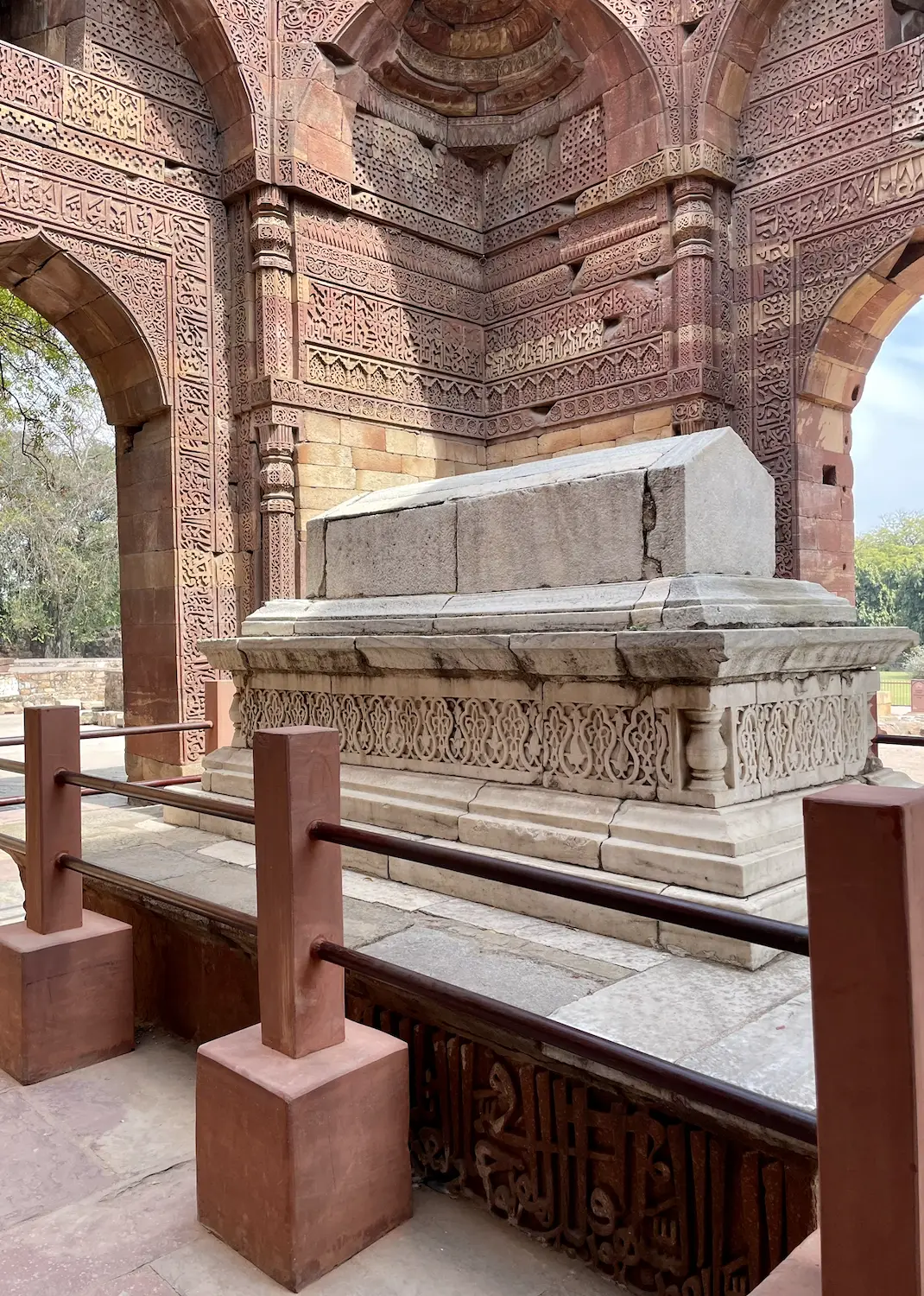
Shams al-Din Iltutmish (r. 1211–1236 CE / 607–633 AH) was the third sultan of Delhi and the ruler who transformed a fragile military conquest into an enduring political state. While Qutb al-Din Aibak is formally recognized as the first sultan of the Mamluk dynasty, it was Iltutmish who gave the Delhi Sultanate its institutional coherence, political independence, and administrative foundations. A former Turkic slave of the Ilbari tribe who rose entirely through personal merit, military ability, and exceptional political judgment, Iltutmish secured formal recognition from the Abbasid Caliph in Baghdad—legitimizing the sultanate as a sovereign Muslim state within the Islamic world order—navigated the existential threat of the Mongol invasions with diplomatic brilliance that preserved his state while greater powers were destroyed, reconquered territories lost during the instability following Aibak's death, and initiated architectural and administrative projects that defined Delhi's character for generations. His nomination of his daughter Razia as successor represents one of the most remarkable and progressive moments in medieval Islamic political history—a decision that challenged gendered assumptions about sovereignty and demonstrated Iltutmish's willingness to prioritize competence over convention.
Origins and Enslavement
Turkic Heritage
Iltutmish was born around 1180 CE — a modern estimate, not a figure the chronicles give — into the Ilbari clan of the Turkic peoples inhabiting the Central Asian steppes, the vast grasslands stretching from the Caspian Sea to the borders of China. Minhaj al-Siraj Juzjani, who served at his court and wrote the Tabaqat-i Nasiri under his son's patronage, is the nearest thing to a contemporary source for his life, and he places the Sultan "from out of the Ilbari tribes of Turkistan, delivered over to merchants, until, from one degree to another, he was raised to the throne of empire".
The name itself is uncertain in both spelling and meaning. Juzjani's manuscripts give it as I-yal-timish, and some copies and other historians as I-yal-titmish; Raverty, editing the text, judged the first correct on the authority of his oldest manuscript, which supplies the diacritical points. Bada'uni offered an etymology — that he was named for having been born on a night of lunar eclipse, the Turks having a word for a child born at such a time — and Raverty recorded the explanation while stating that he doubted it. The article carries the derivation as what Bada'uni proposed and Raverty questioned, not as the meaning of the name.
Juzjani's formal style for him, given at the head of the reign, was al-Sultan al-Mu'azzam, Shams al-Dunya wa al-Din, Abu al-Muzaffar Iltutmish, Nasir Amir al-Mu'minin — the last element, "helper of the Commander of the Faithful", being the title that mattered politically, and the subject of the section on caliphal recognition below.
The Central Asian Turkic world of the late twelfth century was a turbulent place. The rise of the Khwarazmian Empire, the movements of various Turkic and Mongol tribes, and the constant warfare between competing chieftains created conditions of extreme instability. In this environment, enslavement of captives—including high-born individuals—was common. Children and young people were particularly vulnerable, as they could be trained and molded into valuable servants, soldiers, or administrators.
The Path into Slavery
The circumstances of Iltutmish's enslavement reflect the precariousness of life in medieval Central Asia. According to Juzjani's account, Iltutmish's brothers—jealous of their father's evident preference for the gifted younger boy—conspired to have him sold into slavery while still a youth. The young Iltutmish was sold to a slave merchant and transported through a series of commercial transactions, passing through multiple owners in the great slave markets of Central Asia and Khorasan.
This narrative of jealous brothers selling a favoured son into slavery is reminiscent of the Quranic story of Prophet Joseph (Yusuf), and the resemblance is not accidental: Juzjani draws the parallel himself, opening his account of the reign with Yusuf sold into Egypt and raised to be wazir there, and then presenting Iltutmish as "Yusuf like" in his passage from the slave merchants to the throne. Raverty, annotating exactly that passage, observed that Juzjani's version of the Yusuf story differs both from al-Tabari and from the Qur'an's own account in Surah Yusuf, and indeed from Juzjani's own earlier treatment of Yusuf in the first section of the same work.
That is worth stating plainly, because it bears on how the enslavement narrative should be read. The frame is a literary one, chosen by the author, and the author's handling of the scriptural story he is invoking was already loose. The basic fact of Iltutmish's enslavement and his rise from bondage to sovereignty is not in doubt — Juzjani states it directly and it is the premise of the whole reign. The detail of the brothers' jealousy carries the weight of the frame rather than of independent testimony, and is reported here on that footing.
The institution of military slavery (mamluk system) in the Islamic world was fundamentally different from chattel slavery as practiced in other contexts. Military slaves were not degraded laborers but potential future generals, governors, and even sovereigns. They received rigorous education—in military arts, administration, Islamic learning, and court culture—and the most talented among them could rise to the highest positions of power. The very fact that a slave could become sultan demonstrates the meritocratic potential within this system, even as it acknowledges the coercion and displacement that brought individuals into it.
Purchase by Qutb al-Din Aibak
Iltutmish's journey through the slave markets eventually brought him to Delhi, where he was purchased by Qutb al-Din Aibak, Muhammad of Ghor's viceroy in India. Aibak, himself a former slave who had risen to near-sovereign power, had an eye for talent and recognized Iltutmish's exceptional qualities. The young Turkic slave was enrolled in Aibak's military household, where he received the comprehensive training—in horsemanship, archery, swordsmanship, military tactics, and administration—that produced the elite commanders of the Ghurid and early Delhi Sultanate period.
Iltutmish distinguished himself rapidly. His physical abilities, intelligence, and leadership qualities marked him out from his peers. He advanced through the ranks of Aibak's household with remarkable speed, gaining his master's trust and increasingly important responsibilities. Aibak reportedly showed Iltutmish particular favor, recognizing in him the combination of military prowess and administrative intelligence that would be needed to govern the vast territories being brought under Muslim rule.
Rise to Power
Service Under Aibak
During Aibak's reign as sultan (1206–1210 CE), Iltutmish held the important governorship of Badaun, a strategic city in the Gangetic plain situated between Delhi and the eastern territories. This appointment demonstrated Aibak's confidence in Iltutmish's ability to govern a major territory independently—Badaun was a frontier province requiring both military competence to defend against Rajput resurgence and Hindu resistance, and administrative skill to manage revenue collection and maintain public order among a predominantly non-Muslim population.
As governor of Badaun, Iltutmish gained practical experience in the complex challenges of ruling a diverse population under the conditions of early sultanate India. He managed revenue collection from agricultural communities unfamiliar with Islamic fiscal systems, maintained a military establishment capable of both defensive and offensive operations, mediated disputes among his subordinates, dealt with the practical challenges of communication and supply across vast distances, and navigated the delicate political balance between asserting authority and avoiding the provocations that might trigger widespread rebellion. This experience proved invaluable when he later assumed supreme power—unlike many military commanders who proved incompetent administrators, Iltutmish came to the throne with genuine governance experience.
Iltutmish's success at Badaun extended beyond mere competence. He demonstrated initiative in expanding sultanate influence in the region, establishing security along trade routes, and building the administrative infrastructure that transformed a military occupation into effective governance. He attracted capable subordinates, maintained fiscal discipline, and earned a reputation for fair dealing that enhanced his authority beyond what force alone could provide.
Aibak also married one of his daughters to Iltutmish, further cementing the bond between them and establishing Iltutmish's position within the ruling elite of the new sultanate. This marriage connection gave Iltutmish a legitimate claim to succession within the framework of the Mamluk political system—though succession in slave dynasties was never simply hereditary, personal connections to the previous ruler carried significant political weight. The marriage demonstrated that Aibak regarded Iltutmish not merely as a competent subordinate but as a member of his extended household—a distinction of honor and trust in the mamluk system.
The Succession Crisis (1210–1211 CE)
Qutb al-Din Aibak died suddenly in 1210 CE, reportedly from injuries sustained during a polo match (chogan) in Lahore—a violent equestrian sport in which riders competed to strike a ball with mallets while galloping at full speed. Falls were common and sometimes fatal, and the great sultan met an inglorious end through recreational accident rather than the battlefield death that might have been expected. His death was entirely unexpected and created an immediate power vacuum—Aibak had not established clear succession arrangements, and the young sultanate's institutional mechanisms for transferring power were virtually non-existent.
The Delhi nobility, acting hastily under pressure of the moment and without adequate deliberation, elevated Aibak's son Aram Shah to the throne. This choice was made primarily on the basis of dynastic continuity—Aram Shah was the deceased sultan's son—but it ignored the fundamental principle of the mamluk system: that power belonged to the most capable commander rather than to hereditary right. Aram Shah proved spectacularly incompetent—lacking both the military ability to command respect from hardened Turkish warriors and the political acumen necessary to navigate the complex factional politics of the Turkic military elite.
The Turkish commanders (maliks and amirs) in Delhi quickly grew dissatisfied with Aram Shah's incompetent rule. His attempts to assert authority over men who had served under his father and who possessed far more military experience and political sophistication were met with contempt. Administrative decisions were poorly made, military assignments bungled, and the treasury mismanaged. Within months, a faction of senior nobles—recognizing that the survival of the sultanate required competent leadership rather than empty dynastic symbolism—concluded that Aram Shah must be replaced.
The conspirators identified Iltutmish as the ideal alternative: he was experienced (having governed Badaun effectively for years), militarily capable (having participated in numerous campaigns), well-connected (as Aibak's son-in-law), and—crucially—respected by the Turkish military elite whose support was the sine qua non of sultanate politics. A delegation of senior nobles journeyed to Badaun and formally invited Iltutmish to march on Delhi and assume power.
Iltutmish responded with decisive speed—a quality that would characterize his entire reign. He assembled his forces at Badaun and advanced on Delhi without hesitation. The campaign was brief—Aram Shah's few remaining supporters offered minimal resistance when confronted with the combined military strength of Iltutmish and his noble backers. Aram Shah was deposed and likely killed (sources are discreet on this point), and Iltutmish ascended the throne in 1211 CE.
The transition established a crucial precedent for the Delhi Sultanate: that supreme power belonged to the most capable commander rather than to hereditary right alone. This principle, rooted in the traditions of the Turkic military slave system, would characterize succession politics in the sultanate for generations—producing both remarkable leaders elevated by merit and chronic instability as competing claimants fought for power.
Challenges to Authority
Iltutmish's accession did not immediately bring stability. Multiple rival powers challenged his authority, and the early years of his reign were consumed by the struggle to consolidate control.
Taj al-Din Yildiz, based in Ghazni, claimed supremacy over all of Muhammad of Ghor's former domains—including India. He regarded the Indian territories as properly subordinate to whoever held Ghazni, the traditional Ghurid capital. Iltutmish was forced to fight Yildiz to establish the Delhi Sultanate's independence from Central Asian overlordship.
Nasir al-Din Qubacha controlled Sind and Multan, effectively ruling an independent state in what is now southern Pakistan. He represented a rival center of Turkish military power that challenged Iltutmish's claim to be the sole legitimate successor to Muhammad of Ghor's Indian domains.
Ali Mardan Khan, a Khalji commander, had seized Bengal and declared independence, creating yet another fragment of the original Ghurid conquest. His defection demonstrated the centrifugal forces threatening to tear the nascent sultanate apart.
Additionally, various Hindu Rajput kingdoms had recovered territories during the instability following Aibak's death, particularly in Rajasthan, Malwa, and parts of the Gangetic plain. These reconquests reduced the effective territory under sultanate control and required military effort to reverse.
Consolidation of the Sultanate
Defeating the Rivals
Iltutmish addressed these challenges systematically over the first decade of his reign, demonstrating a strategic patience that contrasted with the impulsiveness of many medieval military commanders. His approach combined military force with diplomatic patience—knowing when to fight and when to wait, when to strike decisively and when to allow time and circumstance to weaken his opponents without risking battle.
The confrontation with Yildiz came first, forced by Yildiz's own actions. When Yildiz was driven from Ghazni by the Khwarazmians in 1215 CE—losing his Central Asian base to a stronger power—he fled to the Punjab, effectively attempting to appropriate Iltutmish's territory as compensation for his own losses. Yildiz apparently assumed that, as the senior former slave of Muhammad of Ghor who had held the prestigious governorship of Ghazni, he had a superior claim to sovereignty over all Muhammad's former domains, including India.
Iltutmish refused to accept this claim. He met Yildiz at the Battle of Tarain (the same historic site as Muhammad of Ghor's famous battles—a symbolically charged location) and defeated him decisively. Yildiz was captured and subsequently executed, his claim to overlordship extinguished permanently. This victory was doubly significant: it eliminated a dangerous rival who commanded the loyalty of numerous Turkic officers, and it decisively severed the Delhi Sultanate's subordination to any Central Asian power. India would henceforth be ruled from Delhi, not as a province of an Afghan or Central Asian empire but as an independent sovereign state within the Islamic world. This assertion of Indian Muslim autonomy from Central Asian overlordship was one of Iltutmish's most consequential political achievements.
The defeat of Qubacha took longer, reflecting both the distance of Qubacha's domains from Delhi and the difficulty of projecting military force into the lower Indus region. Iltutmish conducted multiple campaigns against the Sind-Multan territory between 1217 and 1228 CE, gradually reducing Qubacha's power through a combination of military pressure, the detachment of his supporters through diplomacy and bribery, and economic strangulation. Each campaign weakened Qubacha further—stripping away subordinates, reducing his territory, and depleting his financial resources. The final campaign in 1228 CE resulted in Qubacha's complete defeat—he reportedly drowned in the Indus while fleeing Iltutmish's advancing forces, a ignominious end for a once-powerful rival. The incorporation of Sind and Multan into the Delhi Sultanate reunified all the Ghurid conquests in India under a single authority for the first time since Muhammad of Ghor's death.
Bengal proved more difficult still. Ali Mardan Khan, who had originally seized Bengal in rebellion against Delhi's authority, was overthrown by another Turkish adventurer, Husam al-Din Iwaz Khalji, who proved an effective and popular ruler. Iwaz maintained a prosperous administration in Bengal, built a naval force on the rivers, and resisted incorporation into the Delhi Sultanate with considerable success. It was not until 1227 CE that Iltutmish's son Nasir al-Din Mahmud successfully brought Bengal back under Delhi's authority through a military campaign—though even then, the region would continue to assert autonomy and challenge central control throughout the sultanate period. Bengal's distance from Delhi, its distinct geographic character (defined by rivers and monsoons rather than the plains that favored Delhi's cavalry), and its economic self-sufficiency made it perpetually the most difficult territory for the sultanate to control.
Recovery of Lost Territories
Beyond defeating rival Muslim claimants, Iltutmish had to recover territories that had slipped from sultanate control during the post-Aibak instability. The period of weakness following Aibak's sudden death had been exploited by various Rajput kingdoms to reassert independence—reversing, in some cases, conquests that had been achieved at considerable cost during the initial Ghurid campaigns. Iltutmish conducted systematic campaigns against Ranthambhor, Mandor, Jalor, and other Rajput strongholds, restoring sultanate authority over much of Rajasthan and the western Gangetic plain.
These campaigns were not wars of extermination but reassertions of overlordship. The pattern was consistent: Iltutmish would march against a rebellious fortress, demonstrate overwhelming military force, accept the submission of the Rajput chief (who would typically be restored to local authority as a tributary), and withdraw after extracting tribute and hostages. This approach—coercion followed by accommodation—was pragmatic: the sultanate lacked the manpower to directly govern every Rajput territory and was better served by a system of tributary submission that maintained existing administrative structures while extracting revenue and political obedience.
He also reasserted control over Gwalior, one of the most formidable fortresses in India—a natural stronghold perched atop a sheer sandstone cliff that made it virtually impregnable to conventional assault. Gwalior had fallen to Rajput forces during the period of post-Aibak weakness, and its strategic importance—commanding the routes between the Delhi region and central India—made its recovery essential. The siege and capture of Gwalior (c. 1231 CE) required considerable time and resources, demonstrating Iltutmish's military capabilities and his determination to maintain the territorial gains of the original Ghurid conquest despite the challenges involved.
The recovery of Ujjain and parts of Malwa in central India further extended sultanate influence southward. Iltutmish conducted at least two campaigns into this region, bringing it under nominal sultanate authority—though effective control over these distant territories remained limited by the same problems of distance and communication that affected all sultanate frontier provinces.
By the mid-1220s, Iltutmish had reunified all the major components of the Ghurid Indian conquests under his authority. The Delhi Sultanate's borders extended from Sind in the west to Bengal in the east, from the Punjab in the north to Malwa in the south. This territorial consolidation transformed the sultanate from a precarious military frontier into a substantial state controlling some of the wealthiest and most populous regions of the subcontinent—a transformation accomplished through over a decade of patient, systematic military and diplomatic effort.
The Mongol Threat and Diplomatic Brilliance
The Mongol Invasion of Khwarazm
The most existential threat Iltutmish faced came not from Indian opponents or Turkish rivals but from the Mongol Empire under Genghis Khan—the most devastating military force the world had yet seen. Beginning in 1219 CE, the Mongols launched a catastrophic invasion of the Khwarazmian Empire that destroyed one of the greatest civilizations of the Islamic world in a matter of years.
The causes of the Mongol invasion lay in a diplomatic incident: the Khwarazmshah's governor at Otrar had executed a Mongol trade caravan and its accompanying envoys—a violation of the diplomatic immunity that even the most aggressive rulers typically respected. Genghis Khan demanded satisfaction; the Khwarazmshah's arrogant refusal triggered a military response of unprecedented scale and ferocity.
The Mongol armies swept across Central Asia with a systematic destructiveness that horrified contemporaries and has challenged historians' understanding ever since. The great cities of Islamic civilization—Bukhara, Samarkand, Balkh, Merv, Nishapur, Herat—were systematically besieged, captured, and in many cases completely destroyed. Their populations were massacred or enslaved, their libraries burned, their irrigation systems destroyed. The Khwarazmian Empire—which had been the dominant power in the eastern Islamic world, commanding enormous military resources—was annihilated within approximately three years (1219-1221 CE).
The destruction was of a scale and thoroughness previously unknown in Islamic history. Merv alone reportedly lost hundreds of thousands of inhabitants. Cities that had been centers of learning, trade, and culture for centuries were reduced to rubble. The irrigation systems that supported agriculture in the arid Central Asian climate—complex networks of canals and underground channels (qanats) that had been maintained for generations—were deliberately destroyed, rendering previously fertile regions permanently uninhabitable. The human, cultural, and economic losses were catastrophic and in many cases permanent.
Jalal al-Din Mangbarni's Flight to India
In 1221 CE, the Khwarazmian prince Jalal al-Din Mangbarni—the last significant member of the royal house still fighting—fled toward India ahead of pursuing Mongol forces. Jalal al-Din had shown remarkable personal courage, defeating a Mongol vanguard at the Battle of Parwan in Afghanistan. However, this victory brought Genghis Khan's personal attention, and the Great Khan himself led the pursuit force that cornered Jalal al-Din at the banks of the Indus River.
The Battle of the Indus (1221 CE) was one of the most dramatic episodes of the Mongol conquests. Cornered against the river with the Mongol army bearing down on him, Jalal al-Din reportedly rode his horse off a cliff into the river and swam across—an act of desperate courage that impressed even Genghis Khan, who reportedly prevented his soldiers from shooting at the swimming prince, saying (according to tradition) that every father should have such a son.
Jalal al-Din reached the Indian side of the Indus with a small remnant of followers and immediately sought alliance with the most powerful Muslim ruler in the region: Iltutmish of Delhi. He sent envoys requesting military assistance, shelter for his followers, and an alliance against the Mongols. His appeal invoked Islamic solidarity—the obligation of Muslim rulers to assist fellow Muslims against pagan enemies who were destroying the very fabric of Islamic civilization.
Iltutmish's Diplomatic Calculus
Iltutmish faced perhaps the most consequential diplomatic decision in the early history of the Delhi Sultanate. The arguments for allying with Jalal al-Din were compelling: Islamic solidarity demanded assistance to a fellow Muslim ruler in extremis; a grateful Jalal al-Din might prove a valuable buffer against future Mongol pressure; and refusing assistance to a refugee prince fleeing the enemies of Islam might damage Iltutmish's reputation throughout the Islamic world.
However, the arguments against alliance were even more compelling, and Iltutmish chose the path of cautious neutrality with clear-eyed strategic realism. He recognized several crucial facts: first, that the Delhi Sultanate, still consolidating its own position after barely a decade of existence, was in no condition to confront the military force that had destroyed the far more powerful Khwarazmian Empire in a matter of years. The Khwarazmians had commanded armies of hundreds of thousands of professional soldiers, and they had been annihilated—what chance had the smaller, less experienced Delhi Sultanate against the same enemy?
Second, Iltutmish understood that harboring Jalal al-Din would effectively declare the Delhi Sultanate an enemy of the Mongol Empire—painting a target on India that might otherwise be overlooked. The Mongols had not yet turned their attention seriously to India; provoking them by sheltering their enemy would be an act of geopolitical suicide.
Third, Jalal al-Din was not merely a refugee but a potentially dangerous guest. As a royal prince with a legitimate claim to a vast (if now-destroyed) empire, he might attract followers from among Iltutmish's own Turkish military commanders—men of Central Asian origin who might find a Khwarazmian prince a more prestigious master than a former slave. Sheltering Jalal al-Din might introduce a destabilizing competitor into the Delhi Sultanate's internal politics.
Iltutmish therefore refused to ally with Jalal al-Din, effectively declining to provide the Khwarazmian prince with resources, territory, or military sanctuary. He communicated this decision through diplomatic channels that made clear the Delhi Sultanate would not harbor enemies of the Mongol Empire. When Jalal al-Din persisted, attempting to establish himself in the Punjab borderlands, Iltutmish took military measures to prevent this—demonstrating to the Mongols that India would not serve as a base for anti-Mongol resistance.
This decision was pragmatic rather than cowardly—it required considerable political courage to refuse the appeal of a royal Muslim prince in the name of Islamic solidarity, facing criticism from religious scholars and from those who valued honor over survival. But Iltutmish recognized that survival was the precondition for everything else, and that the primary obligation of a ruler was to preserve his state and his subjects from destruction rather than to pursue glorious but suicidal gestures of solidarity.
Jalal al-Din eventually departed India, conducting raids in Sindh before moving westward. He continued his wanderings through Iran and the Caucasus, ultimately being killed in 1231 CE. The Mongols, satisfied that India would not serve as a base for Khwarazmian resistance, did not pursue their invasion across the Indus—at least not immediately. Iltutmish's diplomatic calculation proved correct: neutrality preserved the sultanate while engagement would likely have brought the same destruction that consumed every other state that opposed the Mongols directly.
Subsequent Mongol Relations
Throughout the remainder of his reign, Iltutmish maintained careful awareness of the Mongol threat on the sultanate's northwestern frontier. The Mongol presence in Afghanistan and eastern Iran—following their conquest of the Khwarazmian Empire—placed them directly on the sultanate's border, separated only by the mountain passes of the Hindu Kush and the western ranges. Any misstep in relations with the Mongol Empire could bring catastrophic consequences.
Iltutmish strengthened frontier defenses, repairing and garrisoning the chain of fortresses that guarded the passes between Afghanistan and the Punjab. He maintained intelligence networks monitoring Mongol movements—a system of agents, merchants, and travelers who reported on conditions in Afghanistan and provided early warning of any military mobilization that might indicate an invasion. He appointed his most capable military commanders to the frontier governorships, giving them both the authority and resources to respond quickly to incursions without waiting for instructions from Delhi.
Most importantly, Iltutmish assiduously avoided provocative actions that might draw Mongol attention southward. He did not attempt to recover territories in Afghanistan lost to the Mongols, did not harbor Mongol enemies or rebels, and ensured through diplomatic channels that the Mongol leadership understood the Delhi Sultanate posed no threat to their interests. This was not passivity but active diplomacy—the constant management of a dangerous relationship that required permanent vigilance.
This strategy of cautious defense combined with diplomatic non-provocation—later continued and refined by his successors, particularly Sultan Balban (r. 1266–1287 CE)—proved essential for the sultanate's survival during the most dangerous period of Mongol expansion. While virtually every other Muslim state between China and Egypt suffered devastating Mongol attacks—including the fall of Baghdad and the destruction of the Abbasid Caliphate itself in 1258 CE—the Delhi Sultanate survived intact. This survival was not accident but the result of deliberate policy initiated by Iltutmish and maintained by his successors for decades. The decision to sacrifice honor for survival—to refuse solidarity with fellow Muslims in order to preserve one's own state—was controversial but ultimately vindicated by the sultanate's continued existence while bolder states were destroyed.
Caliphal Recognition and Islamic Legitimacy
The Investiture of 1229 CE
One of the most politically significant events of Iltutmish's reign was his receipt of formal investiture from the Abbasid Caliph al-Mustansir in 1229 CE. The caliph sent an official delegation to Delhi carrying a diploma of investiture (manshur), a robe of honor (khil'at), formal recognition of Iltutmish as the legitimate Sultan of Hindustan, and permission to use specific caliphal symbols in his court ceremonial and official correspondence. The delegation's arrival in Delhi was one of the great ceremonial moments of the early sultanate.
This recognition was of enormous political importance on multiple levels. At the most basic level, it transformed Iltutmish from a military adventurer who had seized power by force—a status shared by numerous petty warlords across the Islamic world—into a formally recognized sovereign within the framework of Islamic constitutional law. The caliphal investiture gave the Delhi Sultanate a legitimacy that could not be challenged on legal grounds within the Islamic political tradition. Critics might object to Iltutmish's policies, but they could not deny his right to rule after caliphal recognition.
At a broader level, the investiture placed the Delhi Sultanate alongside other recognized Muslim states as a legitimate member of the Islamic international order. It was no longer a rogue polity or a lawless frontier but a constituent part of the Dar al-Islam—the worldwide community of Islamic states—with the rights and obligations that this status entailed. This mattered for foreign relations (facilitating diplomatic exchange with other Muslim powers), for trade (merchants from other Islamic lands could operate under recognized legal frameworks), and for cultural prestige (attracting scholars, poets, and administrators who preferred to serve a legitimate sovereign).
Iltutmish had actively sought this recognition through sustained diplomatic effort. He dispatched multiple embassies to Baghdad over several years, carrying appropriate gifts (including rare Indian products such as elephants, precious stones, and exotic textiles) and elaborate expressions of loyalty to the caliphal institution. The diplomatic correspondence was carefully crafted to present Iltutmish as a pious, competent ruler defending Islam on a distant frontier—a framing that appealed to caliphal interests.
The caliph's positive response reflected several factors beyond simple appreciation of Iltutmish's qualities. The Abbasid Caliphate of the 1220s was under intense pressure from the Mongol advance—Genghis Khan's conquests had destroyed the buffer states that had previously separated Baghdad from the steppe. The destruction of alternative power centers by the Mongols made surviving Muslim states more valuable to the caliphate, which needed allies wherever it could find them. Furthermore, recognizing distant rulers cost the caliph nothing while extending his nominal authority and prestige. For the Abbasids, recognizing Iltutmish was good politics—it bound a capable ruler to the caliphal cause and extended the symbolic reach of Abbasid authority to the very edges of the Islamic world.
Impact on Domestic Politics
The caliphal recognition strengthened Iltutmish's position immensely vis-à-vis potential domestic rivals. It silenced those who might question the legitimacy of a former slave ruling as sultan by providing the highest available Islamic sanction for his authority. The argument was simple and unanswerable within Islamic political framework: the Commander of the Faithful had recognized Iltutmish's sovereignty; who could presume to challenge what the caliph had affirmed?
Iltutmish celebrated the receipt of caliphal investiture with great ceremony, ensuring that the event was widely publicized throughout his domains. The reception of the caliphal delegation was staged as a grand spectacle—elaborate processions, public readings of the caliphal diploma, distribution of gifts and honors—designed to impress upon every observer, from noble to commoner, the magnitude of the sultan's legitimacy. Coins were struck bearing the caliph's name alongside Iltutmish's own titles, visually proclaiming the sultan's legitimate credentials to every person who handled money—making every commercial transaction a reminder of royal authority.
Court ceremonies were reorganized to reflect the new constitutional status. The Friday sermon (khutba) in all mosques throughout the sultanate now proclaimed both the caliph's name and Iltutmish's titles, performing weekly public affirmation of the political order. Administrative correspondence carried new formulae reflecting the caliphal connection. The sultan now occupied a recognized position within the hierarchy of Islamic sovereignty—subordinate to the caliph in symbolic terms but completely independent in practical governance.
Coinage and Titles
Iltutmish was a significant innovator in Indian Islamic coinage. He introduced the silver tanka and the copper jital as the standard currencies of the Delhi Sultanate—establishing a monetary system that would endure, with modifications, for centuries. The silver tanka weighed approximately 11 grams and became the standard unit of high-value commerce, while the copper jital served for everyday retail transactions. This bimetallic system—silver for large transactions, copper for small—provided the Delhi Sultanate's subjects with a functional monetary system appropriate for an economy of their complexity.
The design of Iltutmish's coins represented a deliberate political statement. His earlier coins (before caliphal recognition) bore Arabic inscriptions proclaiming his titles and religious formulae, but some also included Sanskrit/Nagari inscriptions—a bilingual approach that acknowledged the multilingual character of his domains and facilitated the coins' acceptance by the Hindu trading communities who formed the majority of the commercial population. After receiving caliphal investiture in 1229 CE, Iltutmish progressively Islamicized his coinage, replacing the bilingual format with exclusively Arabic inscriptions that proclaimed his relationship with the caliph and his position within the Islamic political hierarchy.
This numismatic evolution tracks the political consolidation of the sultanate itself—from a pragmatic hybrid state accommodating multiple cultural traditions to an increasingly self-confident Islamic polity asserting its position within the broader Muslim world. The standardization and quality of Iltutmish's coinage also served economic functions: reliable currency facilitated trade, attracted merchants, and demonstrated the stability and competence of the state to all who used money—which, in an increasingly monetized economy, meant virtually everyone.
The adoption of exclusively Arabic inscriptions—replacing the earlier bilingual approach—was also an assertion of Islamic political identity. While Hindu subjects continued to form the overwhelming majority of the population, the coins proclaimed that sovereignty was Islamic, that the political order was grounded in Islamic legitimacy, and that the state's orientation was toward the broader Muslim world rather than toward purely Indian traditions. This numismatic decision had both practical consequences (it may have complicated commerce with Hindu communities unfamiliar with Arabic script) and symbolic ones (asserting the Islamic character of the state through the most widely circulated medium of royal propaganda).
Administrative Achievements
The Iqta System
Iltutmish formalized the iqta system—the assignment of revenue grants to military officers in lieu of cash salaries—as the basic structure of sultanate administration. Under this system, the empire was divided into territorial units (iqtas), each assigned to a military commander (muqti or iqtadar) who was responsible for maintaining order, collecting revenue, and supporting a specified number of soldiers.
The iqta system served multiple functions. It decentralized the administrative burden of governing a vast territory, allowing local commanders to respond to immediate challenges without waiting for central directives. It motivated officers to maintain their territories productively, since their income depended on effective revenue collection. And it provided the sultanate with a large military force maintained at provincial expense rather than from the central treasury.
However, the system also contained inherent tensions. Iqta-holders naturally tended toward independence—the further they were from Delhi, the more autonomy they exercised. Preventing iqtas from becoming hereditary fiefs (which would have transformed military officers into feudal lords) required constant vigilance and periodic rotation of assignments. Iltutmish managed these tensions effectively during his lifetime, but after his death, the competition among iqta-holders for power would destabilize the sultanate.
The Corps of Forty (Chahalgani)
One of Iltutmish's most notable institutional innovations was the creation of the "Turkan-i Chahalgani" (the Forty Turks)—a corps of forty senior Turkish nobles who formed the ruling elite of the sultanate. These were his most trusted commanders, appointed to the most important governorships and military commands. They formed a collective aristocracy that advised the sultan, executed his policies, and served as the pool from which future sultans might emerge.
The Chahalgani represented an attempt to institutionalize the ruling elite—creating a defined group with recognized privileges and responsibilities rather than relying on informal networks of personal loyalty. In theory, this provided stability by creating clear hierarchies and expectations. In practice, the Chahalgani would prove both a source of governance capacity and a source of factional conflict after Iltutmish's death, as its members competed for supreme power.
The Tabaqat-i Nasiri corroborates the group's existence and its later role, though it is sparing about its constitution. Raverty's index glosses the Chihilganian simply as the forty slaves of Sultan Shams al-Din, and the term appears in the narrative of Razia's reign, where the "remainder of the Chihil-gani Mamluks" are named as the rebellious Turkish maliks who moved against her — Juzjani's own explanation being that they found in her Abyssinian Lord of the Stables, and in her assumption of male dress, sufficient pretext to rise against a sovereign too energetic for their designs. That is the point at which the corps becomes visible in the chronicle: not as a constitutional body described at its founding, but as a faction identified at the moment it acted. Raverty also notes that the Zubdat al-Tawarikh makes no reference to the Abyssinian at all.
The distinction matters for how the institution is understood. That Iltutmish maintained a body of forty slave commanders is attested; the fuller description of the Chahalgani as a formally constituted council with defined privileges belongs to later historiography rather than to the contemporary chronicle.
Justice and Governance
Sources describe Iltutmish as a conscientious administrator who took personal interest in the dispensation of justice. He reportedly held regular public audiences (darbars) where subjects could bring grievances directly to the sultan. The historian Juzjani portrays him as attentive to the welfare of his subjects—though this may partly reflect the conventions of Islamic kingship literature, which expected chroniclers to praise royal justice.
The legal system under Iltutmish operated through a combination of Islamic shariah law (applied through qadis appointed by the state) and customary practice. For the Muslim population, shariah provided the legal framework for personal law (marriage, inheritance, commercial transactions). For the Hindu majority, existing legal customs generally continued under sultanate oversight, with the state intervening primarily in matters affecting public order or royal revenue.
Military Campaigns and Territorial Expansion
The Rajput Campaigns
Throughout his reign, Iltutmish conducted campaigns to maintain and extend sultanate control over the Rajput kingdoms of western and central India. These campaigns were a constant feature of his rule—not a single decisive war but an ongoing process of assertion, rebellion, and reassertion that reflected the fundamental challenge of maintaining Muslim authority over a vast Hindu territory with limited military resources.
The campaigns were not wars of extermination or religious conversion but efforts to enforce tributary submission—Rajput rulers who acknowledged sultanate overlordship and paid regular tribute were generally left in local control of their territories. This accommodation was pragmatic: the sultanate lacked the manpower to directly administer every fortress and territory in Rajasthan, and attempting to do so would have required permanent military occupation at enormous cost. The tributary system provided revenue and political submission while leaving the burden of local governance to existing rulers who understood their territories intimately.
The most significant of these campaigns targeted Ranthambhor (c. 1226 CE), one of the most formidable hill fortresses in India, perched atop a plateau surrounded by sheer cliffs and dense forests. The Chahamana descendants who held Ranthambhor had been in rebellion, refusing tribute and providing refuge to other rebel chiefs. Iltutmish invested the fortress with a substantial force, but the natural strength of the position made direct assault extremely costly. The campaign required patience, siege techniques, and economic pressure before submission was achieved.
Mandor (1227 CE) and Jalor, both important Rajput strongholds in western Rajasthan, received similar treatment. Each campaign followed a broadly similar pattern: military demonstration of overwhelming force, siege or investment of the fortress, negotiation of terms, and the reestablishment of tributary relationships. The physical destruction was limited—these were not campaigns of annihilation but of political coercion—though each campaign involved casualties and economic disruption for the affected populations.
The campaigns against Ajmer were particularly important symbolically. Ajmer had been the capital of Prithviraj III's kingdom and remained a center of Rajput prestige. Its control by the sultanate symbolized the finality of the Ghurid conquest—the former Chahamana capital held by Muslim authority. Maintaining this control required periodic demonstrations of force, as local Rajput chiefs repeatedly attempted to reassert independence.
These Rajput campaigns reinforced sultanate supremacy but did not permanently eliminate Rajput political structures—the kingdoms survived as subordinate entities that would periodically rebel and require reconquest whenever central authority weakened. This pattern of nominal submission followed by reassertion of independence characterized sultanate-Rajput relations for the entire period of sultanate rule and beyond, creating a borderland of perpetual negotiation between Muslim authority and Hindu autonomy that shaped the character of medieval Indian civilization.
Bengal and Bihar
The eastern territories of Bengal and Bihar presented ongoing challenges that differed qualitatively from the western frontier. The distance from Delhi—approximately 1,500 kilometers through the Gangetic plain—made rapid communication impossible in an age before the telegraph. The difficulty of maintaining supply lines across such distances, particularly during the monsoon season when rivers flooded and roads became impassable, meant that central authority in Bengal was always attenuated by geography.
Additionally, Bengal's distinct character—its riverine geography, dense tropical vegetation, humid climate, and wealthy maritime trade connections—created an environment very different from the dry plains of northern India where Turkish cavalry was most effective. Bengal was a world of rivers, boats, and marshes rather than open plains suitable for cavalry warfare. This geographic distinction encouraged political separatism, as governors recognized that Delhi's ability to project force into Bengal was limited.
The independent temperament of local Turkish commanders—men who had tasted autonomous power and were reluctant to surrender it—compounded these geographic challenges. Bengal offered enough wealth to sustain an independent military establishment, removing the financial dependence on Delhi that kept other governors obedient. Each governor appointed to Bengal faced the temptation of declaring independence, and many succumbed.
Iltutmish sent his eldest and most capable son Nasir al-Din Mahmud to govern Bengal in 1227 CE, and Mahmud proved an effective administrator who brought the region under firmer control through a combination of military force and administrative competence. He suppressed local rebellions, restored revenue collection, and reasserted Delhi's authority over the provincial military establishment. However, Mahmud's premature death in 1229 CE—from causes that sources do not clearly specify—was a devastating personal blow to Iltutmish and created renewed instability in the east. The loss of his most capable son and intended heir simultaneously weakened Iltutmish's personal succession plans and undermined the political arrangements in Bengal. The province would continue to oscillate between submission to Delhi and effective independence throughout the sultanate period and beyond.
Sindh and Multan
The campaigns against Qubacha in Sindh and Multan, culminating in 1228 CE, reunified the western territories with the Delhi Sultanate. These regions were strategically vital—they controlled the Indus valley trade routes and provided a buffer against potential incursions from the west. Their incorporation into the sultanate completed the territorial consolidation that transformed Delhi from one of several competing Turkish principalities into the undisputed paramount power in Muslim India.
Architectural Patronage
The Qutb Minar and Complex
Iltutmish's most enduring architectural legacy is his completion of the Qutb Minar—the magnificent tower begun by Qutb al-Din Aibak that remains one of Delhi's most iconic monuments and one of the tallest stone towers in the world. Aibak had constructed the first story of the tower before his death in 1210 CE; Iltutmish added three additional stories, bringing the structure to its full height of approximately 72.5 meters (238 feet)—a colossal achievement of medieval engineering.
The construction of such a tower—with its tapered profile, circular cross-section that gradually diminishes in diameter with height, and the need to support its own enormous weight—required sophisticated mathematical calculation and engineering expertise. The builders (whose identities are unknown, though they were likely Indian craftsmen working under Islamic architectural direction) solved complex problems of load-bearing, material strength, and aesthetic proportion. The result is a structure that has survived over eight centuries of earthquakes, warfare, and weather—a testament to the quality of its engineering.
The Qutb Minar served multiple functions simultaneously. It was a victory tower (minar) commemorating the Muslim conquest of Delhi—a monumental assertion of Islamic sovereignty visible for miles across the flat Delhi plain, dominating the landscape and proclaiming the power of the new regime to anyone within sight. It served as a minaret from which the adhan (call to prayer) could be issued, connecting it functionally to the adjacent Quwwat al-Islam mosque and serving a practical religious purpose. It was a watchtower from which approaching enemies could be detected—a security function that was practical in the early sultanate period when the military situation remained uncertain. And it was a masterpiece of architectural design, demonstrating the cultural sophistication of the sultanate and its ability to produce works of art and engineering that could rival those of any contemporary civilization.
Each of the Qutb Minar's stories is decorated differently, creating a visual progression as the eye travels upward. The first story features alternating angular and rounded flutings; the second story has rounded flutings only; the third combines angular and circular patterns. The decorative bands between stories bear Arabic calligraphic inscriptions—Quranic verses, the names and titles of the builders, and historical information about the construction. This decorative program combined Indian stone-carving techniques with Islamic calligraphic art, creating the distinctive Indo-Islamic aesthetic that characterizes early sultanate architecture.
Iltutmish also expanded the Quwwat al-Islam mosque itself, extending the prayer hall and adding new screens, arches, and courtyards. His additions to the mosque complex employed the distinctive Indo-Islamic style—combining the consummate stone-carving skills of Hindu and Jain craftsmen (who knew how to work India's hard sandstone with extraordinary precision) with Islamic geometric and calligraphic decorative programs—that characterized early Delhi Sultanate architecture and represented a genuine cultural synthesis.
Iltutmish's Tomb
Iltutmish's tomb, located within the Qutb complex, is architecturally significant as one of the earliest Islamic tombs in India and among the finest examples of early Indo-Islamic decorative art. Built in red sandstone with white marble accents, it features elaborate carved decoration of remarkable density and sophistication, combining geometric patterns (including complex interlocking designs derived from Islamic geometric art), Arabic calligraphy (including Quranic verses particularly associated with death and resurrection, such as verses from Surah Ya Sin and Surah al-Rahman), and naturalistic plant motifs (arabesques and scrolling vines that reflect both Islamic and Indian decorative traditions).
The interior decoration is remarkably rich—virtually every surface of the tomb chamber is covered with carved ornament, creating an effect of overwhelming artistic profusion. The quality of the carving demonstrates that Indian stone craftsmen had, within barely two decades of the conquest, fully mastered the Islamic decorative vocabulary while maintaining their characteristic precision of execution. The tomb represents a crucial early moment in the development of Indian Islamic architecture, demonstrating the creative potential of cultural encounter and artistic fusion.
The tomb's architectural design—a square chamber with a domed roof (though the original dome has not survived, probably having been constructed of rubble rather than the cut stone of the walls)—follows established Islamic funerary traditions while incorporating local Indian craftsmanship in its decoration. It established the pattern for royal tombs in Delhi that would continue through the sultanate period and reach its ultimate expression in the Taj Mahal three centuries later.
The Hauz-i Shamsi
Iltutmish constructed the Hauz-i Shamsi—a large artificial reservoir in the Mehrauli area of Delhi—to provide water supply for the growing capital city. Medieval Delhi depended on seasonal monsoon rains and river water, and the construction of artificial reservoirs was essential for ensuring year-round water supply for both domestic use and agriculture. The Hauz-i Shamsi reportedly covered a substantial area (approximately 70 acres according to some estimates) and included a pavilion at its center accessible by causeway.
The construction of such infrastructure demonstrated both practical governance and Islamic cultural values. Providing water was regarded as among the most meritorious acts of charity in Islamic tradition—the Prophet Muhammad (peace be upon him) had specifically identified providing water to the thirsty as one of the highest forms of sadaqah. The Hauz-i Shamsi served both utilitarian and symbolic purposes, demonstrating Iltutmish's fulfillment of his duties as a Muslim sovereign responsible for his subjects' welfare while simultaneously enhancing the capital's infrastructure and habitability.
The Succession Question and Nomination of Razia
The Death of Prince Nasir al-Din Mahmud
Iltutmish's preferred heir was his eldest son Nasir al-Din Mahmud, who had proven himself an effective governor of Bengal and demonstrated both military ability and administrative competence. Mahmud's premature death in 1229 CE was personally devastating for Iltutmish and created a succession crisis that would haunt the sultanate for decades after his own death.
With Mahmud gone, Iltutmish's remaining sons proved inadequate. The chronicler Juzjani reports that they were given to pleasure-seeking and lacked the discipline and ability that leadership required. Iltutmish, observing their incompetence with growing concern, faced a painful choice: appoint an unworthy son to ensure dynastic continuity, or make an unconventional choice that prioritized competence over convention.
The Nomination of Razia
Iltutmish chose the unconventional path: he nominated his daughter Razia as his successor. According to Juzjani, when courtiers questioned this decision—pointing out that the sultan had surviving sons—Iltutmish reportedly replied that his sons were devoted to pleasure and incapable of governing, while Razia possessed the intelligence, judgment, and courage that sovereignty demanded.
This nomination was extraordinary within the context of medieval Islamic political culture, which had no established tradition of female sovereignty. While women had wielded informal political influence throughout Islamic history, the formal appointment of a woman as sovereign ruler was virtually unprecedented in the Sunni world. That Iltutmish made this choice—against powerful conventional expectations—speaks both to his pragmatism and to his genuine confidence in Razia's abilities.
The nomination also reflected Iltutmish's clear-eyed assessment of the sultanate's political realities. He recognized that the Chahalgani nobles would resist any successor who lacked the personal force to command their respect. His sons, he apparently concluded, would be dominated by the nobles; Razia, with her stronger character, might succeed in maintaining royal authority against aristocratic encroachment.
The Historical Significance of the Nomination
Iltutmish's nomination of Razia challenged the gendered assumptions of medieval Islamic political theory, which generally assumed male sovereignty as normatively correct. While the historical record shows that Islamic civilization produced numerous politically influential women—and several who exercised sovereign power de facto—the formal designation of a woman as sultan was genuinely path-breaking.
The subsequent fate of Razia's reign—she did rule for approximately four years (1236–1240 CE) before being overthrown by noble factions who resented female authority—demonstrates both the possibilities and limits of Iltutmish's unconventional choice. Razia proved herself a capable ruler, but the structural opposition of the Chahalgani nobles, compounded by gender prejudice, ultimately proved overwhelming.
Religious Policy and Relations with the Ulama
Orthodox Sunni Framework
Iltutmish maintained an orthodox Sunni religious policy consistent with his caliphal recognition. He patronized religious scholars, constructed mosques and madrasas, and enforced Islamic law within the Muslim community. His public persona emphasized Islamic piety—he observed religious obligations scrupulously and associated himself with Sufi saints and orthodox scholars.
The religious establishment of the Delhi Sultanate under Iltutmish included qadis (judges) administering shariah law, muftis providing legal opinions, imams leading congregational prayers, and scholars maintaining the intellectual traditions of Islamic learning. Iltutmish supported these institutions through land grants (waqf), stipends, and official appointments.
Raverty preserves a detail of the Sultan's personal observance, and with it a striking gap in his author's account. Iltutmish, reckoned a pattern of orthodoxy and a God-fearing ruler, went without ceremony to the great mosque on the Muslim sabbath to pray with the congregation and hear the imam's discourse. Knowing that habit, a body of Mulhids of Delhi is said by other writers to have plotted his death, entering the mosque armed while the congregation was at its devotions, drawing their swords and attempting to reach him.
Juzjani says nothing of it. He does describe an attack by the same group on the congregation in the great mosque in 634 AH, under Razia's reign, and Raverty remarks that it is strange he should record the second and pass over the first in silence. The episode is therefore given here as material other historians supply and the contemporary chronicler omits — which is how it stands in the record, and a reminder that a court historian's silence is itself evidence of something, though not always of absence.
Relations with Hindu Subjects
The governance of the Hindu majority population required practical accommodation rather than rigid ideological application. Iltutmish's administration followed the established Islamic framework of dhimma—granting Hindus protected status (dhimmi) in exchange for payment of the jizya (poll tax) and acceptance of Muslim political authority. Within this framework, Hindus were generally free to practice their religion, maintain their temples (though new construction was theoretically restricted), and follow their own personal law.
In practice, the sultanate's control over the Hindu population's daily religious life was limited. The vast countryside—where the overwhelming majority of people lived—remained essentially Hindu in character, with sultanate authority felt primarily through revenue collection rather than cultural transformation. The sultan's writ ran effectively in the cities and garrison towns; in the villages, traditional Hindu social and religious structures continued largely undisturbed.
Some historians have noted tensions between the ulama, who sometimes advocated stricter implementation of Islamic law regarding non-Muslims, and the sultan, whose political pragmatism demanded accommodation. Iltutmish generally sided with pragmatism—he needed Hindu administrative cooperation and Hindu taxpayers' productivity to sustain his state. When reportedly urged by certain scholars to give Hindus the stark choice of Islam or the sword, Iltutmish is said to have replied that the time was not appropriate for such rigidity, given that Muslims remained a small minority dependent on Hindu cooperation for the functioning of government.
Sufi Connections
The thirteenth century saw the early establishment of major Sufi orders in India, and Iltutmish maintained connections with prominent Sufi saints. The Chishtiyya order, founded in India by Khwaja Muin al-Din Chishti of Ajmer, was gaining influence during this period. Iltutmish's favorable attitude toward Sufism reflected both personal piety and political calculation—Sufi saints served as intermediaries between the Muslim ruling class and the broader population, and their teaching of inclusive spirituality helped smooth Hindu-Muslim social relations.
The patronage of Sufism also served to balance the influence of the formal ulama. While the ulama represented institutional Islamic orthodoxy and sometimes pressed for policies that were politically inconvenient, the Sufis offered an alternative model of Islamic authority that emphasized personal spirituality over legalistic rigidity. Sultans throughout the Delhi Sultanate period maintained this balancing act between formal ulama and Sufi establishments.
Personal Character and Assessment
Character in the Sources
The historian Juzjani, who served at Iltutmish's court, provides the most detailed contemporary portrait of the sultan. He describes Iltutmish as physically imposing, personally courageous in battle, devoutly religious in his private life, generous to scholars and the deserving, just in his public dealings, and strategically brilliant in his management of the sultanate's complex political challenges.
While such descriptions must be read critically—court historians had obvious incentives to flatter their royal patrons—the broad consistency of the portrait across multiple sources suggests that Iltutmish was genuinely regarded as an effective and just ruler by his contemporaries. His reign of twenty-five years (1211–1236 CE) was the longest of any early Delhi sultan, and the stability he achieved was remembered as a golden age in the troubled decades that followed his death.
Achievements and Limitations
Iltutmish's achievements were substantial by any measure. He transformed a precarious military conquest into a stable state, defeated all rivals to supremacy, secured international recognition, navigated the Mongol threat, expanded territorial control, and built institutional foundations that outlasted him. The Delhi Sultanate that he consolidated would endure for over three centuries—an extraordinary achievement for any medieval state.
His limitations were primarily those inherent in his historical situation. He could not solve the fundamental problem of succession in a military slave system—the lack of a reliable mechanism for peaceful transfer of power—and after his death, the sultanate experienced decades of instability as competing factions among his former officers struggled for supremacy. His innovative nomination of Razia, while demonstrating remarkable judgment of individual capability, could not overcome the structural opposition of a military aristocracy resistant to female authority.
The iqta system he formalized, while effective during his lifetime, contained centrifugal tendencies that subsequent rulers struggled to contain. Provincial governors with military forces at their disposal naturally tended toward independence, and only the personal force of a capable sultan kept the system functioning as intended. When weak rulers occupied the throne—as happened frequently after Iltutmish's death—the system's inherent instabilities manifested in provincial rebellions and aristocratic coups.
Death and Immediate Aftermath
Death in 1236 CE
Juzjani, who was in Delhi at the time, gives the sequence in detail. In 633 AH the Sultan led the forces of Hindustan towards Banian, and on that march he was overtaken by bodily weakness. Turning back, he entered Delhi in a covered litter on Wednesday the first of Sha'ban, early in the forenoon — the hour chosen by the astrologers. Nineteen days later, his illness having increased, he died on Monday the twentieth of Sha'ban, 633 AH. Juzjani puts his reign at twenty-six years.
The day of his death is not settled, and Raverty's notes to the Tabaqat-i Nasiri set out how wide the disagreement runs. The oldest manuscript of Juzjani's own text gives the twenty-sixth of Sha'ban, and two further copies agree with it; others have Saturday the twentieth. Among later historians the Zubdat al-Tawarikh gives Monday the twenty-sixth, the Tabaqat-i Akbari the twentieth, and both the Tazkirat al-Muluk and the Muntakhab al-Tawarikh the eighth. Mir Ma'sum gives the twenty-third in one manuscript and the twenty-sixth in two others. One authority places the death a year later still, on the twenty-first of Sha'ban 634 AH, and adds that he was buried in the old congregational mosque. Bada'uni, the Haft Iqlim, the Khulasat al-Tawarikh, the Rawzat al-Safa and the Lubb al-Tawarikh give no day at all, and some record only the year.
This article follows Juzjani's printed text in giving 20 Sha'ban 633 AH, corresponding to April 1236, while recording that the figure is one reading among several rather than an established date. No age at death is asserted: the birth date of about 1180 is a modern estimate rather than a figure the chronicle supplies, and compounding it with a disputed death date would produce false precision.
He was buried in his tomb within the Qutb complex, the monument that remains one of early Delhi's finest architectural achievements.
The Post-Iltutmish Crisis
Iltutmish's death immediately triggered the succession crisis he had attempted to prevent through Razia's nomination. The Chahalgani nobles, unwilling to accept female sovereignty, first elevated Iltutmish's son Rukn al-Din Firuz—a weak and dissolute prince whose mother, Shah Turkaan, attempted to exercise power through him. Rukn al-Din's incompetent reign lasted less than seven months before popular and noble discontent led to his overthrow and Razia's elevation.
Razia's reign (1236–1240 CE), while demonstrating her personal capabilities, ultimately failed against the structural opposition of the Turkish military aristocracy. Her overthrow and death inaugurated two decades of instability during which multiple sultans rose and fell—a period that ended only with the strong rule of Ghiyath al-Din Balban (1266–1287 CE), who reimposed the centralized authority that Iltutmish had first established.
Legacy and Historical Significance
The True Founder
Historians widely regard Iltutmish as the true founder of the Delhi Sultanate, despite Aibak's formal precedence as first sultan. This assessment rests on substantive grounds: Aibak's brief reign (1206–1210 CE) was too short and too insecure to establish stable institutions—he spent his four years dealing with immediate military threats and never had the opportunity to create the administrative, constitutional, and cultural frameworks that define a functioning state. It was Iltutmish who gave the sultanate its territorial integrity (by reunifying the fragmented Ghurid conquests), its constitutional legitimacy (through caliphal recognition), its administrative structures (the iqta system, the Chahalgani, the provincial framework), its cultural character (the architectural patronage, the establishment of Persian court culture, the patronage of religious institutions), and its international standing within the Islamic world.
The analogy sometimes drawn is to the relationship between William the Conqueror and Henry I in English history—the first conquered, but the second built the institutions that made conquest endure. Iltutmish converted a military occupation into a political civilization, and the state he built was the foundation upon which three centuries of sultanate rule rested.
Institutional Legacy
The institutional structures Iltutmish created—the iqta system, the Chahalgani elite, the caliphal legitimation, the coinage system, the provincial administrative framework, the relationship between sultanate and ulama, the incorporation of Hindu administrative cooperation—provided the skeleton of sultanate governance that persisted through multiple dynastic changes. Even when these institutions malfunctioned or required reform (as they frequently did under weak rulers), they remained the basic vocabulary of sultanate political life. Later reformers worked within the framework Iltutmish established, modifying his institutions rather than creating entirely new ones.
The Chahalgani system, while it became a source of instability after Iltutmish's death, also provided the pool of experienced administrators and military commanders who maintained governance continuity across the turbulent succession crises of the 1230s-1260s. Even the factionalism of the nobles—destructive though it was—occurred within institutional channels that preserved the basic structure of the state. The sultanate survived decades of weak rulers precisely because its institutional foundations, laid by Iltutmish, were strong enough to maintain governance even when individual sultans were not.
Architectural and Cultural Impact
The architectural projects initiated under Iltutmish—particularly the Qutb complex—established Delhi's identity as a capital of Islamic civilization. The Qutb Minar became and remains the symbol of Delhi—the city's most recognizable monument, visible from great distances and representing both the historical fact of the Islamic conquest and the cultural achievement that followed it. The architectural tradition Iltutmish patronized—combining Indian technical skill in stone-working with Islamic aesthetic programs of geometry, calligraphy, and arabesque—would develop over the following centuries into one of the world's great architectural traditions, producing masterpieces of increasing sophistication and beauty that culminated in Mughal achievements like the Taj Mahal.
Beyond architecture, Iltutmish's patronage of Persian literary culture established Delhi as a center of Islamic learning and artistic production. The court attracted scholars, poets, and Sufis from across the Islamic world—refugees from Mongol destruction who found in India a stable Muslim state willing to support intellectual life. This influx of Central Asian and Iranian intellectuals enriched Indian Islamic culture enormously and contributed to the development of Delhi as one of the great cultural centers of the medieval Islamic world.
A Model of Meritocratic Rise
Iltutmish's personal trajectory—from enslaved youth sold by jealous brothers to sovereign sultan ruling over one of the largest states in the contemporary world—represents perhaps the most dramatic example of social mobility in medieval Islamic history. His story demonstrates both the harsh realities of the slave system (the displacement, coercion, loss of family and homeland, and dehumanization inherent in the institution of slavery) and its paradoxical meritocratic potential (the genuine possibility of supreme advancement regardless of birth, ethnicity, or original social status).
This paradox—a system simultaneously exploitative and opportunity-creating, coercive and meritocratic—lies at the heart of the mamluk institution that shaped so much of medieval Islamic political history from Egypt to India. Iltutmish's life embodies this paradox more completely than perhaps any other figure, and his story has been invoked throughout Islamic history as both a validation of the system's possibilities and an implicit critique of the hereditary aristocracies it periodically displaced.
Historiographical Note
Almost everything known about this reign passes through one book, and the character of that book shapes what can be said.
The Tabaqat-i Nasiri was written by Minhaj al-Siraj Juzjani, who held office under Iltutmish, served as qadi at Gwalior, and completed his history under the patronage of Iltutmish's son Nasir al-Din Mahmud Shah — to whom the work is dedicated and for whom it is named. That gives it the authority of proximity and the bias of proximity together. Juzjani was writing about his patron's father, at his patron's court, and the register of the reign's opening pages is panegyric: Iltutmish is compared to Faridun in pomp, to Sikandar in empire, to Ali in intrepidity. The facts within that frame are those of a man who was present; the frame itself is not neutral.
The nineteenth-century translator, H. G. Raverty, is therefore part of the evidence rather than merely its conduit. His notes collate the manuscripts of Juzjani's text against one another and against the later Persian historians — the Tabaqat-i Akbari, Firishta, Bada'uni, the Zubdat al-Tawarikh, the Rawzat al-Safa — and he is willing to correct both his author and his predecessors. Several statements in this article rest on that apparatus rather than on Juzjani's narrative: the disputed date of the death, the doubtful etymology of the name, the assassination attempt Juzjani passes over, and the observation that a number of the conquests credited to the reign were won by the Sultan's maliks rather than by the Sultan, or belonged to an earlier reign altogether.
Three consequences follow for how this article is written.
Dates are given as the sources give them, including where they disagree. The death is the clearest case, with readings ranging across three weeks of Sha'ban 633 AH and one authority placing it in 634 AH. Where a single figure appears above it is Juzjani's, and the variants are recorded rather than suppressed.
The Chahalgani is described more cautiously than is usual. The contemporary chronicle attests forty slave commanders and shows them acting as a faction after the Sultan's death; the fuller picture of a constituted council with defined privileges is a later reconstruction, and the article says so.
The enslavement narrative is read as literature as well as record. Juzjani himself introduces the reign through the story of Yusuf, and Raverty noted that Juzjani's handling of that story was inaccurate on its own terms. The enslavement is not in question; the motive attributed to the brothers carries the weight of the frame.
Two modern works, Jackson's The Delhi Sultanate and Kumar's The Emergence of the Delhi Sultanate, were authorised by the owner as external sources under §4A.3 and are used for the political and military framework. Both rest substantially on Juzjani, which is why the chronicle is treated here as the primary authority and they as its interpreters.
References and Further Reading
Primary Islamic Sources
- Quran, Surah Yusuf (12:1-111) — the story of Prophet Joseph, paralleled in accounts of Iltutmish's enslavement by jealous brothers
- Quran, Surah Al-Mulk (67:1) — on divine sovereignty, invoked in Iltutmish's legitimation discourse
- Sahih al-Bukhari, Book of Manumission — Islamic framework for slavery and emancipation relevant to mamluk institutions
- Sahih Muslim, Book of Government — principles of Islamic governance cited in sultanate administration
- Juzjani, Minhaj al-Siraj. Tabaqat-i Nasiri. 1260 CE — the primary source for Iltutmish's reign, written by a contemporary
- Hasan Nizami. Taj al-Ma'athir. c. 1217 CE — contemporary chronicle covering early sultanate period
Classical Islamic Sources
- Isami, Abd al-Malik. Futuh al-Salatin. c. 1350 CE — poetic history of the Delhi Sultanate
- Barani, Zia al-Din. Tarikh-i Firuz Shahi. c. 1357 CE — history with retrospective material on Iltutmish
- Firishta, Muhammad Qasim. Tarikh-i Firishta. c. 1606 CE — comprehensive later history of Muslim India
- Ibn Battuta. Rihla. c. 1355 CE — references to Iltutmish's legacy during later sultanate period
- Sirhindi, Yahya ibn Ahmad. Tarikh-i Mubarak Shahi. c. 1434 CE — history including Iltutmish's reign
Academic and Scholarly Sources
- Juzjani, Minhaj al-Siraj. Tabaqat-i Nasiri, translated with notes by H. G. Raverty, 2 vols — the primary chronicle for this reign and the principal source for this article. Juzjani served at Iltutmish's court and wrote under his son's patronage. Used for the Ilbari origin and the rise from the slave merchants; the spelling of the name and Raverty's judgement on it; Bada'uni's derivation from a lunar eclipse and Raverty's doubt of it; the regnal titles; Juzjani's Yusuf framing and Raverty's criticism of it; the Chihilganian as the forty slaves of Sultan Shams al-Din and their part in the rising against Razia; the Mulhid attempt on the Sultan's life that Juzjani omits; and the final illness, the death on 20 Sha'ban 633 AH, the twenty-six-year reign, and the apparatus of variant dates
- Jackson, Peter. The Delhi Sultanate: A Political and Military History. Cambridge: Cambridge University Press, 1999 — the political and military framework of the reign. An external source, authorised by the owner on 9 September 2026 under §4A.3
- Kumar, Sunil. The Emergence of the Delhi Sultanate, 1192-1286. New Delhi: Permanent Black, 2007 — the formation of the sultanate and the standing of the Turkish military elite. An external source, authorised by the owner on 9 September 2026 under §4A.3
Further Reading
- Razia Sultana — his daughter and nominated successor, and the reign in which the Chihilgani become visible as a faction
- Muhammad of Ghor and the Delhi Sultanate — the polity he inherited and the state he consolidated
- The following are named for the reader and were not used for the article; they lie outside the project's approved source base and no statement above rests on them: Richard M. Eaton, India in the Persianate Age: 1000-1765; André Wink, Al-Hind, Volume 2; Annemarie Schimmel, Islam in the Indian Subcontinent; Sunil Kumar, "The Ignored Elites: Turks, Mongols and a Persian Secretarial Class in the Early Delhi Sultanate"; Mohammad Habib and K. A. Nizami (eds.), A Comprehensive History of India, Vol. 5; K. A. Nizami, Some Aspects of Religion and Politics in India during the Thirteenth Century; I. H. Siddiqi, Authority and Kingship under the Sultans of Delhi; Finbarr Barry Flood, Objects of Translation; and Simon Digby, War-Horse and Elephant in the Delhi Sultanate
Mentioned In
9 articles reference this topic